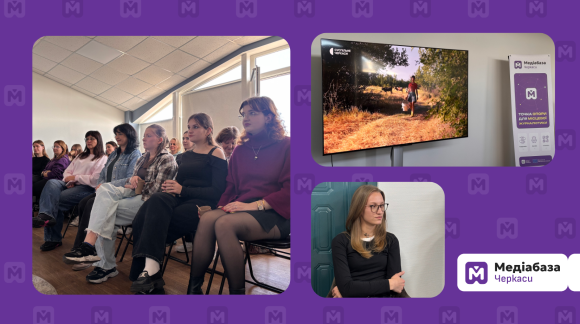
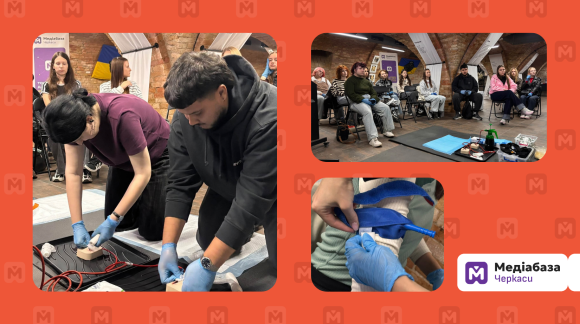
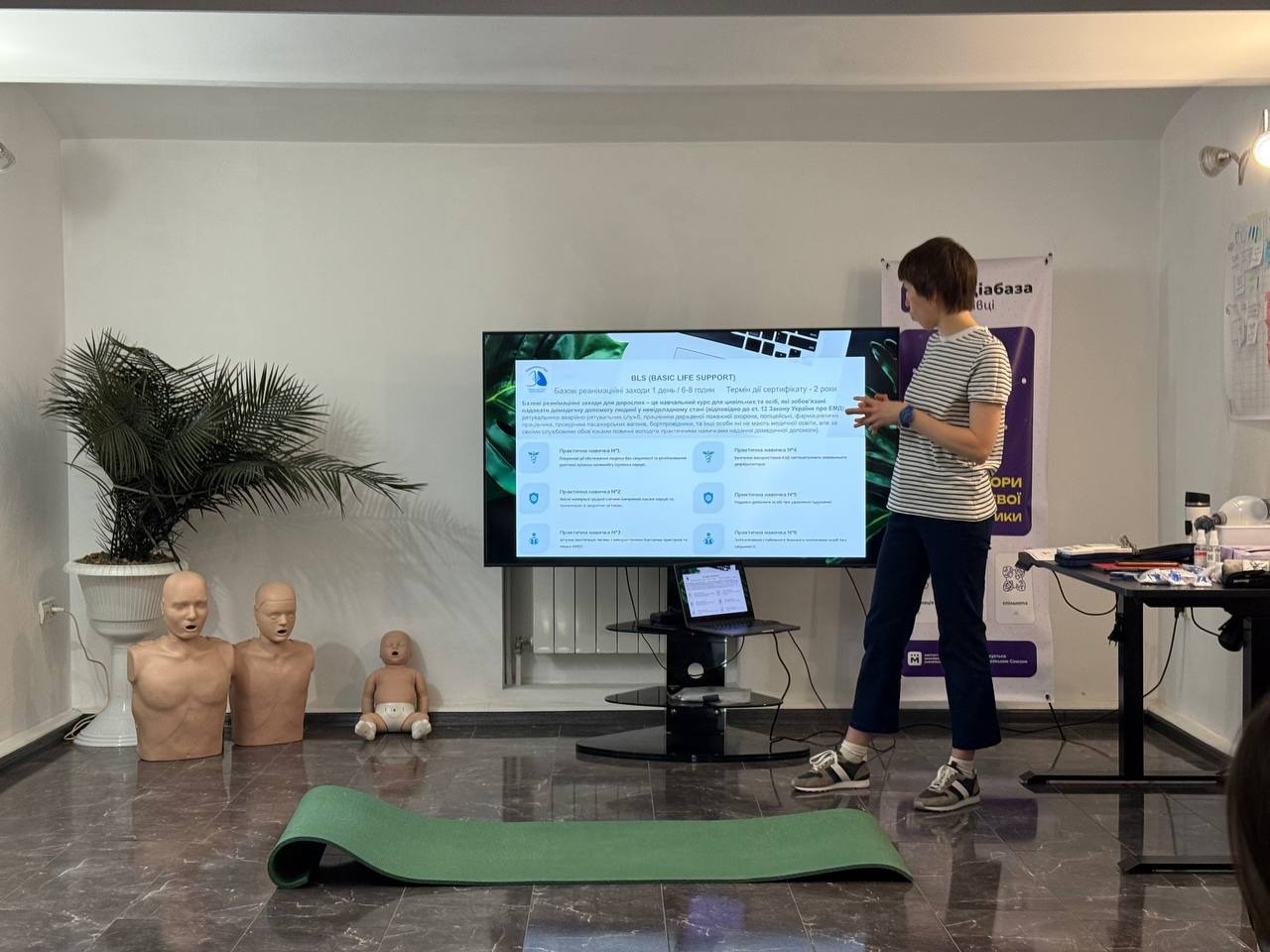
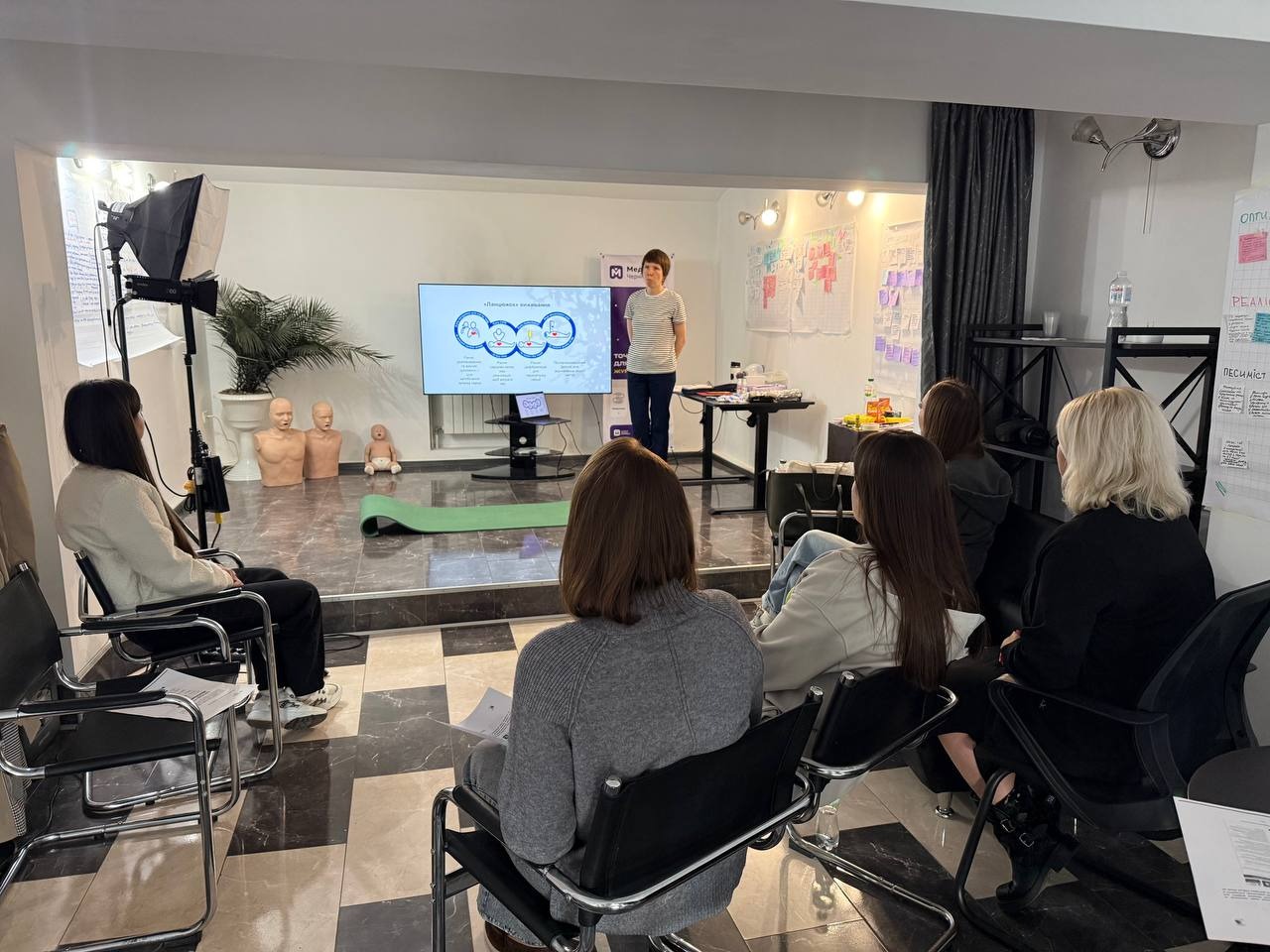
The Institute of Mass Information’s (IMI) hub Mediabaza Chernivtsi hosted an in-person first aid class for media professionals by coach Natalia Korchak on 6 October. The participants not only discussed the basic principles of providing aid, but also received hands-on training with mannequins, an automated external defibrillator, tourniquets, and other equipment.
Natalia Korchak stressed that she herself was not a tained medic and took regular refreshers because of this. She said it was important not just to complete a course once, but to revisit your skills every now and then, since some of the actions get forgotten over time.
Aid begins with assessing the situation
One of the first things the participants learned was that they needed to assess whether the site is safe and whether the situation is dangerous to the rescuer before helping another person.
Natalia Korchak said that a person must also honestly assess their own state and ability to act. In a stressful situation, one can panic, get confused, or freeze up, which should be taken into account as well. If there are other people around, it is important to understand whom you can involve in helping and to give each of these people a specific task.
The coach also discussed the issue of communication during an emergency. Instead of saying, “Someone call an ambulance,” it is better to address a specific person and tell them clearly what they need to do. That way, responsibility does not get “dissolved” among those present.
This principle is especially easy to grasp for media professionals: clear communication can be just as important in a crisis as knowing the steps themselves.
Knowing is not enough; you should feel the skill with your hands
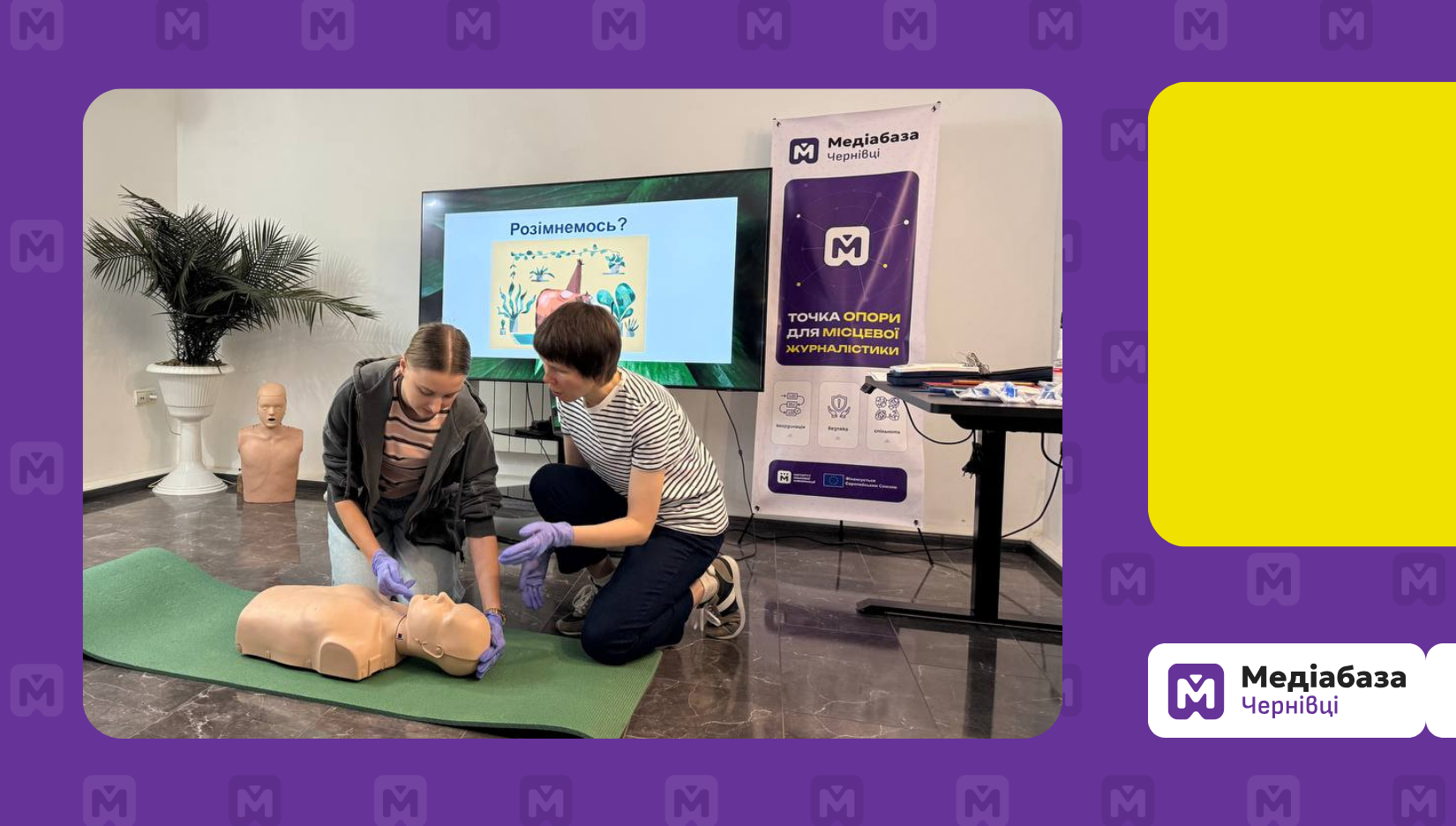
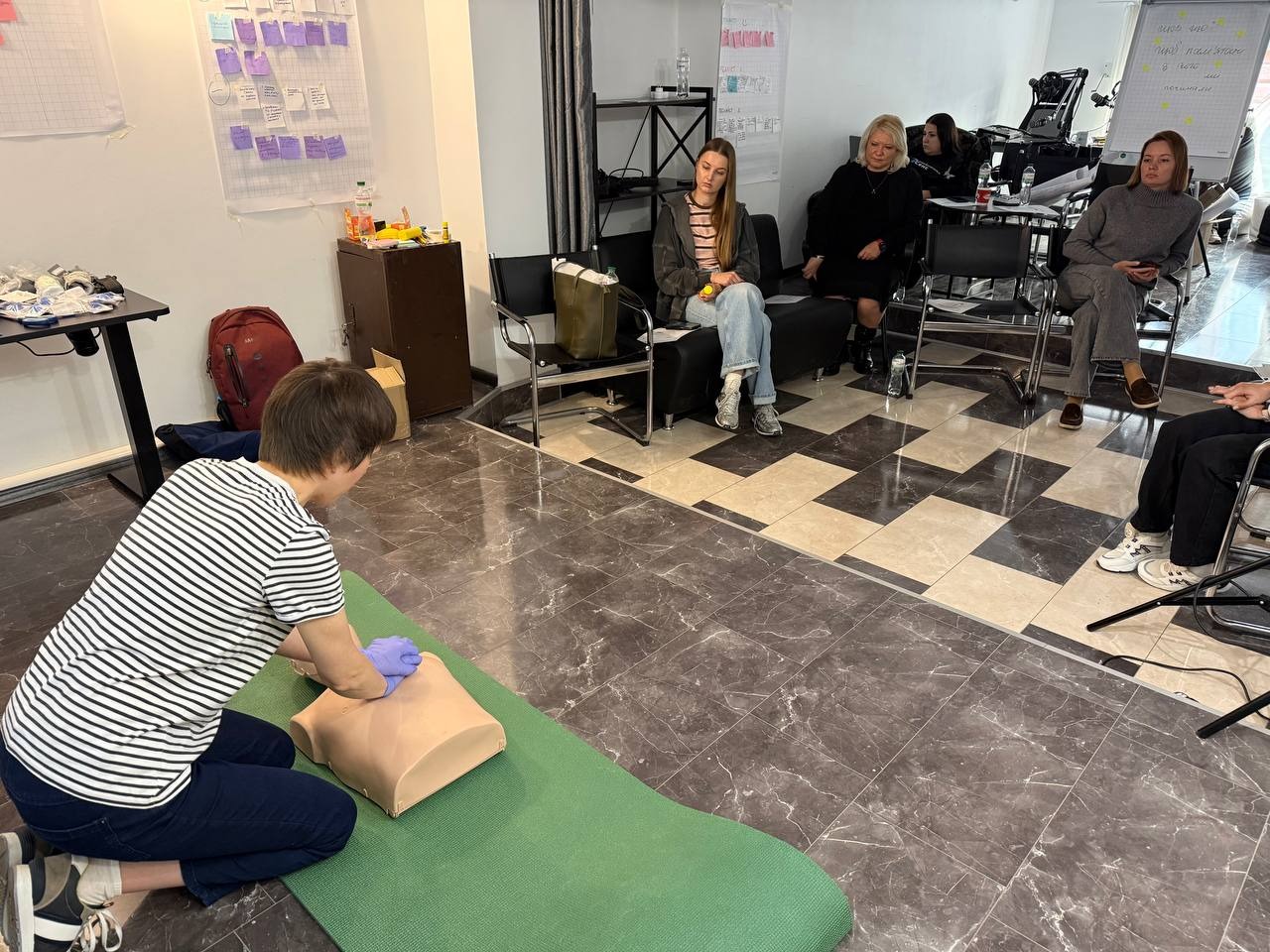
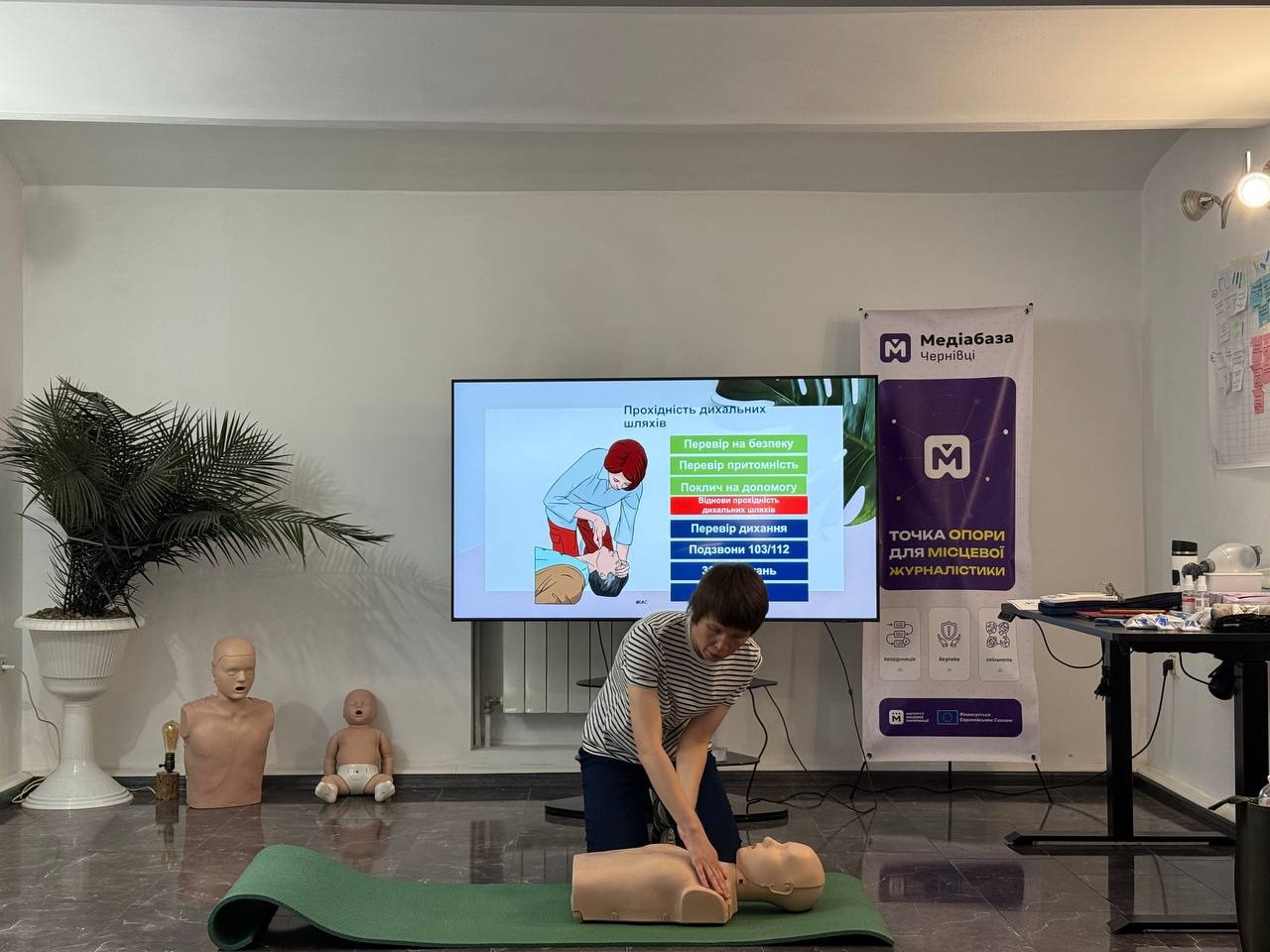
Much of the training was hands-on practice. The attendees worked with mannequins and were able to rehearse the basic steps in the event of sudden cardiac arrest, checking a person’s condition, cardiopulmonary resuscitation, and using an automated external defibrillator.
It became clear during the practice that knowing the algorithm in theory and performing it physically are not the same. Compressions take effort, the rescuer tires quickly, and it is better to rehearse the correct body position and movements on a mannequin at least once. The coach stressed the importance of regular refreshers.
The participants also got to handle an automated external defibrillator (AED). Natalia Korchak showed what a training AED looks like and how the device guides the user with voice commands.
Another segment of the class focused on bleeding, tourniquets, and bandages. Here, too, the emphasis was not on “knowing the name” of a device, but on trying to apply it by hand and understanding how it works in a real situation.
One class will not make you a medic, but it will make you less lost
Natalia Korchak stressed several times that the training was not a substitute for medical education and gave one no grounds to consider themselves an expert. The class has a different purpose: to give people a basic understanding of the sequence of steps and a chance to perform them at least once in a safe training environment.
This matters all the more because a person’s response in a real situation is unpredictable. You can know the algorithm and still freeze up. But being familiar with the equipment, the mannequins, and the practical exercises reduces means that fewer things one encounters in the middle of an emergency will be completely new to them.
The coach also suggested some simple things to consider after the class:
- whether your personal first aid kit or the one at your workplace includes protective gloves and barrier protection items;
- whether staff know where an AED might be located in public spaces;
- whether they are prepared to at least call for help and coherently coordinate other people.
The Institute of Mass Information (IMI) is launching a series of tactical medicine classes for media professionals who are not war reporters but work in cities and regions constantly targeted in air strikes.