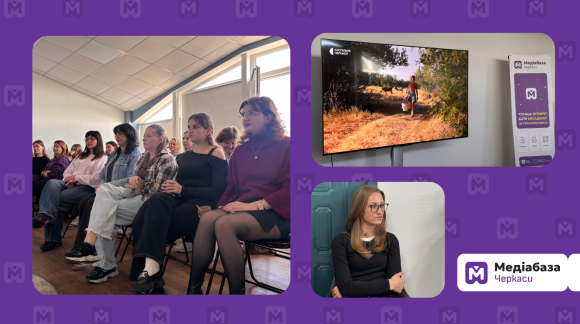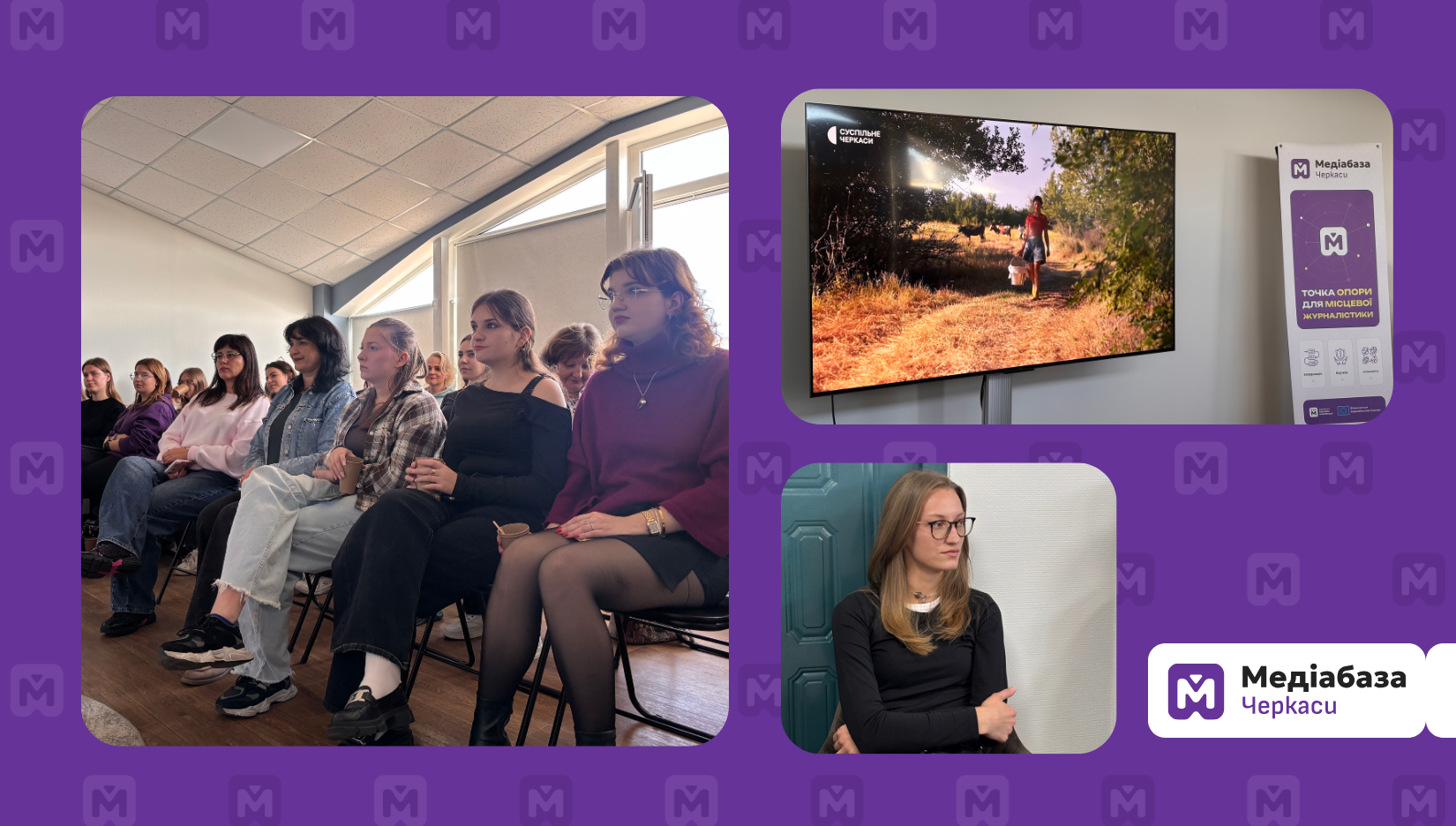
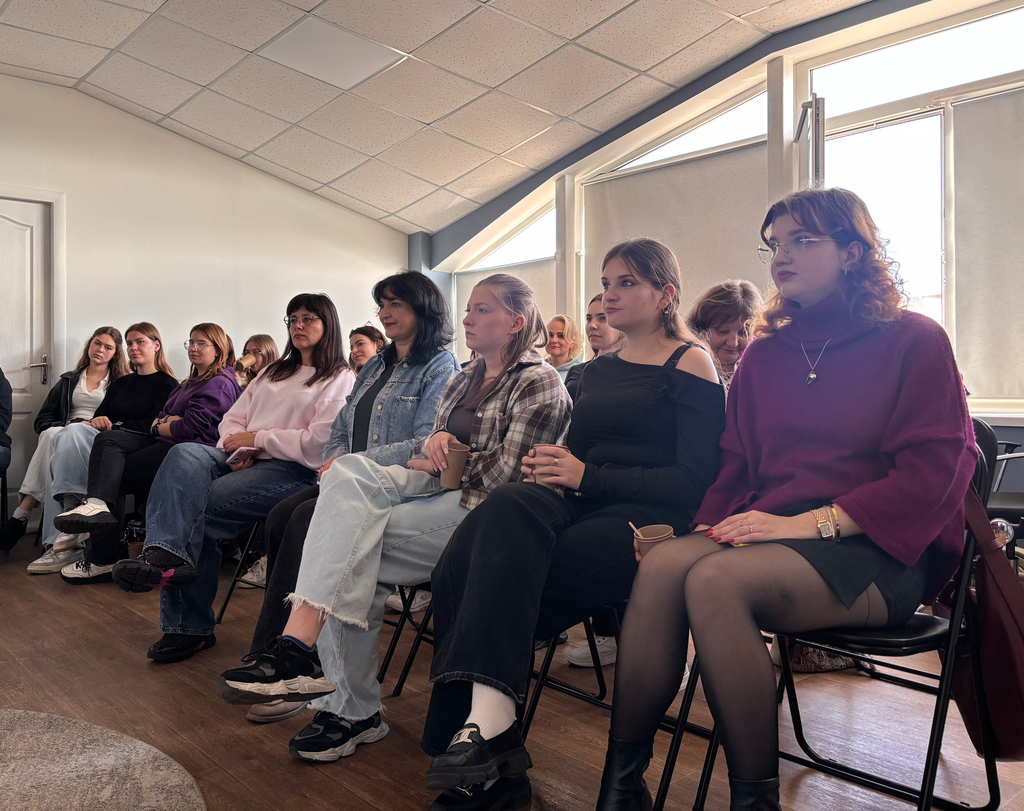
How does one tell a child’s war story without traumatising their subject, and how does one use details and visual choices to convey a complex story through the child’s own eyes? These questions were discussed during a screening of Suspilne Cherkasy’s documentary project Displaced Childhood at the Institute of Mass Information’s (IMI) regional hub Mediabaza Cherkasy.
The film focusing on a large family that had to move to Cherkasy oblast due to the war was presented to students of the Journalism, Advertising, and PR Department at Khmelnytskyi National University of Cherkasy. After the screening, the media professionals-to-be spoke with the creative team behind the project.
READ MORE
Not just coming, shooting, and leaving
During the screening, Suspilne Cherkasy producer Olena Banina said that work on the documentary had involved several trips to meet the family. First was the introduction visit, when the filmmakers, editor Anastasia Kashoyid and cameraman/director Maksym Tkachenko, got to know the family. It was then that they built a rapport with the children, talking about their interests and favourite places and asking them for a tour of the house. This later helped the children not to be afraid of the camera and to open up in the film.
“It was genuine interest in the family, in the children, in how they were feeling, in what they cared about. And the way they later opened up in the film is thanks to the rapport that Nastia and Maksym built with the children,” Olena Banina said.
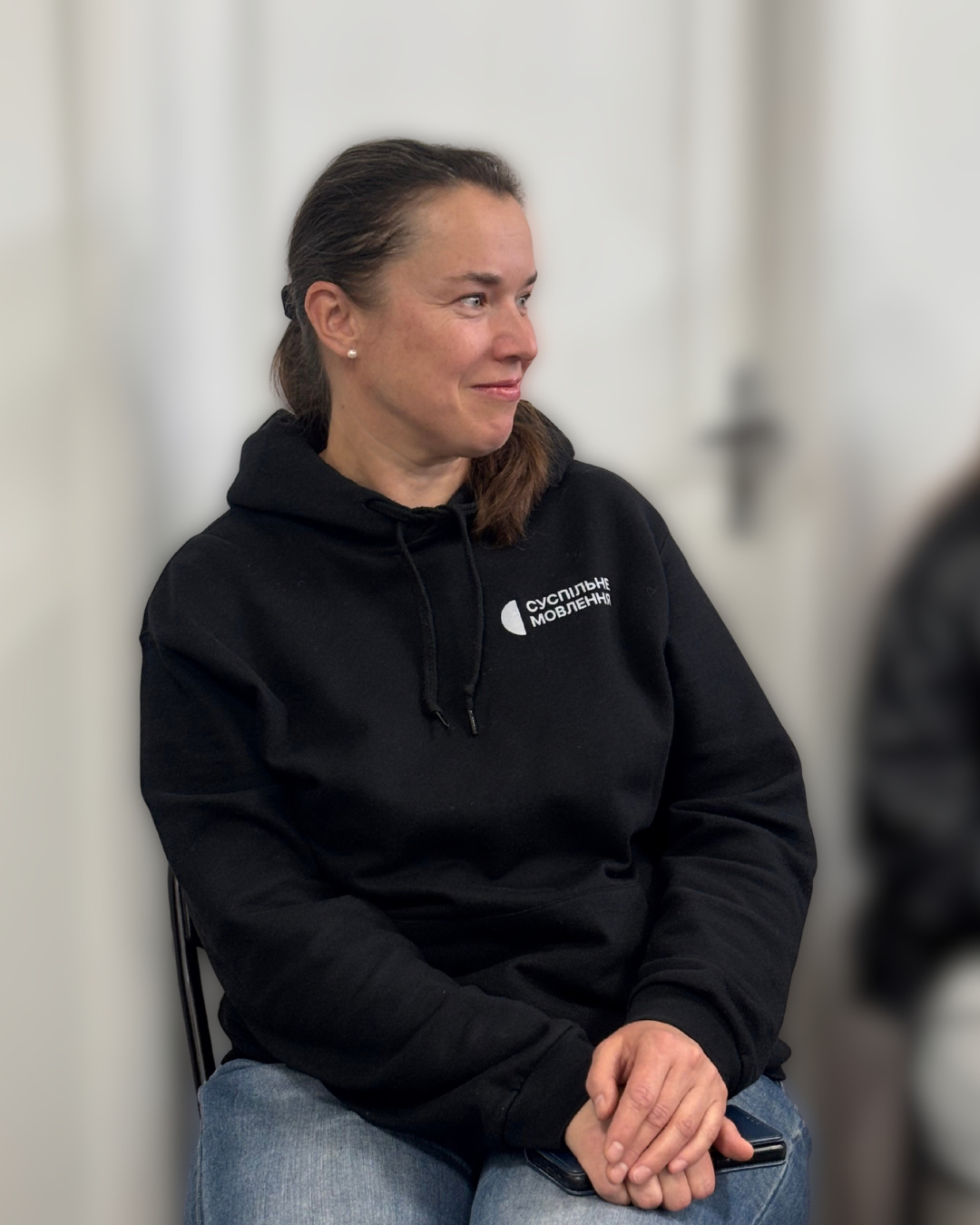
Filmmaker Anastasia Kashoyid said that, even though the crew had a script, they had had to adjust it as they went to fit the real lives of the film’s subjects. After all, the idea of the film is to give the children a chance to tell the story in their own words.
“We didn’t steer them with prompts like, ‘Tell us how hard it was for you,’ or, ‘Tell us what made you cry the most.’ No. They were telling it to us exactly as the words and emotions were coming to them. And how full of hope, kindness, and love for one another they are in the film is their own achievement,” Anastasia Kashoyid shared.
The film’s authors also stressed that they had consulted a psychologist before starting production. This was necessary to understand how best to talk to the children about what they had been through, and how to act if the conversation triggered difficult emotions. The family was also warned in advance that the topic would be sensitive.
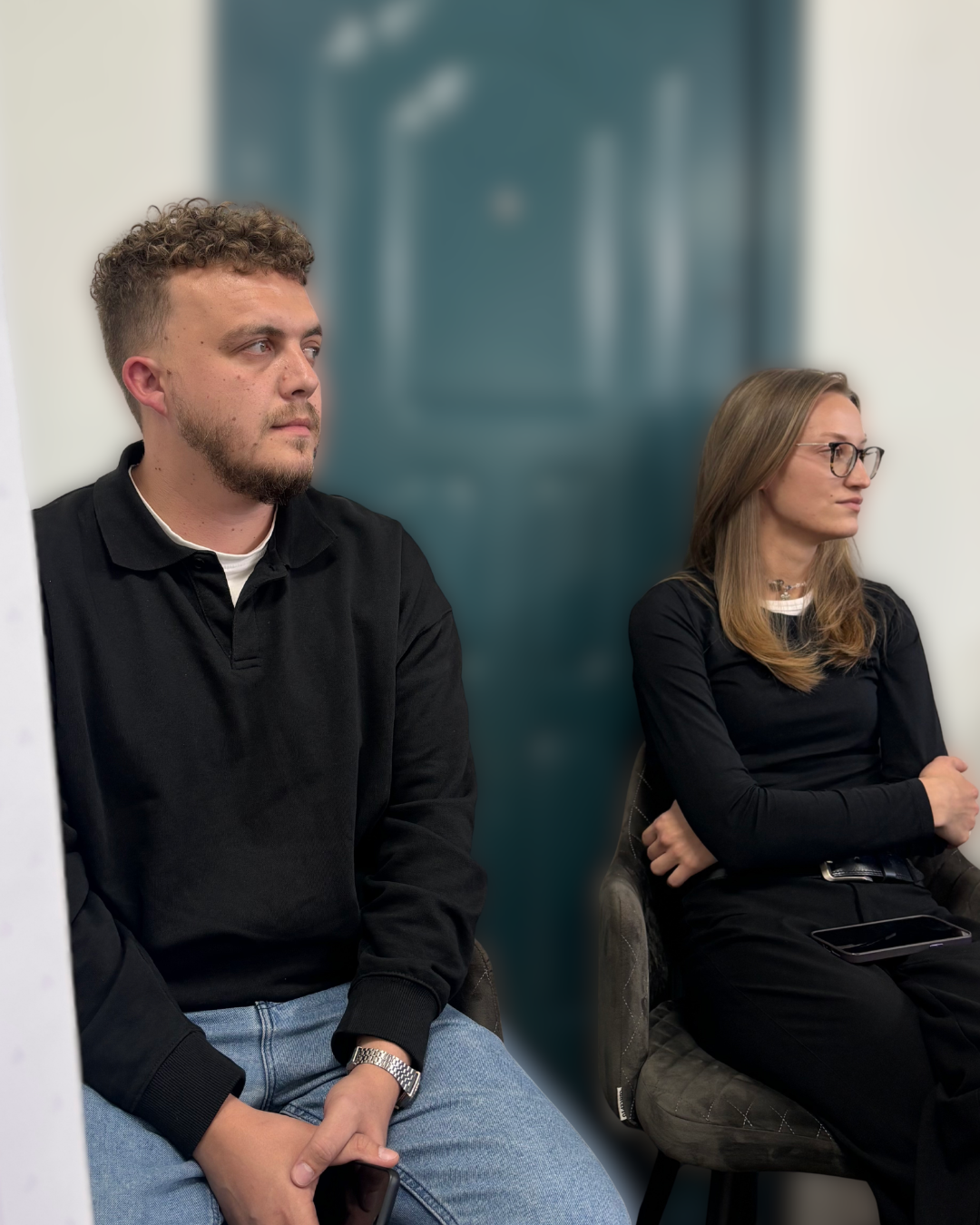
Director and cameraman Maksym Tkachenko said that a key goal in his camerawork was to show events through the children’s eyes. This is what shaped the film’s visual language. For example, one of the young subjects compared the sound of Shahed drones to the buzzing of enormous flies. The team decided to reinforce this childlike comparison visually during editing.
“Even though the topic is difficult, we wanted to make the picture as ‘wide spanning’ and sunlit as possible, like childhood memories. That’s why warm, bright colours dominate the frame,” Maksym Tkachenko said.
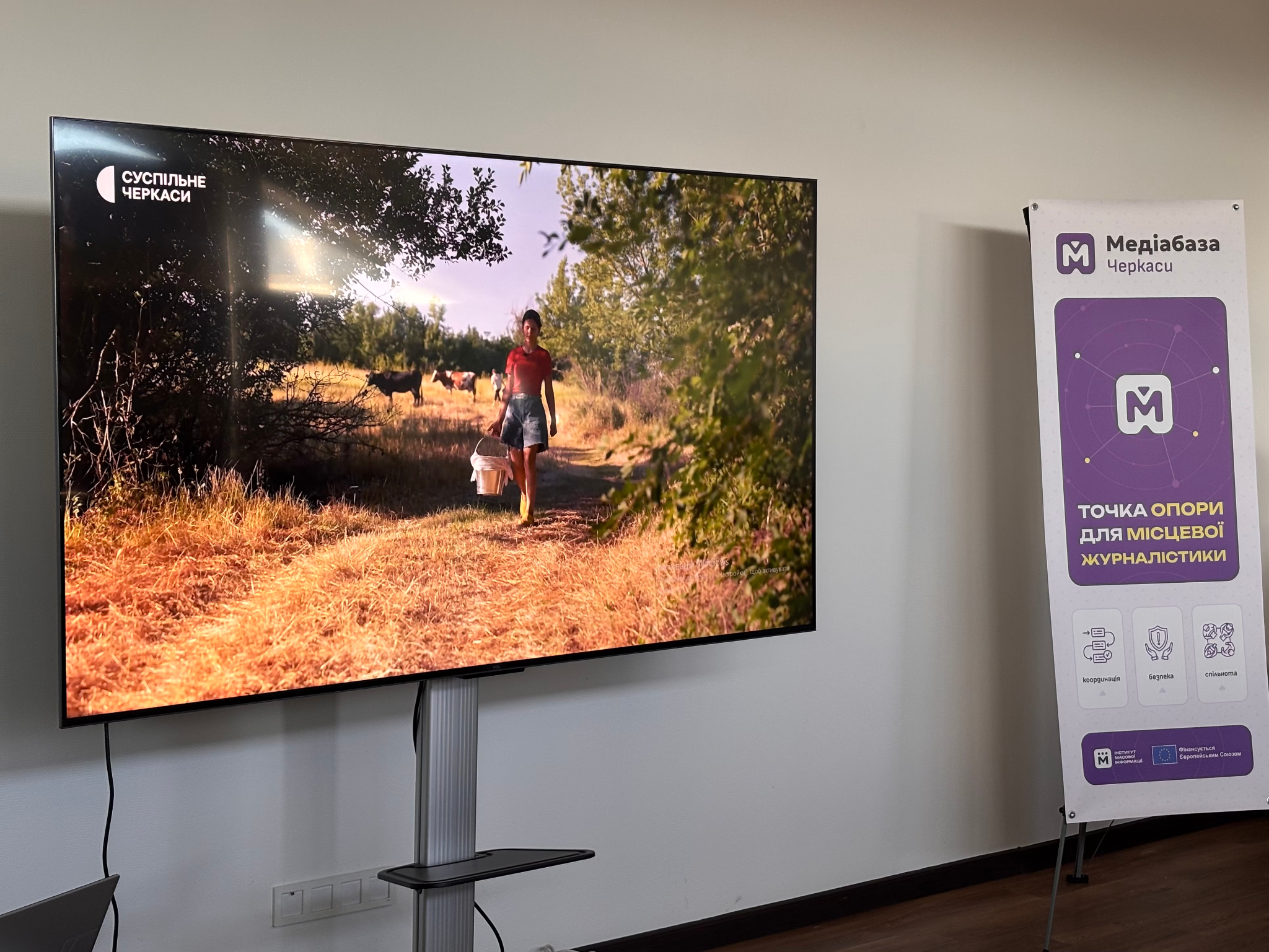
Students also paid attention to the film’s visuals during the screening.
“What really struck me was that everything was conveyed in bright colours and shown in a very childlike way. And at the same time, it conveyed how hard a large family was having it in wartime,” said Viktoria, a second-year student in the Journalism, Advertising, and PR Department at Khmelnytskyi National University of Cherkasy.
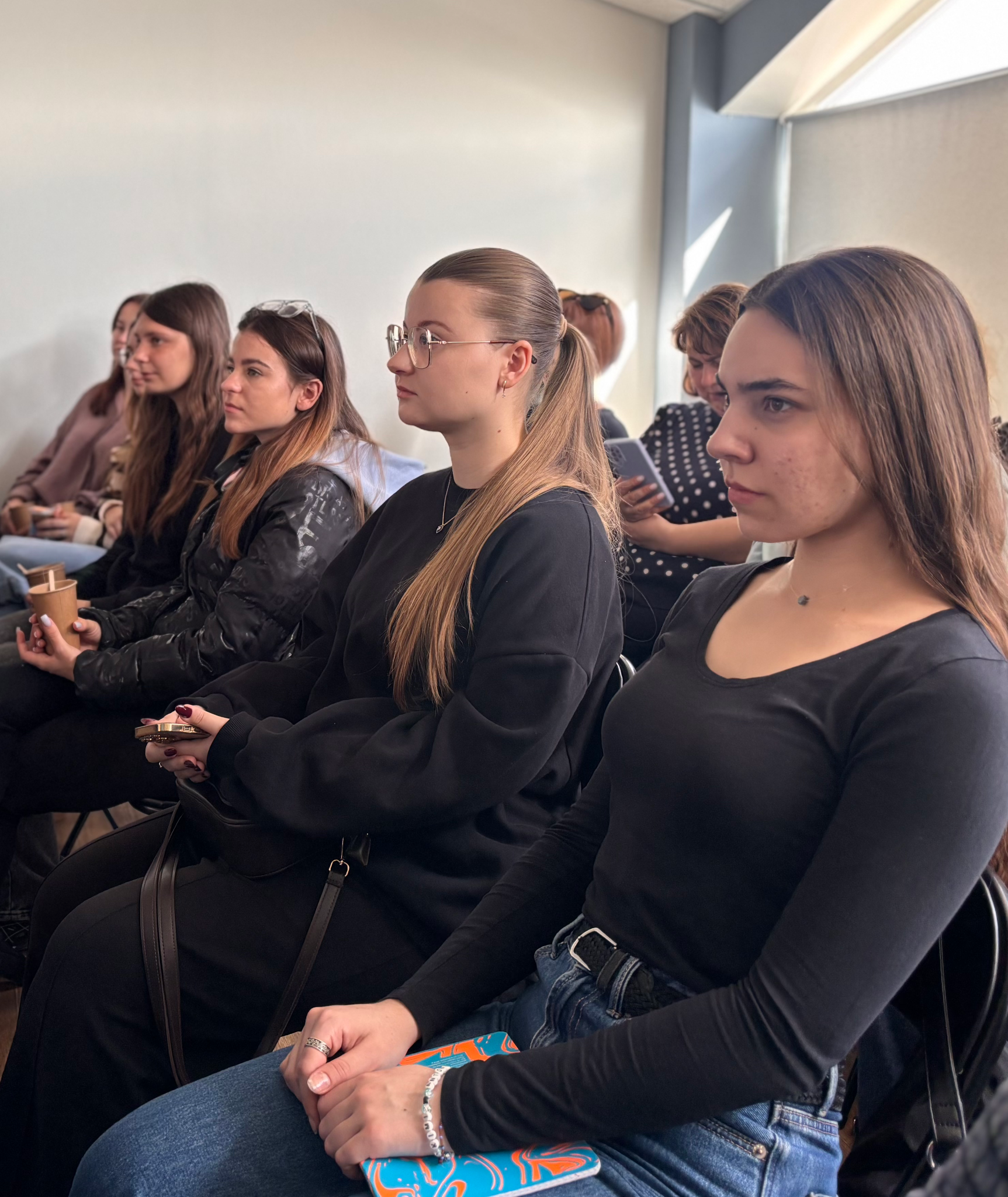
Students also asked the filmmakers whether a sequel was on the table. The team replied that the subjects themselves had supplied an idea for a sequel: the family recently welcomed a new member with the birth of a son, Matviy.
“We’d really like to see him [Matviy] running around the Ivankiv community, too,” said Anastasia Kashoyid. “Besides that, we have a large layer of the story left to cover, because the family only recently moved to Cherkasy oblast. They left behind a large part of their lives and their livelihood in their hometown, and they are only just beginning to rebuild now. We hope that one day we’ll be able to make a film about this new stage in the family’s life.”