The Institute of Mass Information is a civil society organization specializing in the media, operating since 1996. IMI defends the rights of journalists, studies the media landscape and reports on media-related events, fights propaganda and disinformation, and provides media workers with safety equipment for trips to combat areas (since the start of the Russo–Ukrainian war in 2014). IMI carries out the only monitoring study of freedom of speech in Ukraine, keeps a list of transparent and responsible online media outlets, and tracks Russia's media crimes in the war on Ukraine. IMI has representatives in 20 oblasts of Ukraine and runs a network of Media Hubs that provide journalists with unfailing support. IMI's partners include Reporters Without Borders (RSF); the organization is also a member of the International Freedom of Expression Exchange (IFEX).
About Us
About Us
Our Values
Freedom of Speech

Innovation

Teamwork

Quality

Responsibility

Our Mission
Our Achievements
IMI's awards
The Monismanien Prize (2025)
On 22 November 2025, the Institute of Mass Information (IMI) and PEN Ukraine received the Monismanien Prize, awarded to organisations and persons that have made significant contributions to defending freedom of speech, during a ceremony in Uppsala (Sweden).
Notable recipients of the Prize include former Polish President Lech Wałęsa, Czech author Václav Havel, Bellingcat founder Eliot Higgins, and others.
The Kurt Schork Memorial Fund (2023)
On 3 October 2023, the Kurt Schork Memorial Fund awarded the Institute of Mass Information for its work and made a contribution to support its projects focusing on journalists’ safety and rights. More specifically, the contribution supported IMI’s work monitoring attacks on journalists, ensuring the safety of media professionals, and providing expert training for frontline reporters.
The Kurt Schork Awards recognise journalists for their reporting on conflict, corruption and injustice, and are named in honour of the American freelance journalist who was killed in Sierra Leone while on assignment for Reuters in 2000.
Excellence in Journalism Award (2022)
On 7 December 2022, the Internews Network honoured the Institute of Mass Information with the Excellence in Journalism Award. IMI director Oksana Romaniuk spoke at the ceremony, which took place in San-Francisco (USA), via video. IMI was awarded for its contribution to press freedom support and protecting journalists in the course of Russia’s full-scale invasion of Ukraine, in particular for supplying media professionals with individual safety gear (bulletproof vests and first aid kits).
The Human Rights Tulip (2021)
On 10 December 2021, Institute of Mass Information director Oksana Romaniuk was awarded the Human Rights Tulip for outstanding and innovative achievements in the struggle for human rights in Ukraine. The Embassy of the Netherlands in Ukraine presents the award annually on the International Human Rights Day.
The Human Rights Tulip is an award by the Dutch government, initiated by the Foreign Affairs Ministry. Each year since 2008 the award has been given to individuals and organisations defending human rights.
The Ukraine 5 AM Coalition, which includes the Institute of Mass Information, was awarded by the German Institut für Auslandsbeziehungen (IFA) on 14 February 2024. Previous recepients of the IFA Prize include Yoko Ono (2013), Human Rights Watch (2016), and the Turkish activist, businessman, patron of the arts Osman Kavala (2023).
Analysis and monitoring studies
The Freedom of Speech Barometer
The Institute of Mass Information has been tracking violations of freedom of speech in Ukraine since 1998. This monitoring study, now titled the Freedom of Speech Barometer, is released online monthly.
The project’s methodology aligns with the standards of prominent international organizations defending freedom of speech.
Based on the study’s findings, IMI makes annual assessments of the freedom of speech situation in Ukraine and issues recommendations for state authorities, international organizations, and civil society institutions accordingly.
The Freedom of Speech Barometer is the primary media sector development indicator for audiences in Ukraine and beyond. The findings of this study are used as the basis for campaigns, addresses to the government, statements and assessments by the civil society, lawmaking initiatives in Ukraine. They are also used by the EU, UN, OSCE, Reporters Without Borders, Freedom House, and other international organizations to assess Ukraine’s democratic evolution, create rankings, evaluate election legitimacy, etc.
In 2014, IMI compiled a list of media workers who suffered in the course of the Revolution of Dignity, featuring over 200 persons. This list later became an important piece of evidence of the Yanukovych regime’s crimes and Russia’s crimes against Ukrainian journalists.
At the onset of Russia’s full-scale invasion on February 24, 2022, IMI started tracking the Russian forces’ crimes against Ukrainian media outlets and journalists separately in a dedicated monitoring study.
The monitoring study of Russia’s crimes against journalists and media
The Institute of Mass Information has been tracking and recording facts about about Russia’s crimes against journalists and media outlets since the start of the full-scale invasion on February 24, 2022. These include murder, enforced disappearances, abducting and injuring journalists, shelling strikes at TV towers, taking over or attacking media offices, disabling Ukrainian broadcasting and replacing it with aggressive Russian propaganda, cyber crimes, media outlets closing down due to Russia’s war on Ukraine, etc.
The list of transparent and responsible media outlets, known as the High Quality List
The Institute of Mass Information has been releasing a list of the most high-quality Ukrainian online media outlets once every six months since 2019. The list includes national online media outlets which scored the highest in the assessment of adherence to professional journalism standards and had the lowest indicators of manipulation, covert advertising, fake news, sexism, and hate speech. The average level of adherence to professional standards by resources featured in the High Quality List is about 96%.
The Recommended Media Map (project co-founded with NGO Detector Media)
The Recommended Media Map features high-quality online media outlets, radio stations, and TV channels across Ukaraine. The Institute of Mass Information and Detector Media launched the project in 2023. It includes high-quality media outlets from regions throughout Ukraine. The online map shows projects whose adherence to journalism standards was deemed the best. The Map aims to boost the visibility of independent and responsible regional media outlets in Ukraine and to help people search for reliable sources of information.
The monitoring study of adherence to journalism standards
The Institute of Mass Information carries out a quarterly analysis of adherence to professional journalism standards by the prominent Ukrainian online media outlets. Our experts assess adherence to standards such as balance of opinions and perspectives, accuracy, and distinguishing between facts and comments.
The monitoring study of covert advertising in online media
IMI releases quarterly monitoring reports on covert advertising (“jeansa”) in national media outlets, listing the entities or persons commissioning most of such material and outlining the latest tendencies. “Jeansa” is covert advertising disguised as reporting and not labelled in any way the audience might recognize. 13% of the journalists surveyed by IMI anonymously in September 2023 said that the media outlets they worked with required them to write news stories with covert advertising.
IMI carries out quarterly monitoring studies of popular online media outlets in Ukraine to analyze the spikes or drops in the amount of covert advertising. The studies include a ratio of political to commercial actors commissioning covert advertising in media.
IMI names the beneficiaries of news stories with signs of covert advertising and the actors commissioning most of such content in Ukrainian media. We also list media outlets of high integrity whose content bears no signs of being commissioned.
The monitoring study of gender balance in media
IMI has been monitoring the observance of gender balance by Ukrainian national online media outlets continuously since 2013. We track the representation of women experts in key topics, the presence of women as subjects in reporting, stereoptypes, sexism, discriminatory vocabulary, ageism.
IMI was the first to start monitoring gender balance in Ukrainian media and developed a unique methodology for this purpose. The study aims to point out errors to media outlets in order to help them achieve gender balance and to facilitate the improvement of visibility and representation of Ukrainian women.
The monitoring study of Russia’s aggressive propaganda narratives
IMI developed the concept for the monitoring study aiming to bring Kremlin-affiliated propagandists to justice based on the Rwanda case, where the genocidal rhetoric of the Radio Télévision Libre des Mille Collines played a significant role.
IMI researchers have collected a body of evidence covering over 300 Kremlin-affiliated propagandists complicit in genocidal rhetoric targeting Ukraine. IMI encourages the use of the terms “aggressive propaganda” or “genocidal rhetoric” to refer to Russian propaganda.
Lawmaking
IMI’s media lawyers co-authored or were involved in the development of the fallowing Laws:
-
- The Law of Ukraine “On Access to Public Information” (2011);
- “On Amendments to Certain Laws of Ukraine Due to the Adoption of the Law of Ukraine ‘On Information’ and the Law of Ukraine ‘On Access to Public Information’”;
- The Law of Ukraine “On Information” (new edition, amended in 2011);
- “On Amendments to Certain Laws of Ukraine on Ensuring Mass Media Ownership Transparency and Implementing the State Policy Principles in Television and Radio Broadcasting”;
- “On Amendments to Certain Laws of Ukraine on the Language Used by Audiovisual (Digital) Mass Media“;
- “On Amendments to Certain Laws of Ukraine on the Quota of Musical Works in Ukraine’s Official Language in Television and Radio Programming”;
- Amendments to the Law of Ukraine “On the Public Broadcasting and Radio of Ukraine” (2015);
- “On the Condemnation of the Communist and the National-Socialist (Nazi) Totalitarian Regimes in Ukraine and the Ban on Promoting Their Symbols”.
Moreover, IMI lawyers have developed suggestions for amendments to the Criminal Code of Ukraine regarding the protection of reporting, as well as amendments to the media-related part of the election law.
Manuals for journalists
IMI has released over 20 manuals for journalists, such as:
- Pro-Russian and Anti-West Conspiracy Theories in the Information War
- Working under PRESSure. Safety Manual for Routine Work in Media
- Media and Elections: Self-Regulation, Safety, Laws
- Manual for journalists “Reporting on Local Authorities”
- The Journalist and (Un)Safety. Manual for Journalists Working in Unsafe Environments
- Mediacompass: A Guide for a Professional Journalist
- Communications for Civil Society Initiatives. For Those Making a Change
- Practical Manual for Communications Staff in State Bodies
- The Contents of Local News in Ukraine’s South and East
- Courtroom Reporting 101
- Gender for the Media: A Manual for Journalists
Our History
Our Team
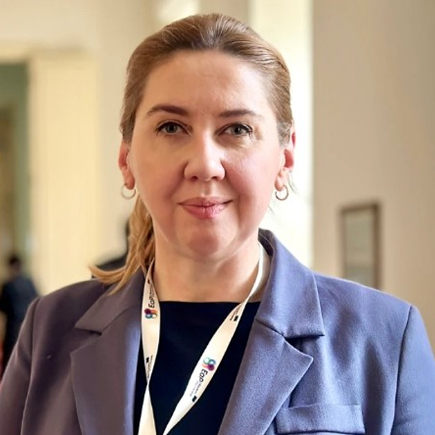
Oksana Romaniuk

Iryna Zemlyana
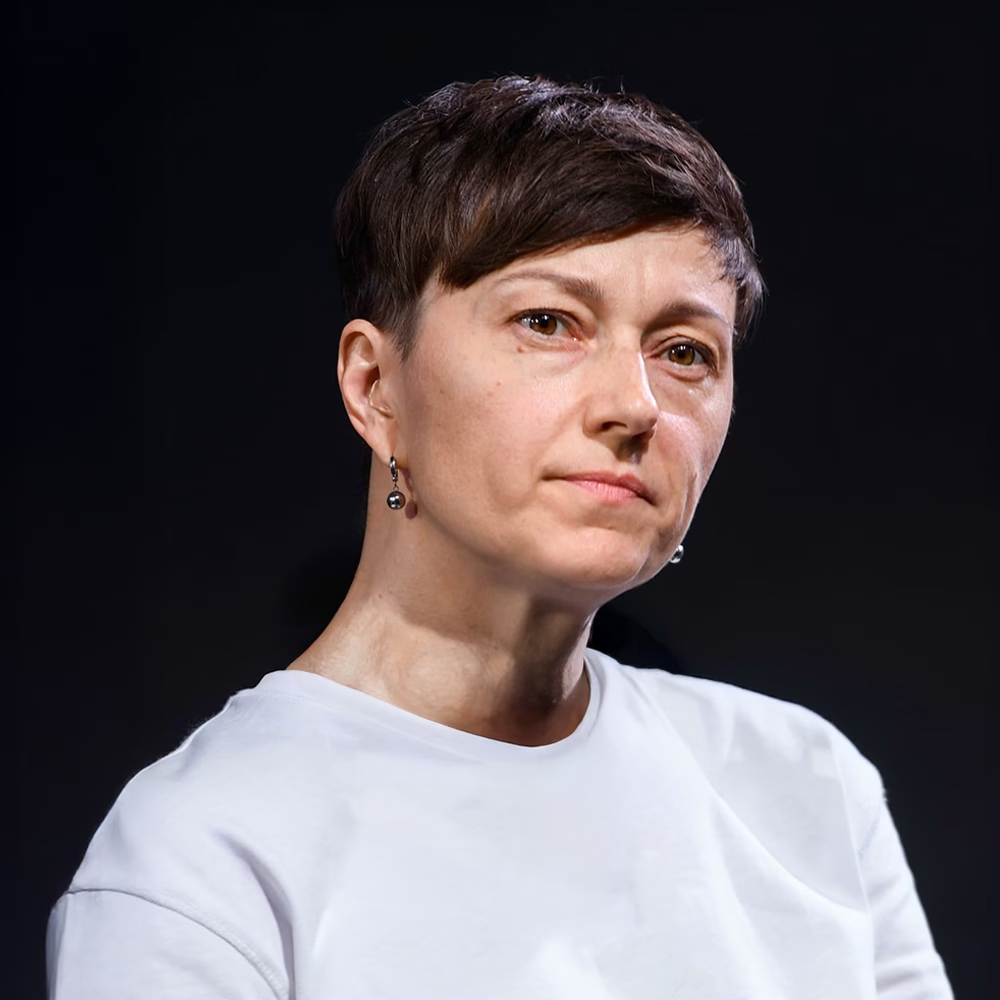
Kateryna Dyachuk
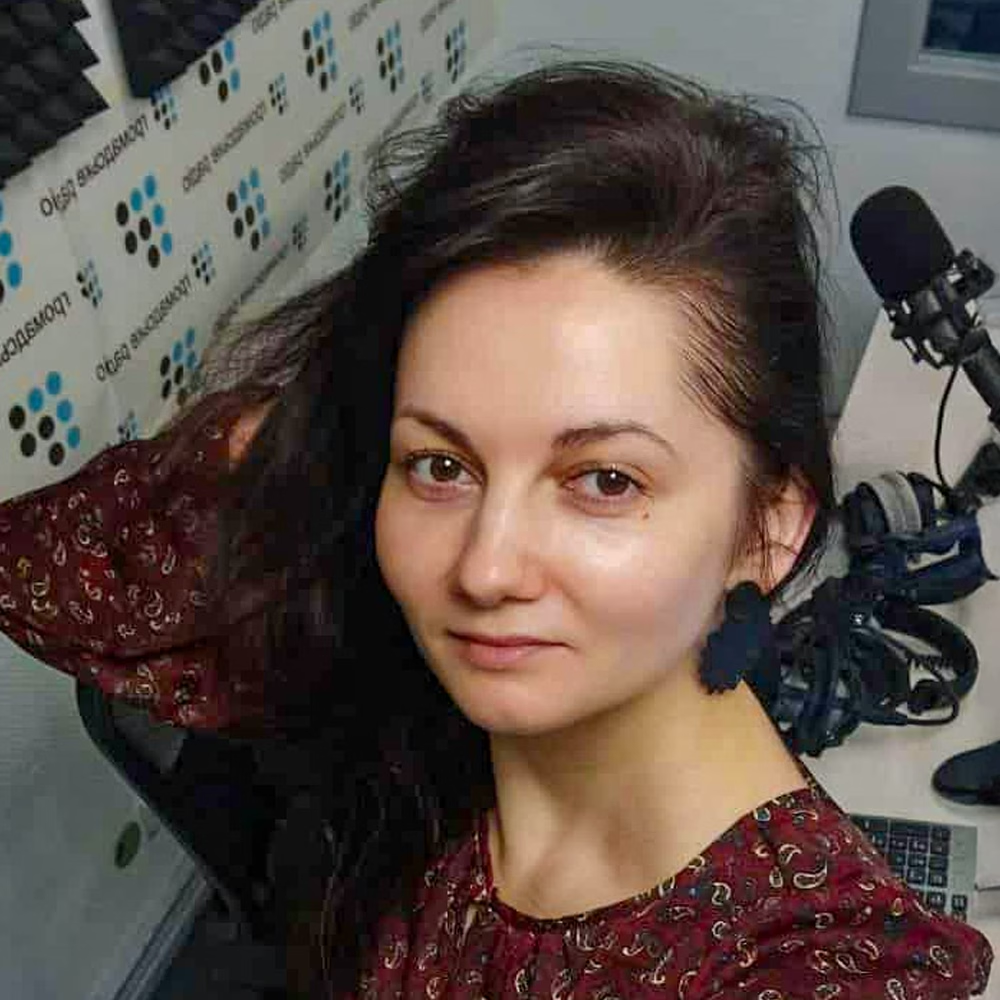
Valentyna Troyan

Maria Ihnatieva
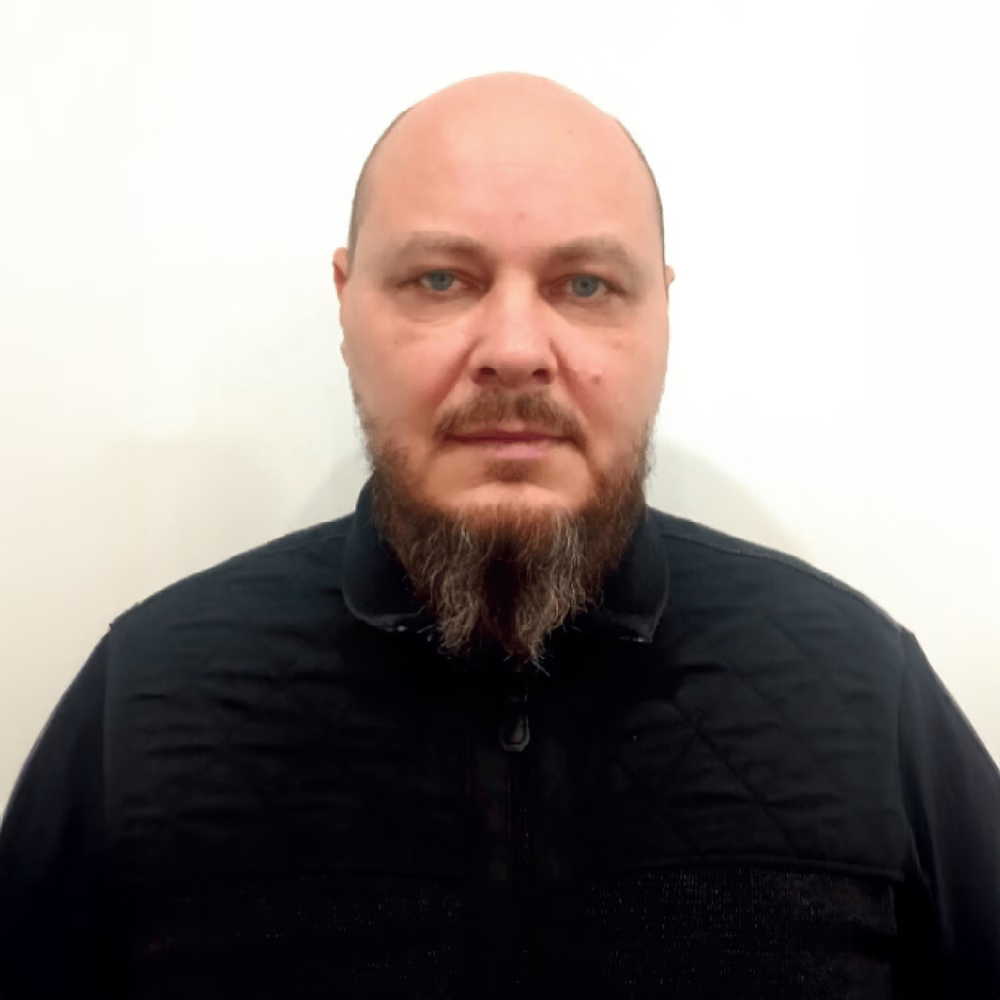
Dmytro Barkar
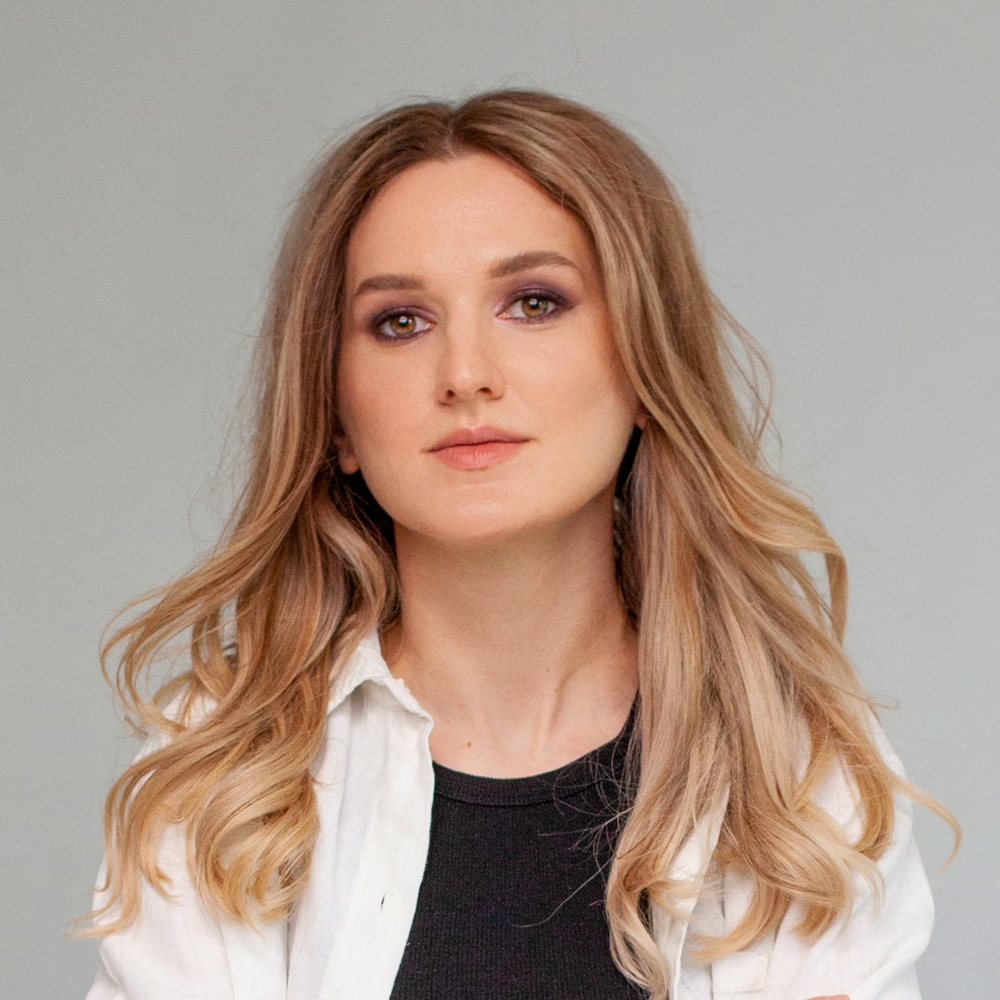
Yana Mashkova

Olena Holub

Volodymyr Zelenchuk
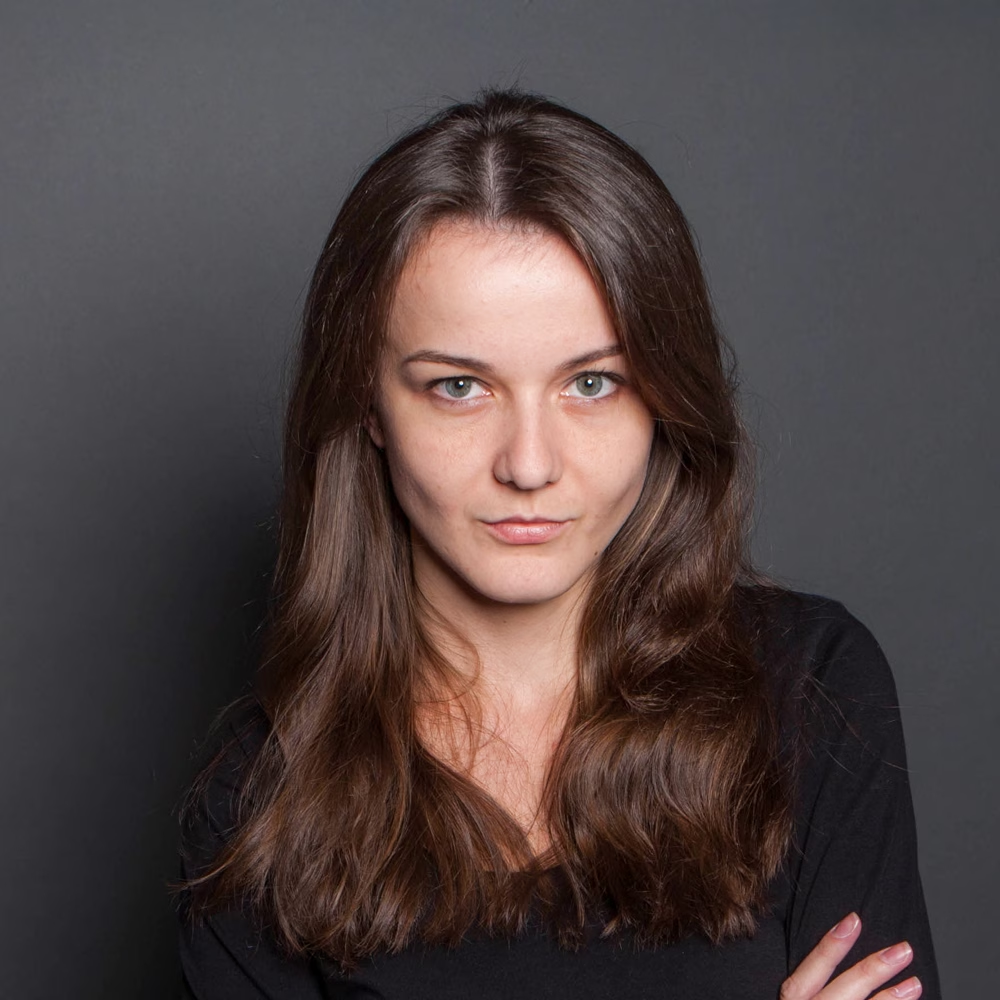
Hanna Chabarai