
Journalist, Russian prison survivor Dmytro Khyliuk said during a round table discussion at the Human Rights Commissioner’s Office that publicity helps illegally detained media workers and can deter mistreatment. He called on the media and the international community to keep illegally imprisoned journalists in the spotlight, Vechirniy Kyiv reports.
Khyliuk explained that publicity had real impact on the situation in Russian prisons.
“Prisoners’ publicity reaches the prisons. Their logic is as follows: if a person isn’t being mentioned anywhere, it means that no one needs them and they can be beaten, tortured. If they hear some reports that a person is well-known, remembered and that someone is waiting for them, then they [the Russians] start to have doubts. A wariness arises among executors: they say, better not to pressure this person too much, what if the higher-ups punish us,” said Dmytro Khyliuk.
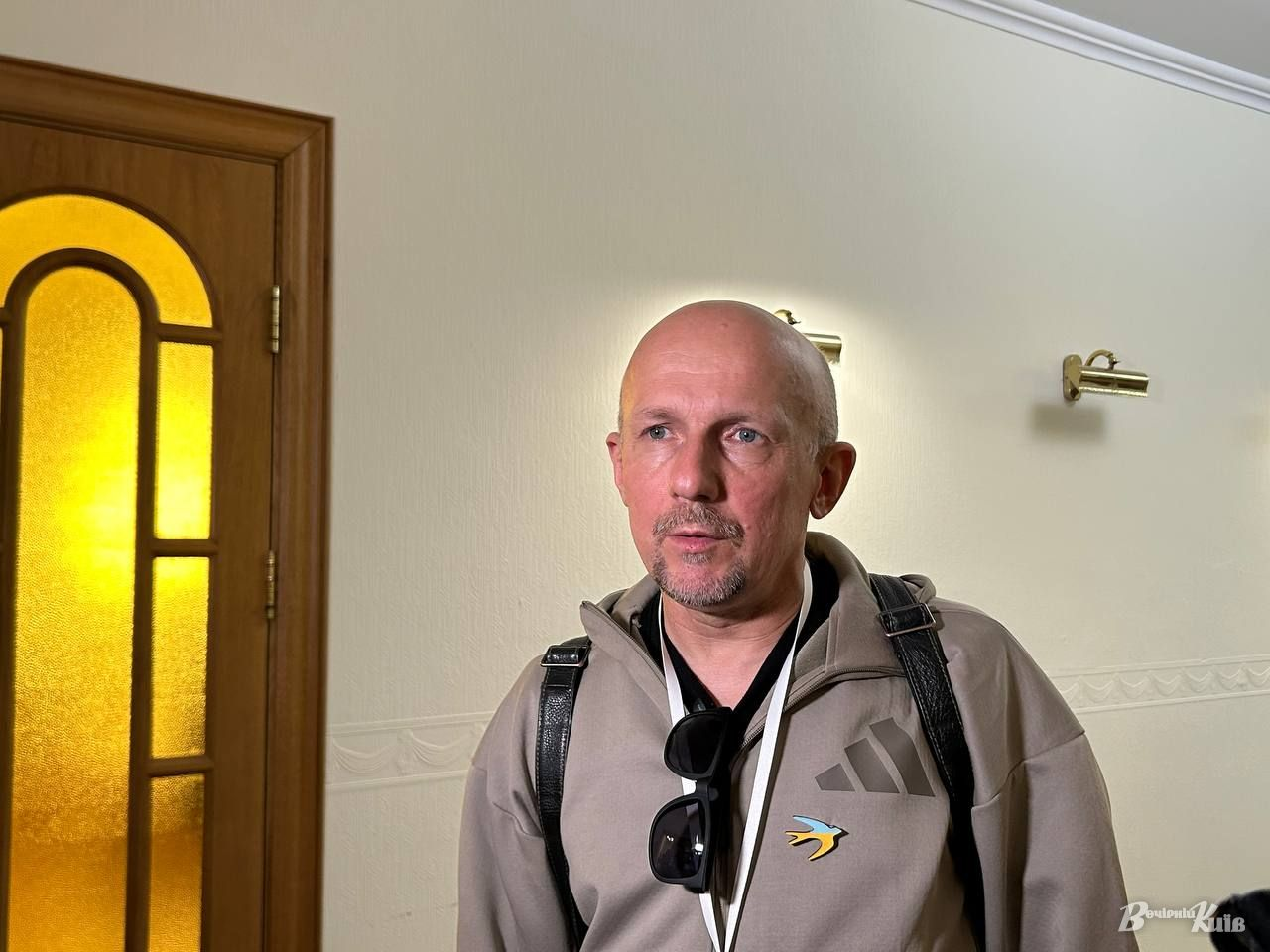
The journalist said that even minor changes in the conditions of detention may be a result of increased attention to specific people. He cited his own experience after being released from Russian prison in 2025.
“Right after I was released, the former mayor of Kherson, Volodymyr Mykolayenko, and I began to speak out about our detention, the conditions and the attitude we faced there. And recently, a National Guardsman who had shared a cell with me for almost half a year came home as well. He said that as soon as Volodymyr and I went home, the detention conditions changed. It is always difficult there, but there was change,” said Dmytro.
The journalist believes this was due to publicity: “The soldier said that they had stopped torturing people with 40-minutes workouts in the morning and adding some sort of oil to the slop they served as food. They had stopped playing loud music (there are speakers in the cells and corridors, and at 6:00 a.m. they would blast Soviet songs at full volume to wake us up). It would drive us crazy, because sometimes you had to shout in your neighbour’s ear just so he hears something.”
He stressed that for many prisoners, any improvement in their life conditions makes a critical difference.
“When there is even the smallest change, it matters. It is a matter of survival. And if publicity can have at least a little impact, then it must be used,” he said.
Dmytro Khyliuk added that dozens of Ukrainian journalists remain imprisoned and unable to speak for themselves today.
“I can be the voice of those 26 journalists who are still in Russian prisons. They have no opportunity to be heard, which is why we must speak out about them,” Dmytro said.
According to the Institute of Mass Information, as of 26 March 2026, at least 26 Ukrainian civilians working in the media and one journalist who joined the Defense Forces remain imprisoned by Russia.
Dmytro Khyliuk’s story
Dmitro Khyliuk was detained by Russian forces as a civilian hostage in March 2022. Russian soldiers kidnapped him on 3 March in Kozarovyvchy, in the yard of his own house. He was first detained in the occupied Dymer and later taken to a pre-trial detention center in Russia.
The Russian Ministry of Foreign Affairs did not outright claim that Dmytro was a prisoner of war, but cited the Third Geneva Convention, which concerns the treatment of prisoners of war, in a response to his father’s query.
Dmytro was released from Russian prison on 24 August 2025.