International journalist safety standards account for newly emerging threats, such as targeted drone strikes, as well as Ukraine’s experience of protecting media workers in wartime. The Institute of Mass Information has proposed three key changes to the UN: introducing special protocols for protecting journalists from drones, recognising independent monitoring of press freedom violations as a component of national protection mechanisms, and supporting networks of local safety hubs for media workers.
IMI director Oksana Romaniuk presented these proposals on 20 November during the European Regional Consultation of the UN Office of the High Commissioner for Human Rights (OHCHR) on journalist safety. The consultation was stipulated by the UN Human Rights Council Resolution 59/15. Its results will be included in a global study on the effectiveness of national mechanisms for protecting journalists.
IMI submitted three contributions to the consultation in writing, based on years of monitoring press freedom and practical experience supporting Ukrainian journalists in wartime.
1. Drone protection. International standards must catch up with the reality of war
Russian drones have become one of the most serious threats faced by journalists working in frontline regions. However, international documents on media workers’ safety still contain no special provisions on protection from such attacks.
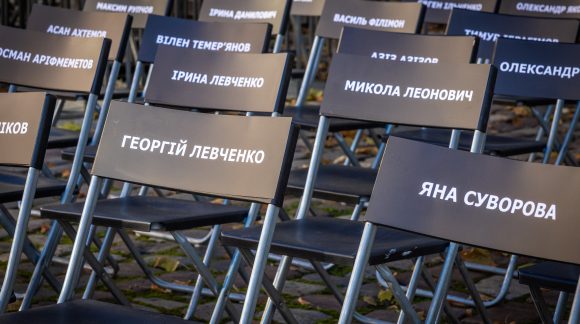
“Four years into the war, four journalists, of the 16 who died while reporting in Ukraine, were killed by Russian drones. No existing international standard even mentions drones,” IMI director Oksana Romaniuk stressed.
A significant feature of FPV drone strikes is that the operator sees the target in real time. If the situation suggests that the operator could have recognised the journalist as a civilian, this must be taken into account when investigating and establishing intent.
IMI proposes that international organisations and states:
- Develop special protocols for investigating drone strikes on journalists, including prompt collection of digital evidence and identifying the military unit and operator involved.
- Include drone safety in the mandatory training for journalists working in frontline areas.
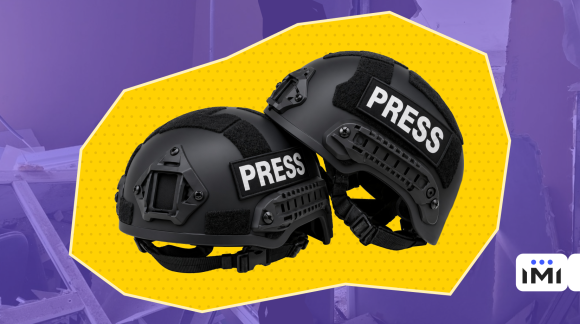
- Secure the support of states, outlets, and international donors to ensure media workers have access to drone detectors and other specialised protective equipment.
- Draw a clear line between independent reporting and wartime propaganda, so that the guarantees and privileges provided for journalists do not extend to Russian propagandists.
2. Mediabazas. Local safety hubs can save lives
IMI also proposed recognising local journalist support hubs as an important element of national safety systems. IMI has built a network of 15 Mediabazas in different regions of Ukraine since 2022; nine of these hubs operate in frontline oblasts. Journalists have already used the services, safety equipment, training, consultations, and other assistance they offer more than 13,000 times.
IMI proposes including the local safety hub model in the UN study and taking it into account when updating European Commission Recommendation 2021/1534 on the protection, safety, and empowerment of journalists.
IMI also called for the lifting of regulatory obstacles that make the supply of vital equipment to journalists harder by classifying them as dual-use goods. In particular, this concerns drone detectors.
3. Independent monitoring must become part of national mechanisms for protecting journalists
Effectively protecting journalists is impossible without consistent tracking of violations and subsequent response by law enforcement.
IMI has been carrying out the “Freedom of Speech Barometer” study for over 20 years, and has been including Russia’s crimes against journalists and the media in it since the start of the full-scale invasion.
IMI has recorded 989 such crimes as of October 2026. The gravest consequences of Russia’s aggression include the deaths of 16 journalists while reporting (as of November 2026) and the detention of at least 27 Ukrainian media workers by Russia.
IMI’s monitoring covers crimes committed by Russian forces as well as press freedom infringements by Ukrainian officials. Each incident is verified and assigned legal classification with reference to the Criminal Code of Ukraine and the Rome Statute of the International Criminal Court.
IMI’s data is used by the Prosecutor General’s Office, parliament, and numerous international organisations.
Ukraine’s experience shows that independent civic monitoring can not only provide information about the violations but also be a tool for tracking crimes and help to hold the perpetrators to account.
In view of this, IMI recommends that the UN recognise independent civic monitoring as an element of national journalist protection mechanisms, ensure its stable funding, and create formal channels of cooperation between civic organisations and prosecutors.
Ukraine’s experience should influence global safety rules
Presenting the proposals, IMI director Oksana Romaniuk stressed that Ukrainian journalists continue to work despite constant Russian strikes and that the mechanisms for survival and safety that they have developed should matter to the international community.
“Russia was bombing Kyiv throughout last night. Many of us got no sleep and went back to work in the morning. But despite all the challenges, Ukraine’s media community is active, resilient, it’s fighting and evolving. We have built up expertise that, in our view, warrants careful study by our colleagues in international organisations,” she said.
“What Ukrainian journalists have learned while working in these extremely difficult conditions should not remain Ukraine-exclusive knowledge. This experience is vital for our colleagues abroad and for international organisations,” Oksana Romaniuk concluded.
IMI is ready to share its monitoring methodologies and documented data with OHCHR and international partner organisations so that Ukraine’s experience can serve as a basis for improving international standards for protecting journalists.