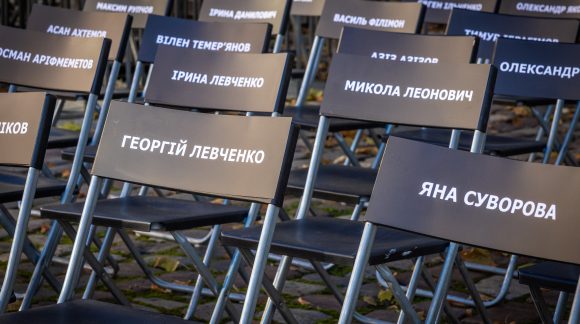
The annual human rights action Empty Chairs took place in Kyiv, Lviv, Kharkiv, and other cities in Ukraine and around the world on 15 November. It aimed to raise awareness of the Ukrainian journalists, authors, artists, and human rights activists whom Russia has unlawfully imprisoned, as well as people who have gone missing in the course of Russian aggression.
The action was timed to coincide with the International Day of the Imprisoned Writer, initiated by PEN International and marked annually on 15 November. Its key symbol was empty chairs signed with the names of those who can not be with their loved ones because of Russia’s aggression. Each chair stood for a specific person, their story, and the empty space where they should be.
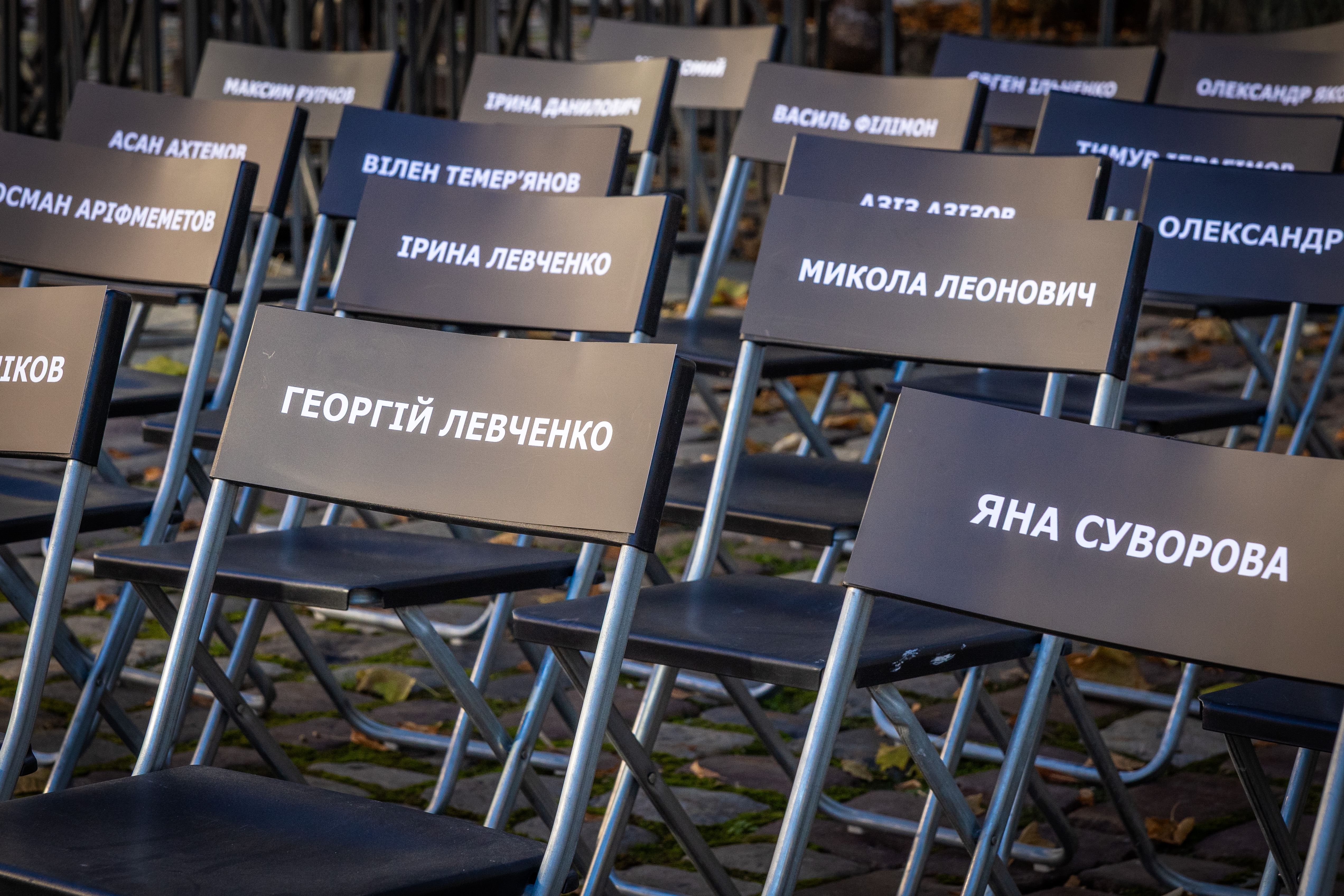
In Lviv, the event was organised by the Heorhiy Gongadze Prize, the Lviv Media Forum, and INDEX: Institute for Documentation and Interaction, and was joined by civilian survivors of Russian imprisonment, culture personalities, human rights activists.
READ MORE
- Ukrainian journalists detained by Russia: Up-to-date list
- Ethical coverage of imprisoned civilians: advice for journalists
- Human rights NGOs call for release of journalists unlawfully imprisoned by Russia
Participants spoke about their experiences in Russian prison and the persecution faced by journalists in the temporarily occupied territories, and reminded how important it is to remember the people whose whereabouts are still unknown.
Oleh Baturyn, investigative journalist from Kherson oblast and prison survivor, spoke about the persecution of local journalists by Russian occupying forces and the pressure he and his family have faced.
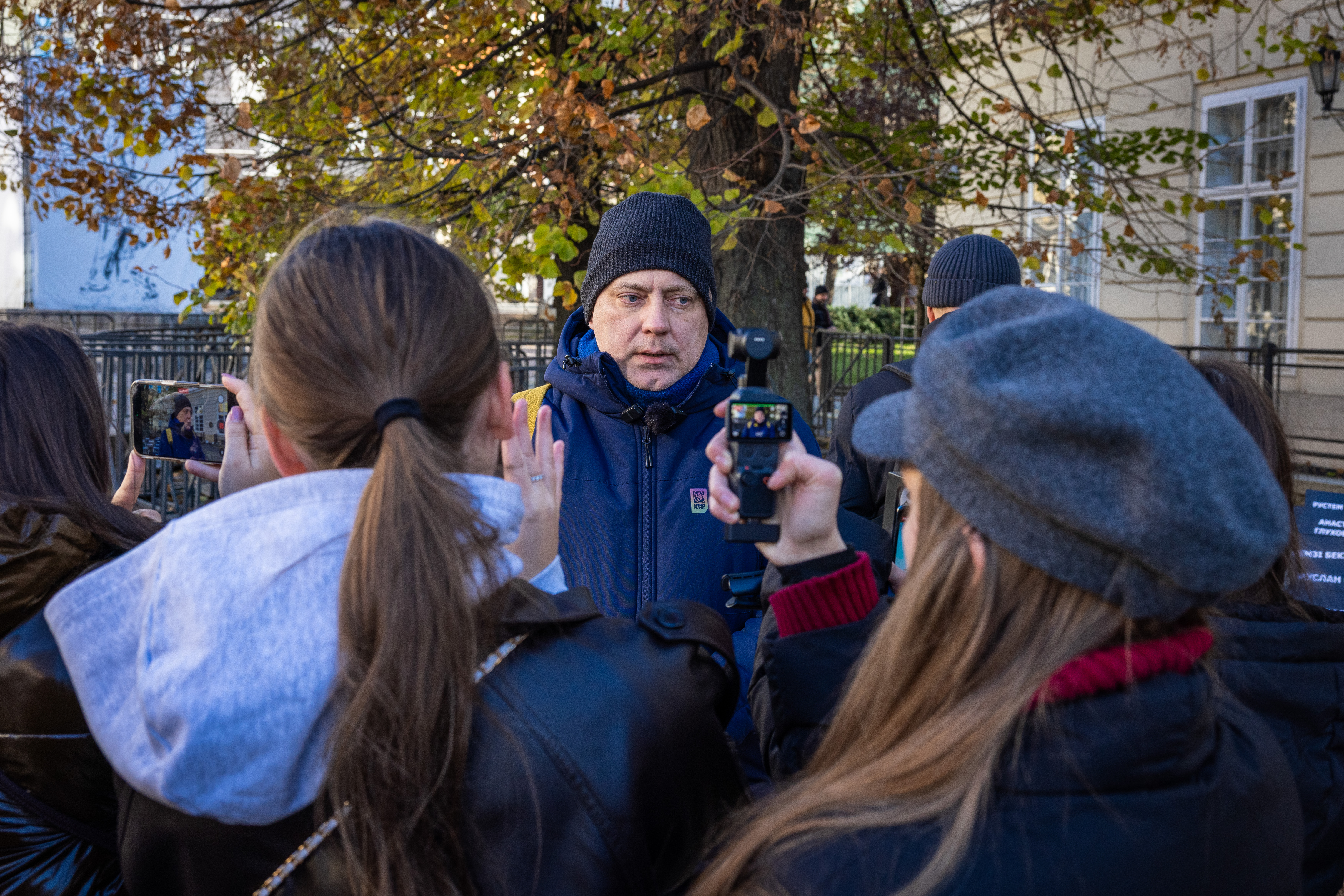
“Honestly, when this whole thing began in spring 2022, I thought I might as well say goodbye to journalism for good, because life under occupation is incompatible with this work. And a great many of our colleagues in Kherson oblast, both journalists and bloggers, had to switch professions. The main reason for this was the pressure by the Russian occupation authorities: pressure on their families, pressure on them personally by every means possible,” Oleh Baturyn said.
He added that Russian forces had abducted his parents, who had stayed under occupation, and threatened to kill them. Only a few weeks before the action did the journalist’s family manage to leave the occupied territory.
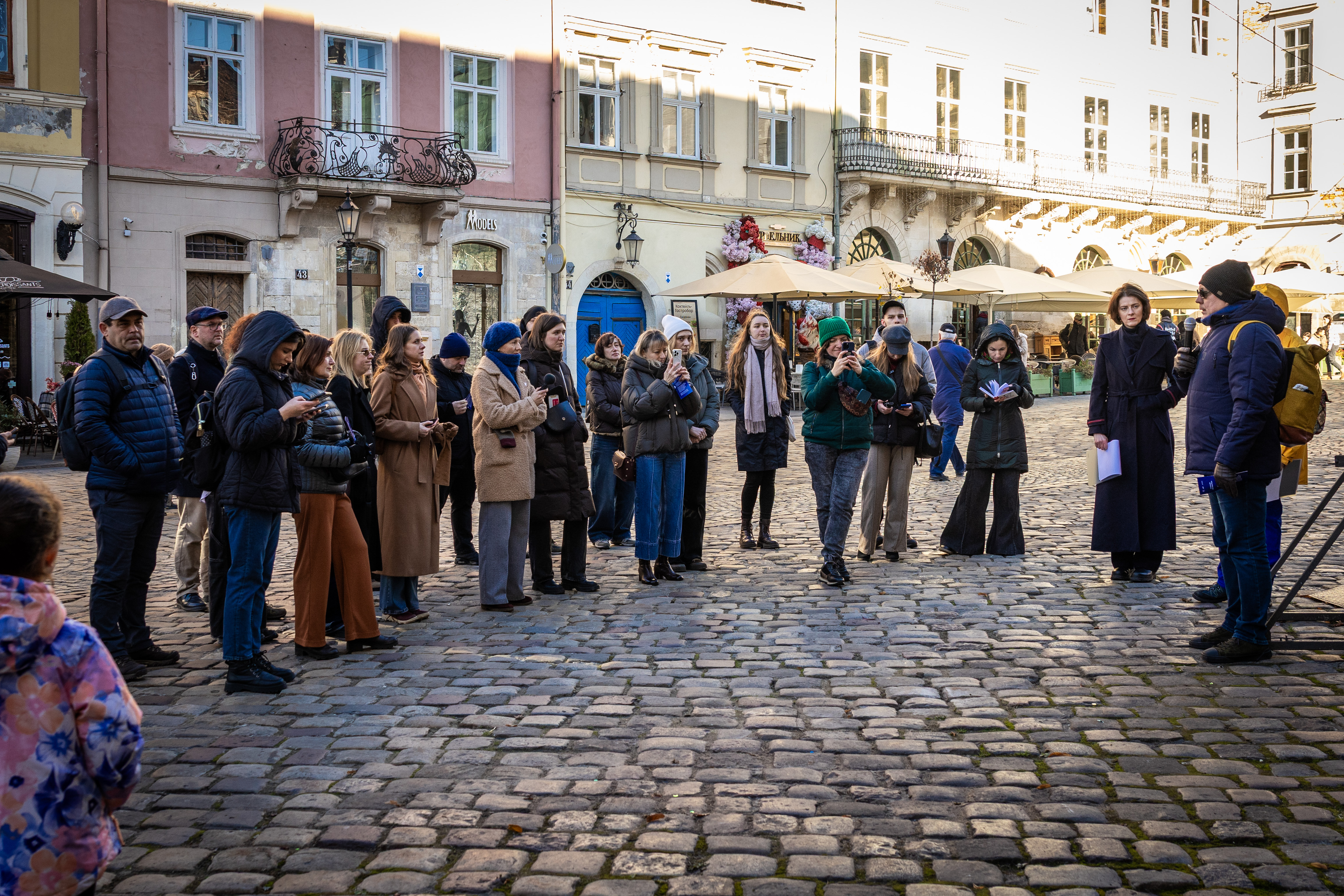
Oleh Baturyn stressed the importance of remembering the journalists who had to abandon their profession because of the persecution as well as those who remain in Russian detention today.
Translator and editor Maryna Oleksandrovych shared her personal story of waiting. Her husband Mykola Leonovych, a serviceman, poet, illustrator, and book designer, has been considered missing for over three and a half years.
“In my hands I’m holding a book of Mykola’s poetry, ‘A Slow Person’, with his illustrations. We worked with the Smoloskyp publishing house to release this book. And since Mykola went missing, it has been my dream that the book, the poetry, and the illustrations would help us learn something about Mykola, find some information, and bring him back. And this dream is quite down-to-earth,” Maryna Oleksandrovych said.
In Kyiv, the action was organised by PEN Ukraine and the Centre for Civil Liberties. It was attended by families of Ukrainian nationals who have been imprisoned or died in Russian custody, as well as detention survivors such as human rights activist and journalist Maksym Butkevych, serviceman and author Dmytro Kanuper, and former journalist Roman Borshch.
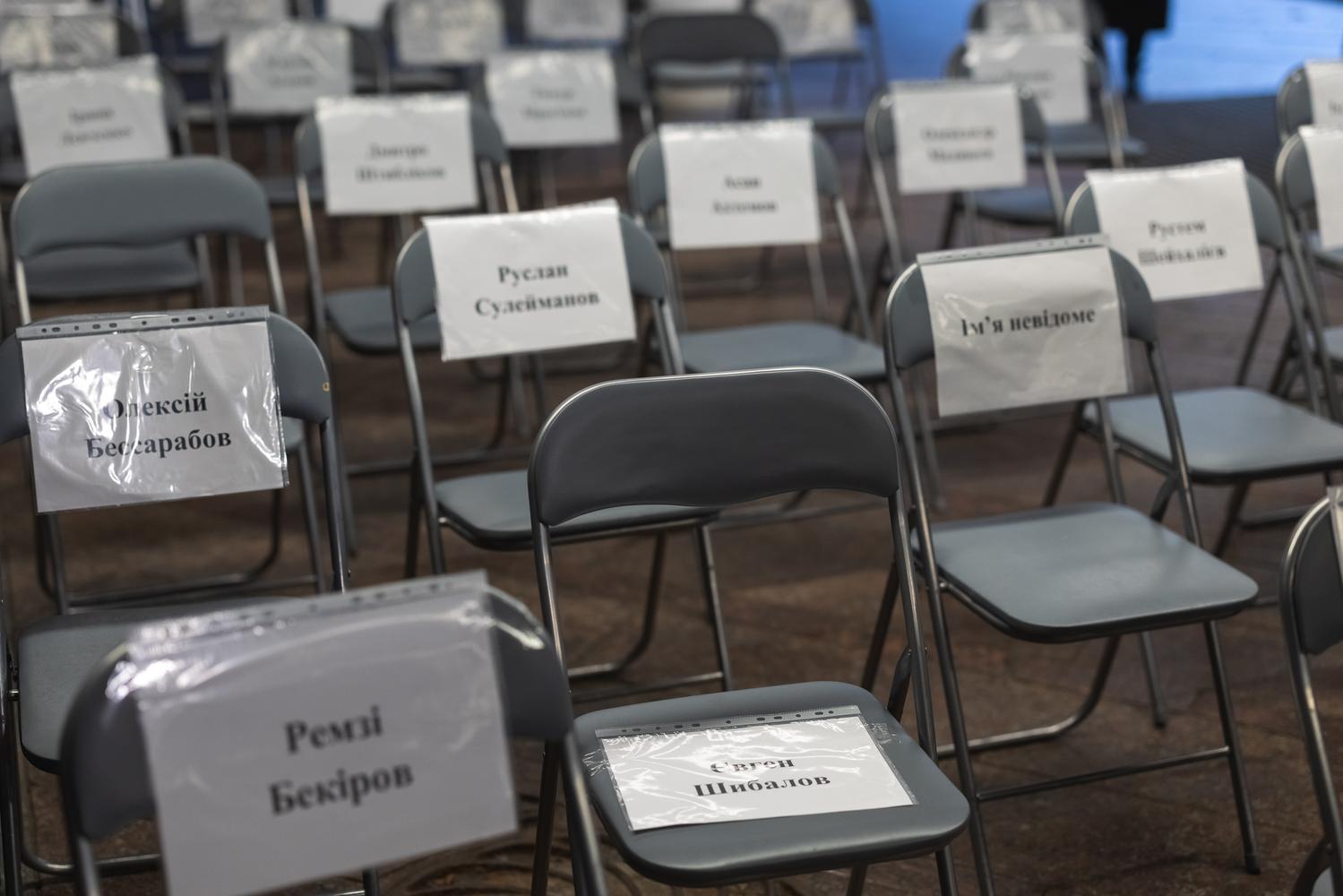
According to the Institute of Mass Information, at least 27 Ukrainian civilians working in media and one journalist turned serviceman remained in Russian custody as of 2 November 2026.
According to Ukraine’s Ministry of Culture, 21 culture sector workers were imprisoned by Russia and 111 more were considered missing as of the third quarter of 2026.
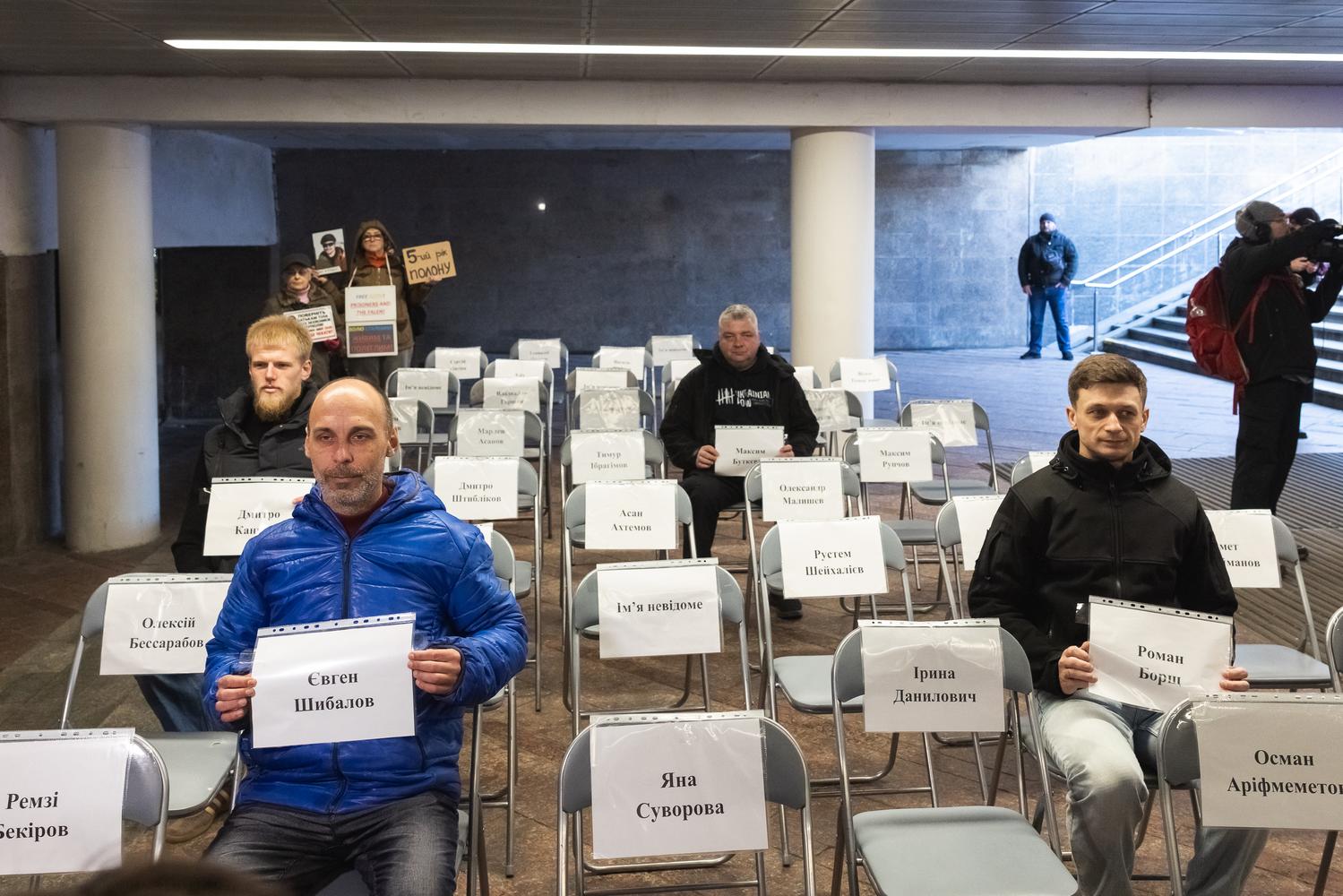
The action’s media partners included Chytomo, Ukrainska Pravda, UP.Zhyttia, Ukrinform, hromadske, The Ukrainians Media, the Institute of Mass Information, Detector Media, and the Commission on Journalism Ethics.