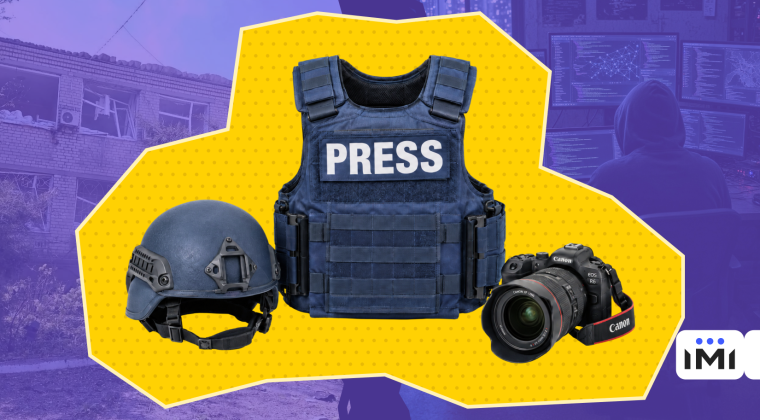
Every news story from the battlefield in Ukraine costs more than the last. International humanitarian law is failing to keep pace in protecting reporters who have become targets for Russian drones equipped with cameras, while newsrooms on the homefront are facing judicial pressure from the subjects of their reporting.
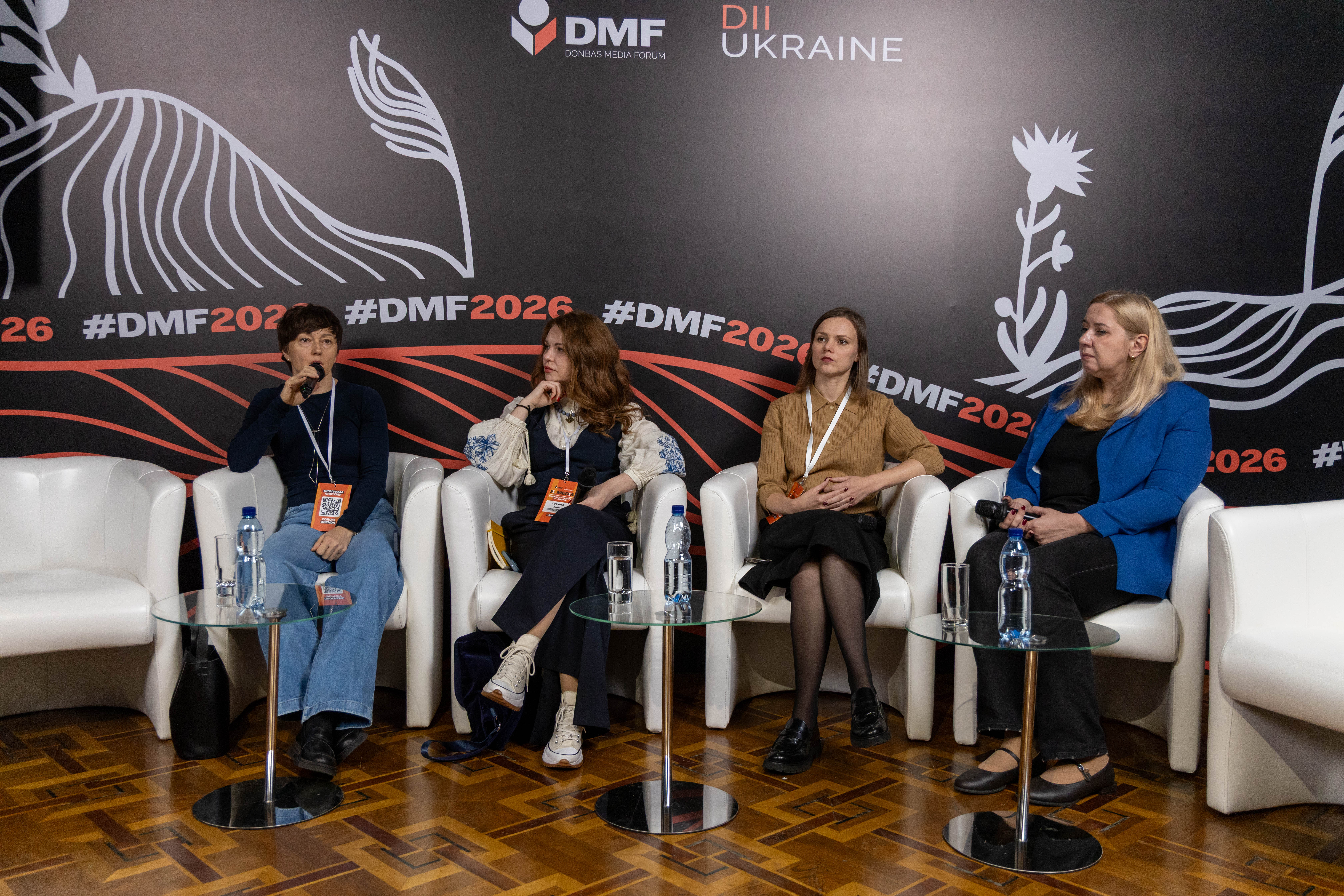
The Institute of Mass Information held a panel discussion “I Am the Media, Not a Target: Freedom of Speech, Its Price, and New Challenges” as part of Donbas Media Forum 2026 on 9 October.
Key conclusions
- A revival of solidarity among news outlets is needed. “Initiative 143” showed that journalists can resist pressure together.
- As the cost of news reports grows, there will be fewer of them. Without funding, media outlets risk losing the capacity to send reporters out to frontline towns and to show Russia’s crimes.
- International humanitarian law needs to change. In its current form, it does not protect journalists from Russian drones.
- Parliament should do more to protect journalists’ rights, including adopting draft bill No. 16117 on protection against frivolous lawsuits.
- Both domestic pressure on journalists and pressure from Russia are growing. IMI has recorded nearly 1,000 Russian crimes against the media and an increasing number of SLAPP suits against Ukrainian journalists.
Crimes against media on the rise
Ukraine moved up in the World Press Freedom Index by Reporters Without Borders in 2026, Institute of Mass Information Director Oksana Romaniuk recalled. However, she is less optimistic about next year. IMI is recording a spike in the crimes against journalists committed by Russian forces and Ukrainian nationals alike.
IMI’s monitoring study has recorded 977 Russian crimes against journalists and media since 2022. 139 media workers have died in the course of the war, with 15 being killed while reporting. On 24 occasions, Russians have targeted TV towers in air strikes to deprive Ukrainians of access to information; newsroom offices have been damaged by shelling 109 times, and 338 media outlets have halted operations or shut down permanently as a result of the war.
“We hope that one day this data will help convict Russian criminals in an international tribunal,” Oksana Romaniuk remarked.
Drones, the kill zone, new safety protocols
Russia’s crimes against the media recorded by IMI include killing and injuring journalists, air strikes, detentions, and cyberattacks, remarked Kateryna Diachuk, the Institute of Mass Information’s chief of press freedom monitoring. Air strikes on media offices have particularly intensified this year, forcing journalists to relocate or close their outlets, resulting in frontline communities losing their local media.
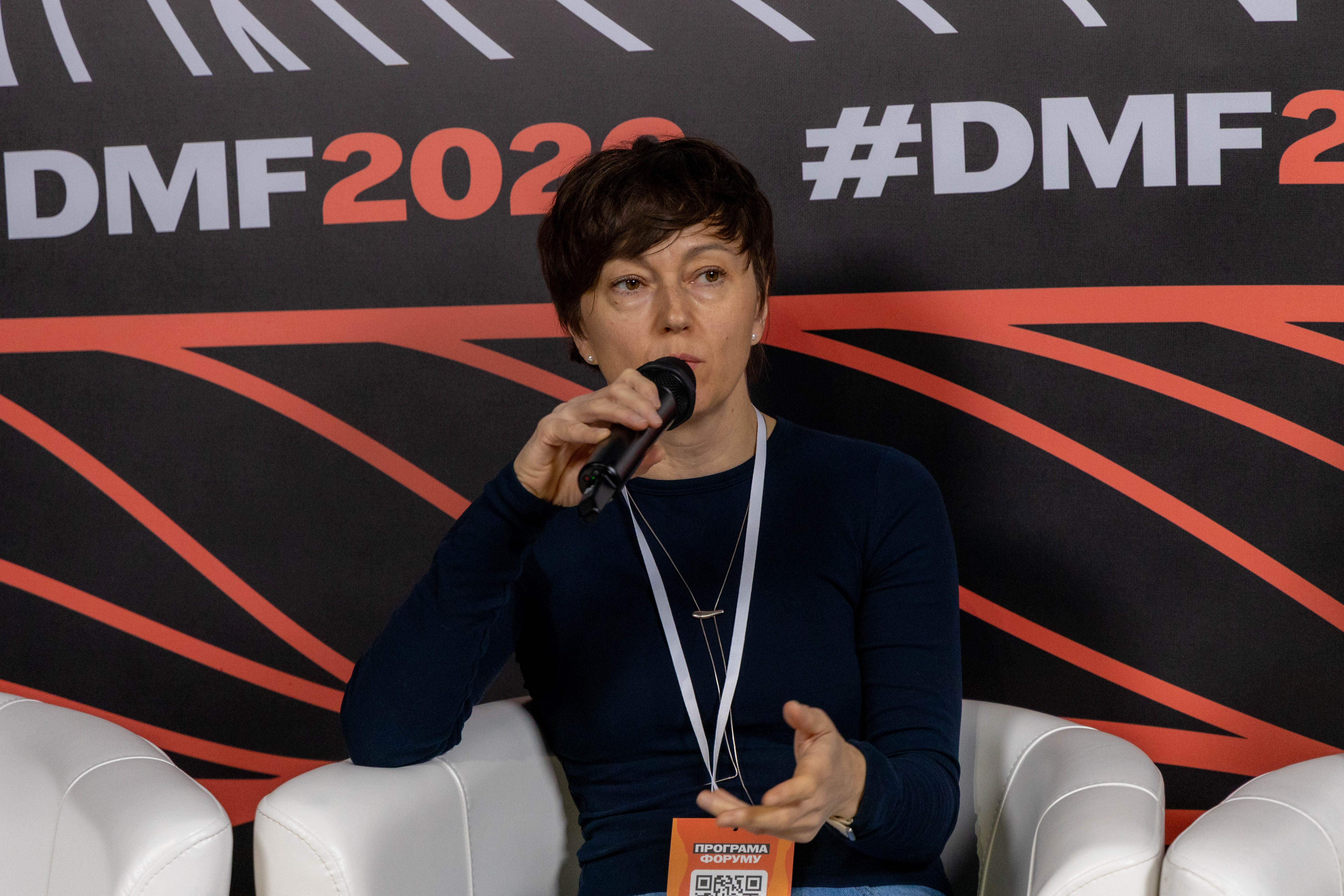
IMI recorded the deaths of three journalists caused by Russian drone strikes last year: French photojournalist Antoni Lallican and two reporters with Freedom TV, Alyona Hubanova and Yevhen Karmazin, who were hit by a Lancet near a petrol station.
Journalists are changing their working protocols. Kateryna Diachuk said that her colleagues in Kharkiv did not linger at petrol stations and many reporters had abandoned their PRESS insignia, since the Russians are using FPV drones to hunt journalists down.
Yulia Surkova, journalist and producer for foreign media outlets, said that the kill zone was expanding and every reporting trip took careful planning.
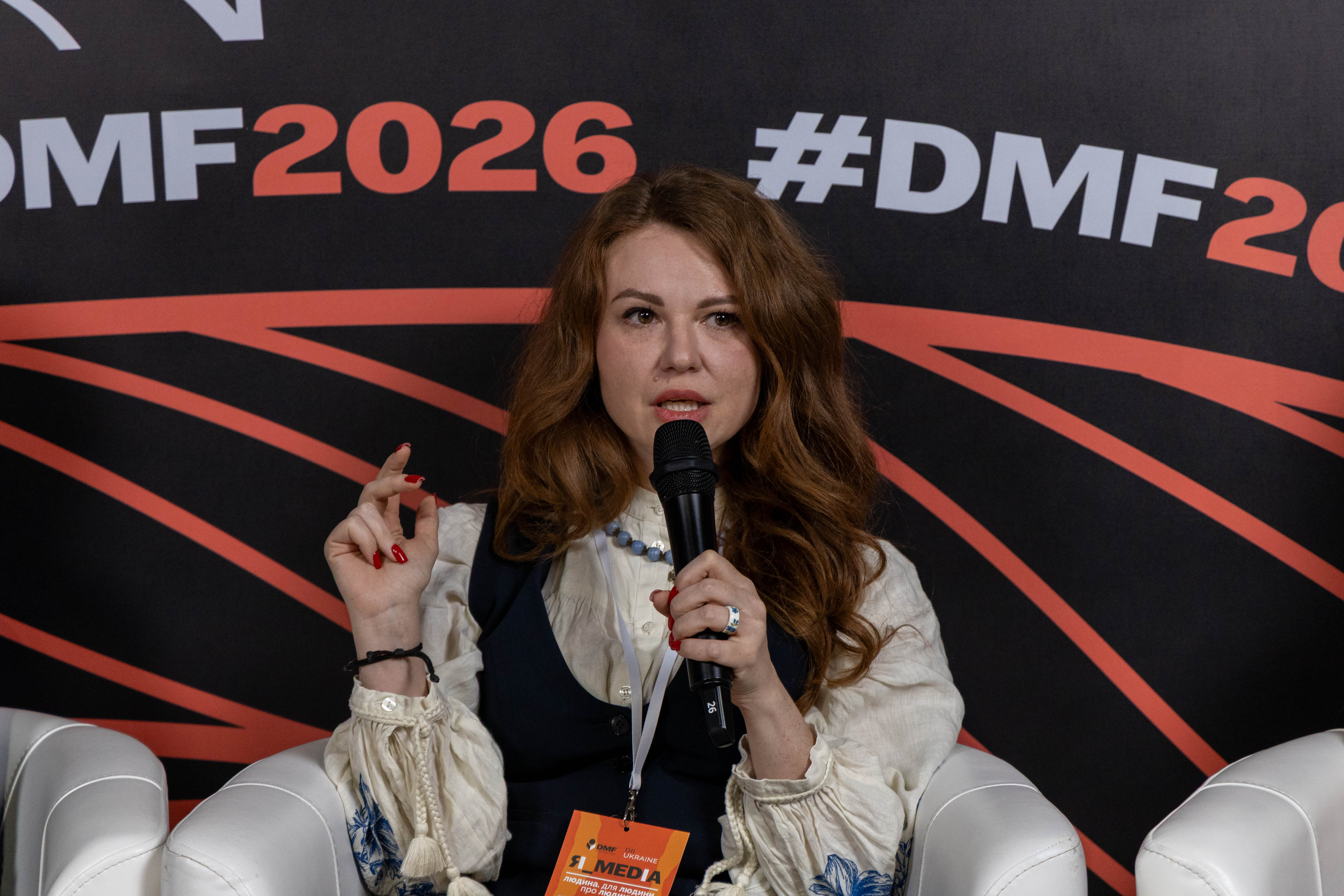
“Yes, we don’t use petrol stations in the kill zone, and fill up elsewhere in advance. We have stopped staying in hotels in frontline cities very long ago. For example, last time I went to report from Kramatorsk and Sloviansk, I travelled for three hours each day,” Yulia Surkova added.
International humanitarian law fails to keep pace with the war
IMI has repeatedly told international partners that international humanitarian law as it was created after the Second World War does not meet today’s challenges. By the rules, a reporter must be wearing PRESS labels, and the international community still fears that using protective equipment could make a journalist equal to a combatant.
“Drone detectors or anti-drone rifles are a journalist’s right to self-defense. They are not weapons. A journalist must survive. But what we end up doing is paying beautiful tributes to a deceased journalist and allocating money for their memorial while changing nothing,” Kateryna Diachuk said.
Yulia Surkova agreed that the war reporting of today was an occupation completely different from the war reporting of 2014. She said that whenever she gave lectures abroad, she asked students to describe a war journalist, and they described a person in a blue flak jacket signed PRESS, standing at full height on the front line and able to work on both sides of the front.
“Well, that person has died in this war. That kind of journalist is no more,” she said.
Surkova added that international media outlets often refused to use electronic warfare (EW) systems not just because of the price (around 15,000 euros), but also for ethical reasons: if a downed drone falls on civilian infrastructure, who is responsible?
“Turns out that it’s ethical for a reporter to die from a Russian FPV drone but not very ethical for them to use a drone detector,” Yulia Surkova concluded.
Journalists saving lives
Not long ago, Yulia Surkova and her colleague Kristina Berdynskykh administered first aid in a café in central Kyiv to a passer-by who had been injured in a Russian jet-powered drone strike nearby.
“I went out to get coffee with a friend, and at that moment a jet drone hit a building in central Kyiv 200 metres away from us. I had to help an ordinary civilian who had been walking by. Goes to show that we’re all targets now, and not even because we’re journalists, but simply because we’re Ukrainians,” Yulia said.
Oksana Romaniuk reminded that IMI offers first aid kits and tourniquets to journalists and the equipment tends to run out quickly because media workers in frontline cities use them to save the wounded.
In addition, the Institute of Mass Information is launching a series of first aid classes media professionals who are not war reporters but work in cities and regions constantly targeted in air strikes.
Access to strike sites depends on local authorities
Yulia Surkova said that journalists’ access to strike sites depends on local authorities even in relatively safe cities. In Poltava, she was not allowed to film despite having accreditation from the UAF. In Kyiv, the situation changes between strikes and the police do not always grant proper access. Still, she praised the effective cooperation with the DSNS press service.
The journalist also pointed to a practice of only allowing journalists to approach the destruction site while officials are present.
“Sometimes representatives of the authorities or the Ministry of Internal Affairs turn up, and while they are on site, journalists can get right up to the wreckage and take photos. Then those representatives leave, everything is cordoned off with tape, and you can no longer work there,” Yulia said.
Between investigating war crimes and overseeing the government
Anna Babinets, head of the investigative journalism agency Slidstvo.Info, said that her newsroom tried to maintain a roughly 50/50 balance between coverage of Russian war crimes and oversight of those in power. At the start of the full-scale invasion, the team, which had released investigations into Kyrylo Budanov and Volodymyr Zelensky’s offshore holdings shortly before, shifted their focus towards identifying Russian servicemembers committing war crimes in Ukraine. The journalists also taught prosecutors the identification methods they had previously been taught by Bellingcat.
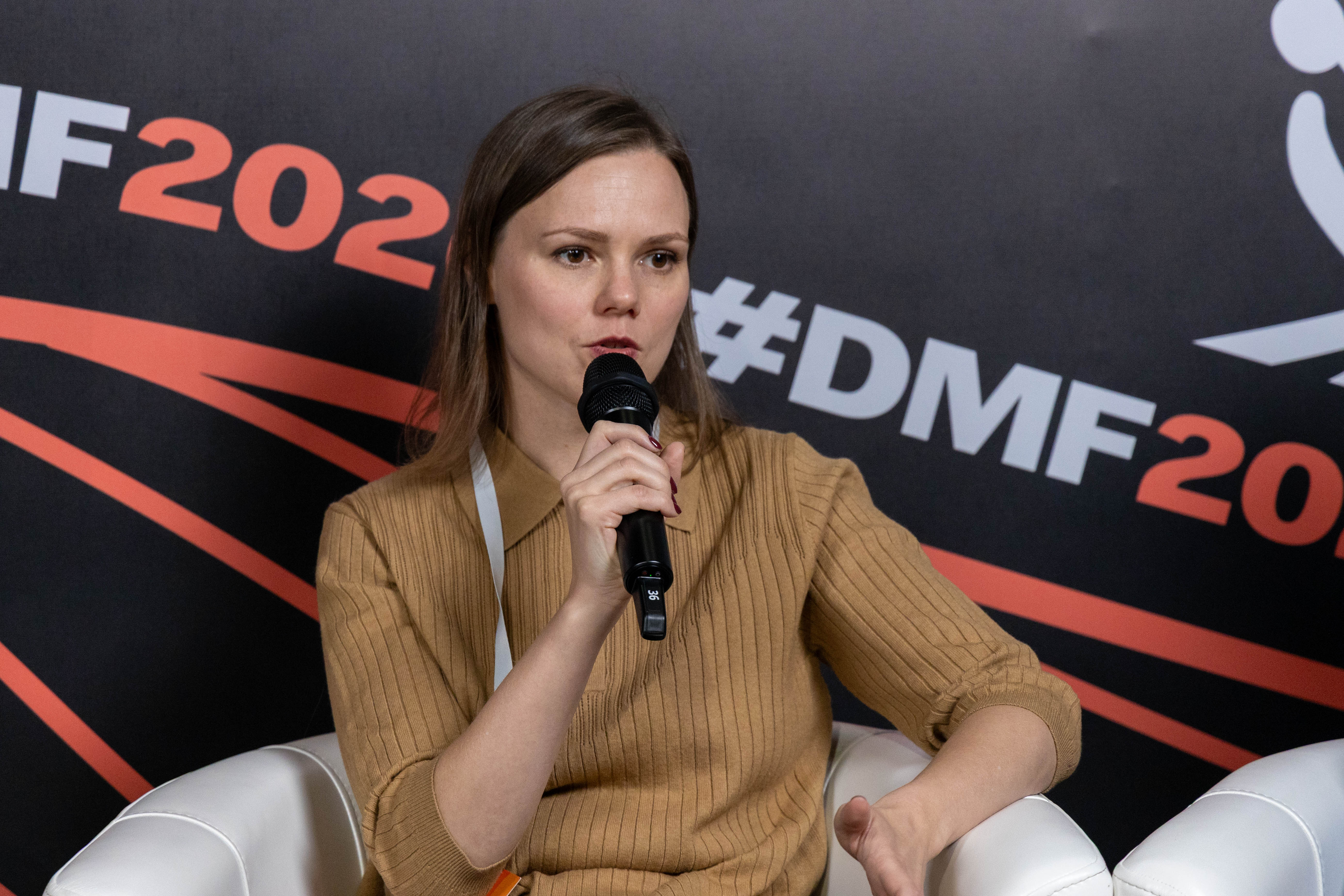
“There is a certain public consensus that we have to keep a very close eye on those in power. When the money the state receives, be it from the budget, taxes, or international donors, is spent effectively and buys not 100 drones but 1,000 drones, that gives all of us a better chance of surviving and winning this war,” Babinets explained.
SLAPP suits and solitarity between newsrooms
Oksana Romaniuk reported that judicial pressure on media was on the rise, in particular on investigative journalists covering corruption. This year, IMI recorded nine SLAPP suits for sums in the millions, which aimed not to achieve justice but to exert pressure on journalists. There were no more than five such cases the year before.
The task force under the Verkhovna Rada Committee on Freedom of Speech, which first convened in 2023, has drafted an anti-SLAPP bill, which has already been registered in parliament. “When this task force first started, there were only a handful of such lawsuits. And then they began to multiply,” Oksana Romaniuk said. She stressed that parliament must show agency and pass the draft bill.
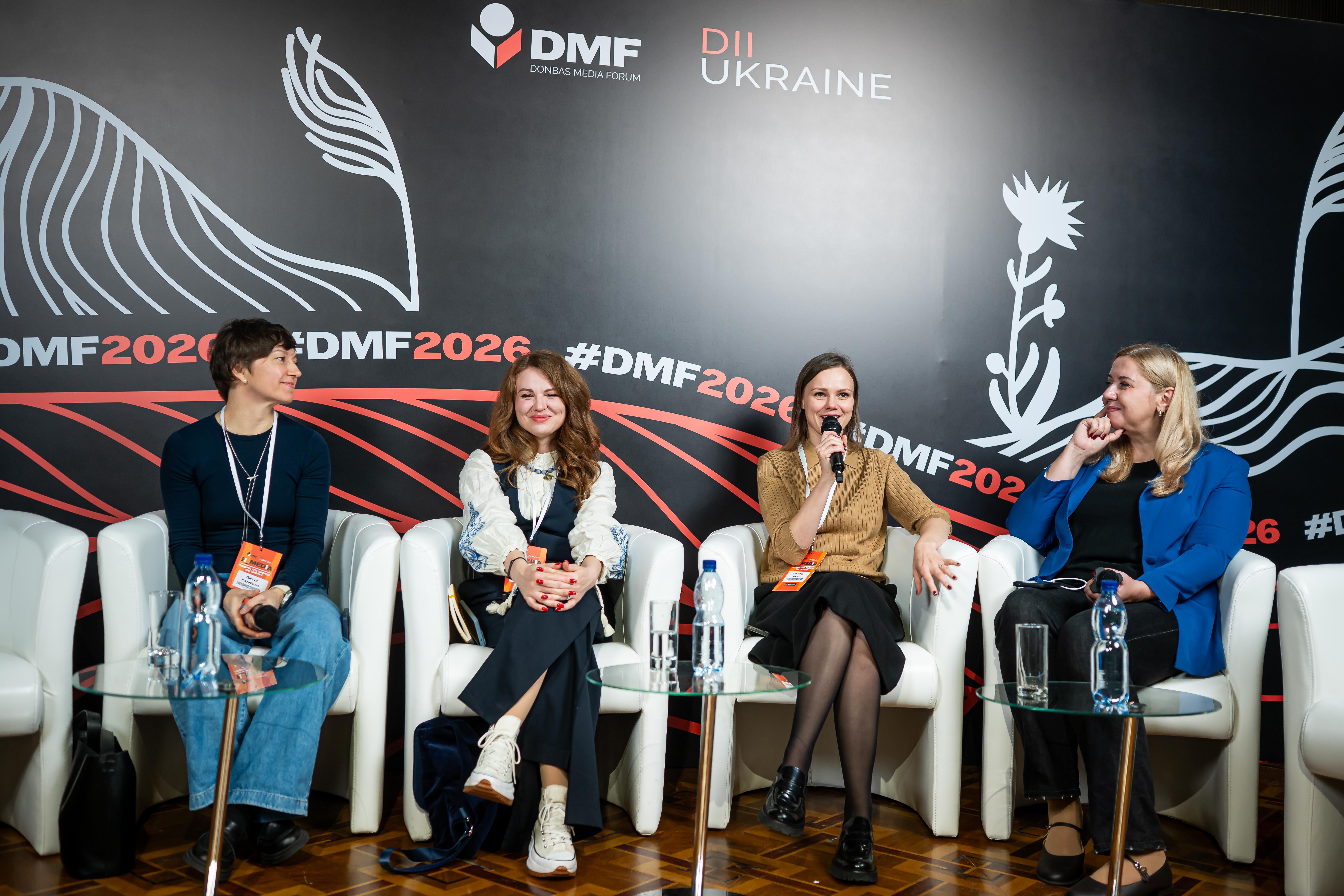
Anna Babinets gave an example of how media solidarity turned a court ban against the plaintiffs. After the court barred Slidstvo.Info and the Anti-Corruption Action Centre from releasing an investigation into the 143 flats owned by the brother of the State Bureau of Investigation director, eight leading Ukrainian news outlets published it in their place, and were later joined by 30 more.
“Normally, an investigation like this would be viewed by a few hundred thousand people. Over four to five days, in just those outlets whose statistics we collected, there were more than 5 million views,” Anna Babinets said.
The cost of reporting and working with international media
Yulia Surkova stressed that, besides solidarity, journalists needed funding.
“It’s getting harder to reach the front line, and every report is becoming more expensive. I calculated the cost of my last trip to Kherson: it came to 1,000 euros. And we’re not talking comfort, I slept on the bus. You have to buy tickets and petrol, hire a driver to take you around the city, and get a drone detector, a net gun, a few other things. And all journalists are saying this: every trip and every report is becoming more expensive,” Yulia said.
She advised Ukrainian journalists looking for international partners to pay attention to media outlets that are lesser known but share pro-Ukrainian views. “You don’t want to be reading your own material in some Pulitzer Prize-winning super-outlet with comments from the Kremlin added for objectivity,” she remarked.
The Institute of Mass Information (IMI) is a civil society organization specializing in the media, operating since 1996. IMI defends the rights of journalists, studies the media landscape and reports on media-related events, fights propaganda and disinformation, and provides media workers with safety equipment for trips to combat areas (since the start of the Russo–Ukrainian war in 2014).
IMI carries out the only monitoring study of freedom of speech in Ukraine, keeps a list of transparent and responsible online media outlets, and tracks Russia’s media crimes in the war on Ukraine. IMI has representatives in 20 oblasts of Ukraine and runs a network of Media Hubs that provide journalists with unfailing support. IMI’s partners include Reporters Without Borders (RSF); the organization is also a member of the International Freedom of Expression Exchange (IFEX).