
Had his story come out a few days earlier, it would have opened by saying that the Institute of Mass Information’s (IMI) Mediabaza network includes 15 regional hubs. However, the Russian drone attack on Dnipro city on 17 November destroyed the building that housed Mediabaza Dnipro. Still, we have chosen to keep the number at 15. After all, Mediabazas are much more than just rooms. And even if journalists will no longer be able to take interviews or offline classes at the Mediabaza in the near future, all the values, support, and the community of media professionals that emerged around Mediabaza Dnipro are still there.
We are grateful to everyone who offered us help and words of support in these days. Soon we will report the losses our plan for recovery, which anyone willing can join. Mediabaza Dnipro will persevere. In the meantime, we want to tell you what support we have been able to offer journalists over the three years of the IMI Mediabaza network’s existence.
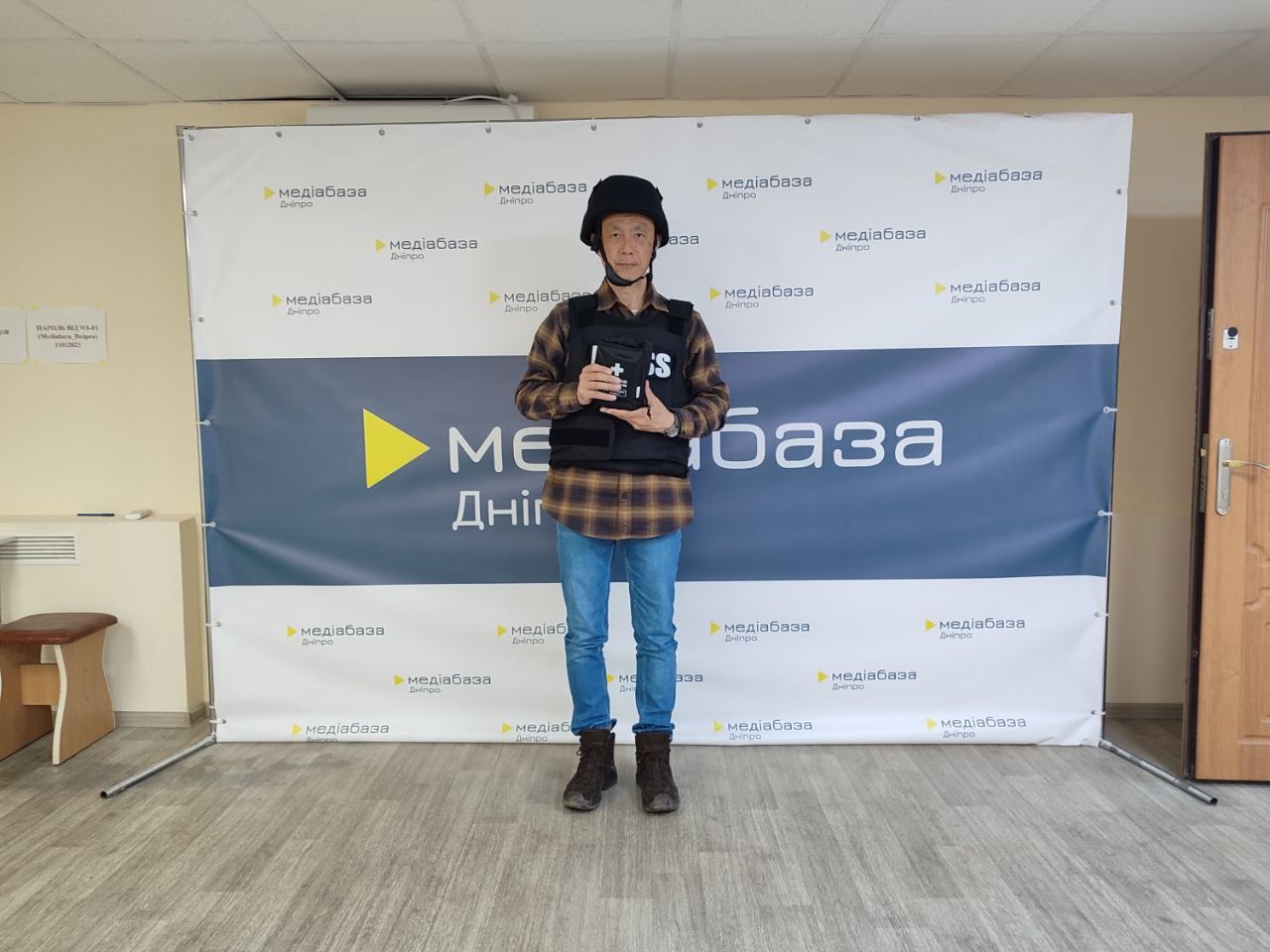
A journalist with safety gear received at Mediabaza Dnipro. Photo by Mediabaza Dnipro
Having started with hubs in 10 regions in 2022, we have expanded to 15 hubs as of November 2025 (with Mediabaza Sumy founded in 2023, Mediabaza Slovyansk and Mediabaza Chernivtsi in 2024, and Mediabaza Cherkasy and Mediabaza Khmelnytskyi starting operations in 2025).
Over the three years of their work, the Mediebazas have hosted 631 training and networking events, which were attended by more than 10 thousand people. The Mediabazas were used as co-working spaces 6305 times. Media professionals leased safety gear or technical equipment there free of charge 660 times.
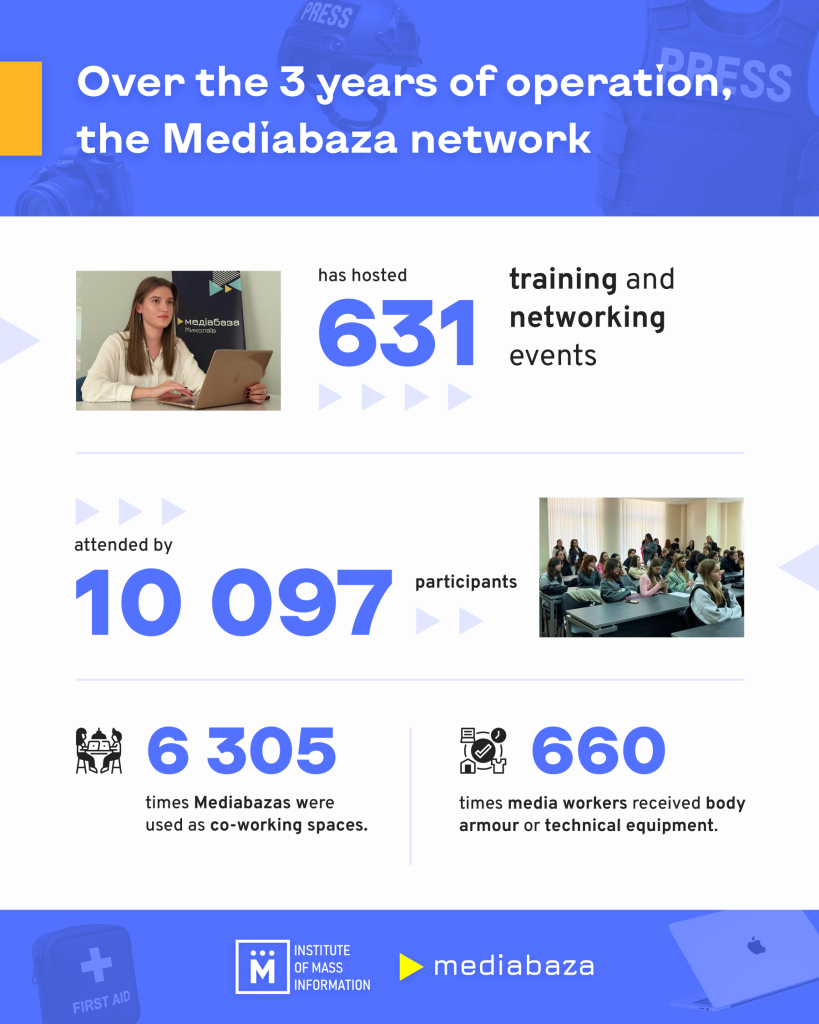
IMI’s hub network
Classes, webinars, lectures, retreats, and other events organised by the Mediabazas were attended by employees of several hundred Ukrainian news outlets such as LIGA.net, Vechirniy Kyiv, Suspilne Cherkasy, KyivVlada, Slobidskyi Krai, Vilne Radio, Chetverta Vlada, Localna Istoriya, Channel 5, Radio 10, KibOrg, Kordon.Media, Dnipro.Media, Intent, Cherkasy’s Independent Media Outlet 18000, SODA, RIO-Berdychiv, TRYBUN, BC Rudana, ICTV TV, Vechirni Cherkasy, Nakypilo, Persha Elektronna Hazeta, Bukvy, Tochka Dostupu, Kunsht, Syla Pravdy, 1+1, Gvara, and many others.
Safety gear provided by the Mediabazas has been used by representatives of international publications such as Paz en construccion, Correio da Manhã, Tidningen Vi, Mladina, YLE, La Repubblica, Altra Economia, The Telegraph Magazine, Forsvarets forum, FAMO Praha, France Televisions, Luci Nul Mondo, Danish Radio, Danish Broadcasting Corporation, etc.
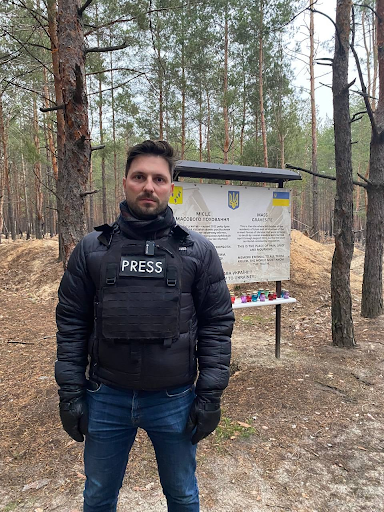
YLE reporter Justas Stasevskij. Photo by Mediabaza Kharkiv
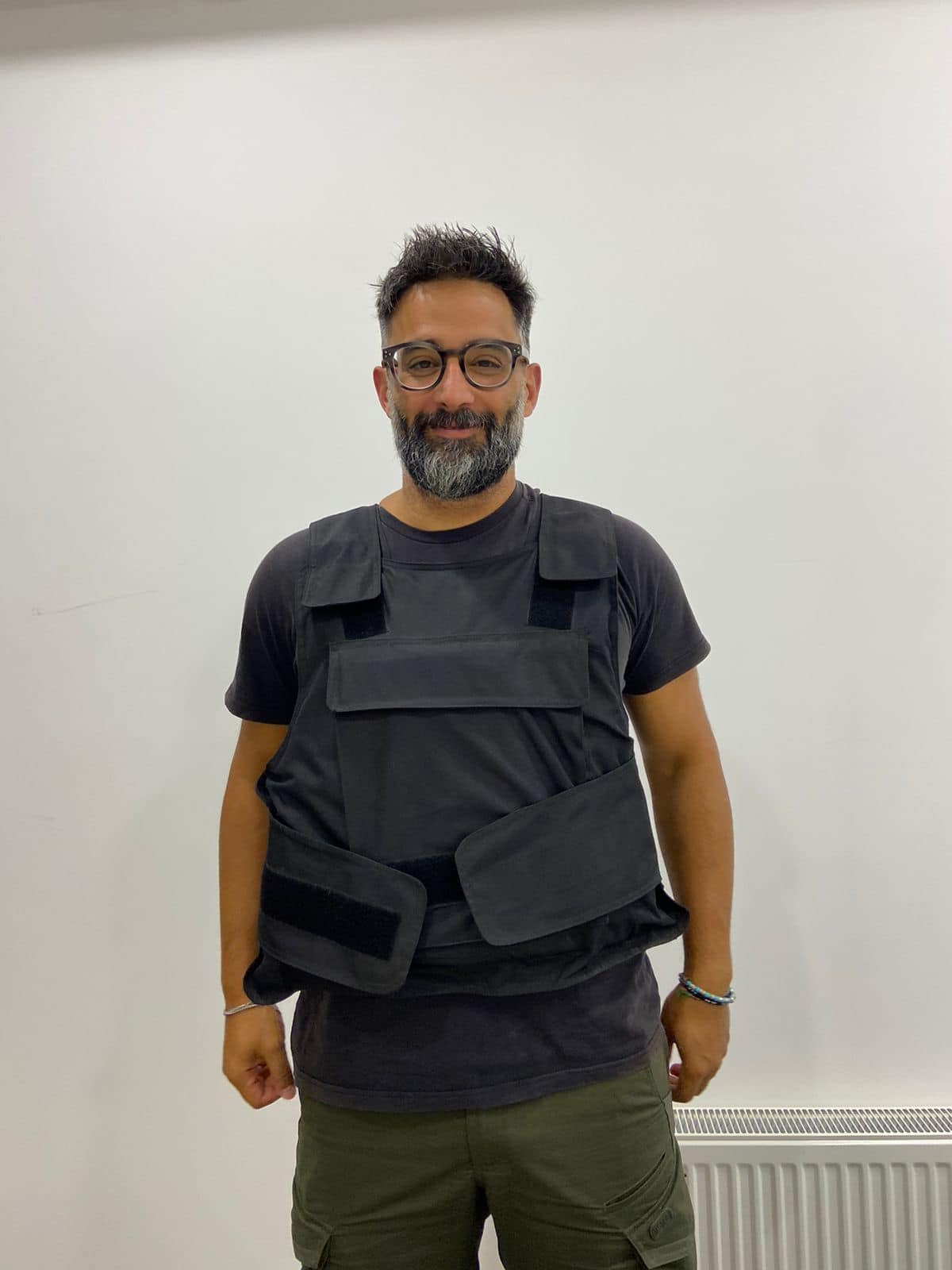
Italian journalist Jozsef Makai wearing body armour provided by IMI. Photo by Mediabaza Odesa / Kherson
Working during blackouts
During blackouts (or whenever you might need a place to work), the Mediabazas offer co-working spaces, connectivity, access to the Internet and power equipment. In the three years since the Mediabazas’ opening, journalists have made use of those 6,305 times. 2023, the year of the first blackouts, saw most of that: 3,791 times. This was especially helpful for media workers in Zaporizhzhia, Kharkiv, Poltava, and Sumy.
March 2024, when Mediabaza Kharkiv enabled about 25 journalists from Suspilne Kharkiv, Ukrainski Novyny Nakypilo, Kharkiv Today, Freedom TV, Holovne v Ukraini, 1+1 (TSN), Radio Free Europe / Radio Liberty, and Channel 5 to work during blackouts, is also worth mentioning.
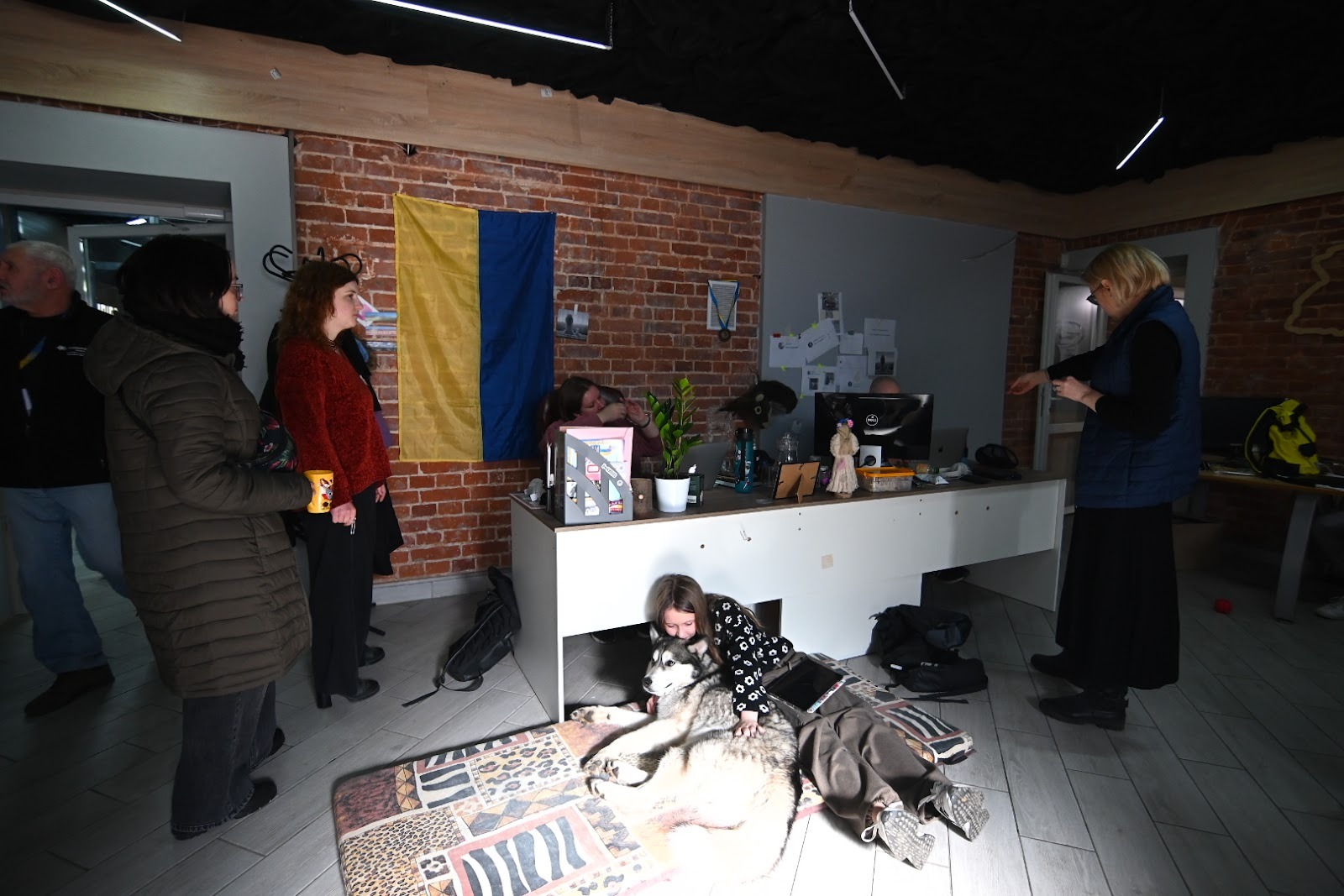
Journalists working in Mediabaza Kharkiv. Photo by Ihor Leptuha
And just a few weeks later, again in Kharkiv, a helmet and bulletproof vest provided by the Mediabaza saved the life of Nakypilo reporter Viktor Pichuhin during an intense Russian drone strike.
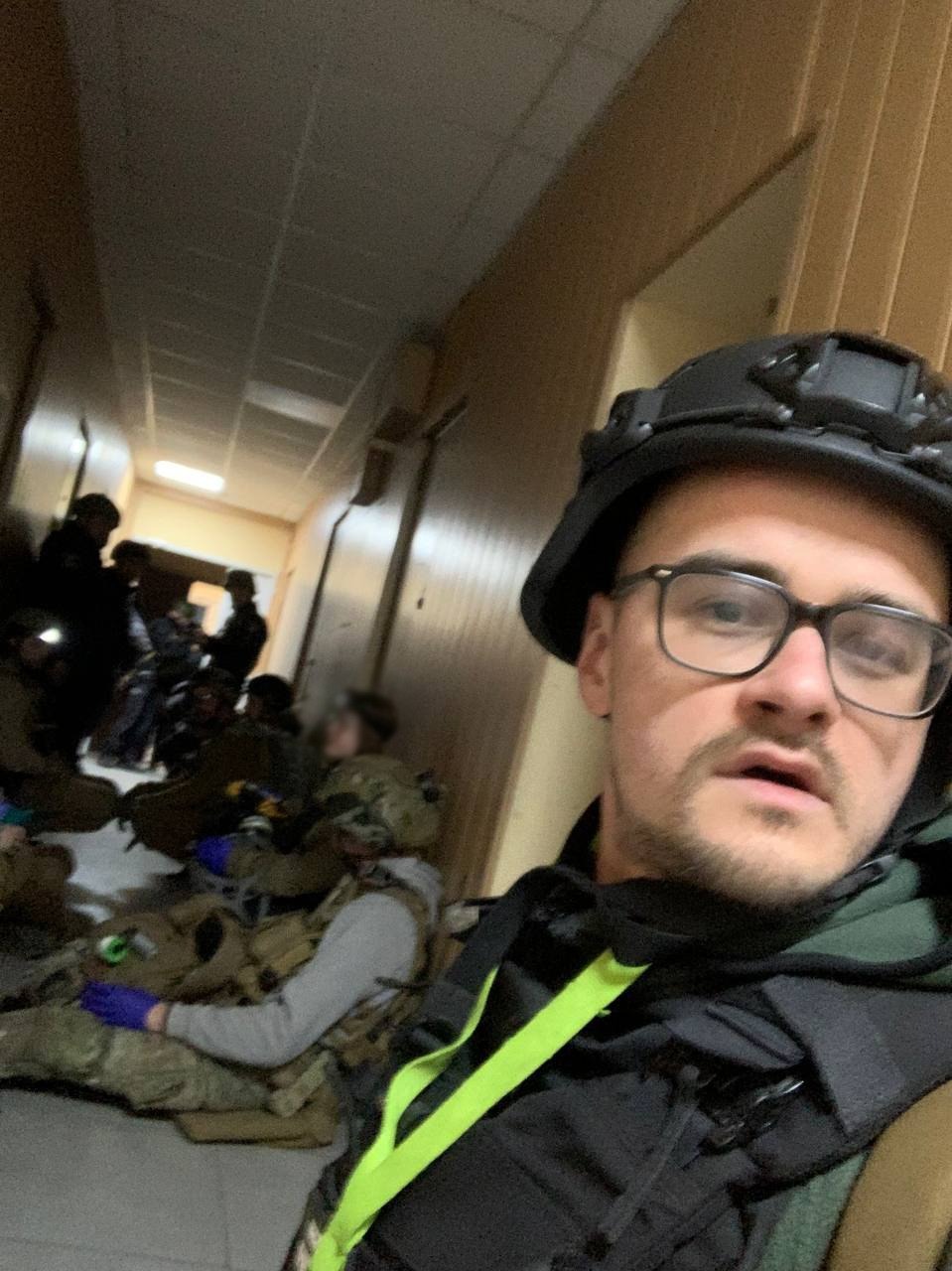
Viktor Pichuhin in a bomb shelter, wearing body armour provided by IMI. Photo by Viktor Pichuhin
Mediabazas defending freedom of speech
Over the past three years, the Mediabazas hosted 161 networking events focusing on helping media outlets expand in new directions, mental health recovery, creating associations between media teams, and platforming the dialogue between the media and the authorities.
For isntance, Mediabaza Poltava has become a communication platform for a joint project by Poltava news outlets fighting disinformation and fake news. The collaboration resulted in a group chat where journalists prepare materials to combat Russian disinformation and psy-ops together with the information department of the Poltava Oblast Military Administration (OMA). Moreover, Mediabaza Poltava hosted a meeting with the City Council following which the Council promised to post reports regularly, and one with a Human Rights Commissioner’s representative, who assured that he would assist Poltava media workers with access to information.
Mediabaza Khmelnytskyi has also been effective in establishing a dialogue between media and the authorities since its opening in early 2025. The hub co-organised two off-the-record events. The first one took place in February at the Khmelnytskyi OMA and was attended by the administration’s top officials, top officials and spokespeople of law enforcement bodies (the National Police, the oblast prosecutor’s office, the Security Service of Ukraine), as well as top officials of the Khmelnytskyi oblast enlistment centre and the Emergency Service.
The second meeting took place in May and involved representatives of the city, district, and appeal courts in the oblast. After this meeting, a special private group chat for communication between media workers and the courts was created. The parties also agreed on basic rules for prompt and safe interaction, which improves the quality of reporting to the audience and reduces disinformation risks.
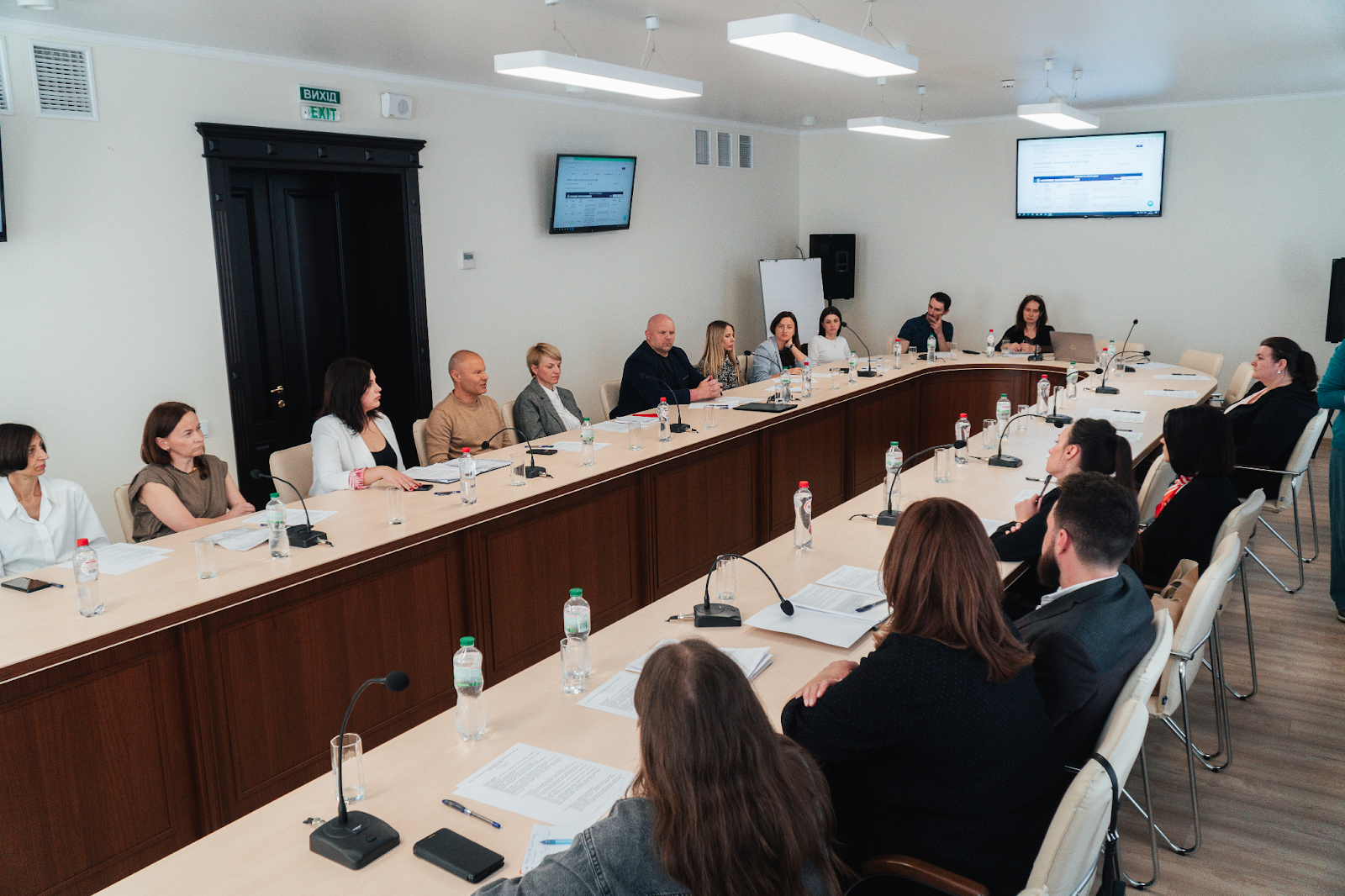
Media workers and local authorities’ representatives at the meeting initiated by Mediabaza Khmelnytskyi
The Mediabazas responded to Russia’s strikes at the energy sector and the safety risks: infrastructure assistance quickly turned into content and guaranteed the media’s presence in local communities.
Part of the Bilopilshchyna team (newspaper from Sumy’s Bilopillya city, relocated due to intensified Russian shelling) has been working at the Mediabaza Sumy office since May 2025. Here, the team writes and typesets new issues of Bilopilshchyna, Spilnopillya (for communities that used to be part of the Bilopillya and Krasnopillya districts prior to the administrative reform), and Visnyk Hromad Sumyshchyny (a joint project by the Ministry of Culture and Bilopillya community).
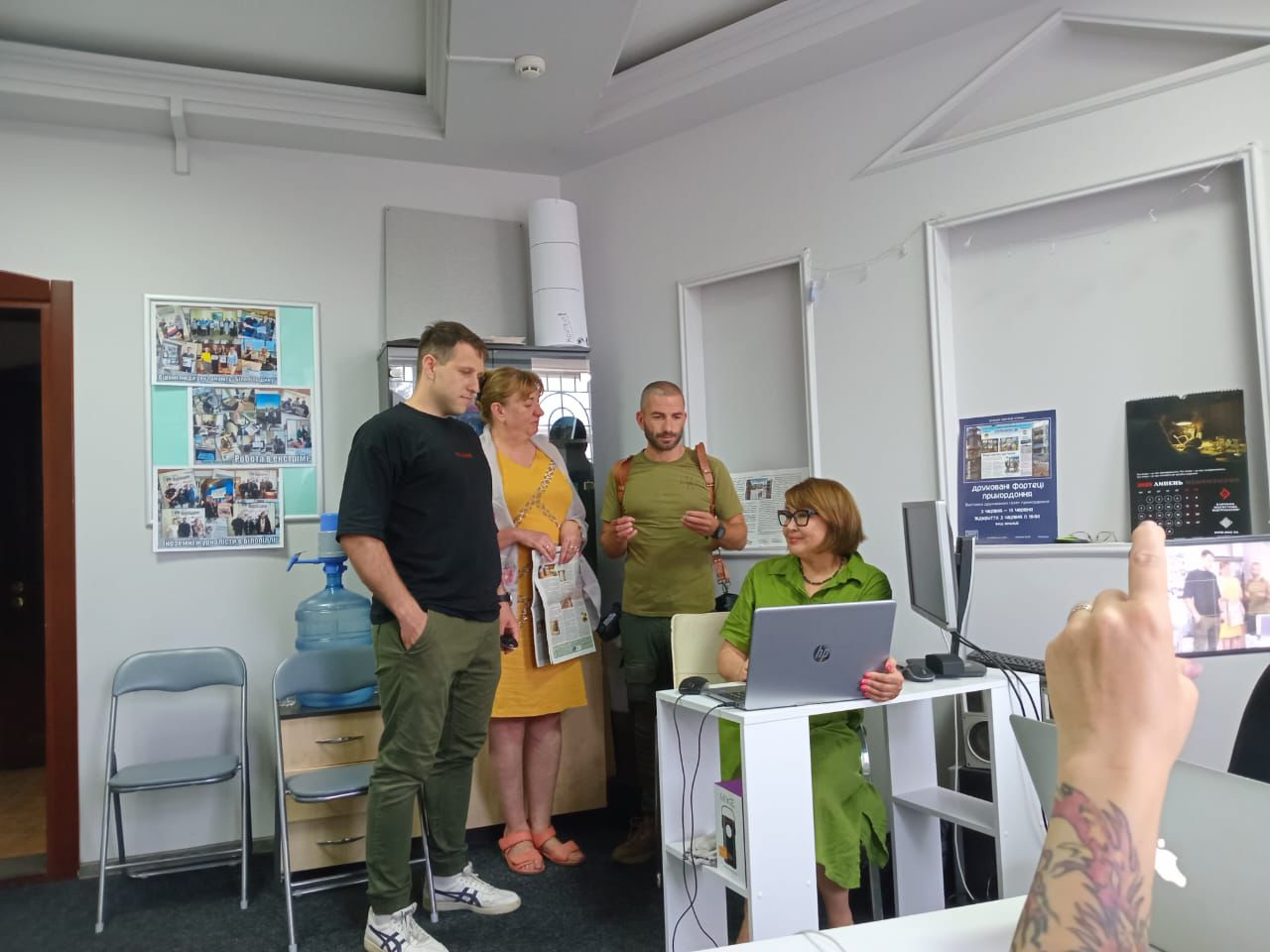
Natalia Kalenichenko, Bilopilshchyna team, and local volunteers at the Mediabaza Sumy office
Besides Bilopilshchyna, the Mediabaza office is sometimes used by Larysa Yakubenko, representative of the National Council for Television and Radio Broadcasting, and her assistant Yulia Nikolayeva. They used to have an office in the Sumy Oblast Administration. However, a Russian drone strike at the building in July 2025 significantly damaged the office. So now the National Council is advising journalists in the oblast on additional development opportunities and updates the registration of media outlets at Mediabaza Sumy.
Meanwhile, Mediabaza Zaporizhzhia has been hosting the planning sessions of the recently created news outlet SODA, which prompted the release of a series of news stories about Zaporizhzhia.
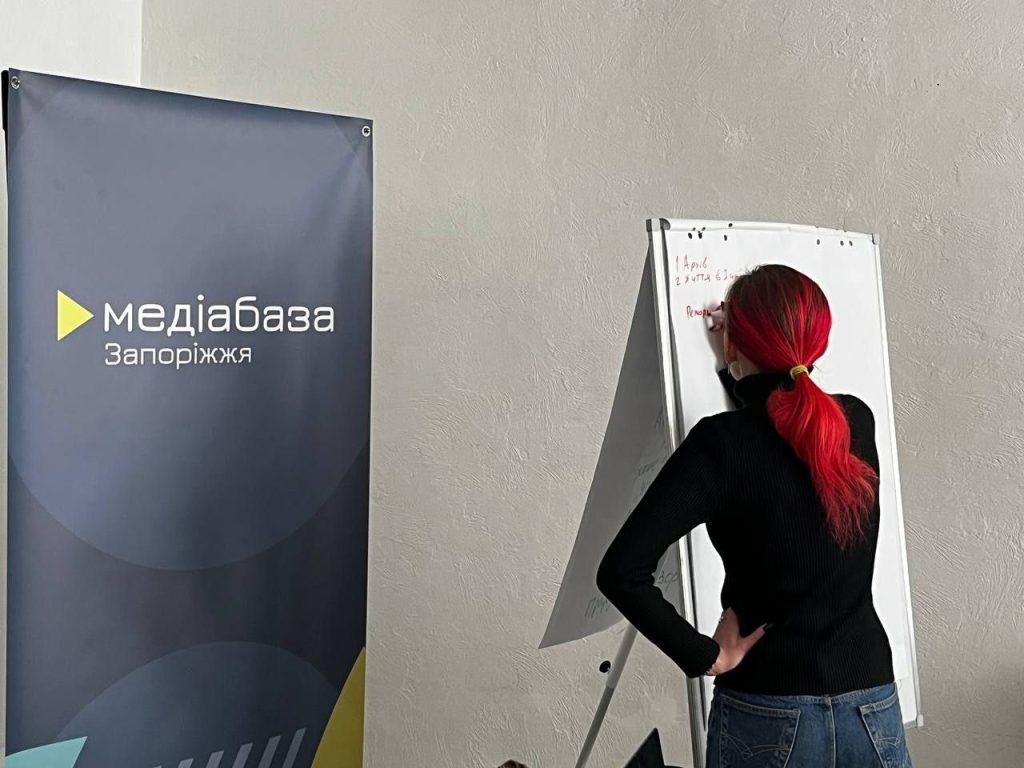
SODA planning session at Mediabaza Zaporizhzhia. Photo by Mediabaza Zaporizhzhia
Involving young people in the journalism community
Almost every Mediabaza has established ties with universities in its respective region. Students actively attend Mediabaza events and sometimes even do internships there.
Mediabaza Kropyvnytskyi went a step further and hosted two Media Schools for journalism majors. Students who joined the project had the opportunity not just to attend a series of classes from practicing journalists, but also to complete an internship at a news outlet of their choice.
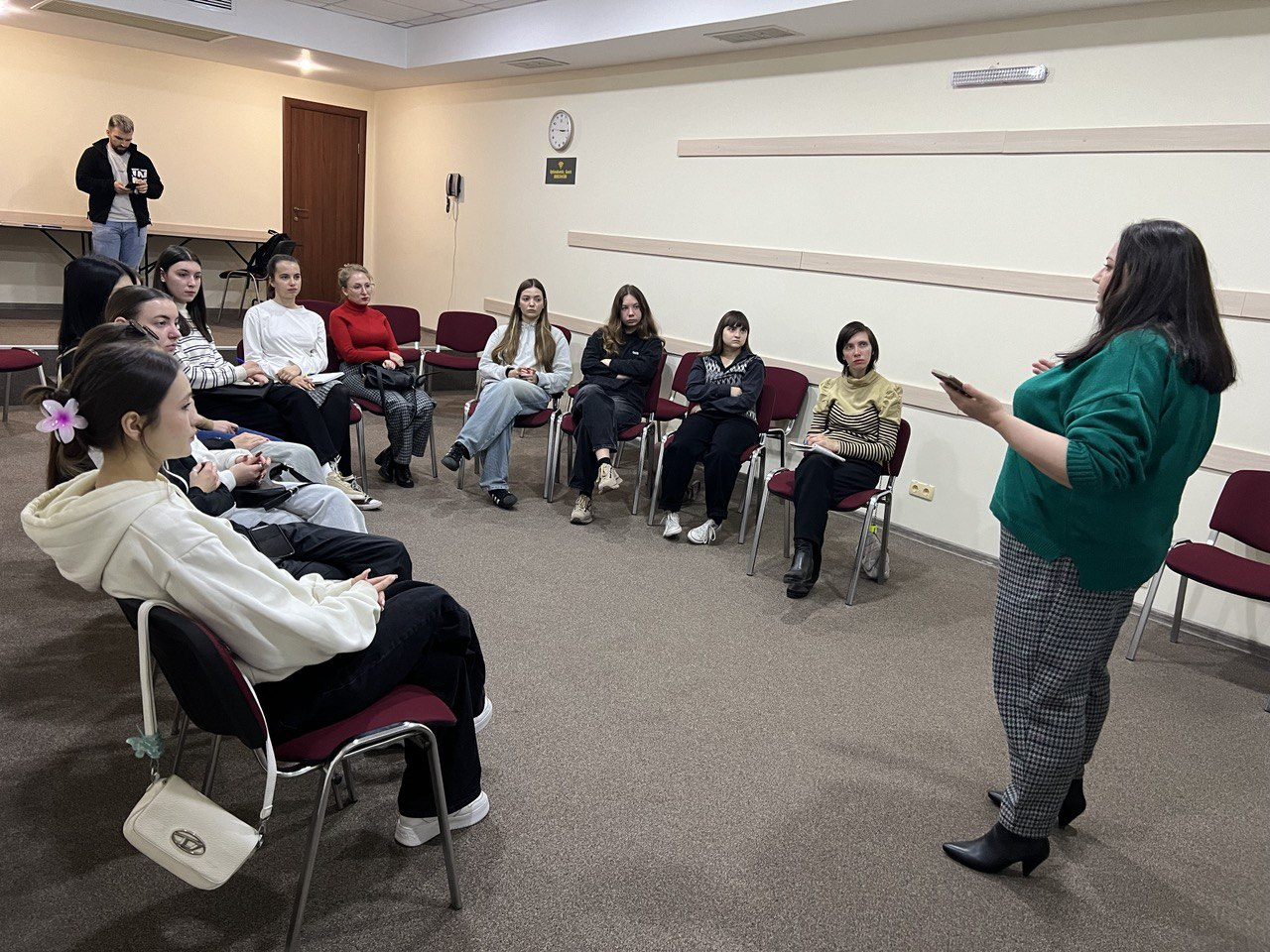
Media School 2.0 participants in Kropyvnytskyi. Photo by Mediabaza Kropyvnytskyi
As the Media School 2.0 graduates began their internships, the Kropyvnytskyi-based news outlets Hrechka, Tochka Dostupu, and Kirovohradska Pravda announced their intention to expand their teams. So the interns had a very real chance not only to learn, but also to get employed. Two participants of the Media School made use of this and are now working with the aforementioned media outlets.
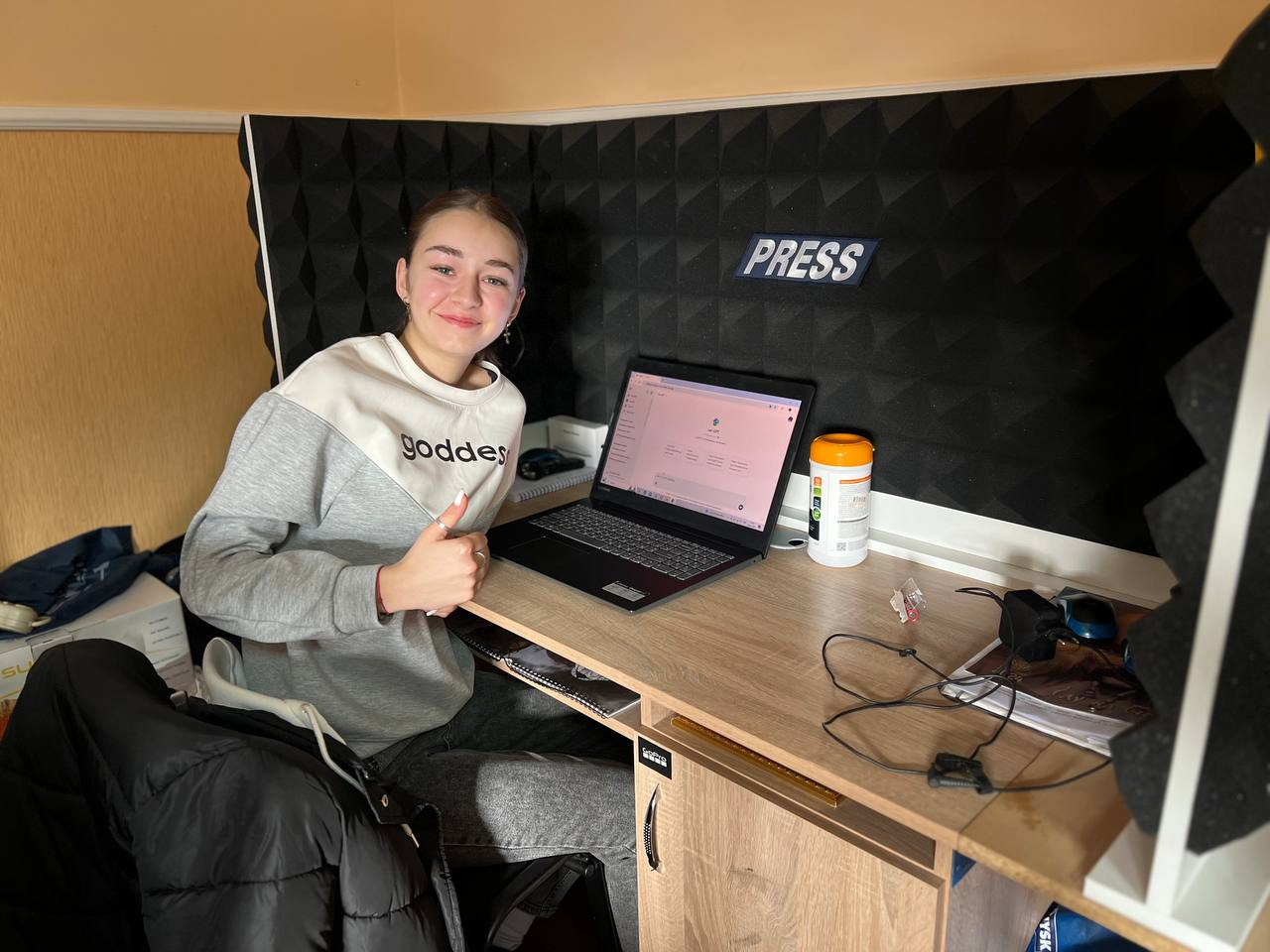
Diana Bondarenko in the office of the news portal Hrechka. Photo by Mediabaza Kropyvnytskyi
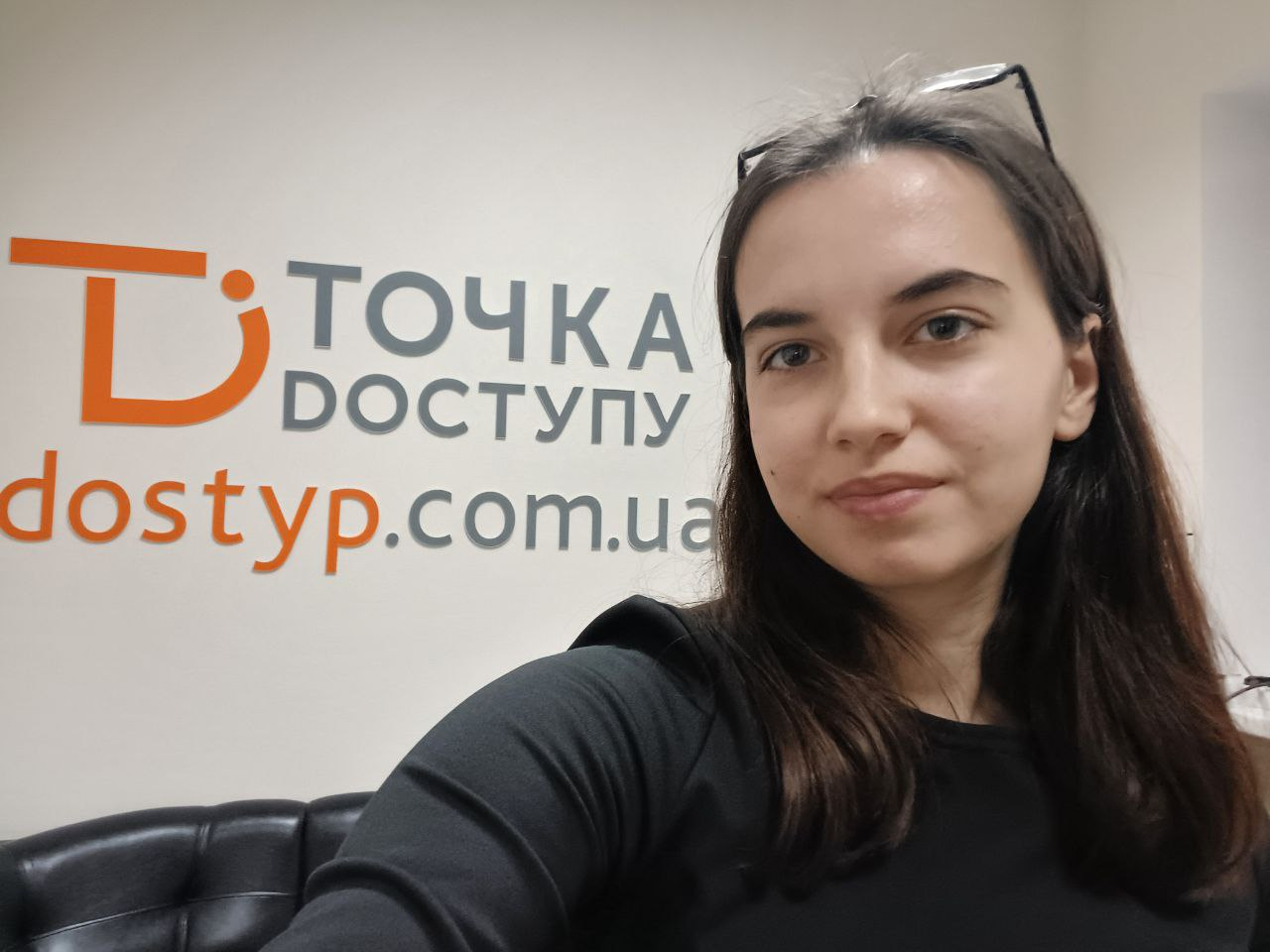
Ulyana Skorokhod during her internship at Tochka Dostupu. Photo provided by Ulyana Skorokhod
Another mention goes to Mediabaza Odesa/Kherson, which became the catalyst that helped a professional community of journalists to take shape in the region. In an environment affected by war, de-occupation, and disinformation pressure, many news outlets remained isolated from one another and operated in a fragmented media space. It was Mediabaza Odesa/Kherson that provided a platform where journalists could share facts, material, and feel part of a united circle of professionals.
This community recently came to see its power in practice. Establishing a direct line of communication between the Kherson OMA and local journalists helped prevent the spread of Russian narratives and disinformation. In July, journalists met with Kherson OMA deputy chair Oleksandr Tolokonnikov; the parties agreed on regular press tours for media workers. The first such tour took reporters through facilities where anti-drone nets were being installed. Journalists were able to see the system working in person, ask questions to the military and to engineers, and obtain verified data on the nets’ effectiveness and the scope of their use.
Following the tour, the media released several articles and videos explaining hos exactly the authorities worked, why anti-drone nets were important, and that they really helped mitigate the risks of Russian strikes. This enabled a shift in the information space: now instead of panicmongering rumours, facts and expert opinions were being promoted.
The right to recovery
The Mediabazas also work to provide psychological support for media workers to combat the war-induced stress. In the summer of 2025 alone, the network organised 10 mental health recovery events and informal hangouts. These included SUP board tours, picnics, and outdoors sessions with therapists.
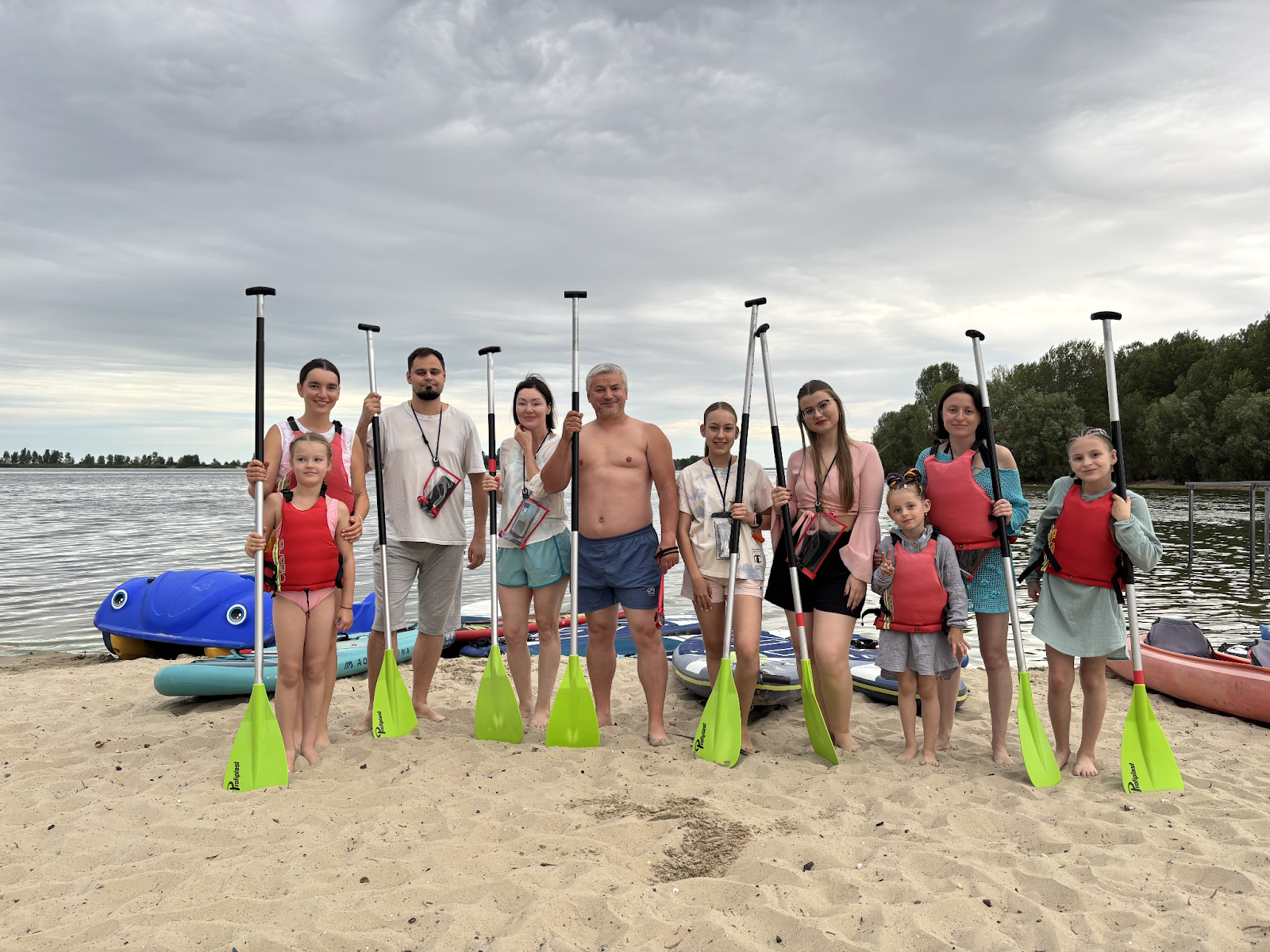
Cherkasy journalists at a retreat organised by Mediabaza Cherkasy. Photo by Anastasia Neboha
Recovery efforts are still going strong. The last event at Mediabaza Dnipro before it was destroyed in the Russian strike was an art therapy session.
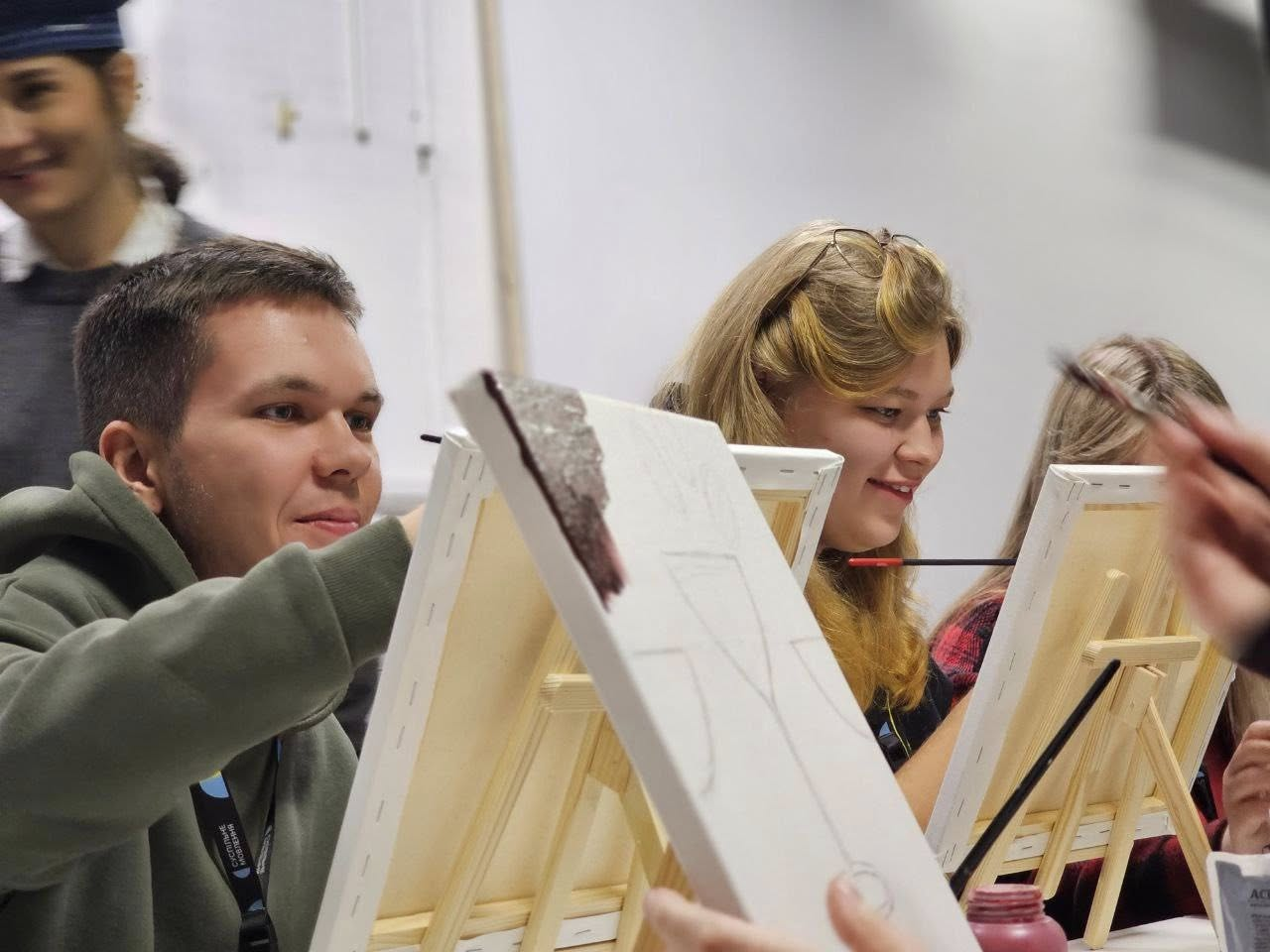
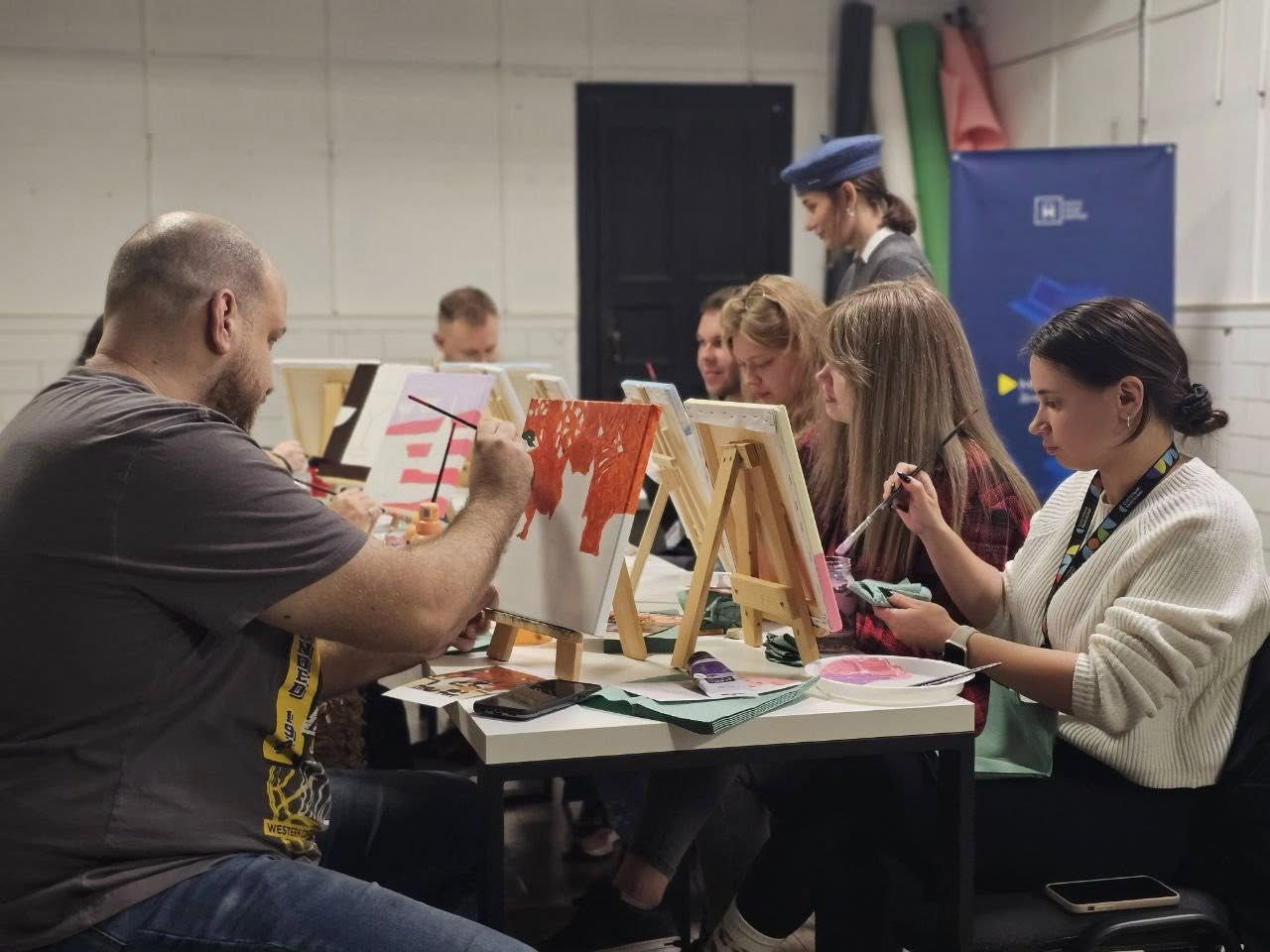
Media workers attending an art terapy session at Mediabaza Dnipro. Photos by Mediabaza Dnipro
Training catering to region-specific needs
In the past three years, classes in first aid, mental health support, AI, SEO, monetisation, access to information, social media management, staff’s mental health, grant application writing, and working with databases were the most popular of the over 600 events hosted by the Mediabazas.
We paid special attention to first aid training. After all, it is crucial that media workers practice this skill regularly, given that they often work at shelling sites (which are often targeted in double-tap strikes) or film the military right on the battlefield.
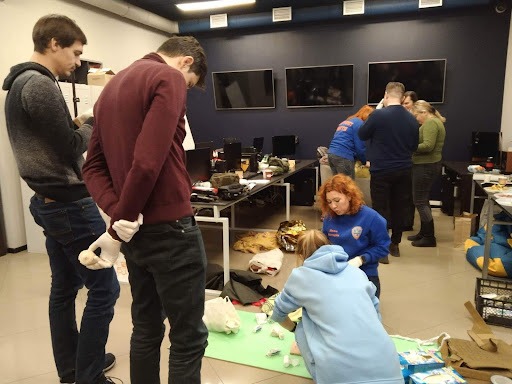
First aid class at Mediabaza Poltava
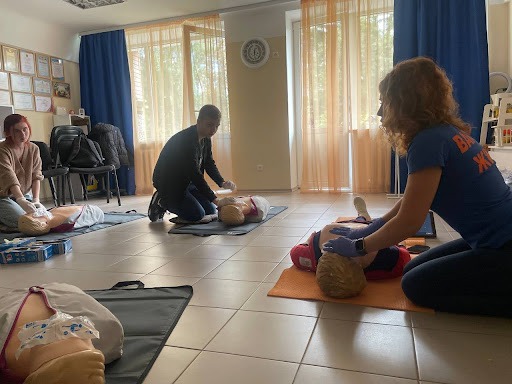
CPR class organised by Mediabaza Poltava
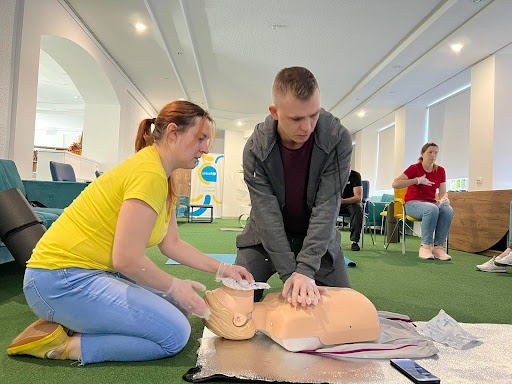
First aid class organised by Mediabaza Kropyvnytskyi
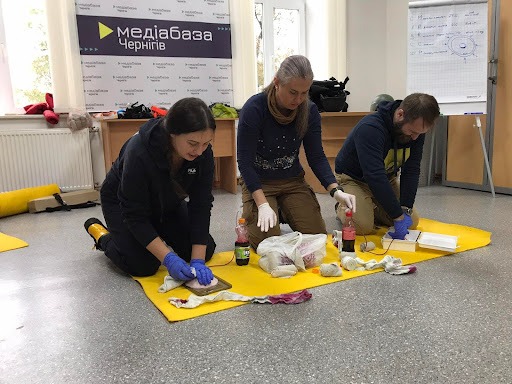
First aid class organised by Mediabaza Chernihiv
Over the years that the Mediabazas have been operating in Ukraine, artificial intelligence models have grown in number. Introducing AI into the day-to-day work of regional news outlets is another challenge that the IMI Mediabazas have been addressing. We understood this demand among media professionals, so we organised several dozen classes on the topic: from basic introductions to more advanced ones offering solutions to specific issues of integrating large language models into media outlets’ workflow.
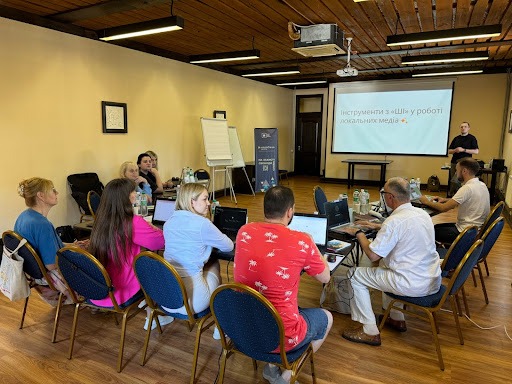
Class “AI tools in the work of local media” hosted by Mediabaza Chernihiv
Many media outlets need training in social media management. Journalists are interested in the algorithms, targeting, digital security of new social media platforms, cross-posting and monetization opportunities. Offline and online classes organized by the Mediabazas helped to provide answers to these questions.
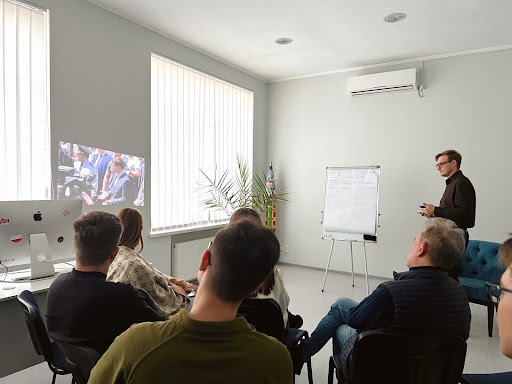
Class “Write and share: why social media are a must-have for a journalist” hosted by Mediabaza Poltava
Yet the most important thing that the Mediabazas training work has achieved is the emergence of a sustainable community of journalists who do not just receive information passively but initiate events that meet the media’s current needs independently.
“For these three years, the Mediabaza network has been fulfilling the primary mission we put into this project: helping media professionals in every possible way. We have built a network that has been providing training, support, protection, and has been an island of stability. Hundreds of news outlets, thousands of journalists have trusted us and used our hubs’ services. In my opinion, this is the main indicator of our work — the unwavering trust of the media community,” comments Pavlo Lisnychenko, the Mediabaza network coordinator.
We believe that we will be able to continue supporting and uniting media professionals across Ukraine even in the face of Russian shelling and destruction. The support we have received from journalists after the Mediabaza Dnipro destruction made us realise that in these three years we managed to build something that no Russian missile can destroy. We thank each and every one who visits us.
The IMI Mediabazas are funded with the support of the European Union.