
On 12 June, Volodymyr Zelenskyi signed into force the National Security and Defence Council’s decision introducing sanctions against Russian propaganda outlets and judges passing unlawful rulings against Ukrainian citizens (presidential decree No. 493/2026), as reported on the President’s website.
The list of persons targeted by the sanctions includes judge Vitaliy Belitskiy (Белицкий Виталий Александрович). It was him who handed down the politically motivated ruling against Institute of Mass Information (IMI) expert Iryna Zemlyana, sentencing her in absentia to 13 years in a low security prison.
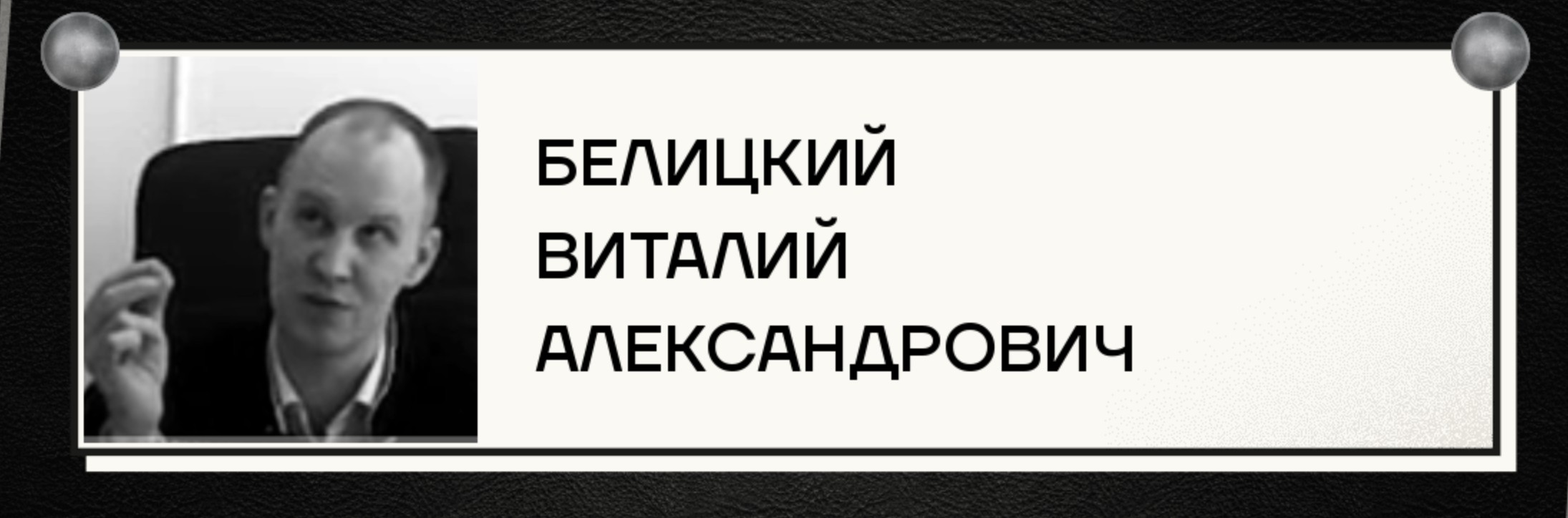
In March 2026, IMI found that Vitaliy Belitsky, the Russian judge who handed down the ruling against Institute of Mass Information (IMI) expert Iryna Zemlyana, has repeatedly tried politically motivated cases against journalists and civil society representatives.
On 12 June, Volodymyr Zelenskyi signed into force the NSDC decision introducing sanctions against Russian propaganda outlets and judges passing unlawful rulings against Ukrainian citizens (presidential decree No. 493/2026). These included judge Timur Vakhameev, complicit in the imprisonment of Ukrainian journalist Viktoria Roshchyna.
Previously
In March 2026, the Moscow City Court (Russia) sentenced the Institute of Mass Information (IMI) media expert Iryna Zemlyana to 13 years in a low-security prison in absentia for allegedly attacking Sergei Andreev, the Russian Ambassador to Poland, in Warsaw in 2022. Zemlyana was convicted of attacking a representative of a foreign state with the aim of complicating international relations; inciting hatred and enmity through violent means; and promoting “fakes” about the Russian army.
Iryna Zemlyana says that the ruling is politically motivated and is part of a pressure campaign against her; according to her, the charges are entirely fabricated.
In November 2022, Russia declared Iryna Zemlyana a wanted person, opening a criminal case against her for allegedly attacking the Russian ambassador Sergei Andreev in Warsaw (Poland). Iryna notes that she did not commit the attack.
A group of protesters doused the ambassador with a red liquid as he was trying to lay flowers at the Mausoleum of Soviet Soldiers on 9 May 2022. Many protesters had red paint stains on their clothes to symbolise blood. They chanted such words as “fascists,” “ruscists,” and “murderers.”
Iryna Zemlyana, who participated in the campaign, had to leave Warsaw following a series of death threats.
Poland investigated death threats to Iryna Zemlyana by Russians and others. In June 2023, Polish prosecutors paused the investigation into the Russian ambassador in Warsaw, Sergei Andreev, being doused with paint on 9 May 2022.
The National Police of Ukraine opened a case following Zemlyana’s statement after the incident with the Russian ambassador in Warsaw. Later, the Shevchenkiv District Police Department in Kyiv closed the criminal case over death and doxxing threats to the IMI expert Iryna Zemlyana. However, the court ordered to resume the investigation.
Interpol is yet to decide whether to declare her an international wanted person at Russia’s request or not.
In February 2024, Iryna Zemlyana, an expert at the Institute of Mass Information, was added to the list of “terrorists and extremists” maintained by the Russian Federal Service for Financial Monitoring (Rosfinmonitoring).
On 4 March 2024, the Basmanny District Court of Moscow (Russia) arrested Iryna Zemlyana in absentia on these frivolous charges against her. She has said that the arrest was based on a false accusation and the probe into the “dousing” of the Russian ambassador to Poland in the spring of 2022 was entirely fabricated.
MP Yaroslav Yurchyshyn, Chair of the Verkhovna Rada Committee on Freedom of Speech, asked the National Police, in their capacity as an Interpol representative, to protect the Institute of Mass Information (IMI) expert Iryna Zemlyana from persecution by Russia. The National Police promised to see to it that Russia does not persecute Iryna Zemlyana through Interpol.