

Nine out of ten daily filming sessions in Kharkiv and the oblast are coverage of Russian war crimes in Ukraine, Suspilne Kharkiv chief editor Vyacheslav Mavrychev said on 11 February during a meeting between the parliamentary Humanitarian and Information Policy Committee and the Verkhovna Rada’s Temporary Commission to Investigate Crimes against Journalists and Other Media Professionals Committed by Russian Troops, ZMINA reports.
“Nine out of ten daily filming trips are essentially war crime recording trips,” he said.
According to the media professional, each news outlet in the regions close to the front line covers several tragedies of varying scale not in a year, but in a day, because air strikes occur several times a day.
“As we speak, an Iskander missile has dropped somewhere near me, in the suburbs. My colleagues are now working to find out the exact location and impact,” noted Vyacheslav Mavrychev.
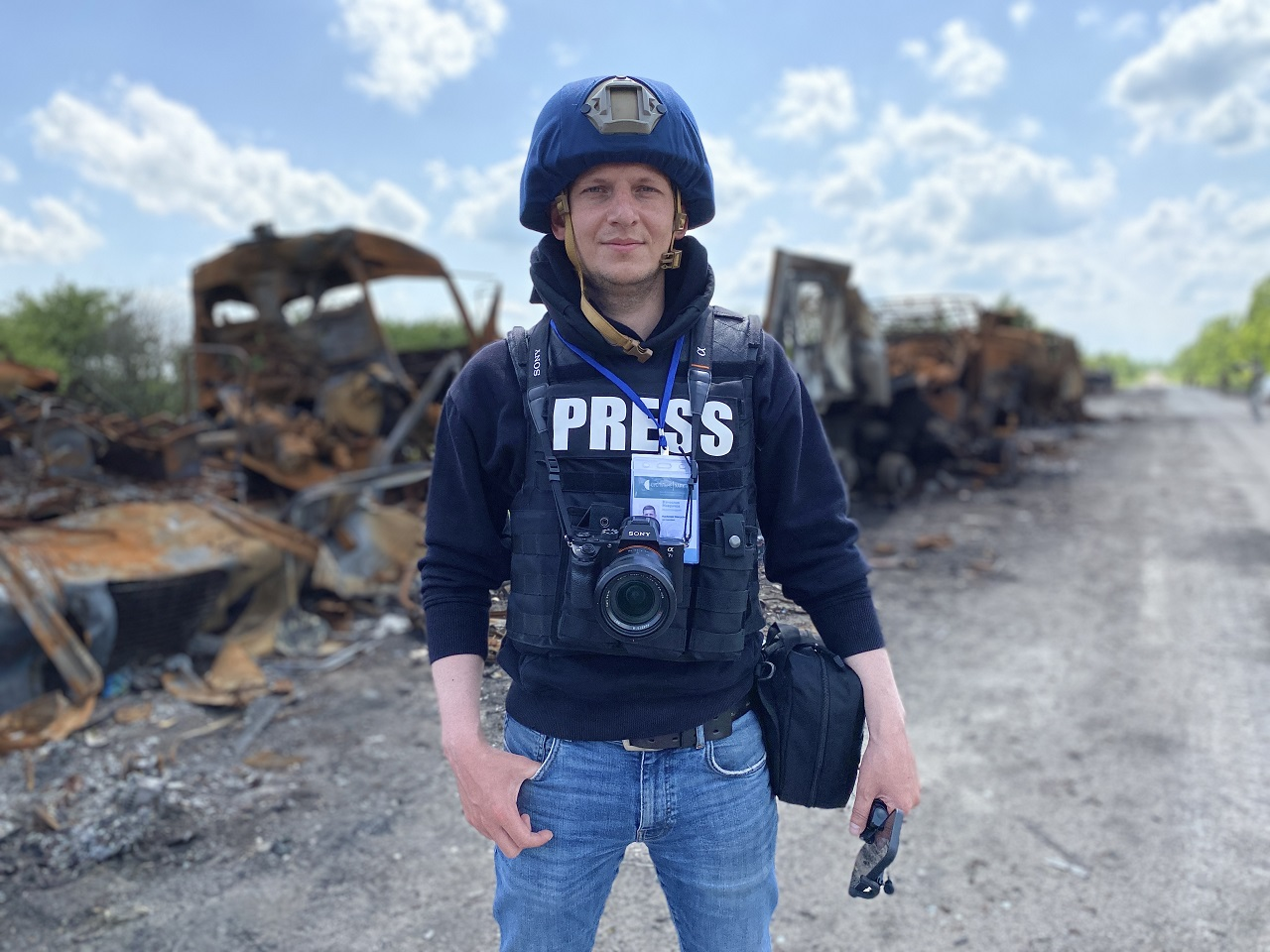
He stressed that in no other country in the world have journalists been facing such intensity and variety of threats for years on end. While for international war reporters the trips usually short missions, for Ukrainian news outlets they are everyday reality.
Despite this, the journalist said that his team has adapted to working in dangerous conditions. Still, chief editor admitted that the journalists were exhausted and “burnt out” emotionally. However, they realise that the longer they keep working effectively, the more helpful they are to their country.
Mavrychev said that his team had essentially developed their own safety protocols and algorithms for working in cities under shelling from scratch. They are willing to share these with international partners: from risk diversification to transforming correspondents’ homes into bomb shelters and establishing a network of back-up offices.
Their most important achievement, said Mavrychev, was the algorithms for assessing and predicting risks even before a filming crew leaves and having a clear plan in case the crew finds itself in a targeted area.
But despite their professionalism, journalists have long ceased to view their work as just a job.
“It may sound pompous, but this is service, this is a mission – to defend freedom in Ukraine. We feel it is our duty in the most terrible time for our country: to do our utmost to contribute to the resistance and be of help to our fellow citizens,” the journalist added.
Suspilne Kherson team is working from a rented basement due to constant Russian shelling and targeting of journalists by Russian drones. The basement is now the safest place in the city for the media professionals.