
The Freedom TV camera crew did not react to the Russian Lancet drone approaching despite being equipped with a drone detector: cameraman was distracted while filming and did not notice the threat signal, said journalist Oleksandr Kolychev, who was severely wounded in a Russian drone strike in Kramatorsk (Donetsk oblast) on 23 October 2025, in an interview with Reporters Without Borders. Kolychev’s colleagues, correspondent Alyona Hramova (Hubanova) and cameraman Yevhen Karmazin, were killed in the strike.
Kolychev said that the crew was working in Kramatorsk after a recent strike on the central market. The journalists filmed the aftermath of the attack and interviewed eyewitnesses. They later went to a nearby service station, which had also been damaged.
“The cameraman had a drone detector. He turned his attention away from filming and saw a Lancet coming, and we didn’t even react, because Lancet drones are usually used against artillery, tanks, cannons. So we… If it had been an FPV, we would have scattered in all directions to hide,” the journalist explained.
He said that after the strike passers-by came running to their car to help them.
“I was still conscious. People immediately rushed over, because it [the service station] is on a very busy road. Someone started to bandage my broken leg, and someone else laid me down on a stretcher. I could see and hear things, but I didn’t know what had happened to my colleagues. We were taken to Kramatorsk, to the trauma unit, where we were stabilised — so I thought — and transferred to the Mechnykov Hospital in Dnipro. It was only a week later that I was told that Alyona and Zhenia had died at the scene,” said Oleksandr Kolychev.
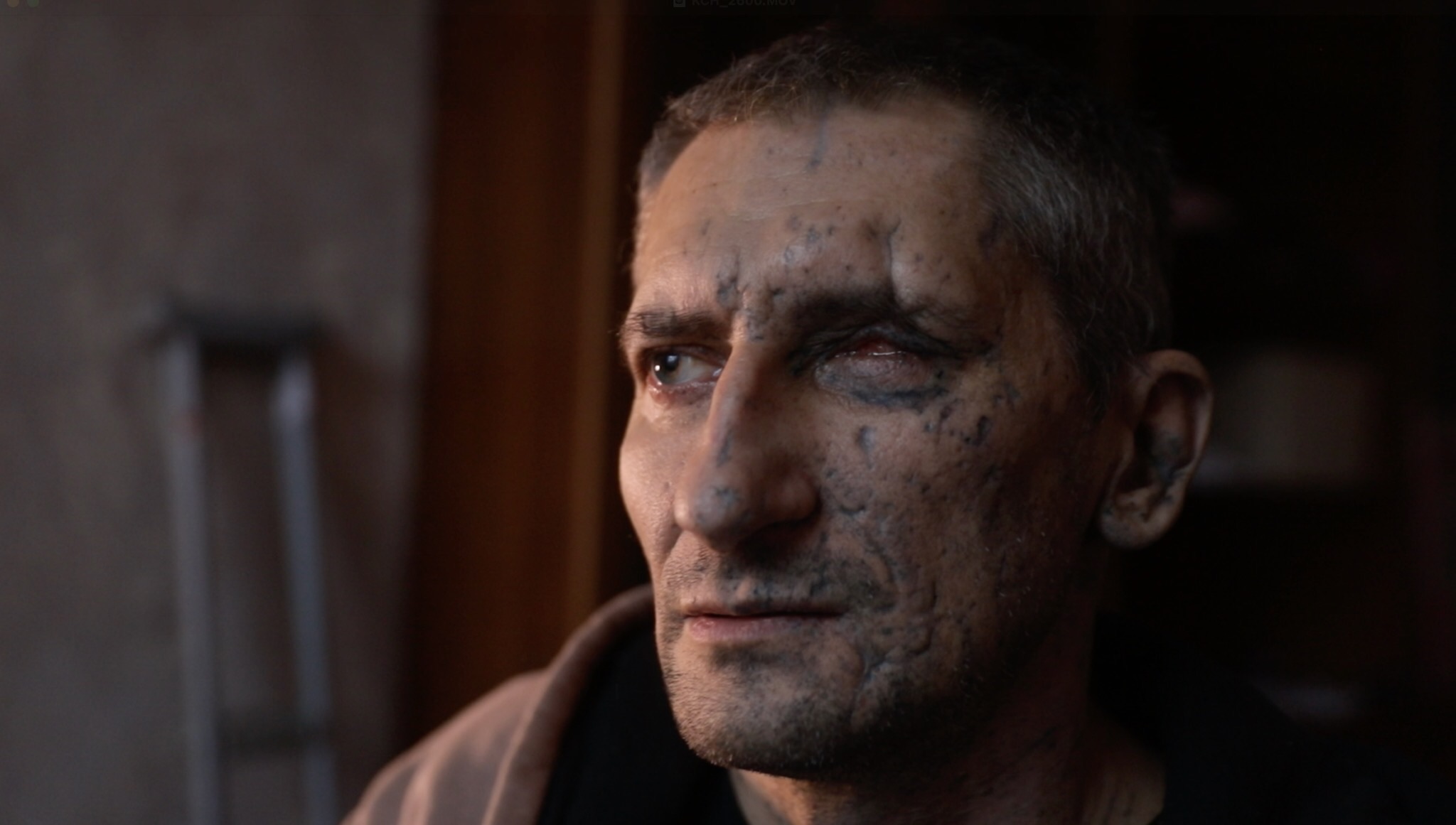
The consequences of the injury were severe: Oleksandr spent a month and a half in hospital. He has hearing impairment, a badly damaged leg, and his left eye had to be removed.
“My hearing, sight, arm, and leg were affected. So, for me personally, this story isn’t over yet. I think it will take another six months [of rehabilitation]. In other words, I’ll be ‘out of action’ for a very long time. I probably tried to protect myself. My arm was badly injured, a ligament in one of my fingers was torn and had to be stitched up. I lost sight in my left eye, which had to be removed. My hearing was also affected, but that should recover, I hope. So there you have it. There was lots of shrapnel all over my body. My face and neck were burned,” the correspondent said.
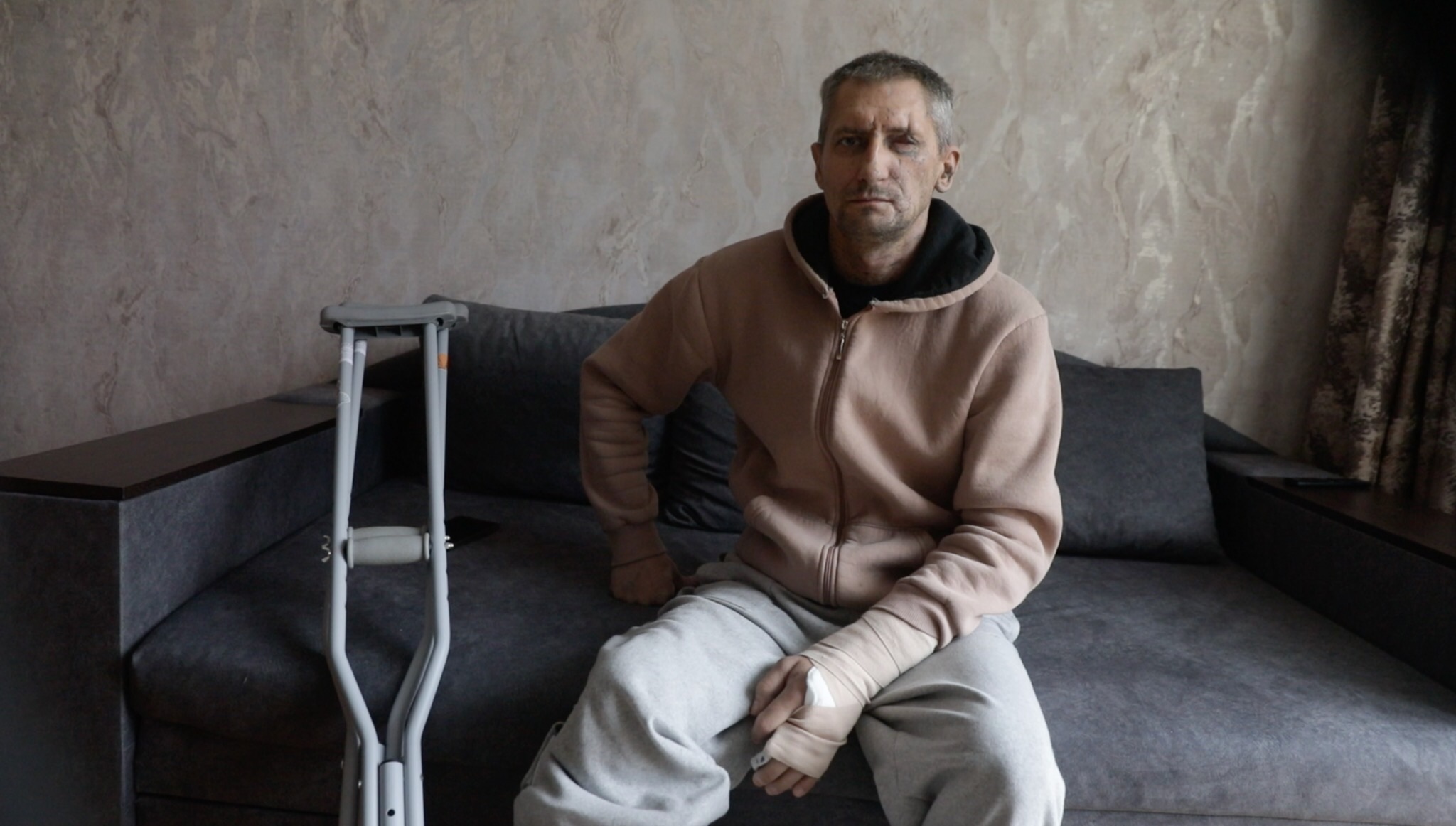
Kolychev hopes to go back to work if his health allows it. Still, he admitted that if his eyesight does not recover sufficiently, working will be extremely difficult.
The journalist said that it is not in Russia’s interest for Ukrainian independent media to be covering the news, particularly in frontline communities and on the battlefield, because Russia is trying to promote its own interpretation of the events.
Oleksandr added that media workers are facing increased risks even far away from the front line. He said that strikes are taking place not just on the front line, but also in cities and villages away from it. Surveillance and aiming technologies are improving, which is making reporting increasingly dangerous.
“From a strategic point of view, the further a journalist is from the front line, the better it is for them. But journalism doesn’t work that way. So everyone tries to be at least on the ‘second line,’ which is very, very dangerous. I would say that since the beginning of the year, this trend has become more pronounced, whereas before we could be on the front line at less risk. Or at least, the risks were minimal. But over the last year, this trend has increased significantly,” said Oleksandr Kolychev.
He believes that for the Russian troops, journalists are the first target after the military.
“Artificial intelligence and surveillance methods are improving, as are means of communication. All of this is making it easier to identify groups arriving in the Donbas or the region and strike them . . . In my opinion, yes, they [journalists] are the first target after the military. I don’t know why, it’s my personal opinion, but I see it through my own friends and acquaintances who’ve been killed, including foreign journalists,” the media professional explained.
The attack on the Freedom TV crew
As reported earlier, war reporter Alyona Hramova (Hubanova) and cameraman Yevhen Karmazin of the Ukrainian international channel Freedom TV were killed in a Russian Lancet drone strike in Kramatorsk (Donetsk oblast) on 23 October 2025. The journalists were filming the aftermath of an earlier Russian strike at a gas station. Special correspondent Oleksandr Kolychev was wounded in the strike. The police is investigating the murder and wounding of Freedom TV crew as a war crime.
The funeral for Alyona Hramova (Hubanova) and Yevhen Karmazin took place at the St. Michael Cathedral in Kyiv on 27 October.
It was reported in November 2025 that Oleksandr Kolychev had spent nearly four full days connected to a ventilator. He had five surgeries and received 3 liters of blood transfusions.