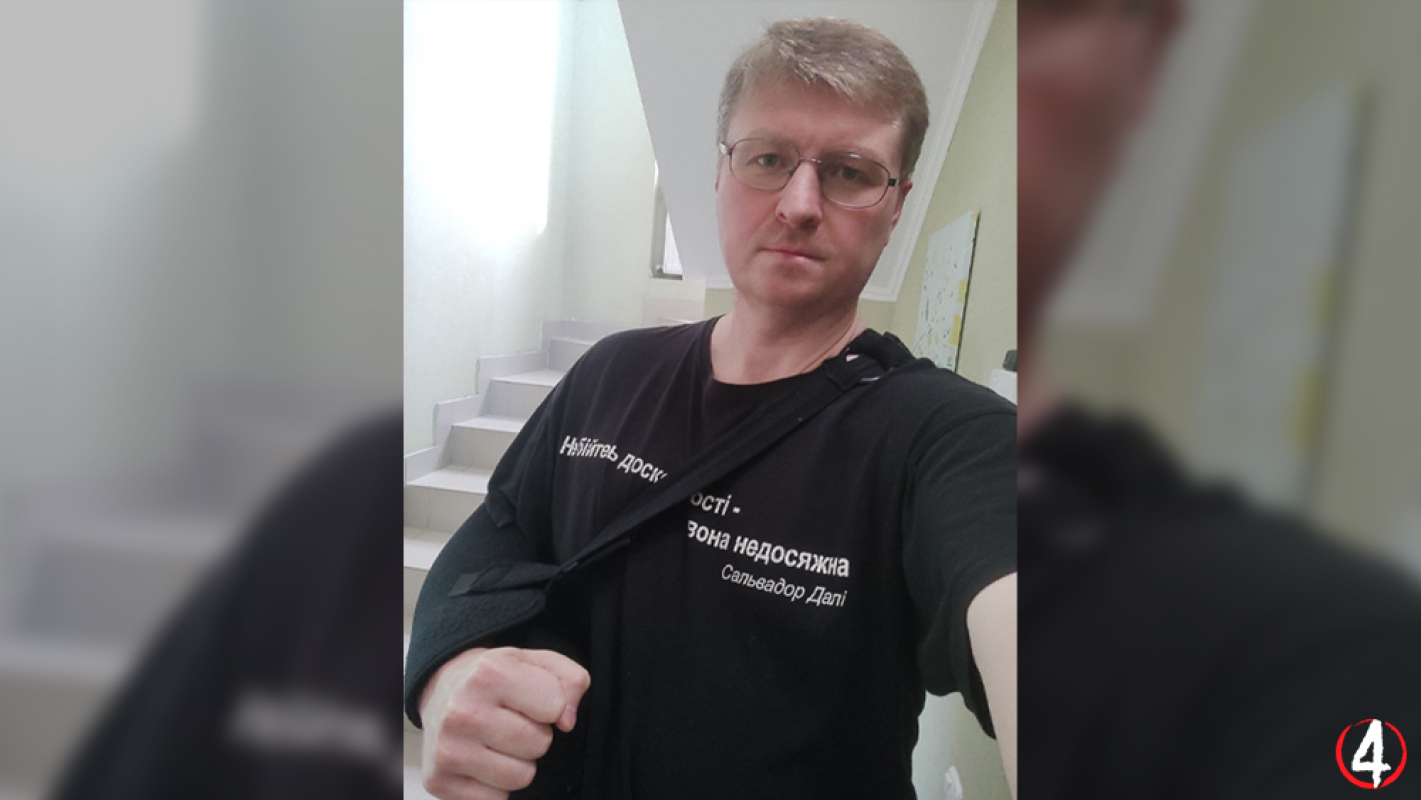

The Rivne police only opened an investigation into obstruction of Myroslava Prymak’s reporting after an address by MP, Chair of the Verkhovna Rada Committee on Freedom of Speech, Yaroslav Yurchyshyn, Chetverta Vlada reports.
The news outlet adds that the the police had ignored the journalist’s statement for a week before that. Instead of opening a case, they first qualified her statement as an address by a citizen, giving themselves a month to reply to it.
Myroslava Prymak’s statement was about the pressure she faced from the Rivne-based lawyer Oleksandr Lutsiuk, who was featured in her investigation. Chetverta Vlada reported on the incident on 16 February 2026. The lawyer asked the journalist personal questions when she tried to get a comment from him as part of the investigation. Namely, he claimed to have read online that the journalist’s husband was a “drug addict with a criminal record” and added that “the public would be interested” to know about it.
Myroslava Prymak filed a complaint with the police on 25 February. The law enforcers did not respond until Yaroslav Yurchyshyn intervened.
“On 2 March, I sent ab address to the National Police as an MP, and on 5 March, I received a response saying that the Rivne Oblast National Police HQ had opened a criminal law case on 3 March. Meaning, the police only took action when they received my address, to which they are obligated to respond. Even though opening a proceedings is a quick thing to do. You do not need to wait a week for this or reinforce it with an address from an MP,” Yaroslav Yurchyshyn told Chetverta Vlada.
He suggests that the situation with the police’s reaction is about a certain negligence. The People’s Deputy believes that under normal conditions, the deputy should not contact the police with a deputy’s appeal. Instead, law enforcement officers themselves should track this case, contact the victim, interview her, and start an investigation.
Moreover, the extract from the Unified Register of Pre-Trial Investigations lists Yaroslav Yurchyshyn’s address, and not the journalist’s statement, as the grounds for the case being registered.
In a comment to Chetverta Vlada, Oleksandr Lutsiuk denied that his actions had been an attempt at pressure or intimidation.
“I don’t think I crossed the line of the law while talking to your colleague, and I don’t consider myself guilty. I emphasised to her that I had no intention of making my question public on, say, any websites or online. And it was a question, not a statement. And I asked the same question as she was asking me. So what’s illegal or objectionable about this? In my opinion, this [the journalist’s statement to the police] was done in order to trigger hype, to collect views,” he said.
Chetverta Vlada has been a target of a continuous mudslinging campaign. In particular, after the release of several high-profile investigations about the Rivne City Council press service, unknown persons wrote a series of discrediting articles alleging that the team had ties to the Russian church, and published sexist attacks on the news outlet’s female journalists. Later, unknown persons staged a (likely paid-fore) rally in front of the Rivne City Court in order to discredit the media outlet’s editors.