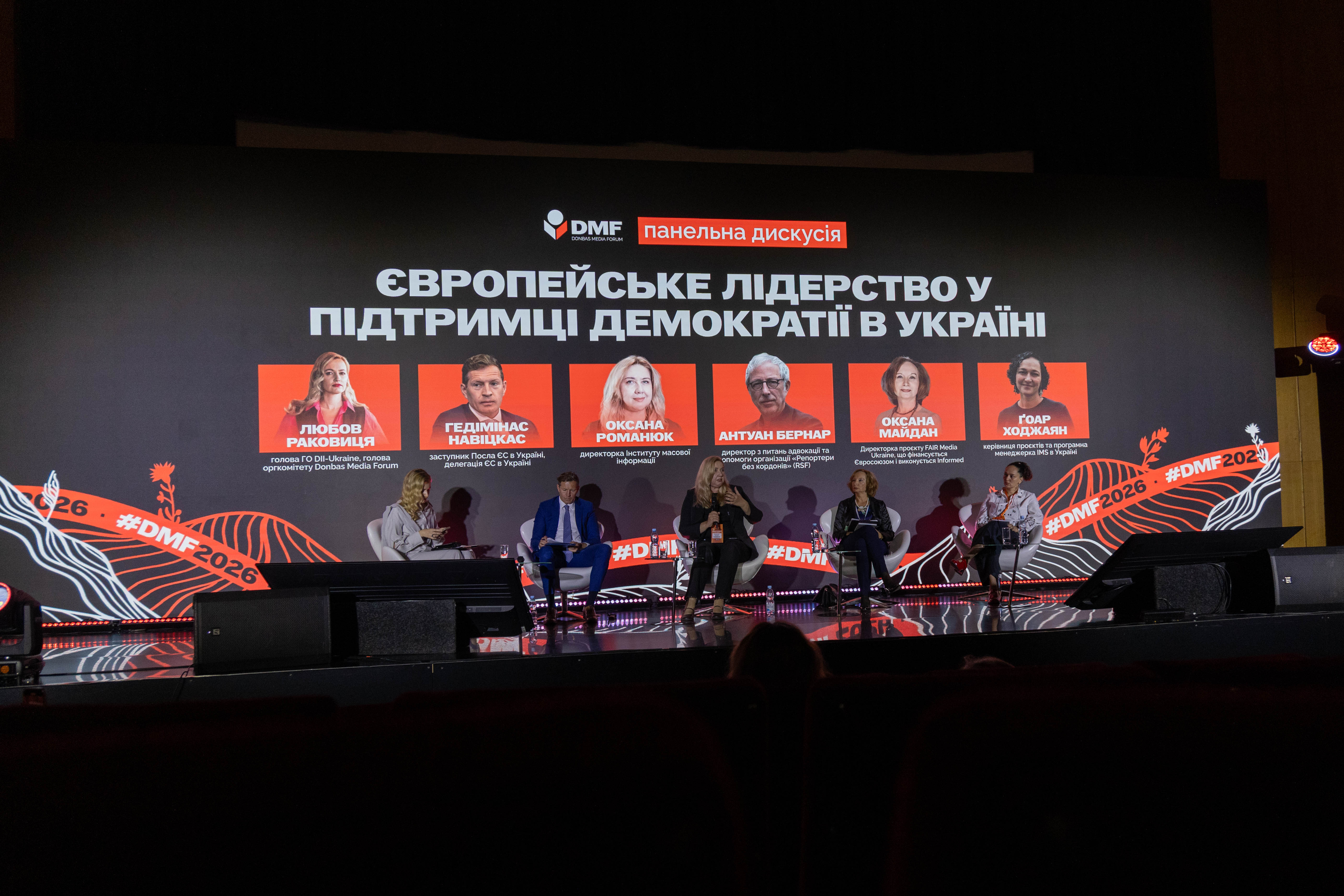
Support for independent media should be a long-term investment in democracy, not just a response to a crisis. At the same time, Ukraine’s European integration requires not just legislative reforms but also strong independent newsrooms capable of holding those in power to account and ensuring the transparency of the recovery efforts, the panel “European Leadership in Supporting Democracy in Ukraine” at the Donbas Media Forum in Kyiv concluded.
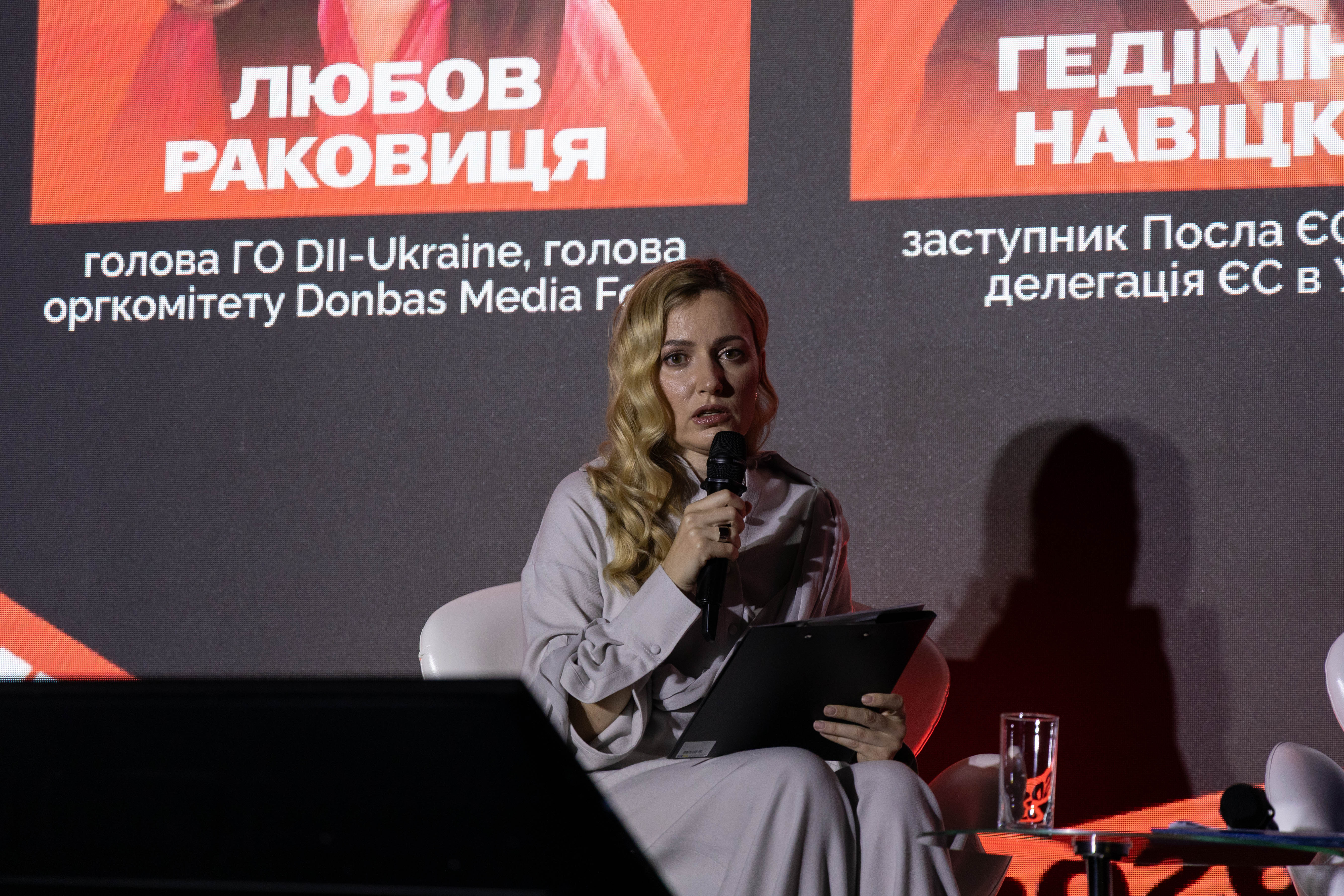
Opening the discussion, Liubov Rakovytsia, Donbas Media Forum organising committee chair and head of the NGO DII-Ukraine, stressed that international support for Ukrainian media was undergoing a fundamental shift and that Europe was becoming an increasingly important partner for Ukraine’s media sector.
“True European leadership today is measured not in millions of euros or in the amount of equipment delivered. Its essence lies not simply in supporting Ukrainian media and civil society, but in building a mature and resilient democratic ecosystem together that can stand firmly on its own feet,” Rakovytsia remarked.
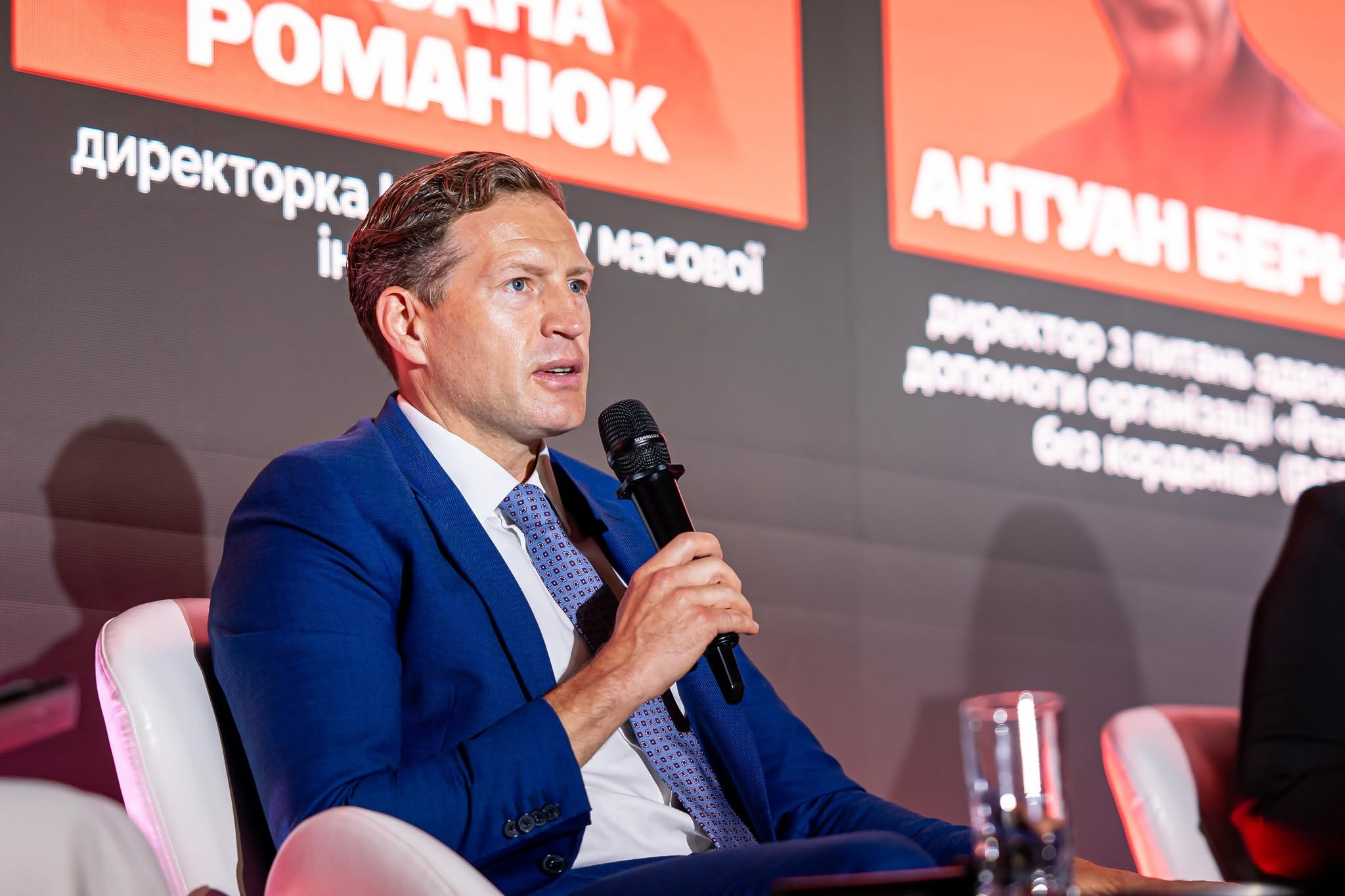
Gediminas Navickas, Deputy Head of the EU Delegation to Ukraine, stressed that independent media play an important role in Ukraine’s EU integration, saying that aligning legislation with European standards, including implementing the European Media Freedom Act (EMFA), is a necessary condition but insufficient in itself.
“When we talk about Ukraine’s integration into the European Union, the first part of this process is bringing legislation into alignment: adopting laws and carrying out reforms. But what truly matters cannot be described by legislative procedures alone. It is genuine freedom of expression and the quality of independent journalism. The way Ukrainian media report news every day, reveal the facts, and ensure the accountability of institutions is a systemic guarantee on Ukraine’s path to the EU,” Navickas remarked.
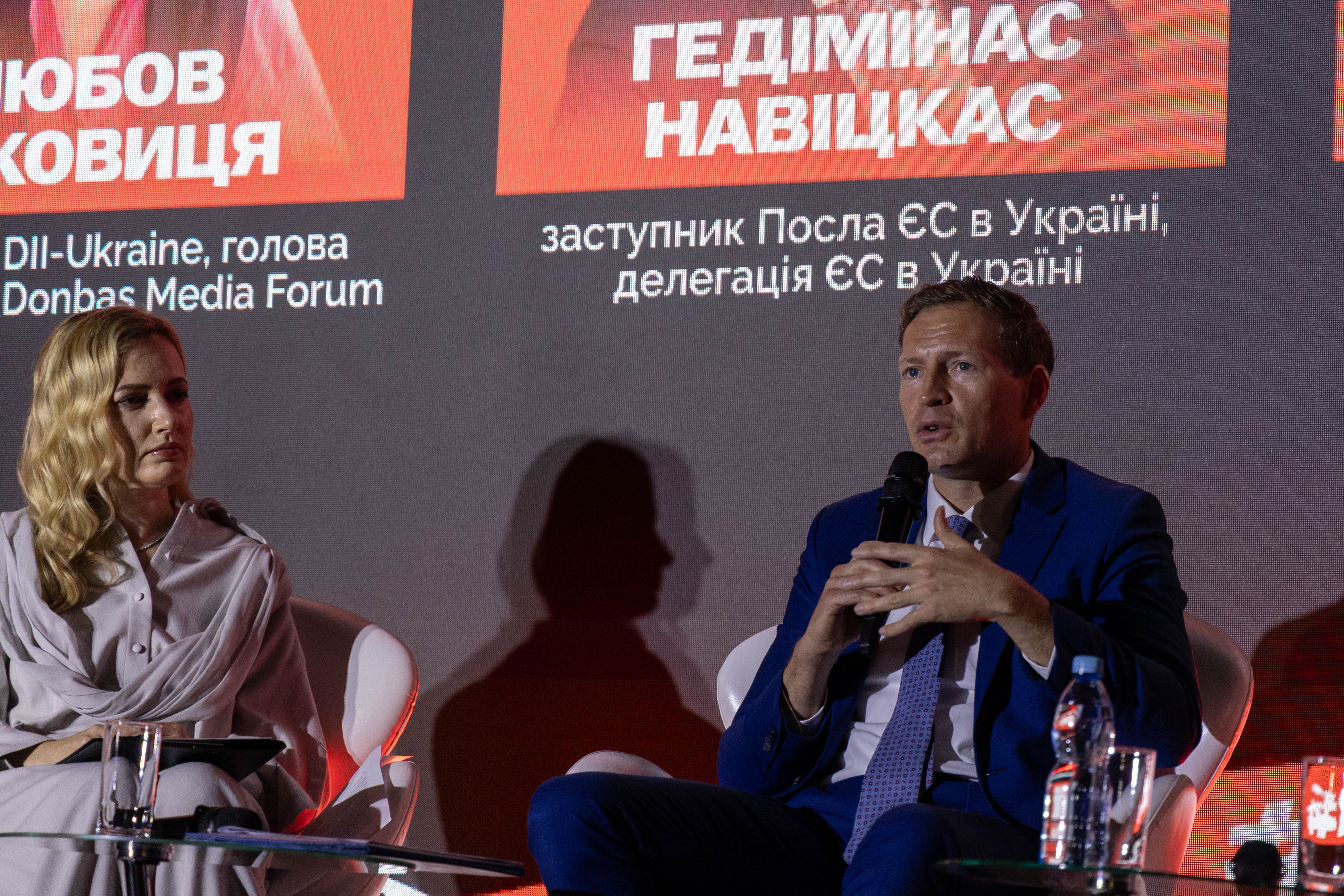
He mentioned the role of regional media in Ukraine’s recovery and reconstruction as a separate challenge.
“When we rebuild Ukraine, it is crucial that, in the regions where recovery is taking place, there are media that provide oversight and accountability. In my view, this will be one of the key issues of the future,” the EU representative stressed.
He also emphasised the need for a strong, independent public broadcaster, equal access to information for journalists, transparency of media ownership, and effective investigation of crimes against journalists.
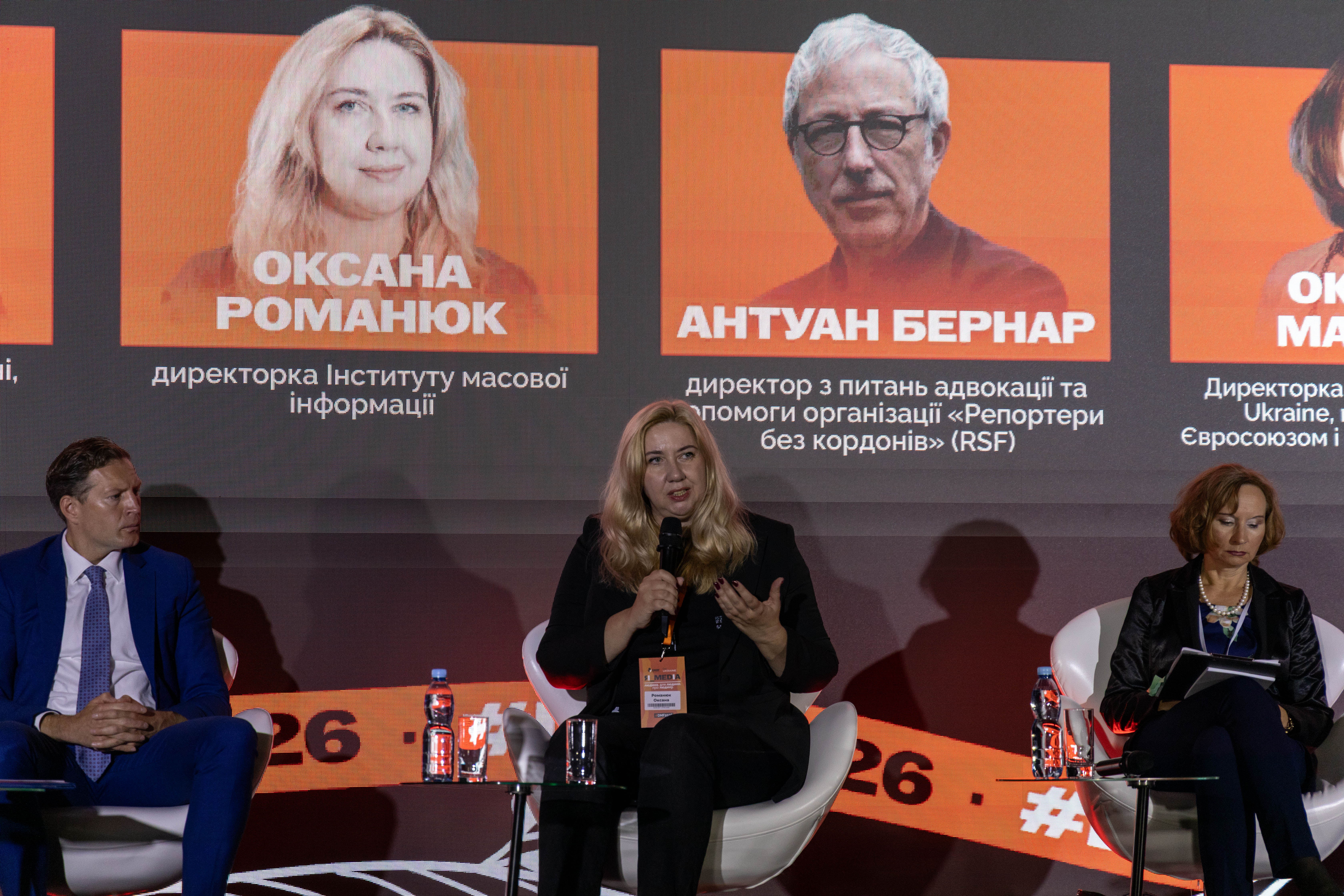
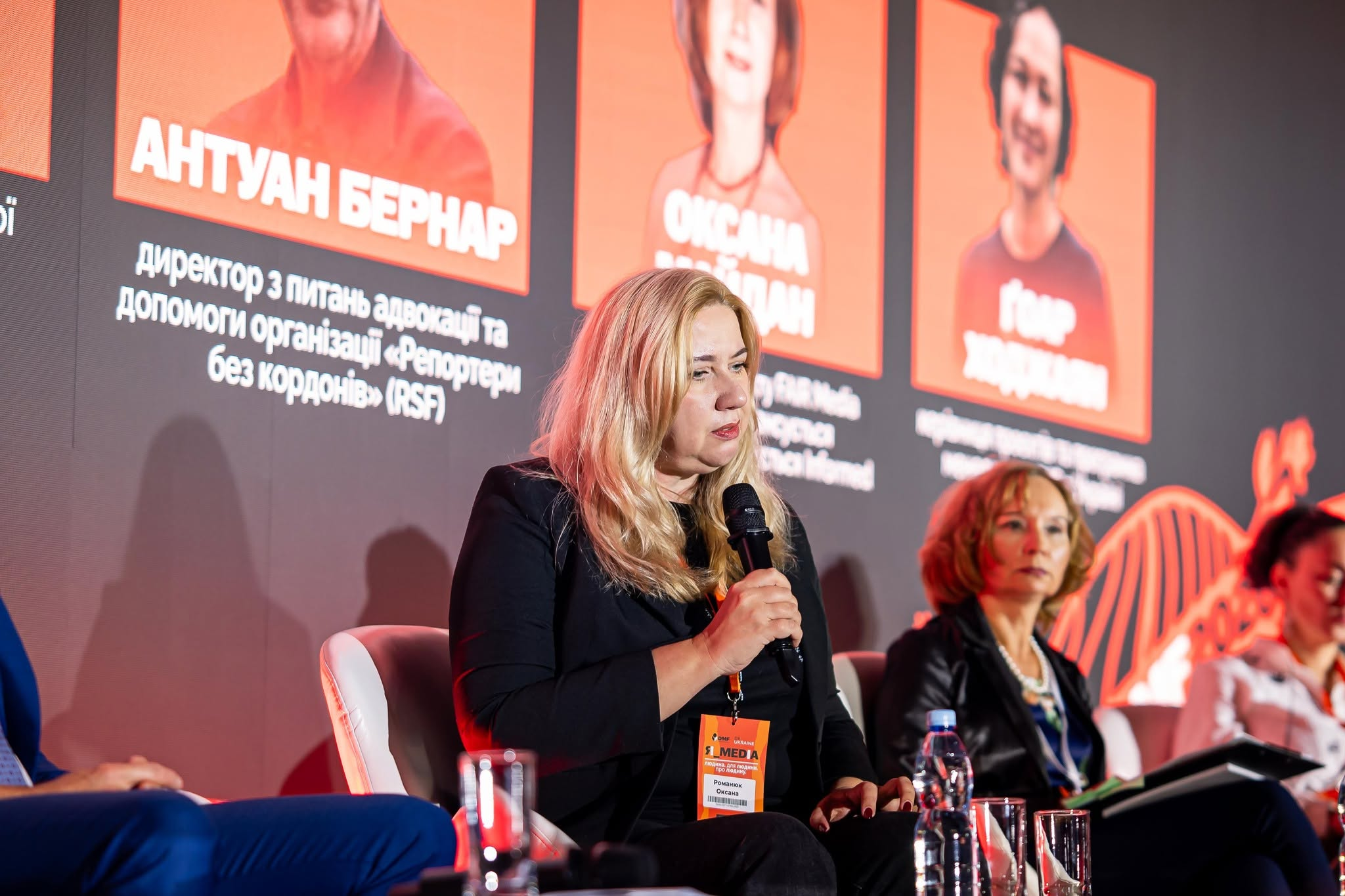
IMI’s Director Oksana Romaniuk remarked that the concept of resilience for Ukrainian media has changed fundamentally over the years of the full-scale war.
“The resilience of the media is no longer about the romance of a heroic team that survived without salaries or electricity and under shelling. Today it is a daily management routine, a never-ending balancing act between security, finances, people, and technology. But there is another fundamental dimension: the mission and trust. A newsroom can physically survive but lose its public function. And then the question arises of why it exists,” Romaniuk remarked.
Romaniuk stressed that an independent newsroom disappearing means far more to a community than the loss of one news source.
“When a community loses an independent outlet, Telegram channels and other platforms very quickly take its place. The flow of information supposedly remains, but the community loses an institution that asks questions of those in power, verifies information, and helps people solve their problems. And restoring an independent outlet after it shuts down is far more difficult than keeping it afloat. Professional teams, sources of information, ties with the community, and the audience’s trust, built up over years, all disappear along with it,” the IMI director explained.
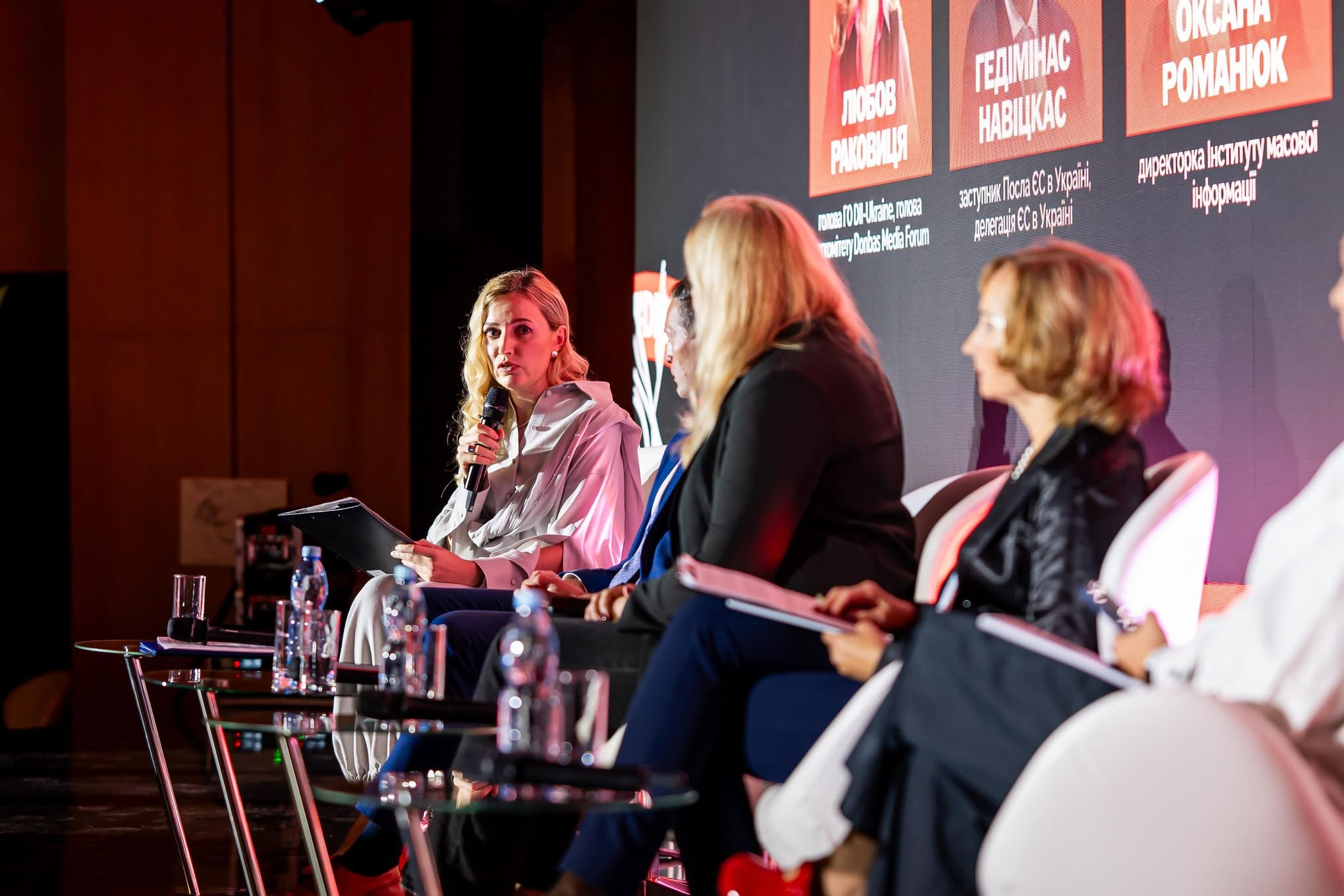
She proposed changing the very logic of international support for the media sector, moving from short-term project funding towards systemic mechanisms.
“I believe that every major package of international aid to Ukraine should provide at least 0.2–0.5% for supporting independent media and civil society. Not as charity or an extra bonus, but as an investment in the country’s democratic resilience. After all, the media monitor how resources are used, and civil society is involved in developing reforms. Support for these institutions should be part of Ukraine’s recovery policy, not a separate humanitarian track for donors,” Romaniuk stressed.
She added that creating an independent mechanism for long-term media support, involving civil society organisations, the state, the European Union, and other international partners, coul be a promising solution.
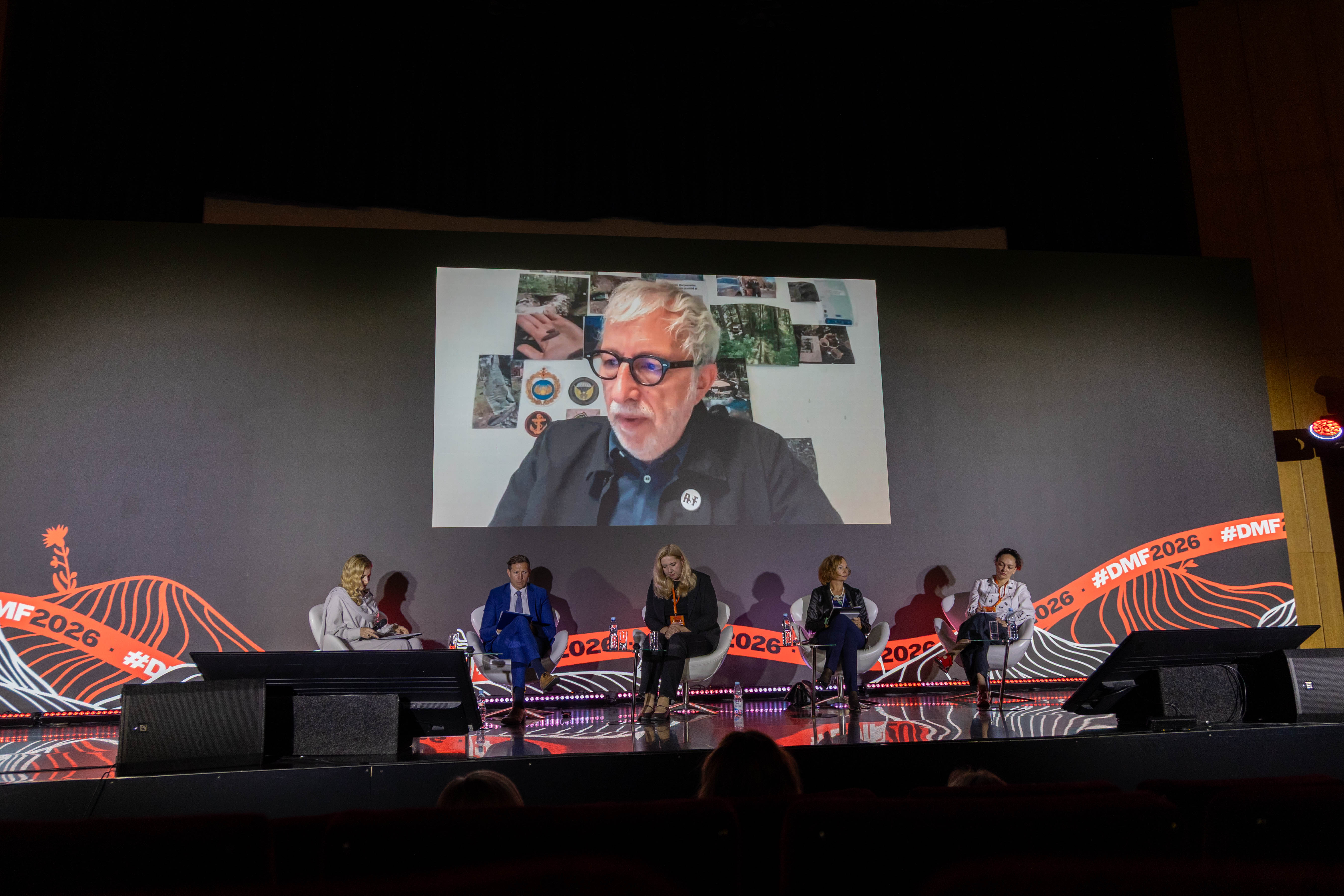
Antoine Bernard, director of advocacy and assistance at Reporters Without Borders (RSF), supported the need to move from emergency aid towards sustainable funding models. He spoke about IFRUM, the Independent Fund for the Resilience of Ukrainian Media, which is intended to help newsrooms diversify their revenue and reduce dependence on donor funds.
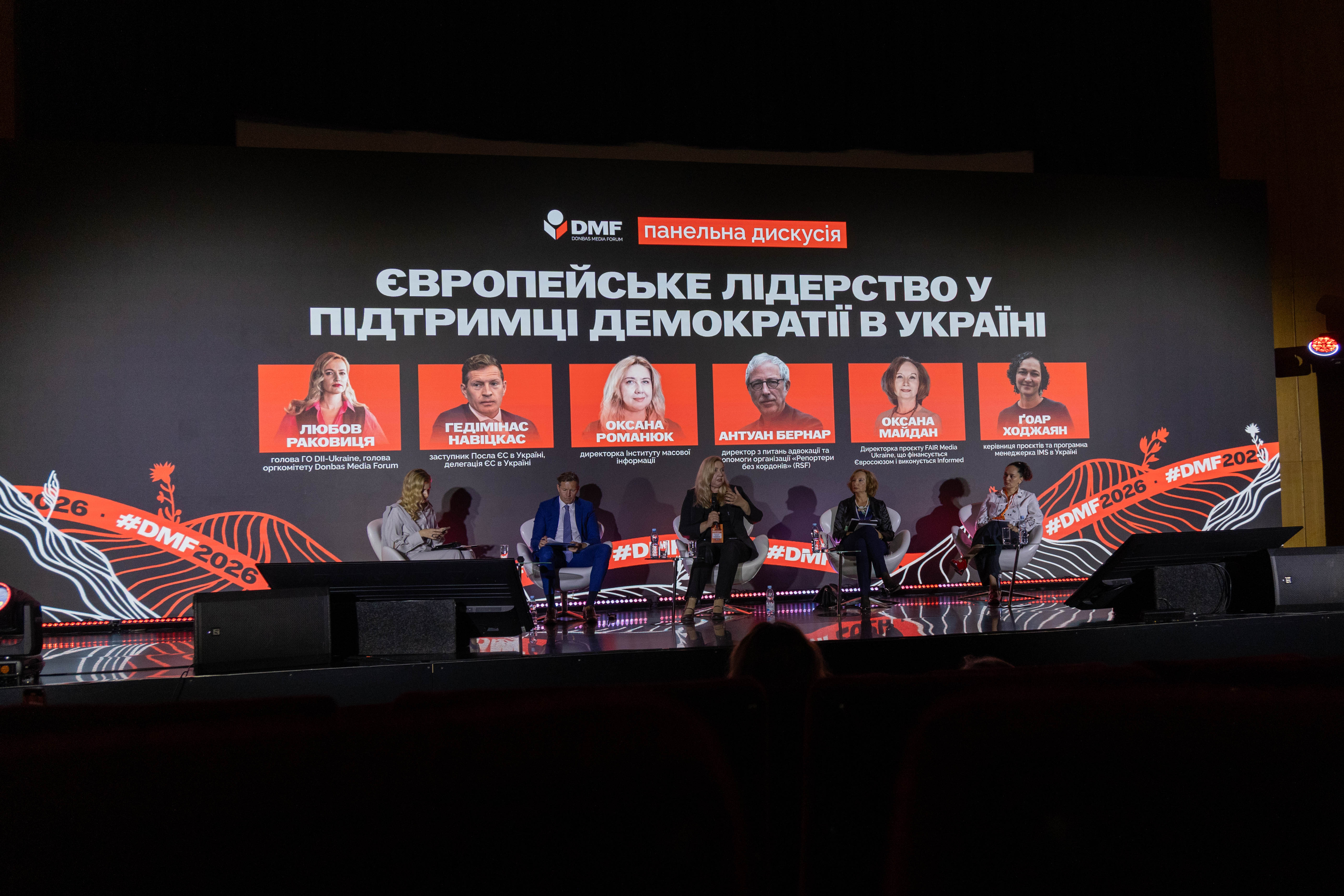
“The Ukrainian media sector must continue to make its own decisions about its development, even when it receives international funding,” Bernard stressed.
Oksana Maidan, director of the FAIR Media Ukraine project, said that 40 media outlets based in frontline regions have received EU support. At the same time, finding their own economic models remains a key task for the newsrooms.
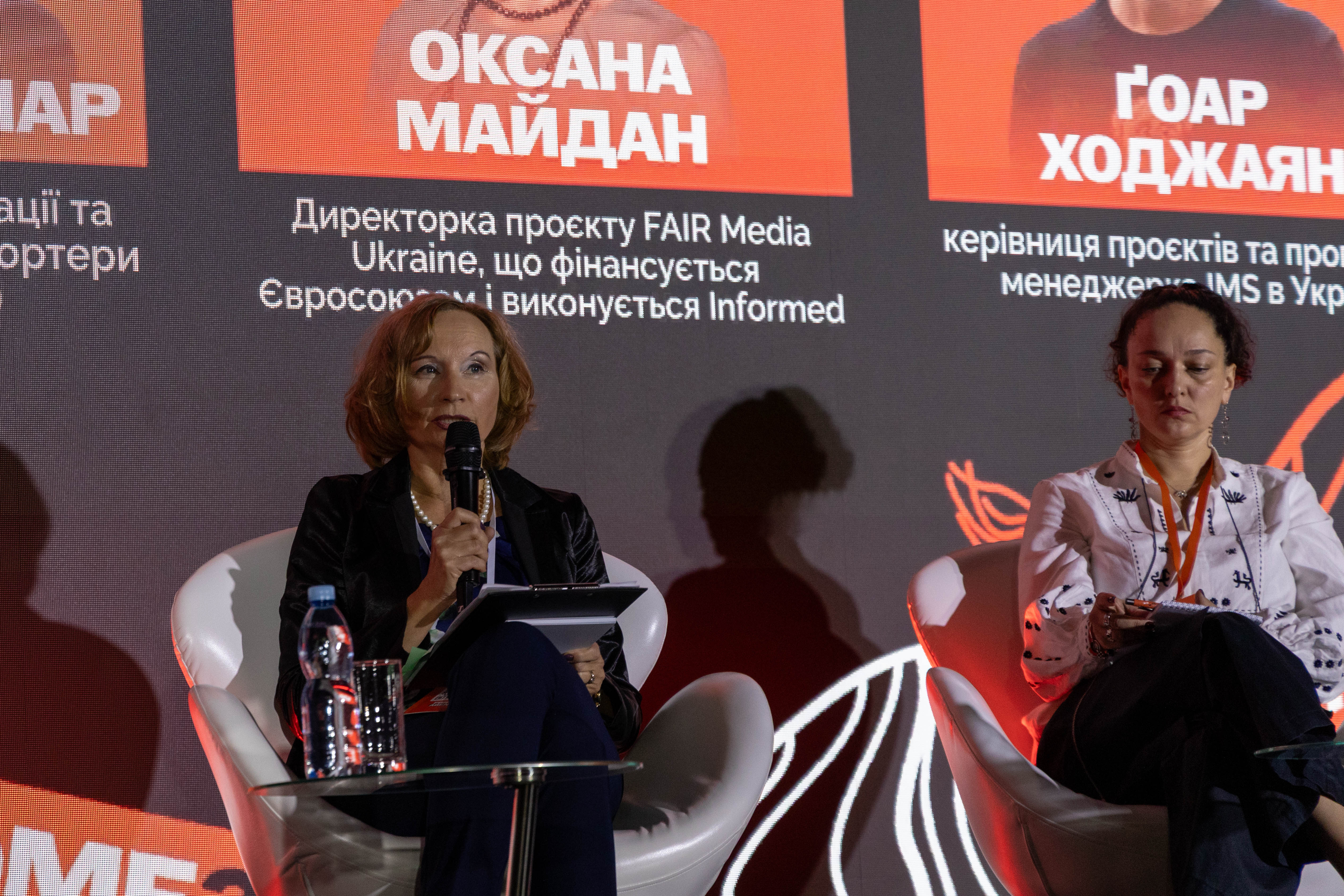
“Developing independent journalism is not only a component of democracy, but also a component of national security,” Maidan stressed, pointing out the threat of cognitive warfare and attempts to influence society’s behaviour through information.
READ MORE
Goar Khodjayan, project lead and programme manager at IMS in Ukraine, identified three strategic priorities: the economic viability of newsrooms, citizens’ trust in quality news, and the media’s involvement in reconstruction and European integration.
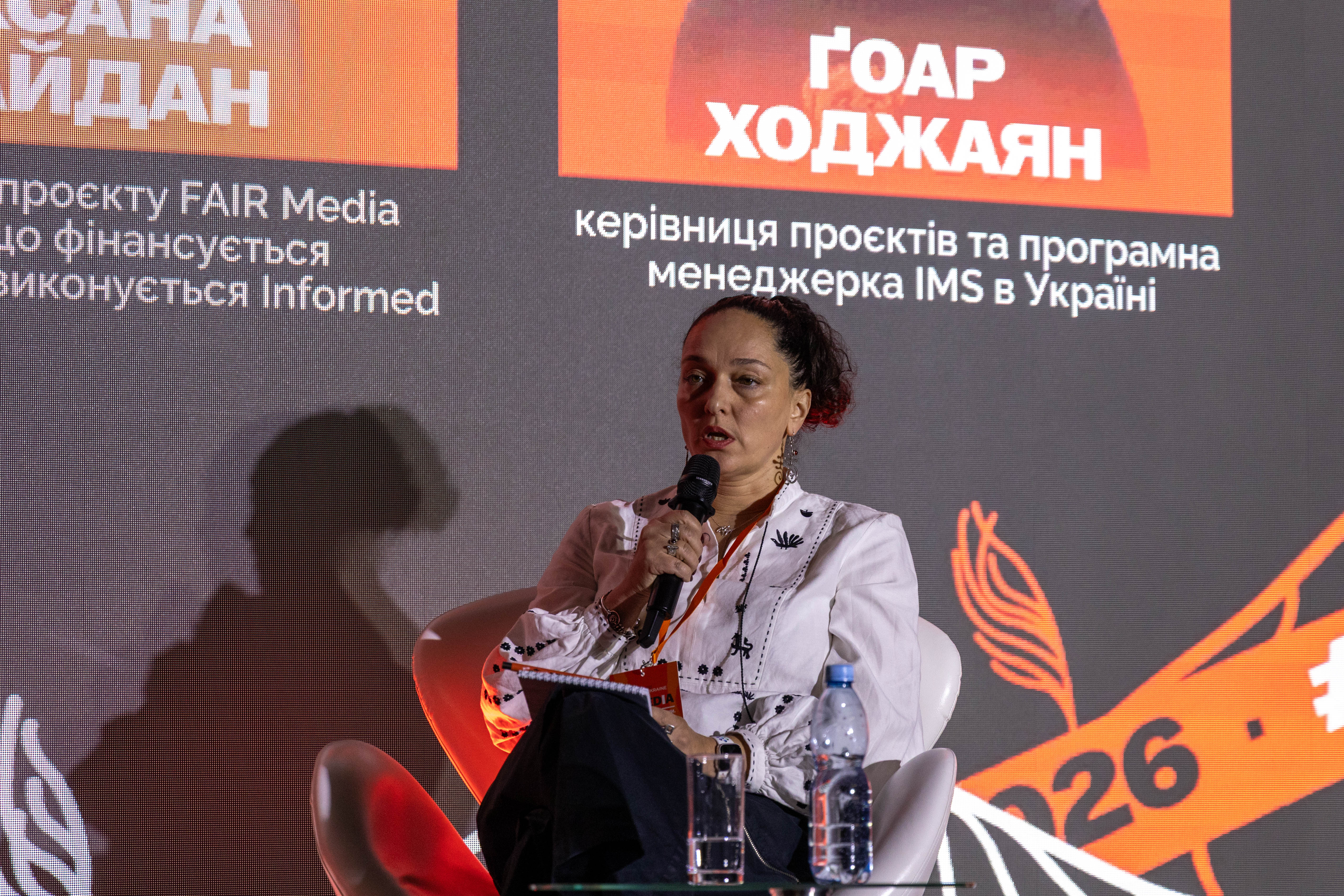
“Support for media must not remain a temporary response to a crisis. It must be a long-term investment in Ukraine’s future,” Khodjayan stressed.
Summing up the panel, Liubov Rakovytsia remarked that the future of independent Ukrainian media would be shaped by five key principles: resilience, solidarity, partnership, innovation, and mutual support.