

Support for independent media should become an integral part of international aid and of Ukraine’s recovery policy, rather than being limited to short-term grant programmes. To that end, each major international aid package should include at least 0.2–0.5% of support for independent journalism and civil society, said Institute of Mass Information director Oksana Romaniuk during the discussion “European Leadership in Supporting Democracy in Ukraine” at the Donbas Media Forum in Kyiv.
“I believe that every major package of international aid to Ukraine should provide at least 0.2–0.5% for supporting independent media and civil society. Not as charity or an extra bonus, but as an investment in the country’s democratic resilience. After all, without independent journalism, ensuring the transparency of reforms, oversight of those in power, and efficient use of reconstruction funds is impossible,” Romaniuk stressed.
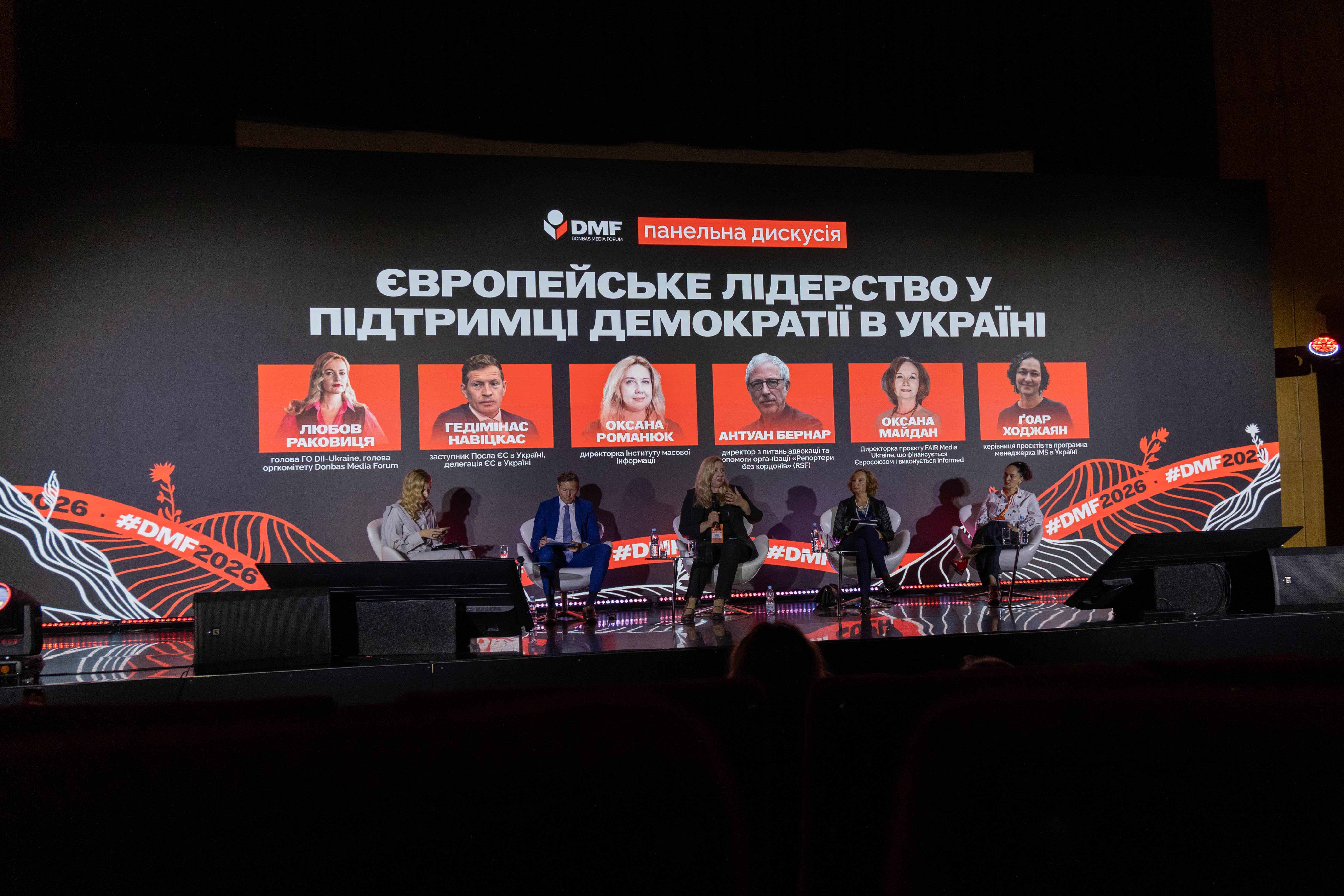
According to her, international partners should move from supporting individual short-term projects towards long-term partnership with the entire Ukrainian media ecosystem. One possible solution could be to create an independent mechanism for supporting the media, involving civil society organisations, the state, the European Union, and other international partners.
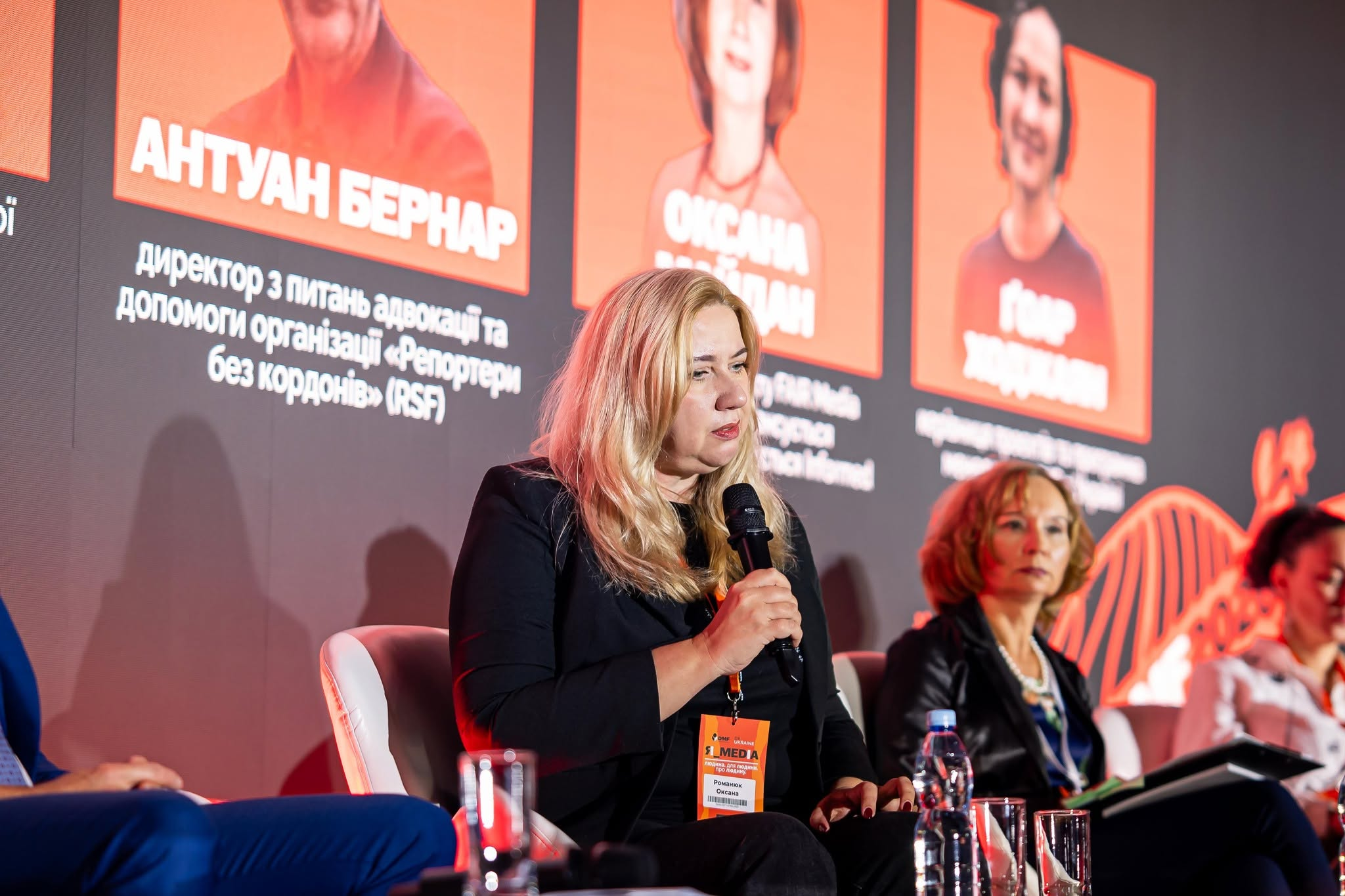
The IMI director pointed out that the very concept of resilience for Ukrainian media has changed fundamentally over the years of the full-scale war.
“The resilience of the media is no longer about the romance of a heroic team that survived without salaries or electricity and under shelling. Today it is a daily management routine, self-sufficency, and a constant balancing act among all the possible variables of Ukrainian life. But media resilience is tied firmly to Ukraine’s resilience,” she remarked.
Romaniuk divided the main challenges facing the media sector into two groups. The first covers physical safety, financial stability, the staffing crisis, and journalists’ mental exhaustion. The second concerns independence, trust, and preserving the public mission of journalism.
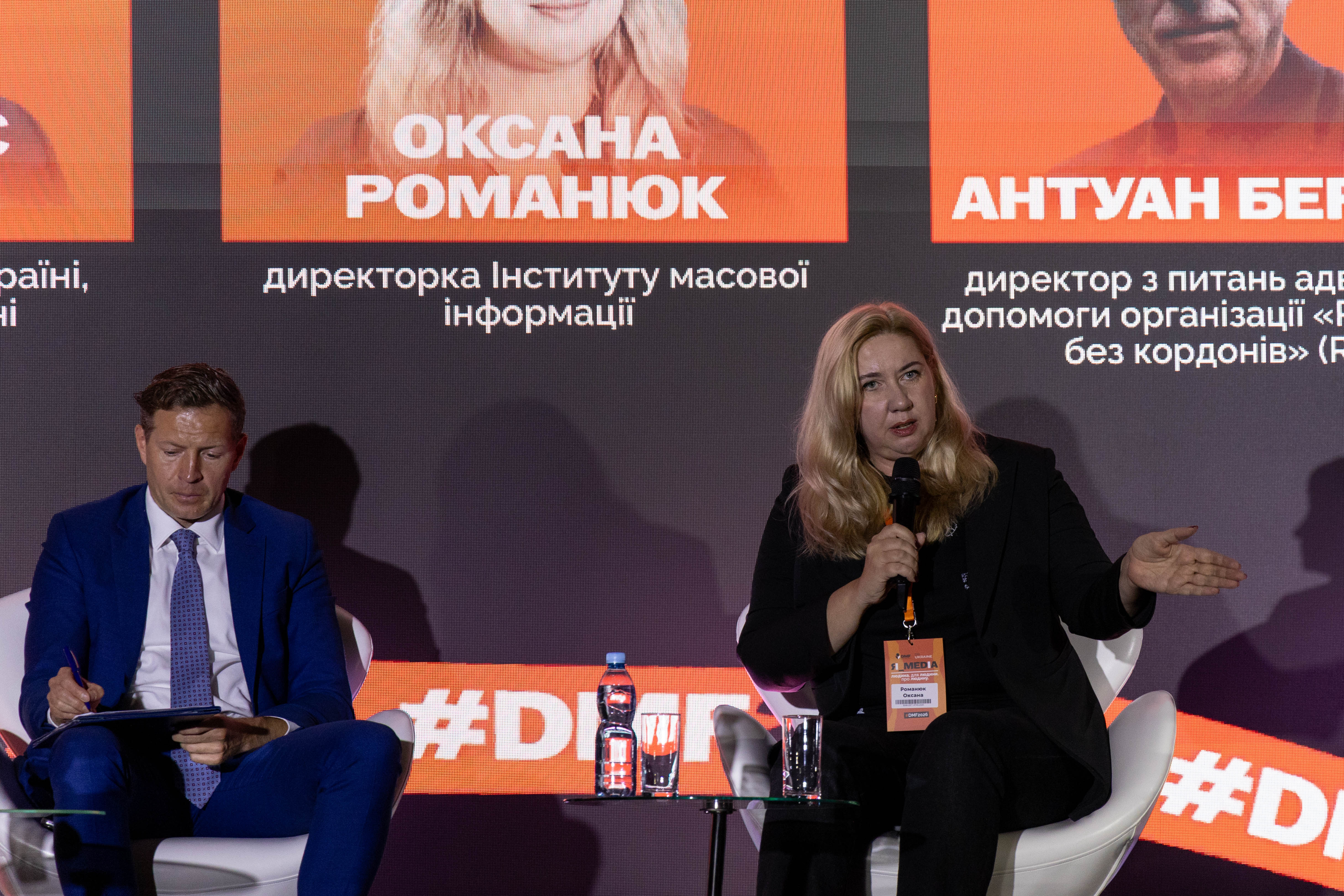
Romaniuk also pointed out another problem: the risk that independent media may lose their public function even if they survive economically.
“A newsroom can survive physically but lose its mission. If it turns into a PR platform for business exclusively, it begs the question as to what its journalistic purpose is. When a community loses an independent outlet, it is quickly replaced by the news equivalent of junk food, mostly Telegram channels. The flow of information remains, but the community loses an institution that asks questions, checks facts, helps solve people’s problems, and holds powerful actors accountable,” the IMI director explained.
She stressed that restoring an independent outlet after it shuts down is far more difficult than keeping it running: professional teams, sources of information, ties with the community, and the audience’s trust, built up over years, all disappear along with it.
Romaniuk also remarked that Ukrainian news outlets are already showing innovative approaches to working in crisis: distributing teams and technical resources, using artificial intelligence to automate processes, and creating their own digital tools. In her view, this experience could be helpful for European media too.
She named building the solidarity and agency of the Ukrainian media community as another priority for 2027.
“We compete with each other a great deal, when in reality it should be us together competing for the audience’s attention against Telegram channels and social media platforms. We need to cooperate more, share resources, and defend access to information and promote the necessary reforms together. We have to turn from a fragmented community into a strong professional community, capable of setting the rules of its own growth,” Romaniuk remarked.
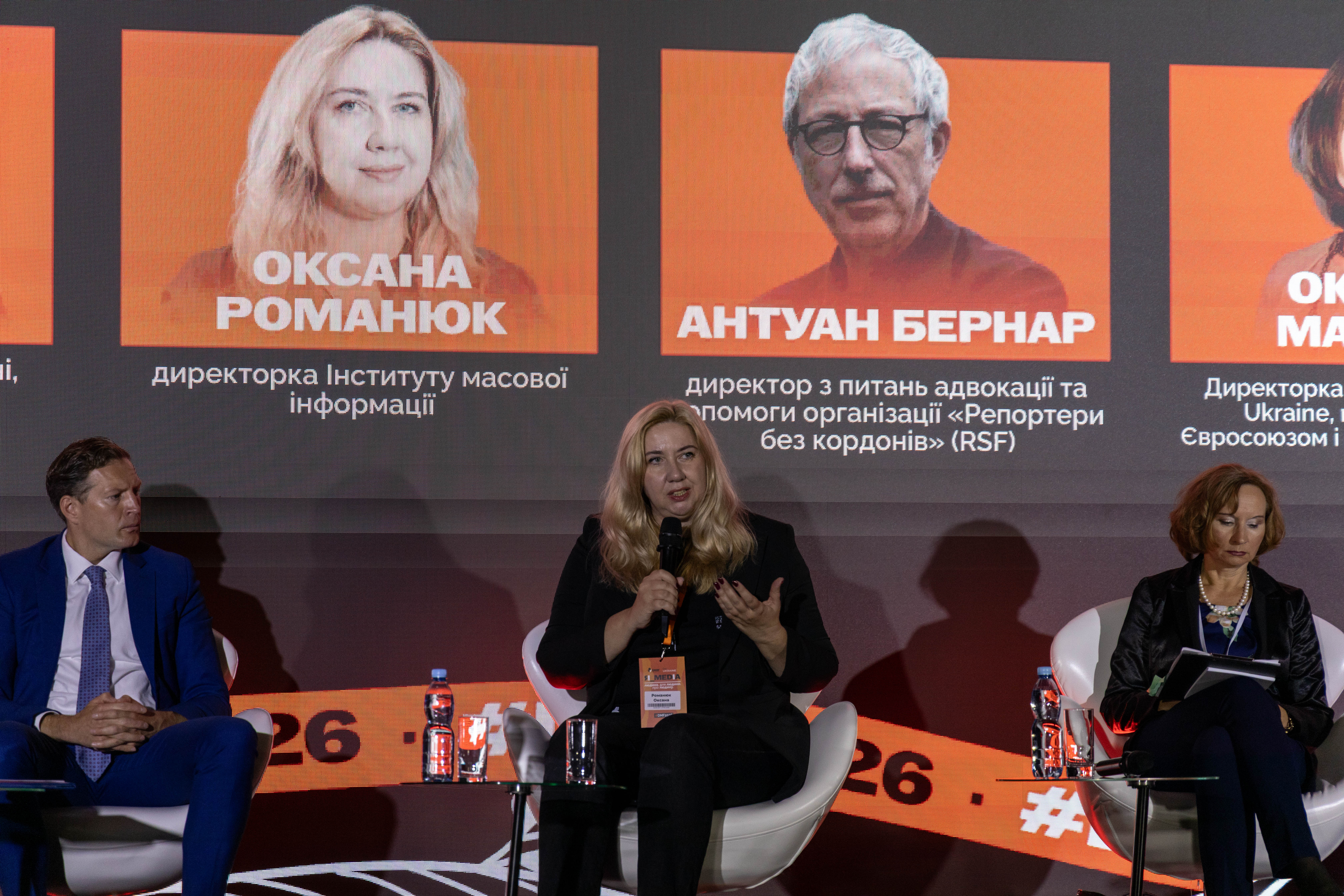
She said that support for the media should be viewed not just as a matter of keeping individual news outlets alive, but as an investment in democratic institutions, public trust, and Ukraine’s European future.
“We need a support system, not short-term fixes. A partnership that will help preserve independent journalism and develop new models of its resilience. Support for the media should be part of Ukraine’s recovery policy, not a separate humanitarian activity of individual donors,” the IMI director concluded.
The Institute of Mass Information (IMI) is a Ukrainian civil society organization specializing in the media, operating since 1996. IMI defends the rights of journalists, studies the media landscape and reports on media-related events, fights propaganda and disinformation, and provides media workers with safety equipment for trips to combat areas (since the start of the Russo–Ukrainian war in 2014).
IMI carries out the only monitoring study of freedom of speech in Ukraine, keeps a list of transparent and responsible online media outlets, and tracks Russia’s media crimes in the war on Ukraine. IMI has representatives in 20 oblasts of Ukraine and runs a network of Media Hubs that provide journalists with unfailing support. IMI’s partners include Reporters Without Borders (RSF); the organization is also a member of the International Freedom of Expression Exchange (IFEX).