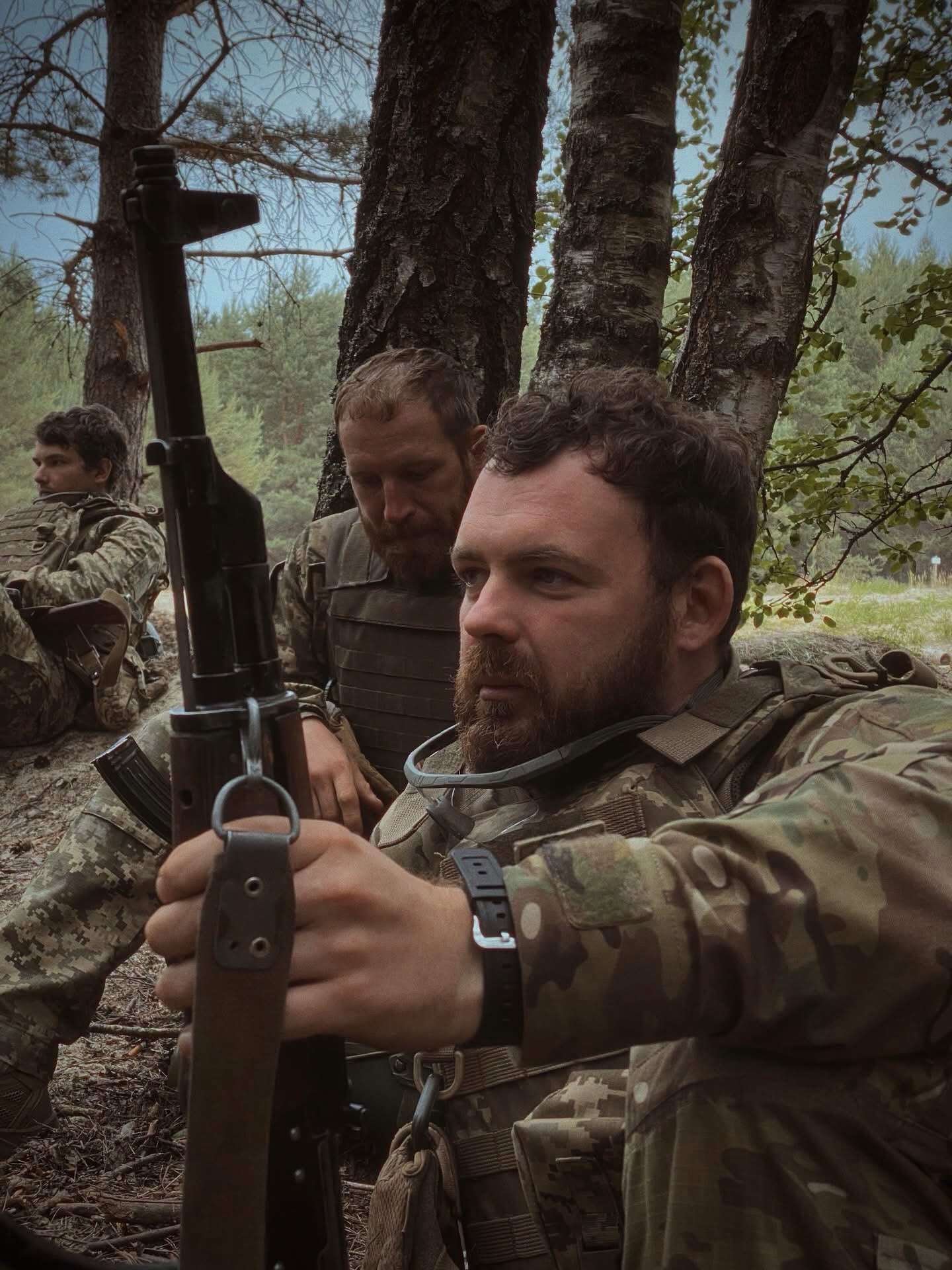

At least 27 Ukrainian civilians working in the media and one journalist who joined the Ukrainian Defence Forces are detained by Russian forces, Kateryna Diachuk, the Institute of Mass Information’s (IMI) chief of freedom of speech monitoring, said in her address to the Verkhovna Rada’s Temporary Investigative Commission (TIC) on Russian crimes against the media on 28 October.
READ MORE:
According to IMI, the prisoners include reporters with local and national outlets, editors, freelancers, citizen journalists, and Telegram channel administrators. A significant share of them are citizen journalists from Crimea who reported on repression and human rights abuses in the peninsula under Russian occupation.
Geography and duration of imprisonment
As Kateryna Diachuk remarked in her address to the TIC, Russia’s persecution of Ukrainian journalists has been going on continuously since 2014 in Crimea as well as well as the parts of Zaporizhzhia, Kherson, and Kyiv oblasts that were occupied after 2022.
- Earliest cases: Oleksiy Bessarabov and Dmytro Shtyblikov have been imprisoned since 2016, for about 10 years.
- Prison terms: Prison terms handed down to Ukrainian media workers by Russian courts have ranged from 3 to 19.5 years. Namely, Hennadiy Osmak was sentenced to 3 years and 2 months, Iryna Danylovych to 7 years, Ernes Ametov to 11 years, Amet Suleimanov to 12 years, and Serhiy Tsyhipa to 13 years. Most Crimean Tatar citizen journalists are sentenced to 14 – 19 years, and Dmytro Shtyblikov was sentenced to 19.5 years on a new charge.
Charges and detention conditions
Kateryna Diachuk said that the occupation authorities most often charged media workers with espionage, terrorism, involvement in outlawed groups, sabotage, and high treason.
After their detention, journalists are taken to pre-trial detention centres and prisons in Russia (Tambov, Khakassia, Murmansk, Krasnoyarsk Krai, Rostov-on-Don, and others) or jailed in the occupied territories.
The IMI representative pointed out to the catastrophic state of the prisoners’ health and to reported cases of torture:
- Amet Suleimanov, who has severe heart failure, needs surgery but is denied treatment;
- Iryna Danylovych has completely lost hearing in one ear;
- Vilen Temeryanov complains of eyesight loss and severe stomach pain;
- Yevhen Ilchenko and Anastasia Hlukhovska were subjected to torture, including electric shocks and mock executions.
Those released and those who died in custody
Kateryna Diachuk stressed that some media workers have come back from detention. Among civilians, these are Nariman Celâl, Vladyslav Yesypenko, Dmytro Khyliuk, and Mark Kaliush; among servicemembers, Maksym Butkevych, Oleksandr Hudilin, Roman Borshch, and Volodymyr Chertushkin.
Ukrainian journalist Viktoria Roshchyna died in a Russian prison in September 2024.
According to the Institute of Mass Information, at least 27 Ukrainian civilians working in media and one journalist turned UAF serviceman remain imprisoned by Russia today.