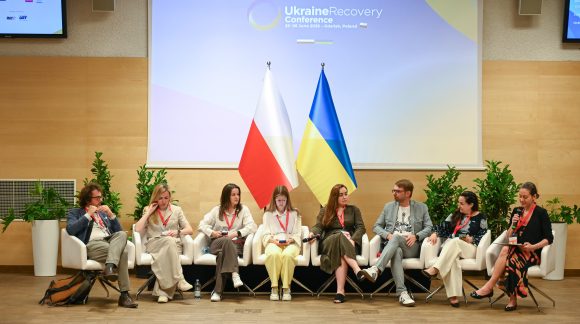
Independent media should be fully involved in the Ukraine Recovery Conference (URC) and their support should be factored into Ukraine’s recovery programmes, as per the joint address endorsed by 38 Ukrainian media outlets and civil society organisations, including the Institute of Mass Information.
The organisations’ proposals include ensuring independent newsrooms are represented in the URC 2027 programme, a more accessible accreditation procedure, and involving media outlets in discussions of recovery-related policies and decisions, reports Recovery Window, which initiated the address.
The address stresses that Ukraine’s recovery is not just about rebuilding the destroyed infrastructure. Transparency in decision-making, expenditure accountability, community participation, and public trust in the recovery process are equally important.
Independent media play an important role in this process: monitoring the implementation of projects, reporting community issues, identifying risks, and helping society oversee the decisions on which the country’s recovery depends.
The war has significantly undermined Ukraine’s media sector. Some newsrooms have lost their offices and equipment, had to relocate, downsize, or operate amid a significant drop in revenue and audience. Independent media in areas close to the frontline, de-occupied, and war-affected communities remain especially vulnerable.
The authors of the address therefore propose treating support for independent media as a component of Ukraine’s recovery. This means not just funding media support for individual projects, but preserving and building newsrooms’ capacity as independent public institutions.
The changes proposed
The address proposes involving representatives of independent media as speakers, experts, moderators, and participants in thematic discussions at URC 2027. It stresses the need to ensure representation of regional, local, and frontline newsrooms, as well as media based in de-occupied and war-affected communities.
It also proposes involving media professionals as early as the conference planning stage: in consultations on the discussion topics, formats, and the composition of guests. In the authors’ view, the media’s role in recovery, as well as the needs of the media sector itself, should be included in URC’s main agenda, both as a discussion subject in its own right and as part of the panels on transparency, democratic governance, community development, investment, and media resilience.
Moreover, the address proposes making URC’s accreditation process clearer and more predictable, e.g. disclosing the criteria and deadlines in advance, allowing enough time for applications to be submitted, and not delaying decisions.
In the authors’ view, accredited journalists should also be able not just to work from the media centre but to attend the open panels of the main programme, ask questions, and get the material they need (with due regard for security and organisational constraints).
One more proposal is for URC 2027 to feature a dedicated official event on the role and recovery of independent media, bringing together representatives of news outlets, state bodies, communities, donors, businesses, and international organisations.
The address also calls for independent media to be included in Ukraine’s recovery programmes and financial instruments. This means supporting newsrooms’ capacity as institutions on which transparency, accountability, and public oversight of the recovery process depend.
More than 30 media outlets and civil society organisations have already endorsed the address. Read more about the proposals here.
Following the release of the address, its initiators plan to engage with governments and the Ukraine Recovery Conference organisers.
You can sign the address here.