
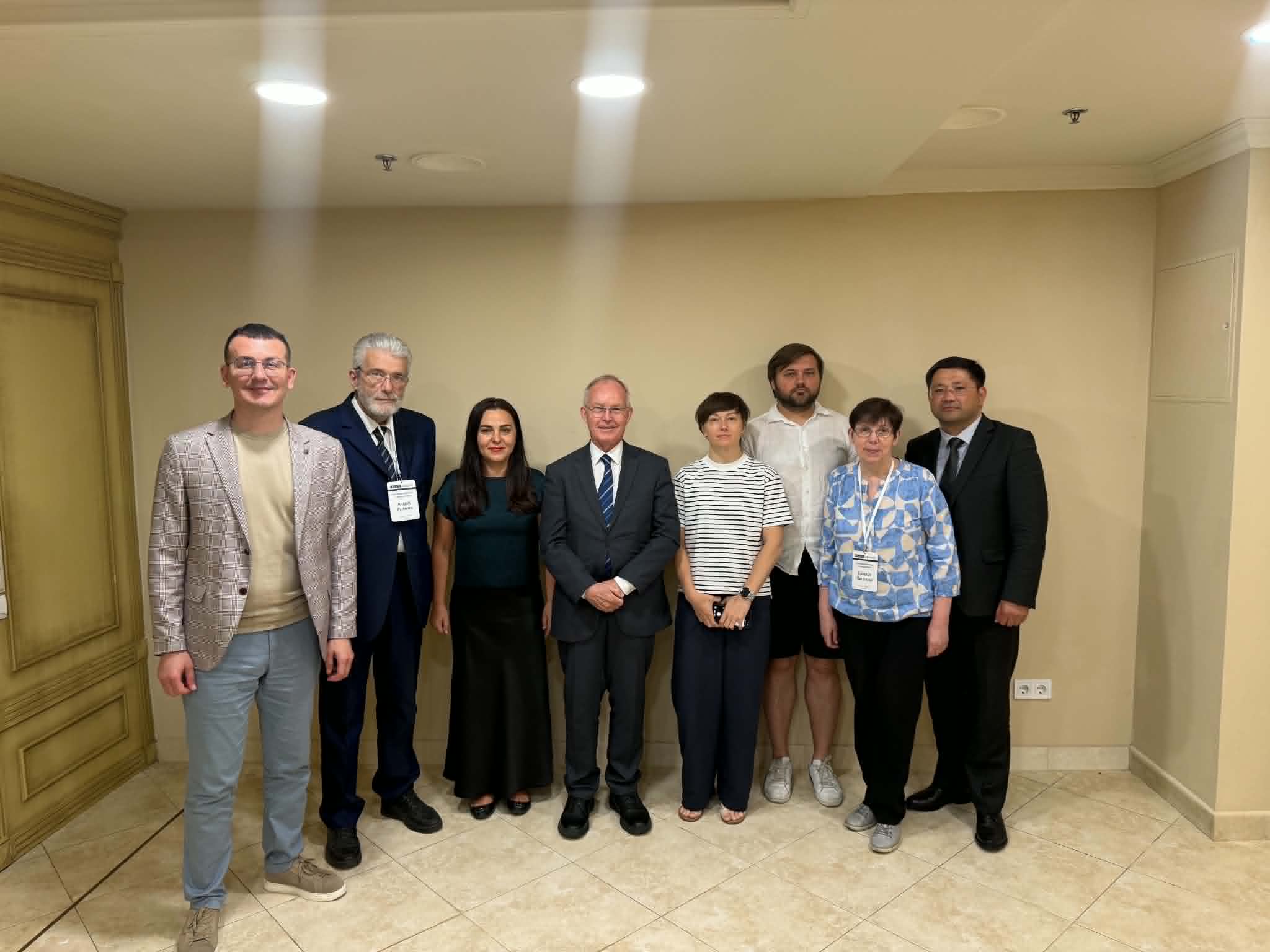
The Institute of Mass Information (IMI) brought up Russia’s crimes against journalists and media, as well as the need for updates to international humanitarian law, during a meeting with Jan Braathu, the OSCE Representative on Freedom of the Media, on 2 July in Kyiv.
The meeting was attended by representatives of Ukrainian media and human rights organisations, including IMI.
Kateryna Dyachuk, IMI’s senior press freedom monitor, spoke about the crimes against journalists and media that Russia has been committing since the start of the full-scale invasion.
“IMI has recorded over 950 such crimes since 2022. These included journalists being murdered and kidnapped, media offices being destroyed, TV towers targeted in air strikes, cyber attacks, and other press freedom violations,” the expert said.
She singled out the Ukrainian civilian journalists who have been illegally detained by Russian forces. According to IMI, at least 26 civilians working in media remain imprisoned by Russia. Some of them were detained in Ukraine’s temporarily occupied territories for reporting on life under Russian rule.
Kateryna Dyachuk also raised the issue of funding for Ukrainian media after the rollback of USAID programs.
“Many news outlets faced the risk of going out of business. IMI’s surveys of journalists have showed that many of them are switching professions due to lack of funding or burnout,” she said.
Dyachuk sterssed the importance of supporting regional media outlets that deliver verified information to their communities, and noted that IMI used their capabilities to help such news teams.
Another topic was the new safety challenges faced by journalists. Kateryna Dyachuk said the Russian army has been deliberately targeting journalists in drone strikes over the past two years, prompting increasing numbers of media workers to abandon labels identifying them as the press as they work in combat zones. She pointed out that international humanitarian law needed updates that would take the modern threats to journalists into account.
Kateryna Dyachuk added that data on Russia’s crimes against journalists, which IMI has been consistently collecting and verifying, was included in the semi-annual report by the Verkhovna Rada’s Temporary Commission investigating crimes against journalists and media workers committed by Russian army units.
“This will allow the inclusion of data on the persecution faced by Ukrainian journalists in Ukraine’s official state position and its use for international advocacy and tracking of Russia’s war crimes,” she said.
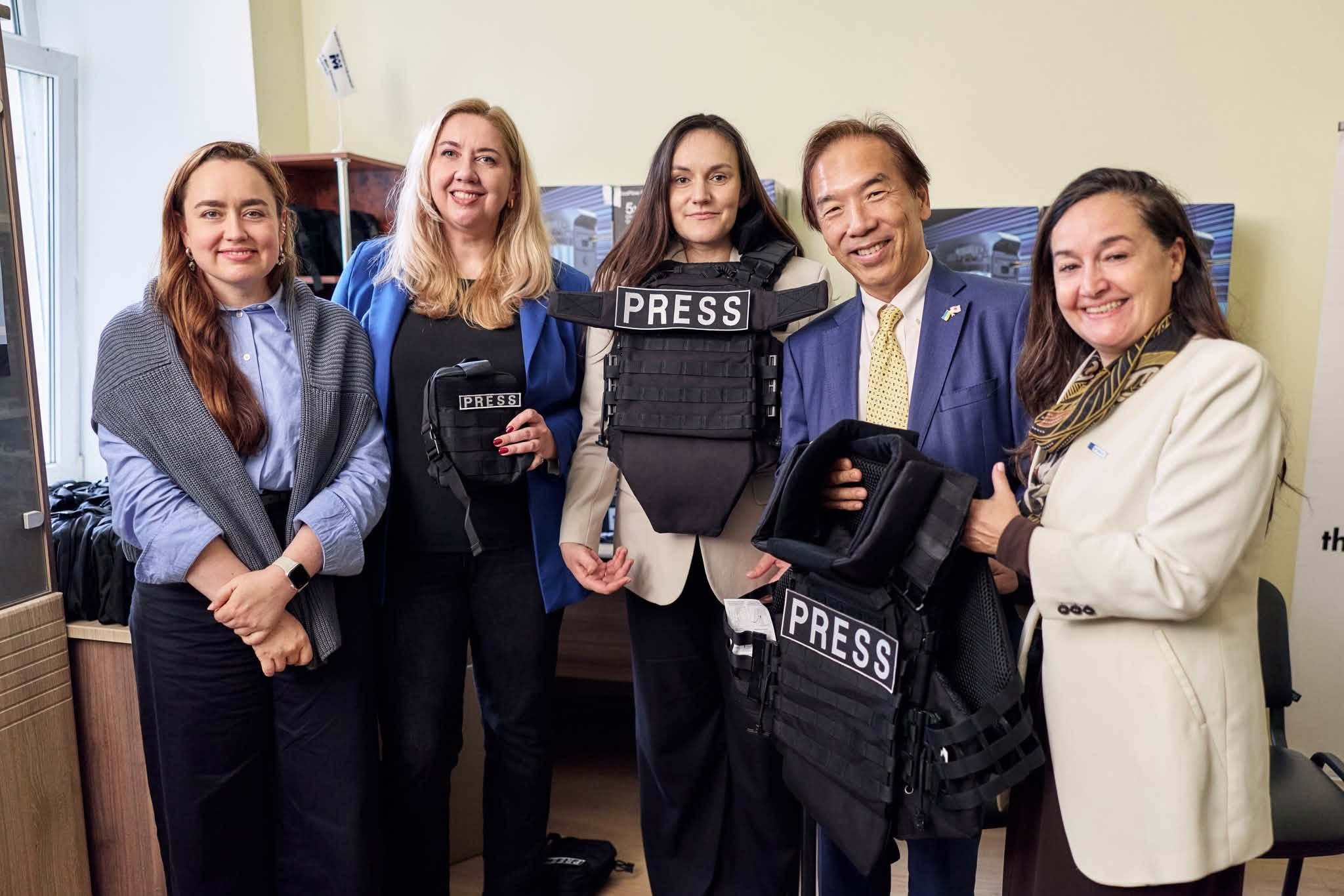
Kateryna Dyachuk also spoke about IMI’s network of 15 Mediabaza hubs that give journalists a safe space to work and provide them with protective gear.
Jan Braathu said that he would bring up the need for changes to international humanitarian law at his Geneva meetings, in particular those with UN representatives.
He added that the topic had to be discussed by professionals so that no changes are made that create a risk of journalists being perceived as combatants.
IMI has explained before how outdated international humanitarian law leaves journalists unprotected.