
The Institute of Mass Information experts recorded 23 freedom of speech violations in Ukraine in May 2026. 10 were committed by Russia, as evidenced by IMI’s monthly monitoring study, the Freedom of Speech Barometer.
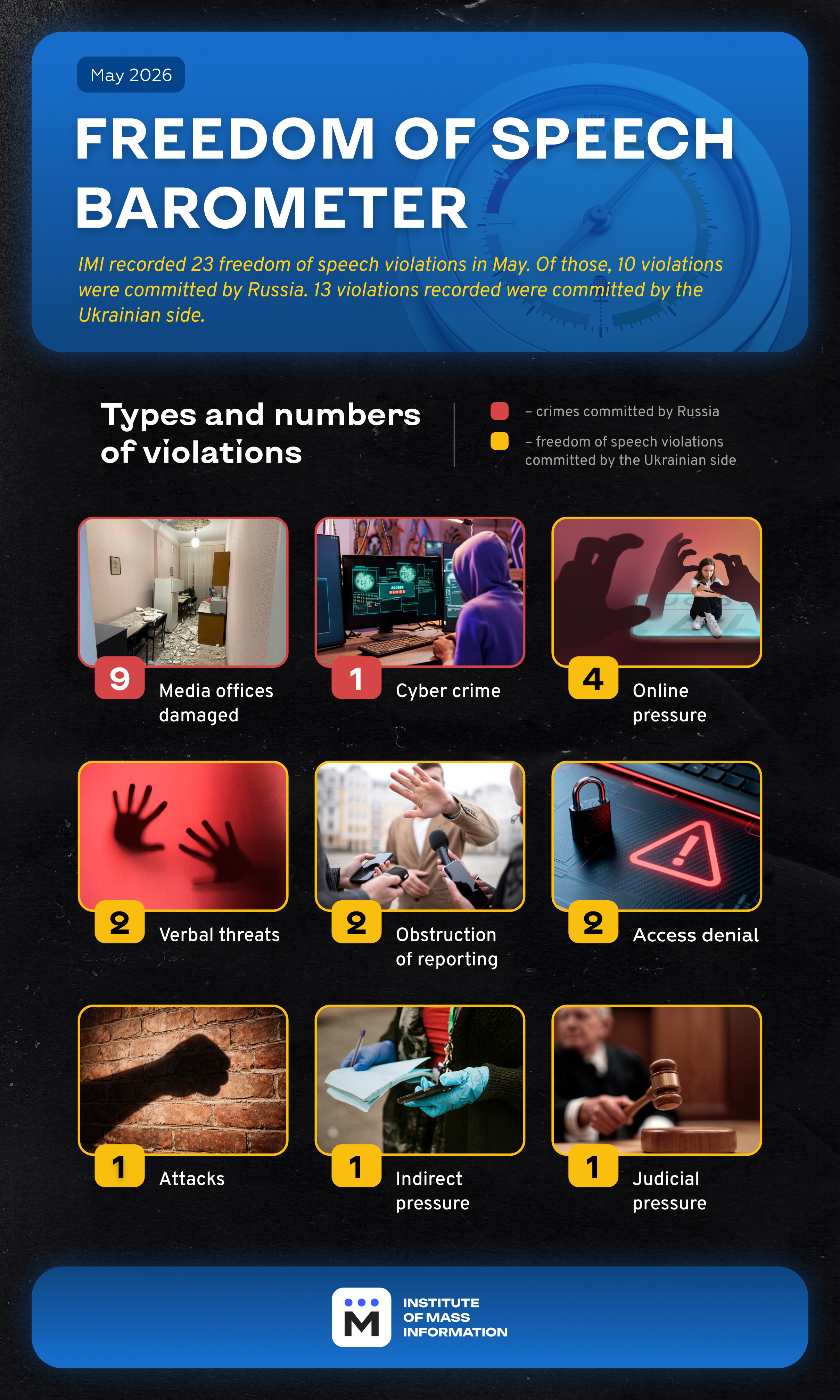
Russia’s crimes against the media and journalists included destruction of and damage to media offices, as well as cyber attacks.
The death of one media worker turned UAF servicemember* was reported in May:
- Oleksandr Klymenko, a serviceman, videographer, and director from Poltava. He had worked as a video editor with the Poltava-based TV channels Misto and Tsentralnyi (before 2020). Klymenko had been considered missing in action since 2024. His death was confirmed on 30 April 2026 by the DNA examination of the soldiers’ bodies released by Russia.
Destruction of and damage to media offices
- The office of the Ternopil-based newspaper 20 Khvylyn was damaged in Russia’s mass drone attack on the city: fragments of a shot-down Shahed drone hit the office building and broke the windows. There were no casualties, since all staff were in a bomb shelter.
- The Suspilne Zaporizhzhia office was damaged in a Russian drone strike along with the TV tower infrastructure. There were no casualties among the team, as everyone had taken cover in the bomb shelter. The attack damaged the windows in the buildings and television broadcasting was temporarily off due to damage to the television tower.
- Russian strikes at Sumy blasted out the windows in Kordon.Media office eight times in late 2025. Most damage was inflicted by various types of drones. The team continued to work despite the repeated attacks, doing some repairs at their own expense or with support from charity organisations. The team is allowed to work remotely for their own safety.
- The DW office in Kyiv was damaged in a Russian strike. The team was unharmed.
- The office of the news website Shelter was damaged in a Russian strike in Kyiv. The team was unharmed.
- The Kyiv office of Realna Hazeta, formerly based in Luhansk, was damaged by Russian shelling. The windows in the building were broken, some of the plaster flaked off the walls, and furniture and equipment were damaged.
- The office of the independent news website Graty was damaged in the Russian strike in Kyiv. The blast wave damaged the office room and podcast studio. The team was unharmed.
- The Kyiv studio of Germany’s ARD was severely damaged in a Russian strike. The windows were broken and some walls collapsed. The staff were unharmed.
- The external glazing in the UNIAN office in Kyiv was damaged in a Russian strike.
Cyber crimes
- Hackers targeted the blog section on the Ukrainska Pravda website and posted Russian propaganda there. The hackers accessed the passwords of some prominent columnists and made fake posts impersonating them.
IMI also recorded 13 press freedom violations unrelated to Russia’s war on Ukraine. These included cases of assault, death threats, obstruction of reporting, denial of access to information, online pressure, judicial pressure, and indirect pressure.
Violations were recorded in Kyiv city, Chernihiv, Dnipropetrovsk, Volyn, and Odesa oblasts. The perpetrators were officials of varying ranks and private persons.
Assault
- A Chernihiv village council staff attacked a Slidstvo.Info filming crew working on a news story about a deceased serviceman and knocked the camera out of the cameraman’s hands.
Death threats
- Texty.org.ua journalist Valeria Pavlenko faced veiled threats and hateful comments on social media following her reporting on the recent immigration panic. The comments hinted to a potential retaliation.
- Pershyi Kryvorizkyi journalist Yevhenia Bykova faced a wave of hateful social media comments and death threats, including warnings such as “some journalists don’t live long,” following a series of articles and registering a petition opposing the raise in water tariffs in the city.
Obstruction of legal reporting
- A Volyn city council official attacked a Syla Pravdy filming crew as they were working on a news story about a rent conflict, grabbing the correspondent’s phone out of her hands. The police are investigating the incident as obstruction of reporting.
- Larysa Kryvoruchko, the defense attorney of Vyacheslav Zinchenko, who stands accused of murdering the public figure Iryna Farion, warned journalists and public activists of potential legal liability for filming and sharing her private conversations in the courtroom.
Access to information
- The Odesa Oblast Military Administration (OMA) refused to share data about the salary of their chair Oleh Kiper with the Center for Public Investigations (CPI), citing martial law and security. The team believes the information to be of public interest and is drafting an appeal.
- The Chernihiv oblast enlistment office refused to disclose information about the burial of a deceased serviceman to Slidstvo.Info, claiming that the query was unfounded and the information could not be disclosed without the family’s consent. The journalists stress the public interest in the story.
Online pressure
- The donation section of the #SHOTAM website was targeted by hackers and bots shortly after the team discovered that a network of social media pages had been impersonating them.
- The Instagram page of Dnipro-based journalist Maria Tkachova was suspended following mass strikes by followers of the underage blogger Timofiy Poteriaylo. The blogger encouraged his subscribers to flag the journalist’s account after she posted a video about his activities.
- Suspilne Dnipro journalist Inna Lysak faced a wave of hateful comments and social media attacks after the release of her interview with Fedor Zinchenko, the father of Vyacheslav Zinchenko, who is accused of murdering Iryna Farion.
- Slidstvo.Info was targeted in an online smear campaign, with several websites posting identical news stories discrediting the news outlet within half an hour. This coincided with the release of Slidstvo’s investigation into a business affiliated with Viktor Medvedchuk’s milieu.
Indirect pressure
- The parliamentary Freedom of Speech Committee has tried the complaint by Danylo Mokryk, an investigative journalist with The Kyiv Independent, against MP Oleksiy Honcharenko. The journalist claimed that the official had posted screenshots from a private group chat that allowed to identify where Mokryk lives.
Judicial pressure
- Centrenergo PJSC is suing Bihus.Info journalist Svitlana Slipchenko, demanding that her investigation into the effort to overhaul the Trypillya TPP be taken down from their YouTube channel, the corresponding news story be removed from the website, and that the media outlet pay them ₴1 million as compensation for moral damage.
See the full monitoring report here.
TheInstitute of Mass Information (IMI) is a civil society organization specializing in the media, operating since 1996. IMI defends the rights of journalists, studies the media landscape and reports on media-related events, fights propaganda and disinformation, and provides media workers with safety equipment for trips to combat areas (since the start of the Russo–Ukrainian war in 2014).
IMI carries out the onlymonitoring study of freedom of speech in Ukraine, keeps alist of transparent and responsible online media outlets, and tracks Russia’smedia crimes in the war on Ukraine. IMI has representatives in 20 oblasts of Ukraine and runs a network of Media Hubs that provide journalists with unfailing support. IMI’s partners include Reporters Without Borders (RSF); the organization is also a member of the International Freedom of Expression Exchange (IFEX).