
Documentary photographer Viacheslav Ratynskyi shares his experience working while equipped with drone detectors for the Institute of Mass Information.
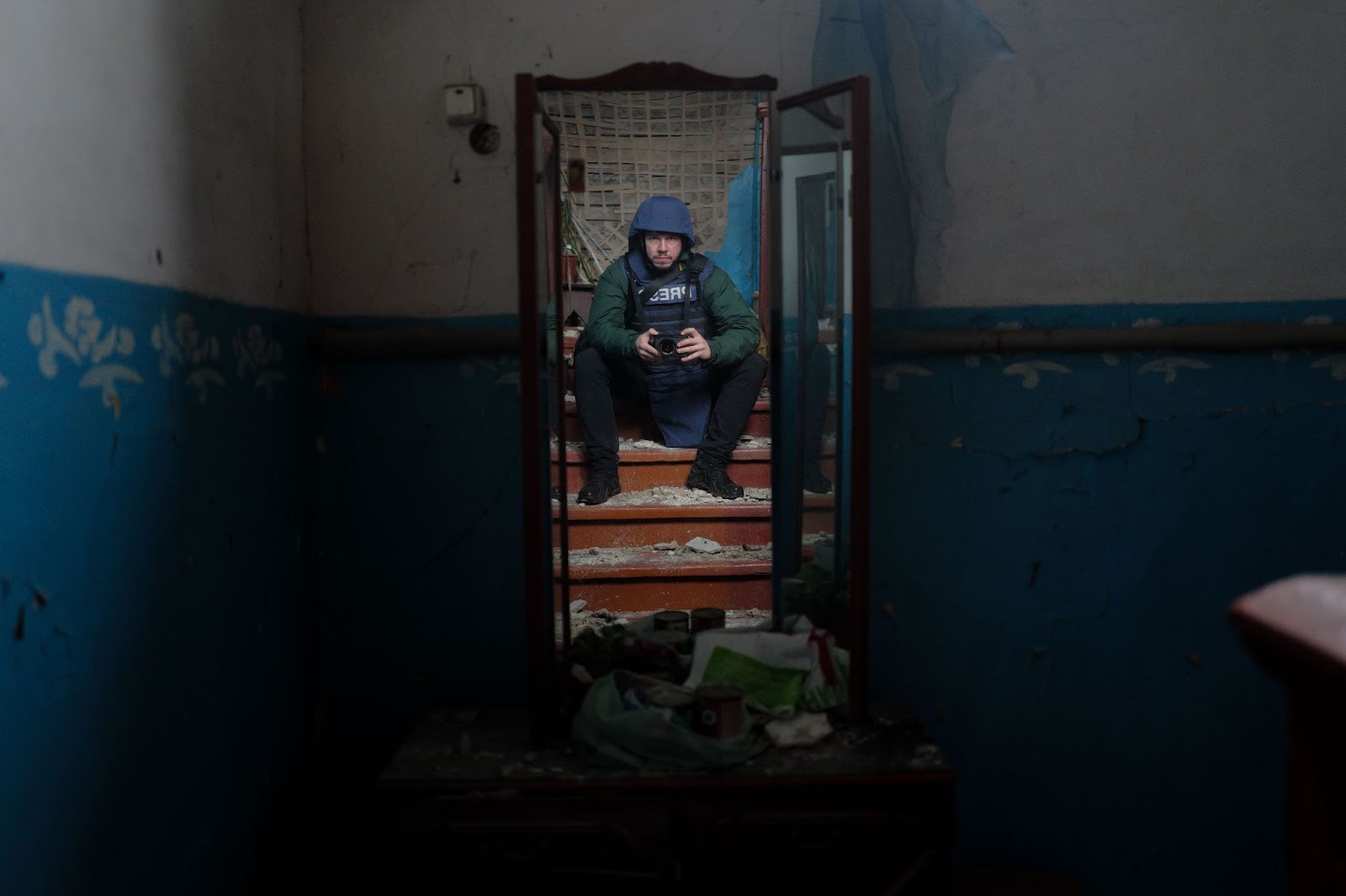
I’ll begin by saying that I am not a technology expert and only sharing my experience working on the battlefield and using drone detectors. My experience is most likely limited, to say the least. But I hope that avoiding even those mistakes that I have made may help someone keep their life and health. Most importantly, you should keep in mind that a drone detector can not save your life; don’t get too relaxed, but at least it will give you better awareness and lower the chances of you getting hit, which is a lot in itself.
A bird in a net
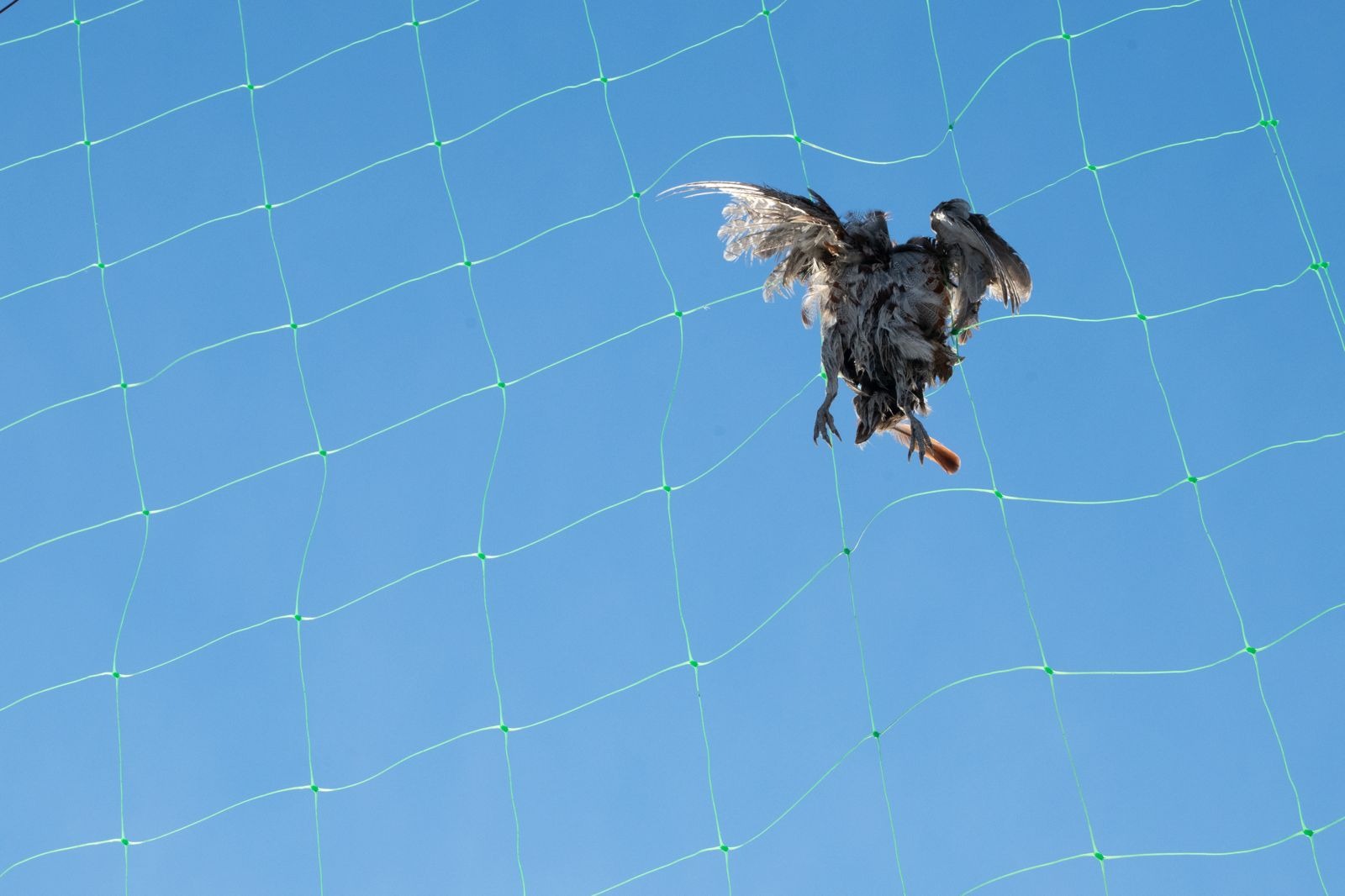
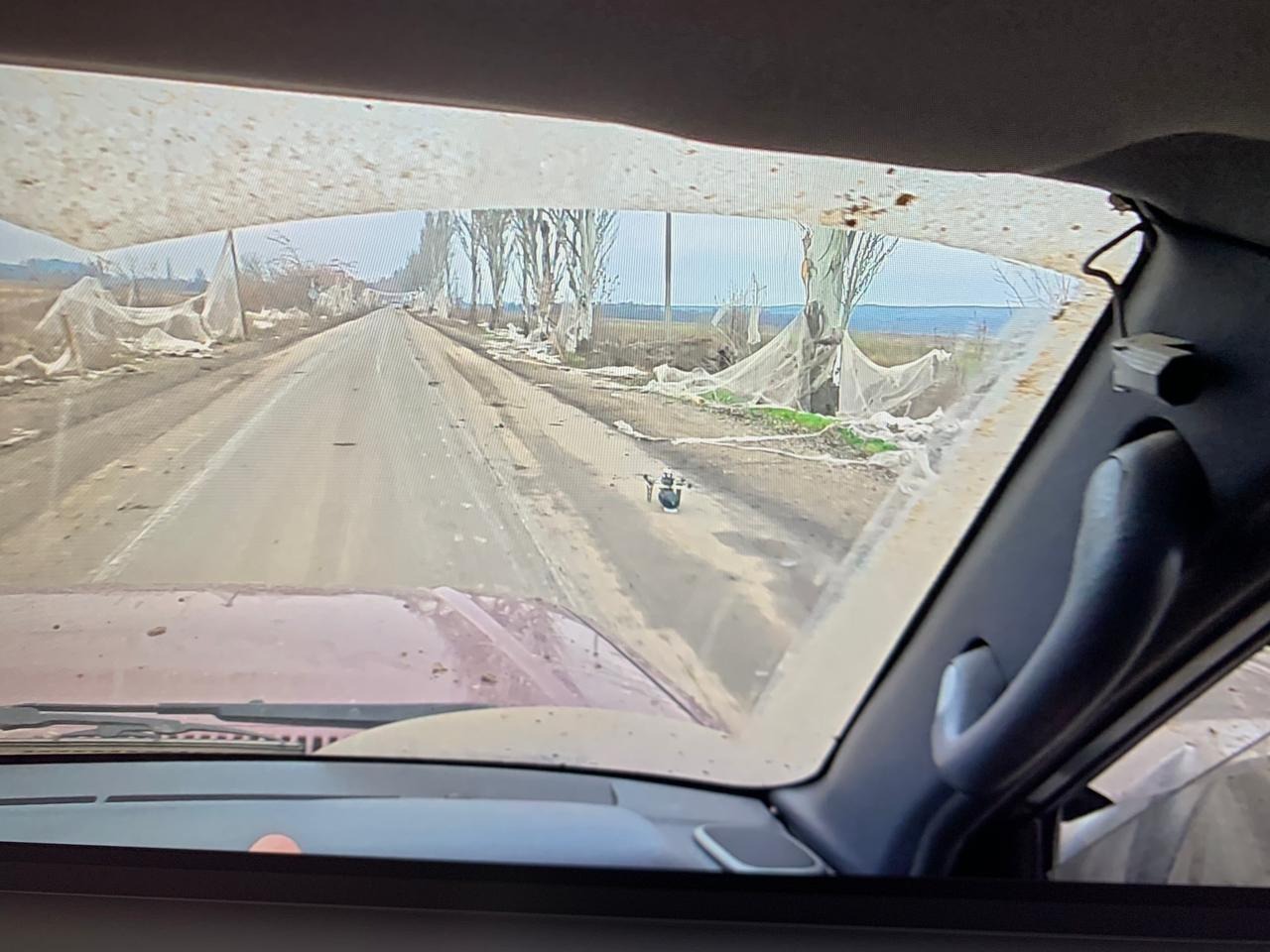
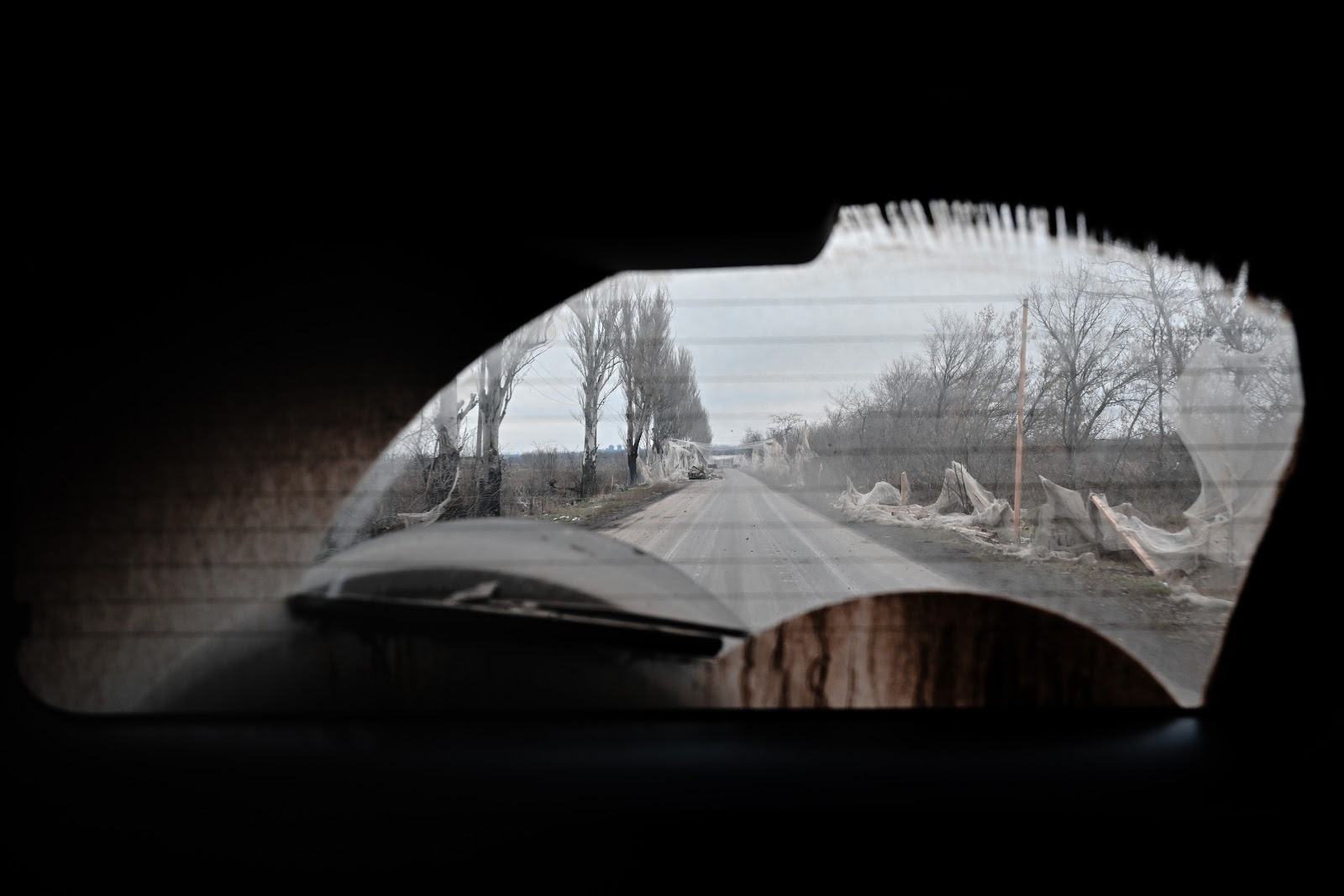
In late January, my colleague and I were driving down the M-03 highway from Sloviansk to Izium. This road has been covered with anti-drone nets since the end of 2025. We had driven round the riskiest bit and were heading towards Izium. We usually switch on the drone detector while passing through dangerous stretches of the road to see alerts of Russian UAVs and react in time in case there’s a threat by taking cover or speeding up.
On that day, we stopped under the net to take a photo of a poor creature: a bird that had died stuck in the mesh. The weather was freezing and very windy, do we didn’t linger outside for very long. Back in the car, we saw the intercepted feed from a Russian drone on the screen of our detector. It was flying over the net-covered highway, searching for something to strike. We may have just escaped becoming a Russian drone pilot’s target.
Our mistake was leaving the detector in the car; stopping in the middle of the highway may have been a mistake in and of itself. But, fortunately, nothing bad happened, and we learned a lesson for the future. You should be using your detector everywhere within an enemy drone’s reach. When you’re outside, you may hear or see the incoming threat as it approaches. In a car, such a meeting may be a surprise and a tragedy.
Now we have a rule of thumb: every drone you see is assumed an enemy. Two of our fellow photographers disregarded this rule: one ended up dead, the other one lost his leg.
The detector
As we strolled around central Kherson in October 2025, keeping an ear out for any sounds in the sky and watching our feet [so as no to step on a landmine — Tr.], we were wearing bulletproof vests and holding a Chuika — a drone detector we had borrowed from volunteers. I was thinking that either warfare had changed completely and forever or we were living in some cheap sci-fi flick.
The emergence of UAVs, FPV drones, Molniyas, Lancets, UGVs, anti-drone nets, kill zones, and total air control over what’s happening on the ground has transformed war considerably. To stay alive and in one piece while working near the front line, I had to learn what drone detectors were and how they worked. In my opinion, drone detectors should be a must-have for a reporter on par with bulletproof vests, helmets, and first aid kits, an essential piece of equipment for any trip to areas close to the front line.
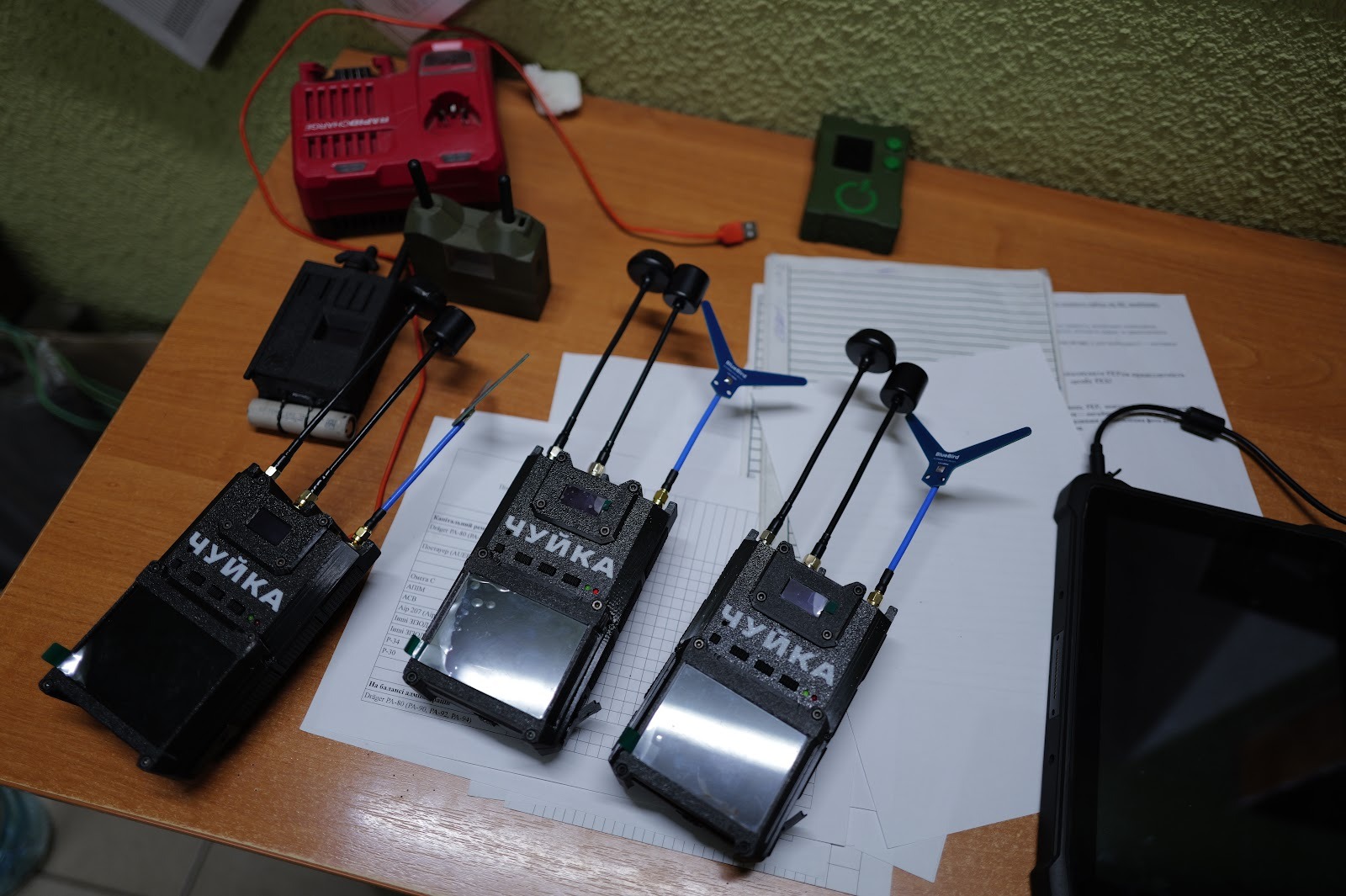
So what is a drone detector and how does it work? Drone detectors are portable SIGINT devices. They work by passively scanning the radio waves, intercepting video signals, and alerting you of incoming enemy UAVs. Since they emit no signal of their own, they remain invisible to the enemy’s SIGINT systems.
There are many companies making these detectors now, but I will only be discussing the most popular ones.
The earliest model was called Tsukorok: it was a device the size of a cigarette box, with a small screen and two antennas. When it caught an incoming drone signal, it beeped and vibrated horribly. I first saw this device in the hands of a Khartiia Brigade soldier while working in northern Kharkiv oblast in the spring of 2024. Every soldier wanted a detector like this at the time, and to get one from the manufacturer you had to queue for months. By late 2024, the detector had become a mere good luck charm, no longer in demand, because it reacted both to friendly and enemy drones (with no distinction between their signals) and did not show you the incoming FPVs.
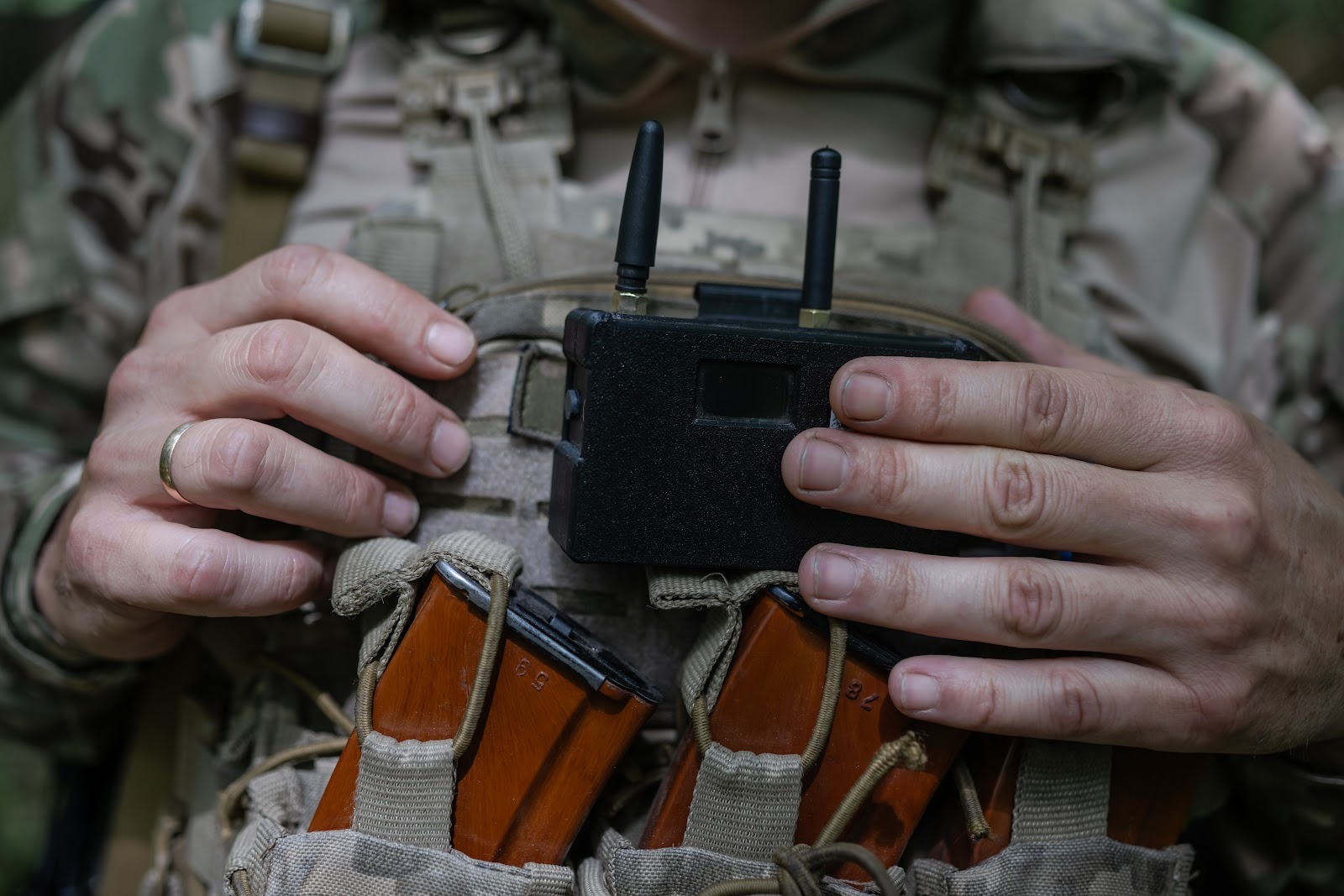
In 2024, we would sneak into military positions at sunrise or night to avoid meeting an enemy “bird” — FPV drones had no night vision or thermal cameras back then. I have watched a Russian drone switch between day and night cameras while flying in twilight through a stationary detector in Pokrovsk in the summer of 2025. Now about the only things that allow you to travel the front line in relative safety are heavy fog, rain, or wind (all three at once is best), and even those don’t always help.
While working with soldiers in Pokrovsk in the late summer of 2025, I noticed them using different detectors altogether: the Chuika 3.0, the Whoover 3.0, or the Dzyga. The soldiers would tell me that no single detector was superior to the others and it was better to have three different ones to get more precise results. They said there had been situations when soldiers had several detectors working at the same frequencies but only one of them showed the signal.
Modern detectors such as Dzygas, Chuikas or Whoovers don’t just beep, but scan wide ranges, analyse various frequencies, and intercept analogue video signal from Russian FPV suicide drones. The devices have display screens built in, allowing you to see what the Russian drone pilot sees in real time and to know where exactly it’s headed. Every manufacturer regularly releases new software or updates the devices by overhauling the hardware.
The pros, the cons, the pitfalls
No detector is a universal solution. A major pro of nearly all detectors is that they work automatically and require little to no human intervention. That is, the device sees a signal and displays it on the screen. But there are some exceptions. For instance, as we were working in Kostiantynivka on 20 December 2025, we saw dozens of drones in the sky, right over out heads. We had to run and take cover inside ruined buildings or hide under leafless trees, but we only saw our Whoover show an image once: the drone on the screen was flying over some field, while we were in the town. It’s entirely possible that the device had been showing pictures before that, but we hadn’t noticed because the sound was off. The fact remains that no detector is a universal solution. The Russian constantly switch between frequencies so that their drones are immune to Ukrainian electronic warfare systems and their signal can not be intercepted by our detectors.
Detectors don’t see fiber optic suicide drones. As we were leaving Kostiantynivka, we came across an enemy “sleeper drone” sitting on the side of the road, waiting for an armoured vehicle, a pickup truck, or, say, our car to get close. It was a very stressful moment, because in situations like this you have to decide quickly whether to get out of the car or speed up. We got lucky that time: the sleeper was facing the other way, watching for cars going the opposite direction. It took off after we drove past it, and press officer Oleh Petrasiuk, who was driving the car, was lightning-fast, knowing that fiber optic drones are quite slow and would not catch up with us if we were moving at over 120 km per hour. We were rushing at over 160 km per hour; it felt like we would sooner crash than get caught by the drone.
Getting a drone takes time and money. The manufacturers prioritise clients in the military, rightfully. But even those have to queue for months to get their hands on a device they want, to say nothing of us, civilian reporters. Also, drone detectors are expensive: the prices range from 3,000 hryvnias to infinity, including all the antennas, cables, screens, and add-ons. The most popular models, which I mentioned above, cost around 25,000 hryvnias, which is often unaffordable for a journalist. Not all Ukrainian media outlets are prepared to pay decently for frontline reporting, let alone buy drone detectors. Western news outlets regard drone detectors with a suspicion and view them as weapons that would put journalists on par with combatants. There are exceptions: for instance, Ukraïner, whom I’m honored to be working with on a project about frontline towns, did equip their crews with detectors. But it is an exception, and it would be good if media organisations, renters, or whoever else offered to at least lease them.
Detectors get obsolete quickly. In Druzhkivka in January 2026 our drone detector showed the intercepted feed of an enemy Molniya. It must have been flying over the town looking for someone to strike. We did not know the area well, so we asked the taxi drivers standing nearby to identify its approximate location. It turned out that the drone was flying over the house where one of the drivers lived, which was very close to us: less then a kilometer, a couple dozen seconds and we would be on fire. So it’s difficult to tell how far away the threat is and how fast should you be running unless you know the area.
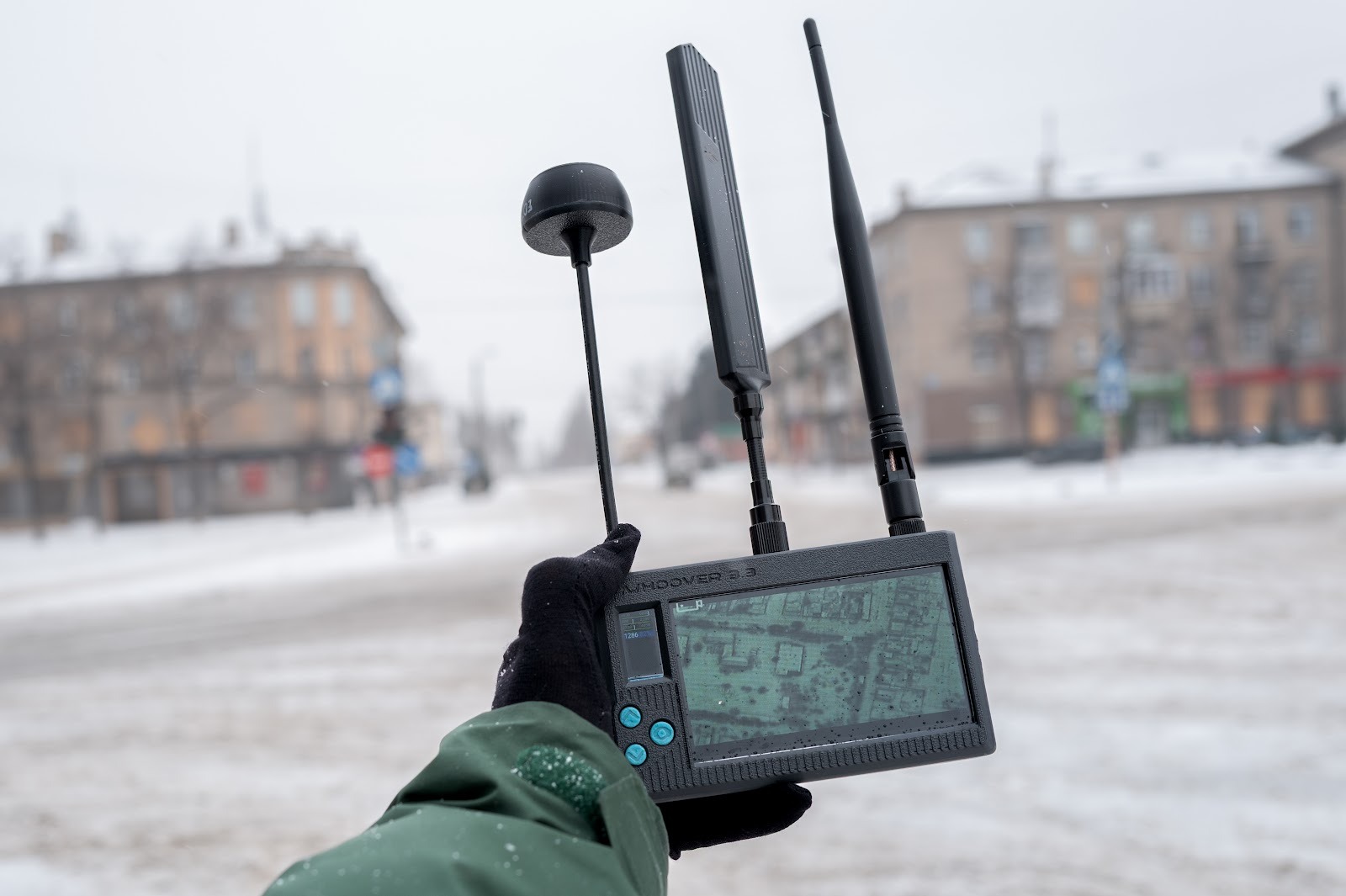
A friend of mine who serves in the army recently got a new detector: with as many as four antennas covering a new range of video signal (7,2). It has another very helpful feature: a compass, which allows you to see the direction the drone is coming from. But this only goes to show that previous models are gradually becoming obsolete and will soon become mere good luck charms — just as it happened with the Tsukerok.
Viacheslav Ratynskyi, documentary photographer, for the Institute of Mass Information