

“Ukraine begins importing labour migrants: who will replace Ukrainian workers”; “Ukraine flooded with Bangladeshi immigrants: which businesses are hiring them and how much it costs”; “Will Indian workers ‘fill’ Ukraine’s labor market? What is really happening with migrant workers”, “Ukraine will be populated with Indians, Africans and Bangladeshis: the state faces a demographic catastrophe” — these are just a few of the headlines by Ukrainian media that came under the scrutiny of the Institute of Mass Information. To say nothing of panicmongering social media posts claiming that 4 million migrants will displace Ukrainians and take everything from them by 2030.
The Institute of Mass Information has investigated the immigrants narrative to see its scope and origin.
The half-forgotten narrative about Bangladeshi and Pakistani immigrants has resurfaced, rising like a phoenix, in the spring of 2026. In just a few days, it gained traction in Ukrainian and regional news outlets. The media reception was divided: most newsrooms were baiting the audience with stunning emotionally charged headlines which often had little to do with the articles themselves. A minority offered consistent, substantiated, professional debunkings of this influx of manipulative, and often fake, reports about an assault force of immigrants “landing” in Ukraine.
This is not the first time the topic of labour migration has gone viral. The previous time was in the autumn of 2025, when the media, too, produced inflammatory articles such as “Businessmen in despair: labour migrants will not solve the problem. All business owners should prepare: hard times are coming to Ukraine” or “The influx of migrants to Ukraine: what will happen to the country when it is populated by people from Bangladesh, India or Nepal”.
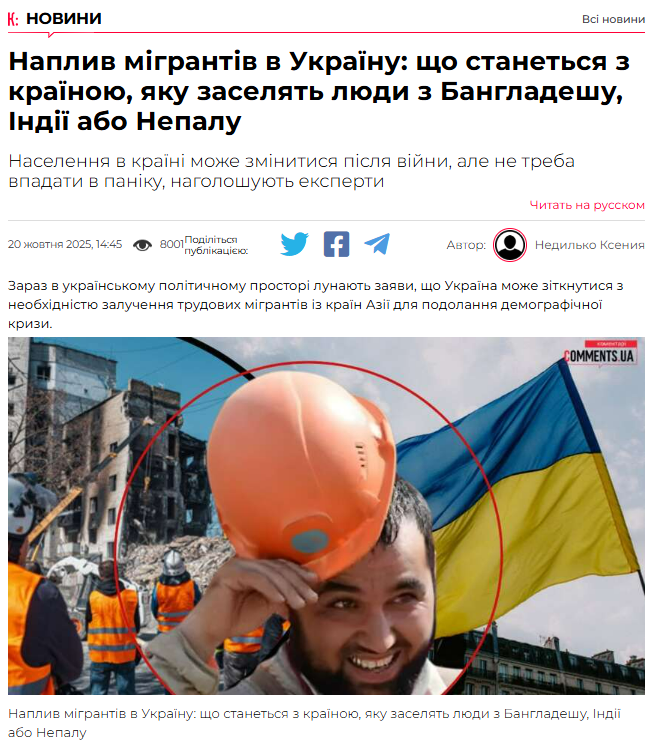
Lead: The country’s population may change after the war, but there is nothing to panic about, experts say.
The supposed immigrant threat to Ukraine is a topic that surfaces in Ukrainian media every now and then. Screenshot from comments.ua
In April–May, another surge of fearmongering mentions of “Indian migrants” began. This one was investigated by NV, who found that it had originated in a social media post referring to “guys from Pakistan.” IMI experts discovered a lot of such posts on various social media platforms. For instance, some claimed that “Ukrainians are shocked by the number of Indians and Pakistanis” who are “everywhere.” Several of such claims were posted by Novyny Lvova on Telegram and Facebook.

Claims that “Indiands and Pakistanis are everywhere” being pushed on Facebook. Screenshot from Novyny Lvova on Facebook
We also discovered a video, posted by the same channel, about “Indian migrants washing their clothes in the river” and drying them nearby.
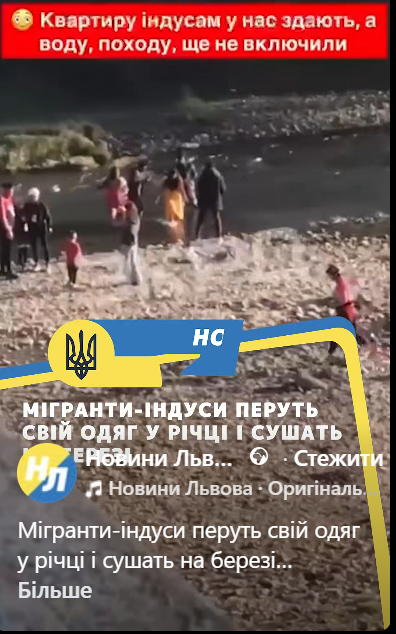
Migrant workers are portrayed as uncivilised people now living in Ukraine. Screenshot from Novyny Lvova on Facebook
According to StopFake.org, this is disinformation based on a video filmed in India and a clip of tourists resting on the riverbank.
AI-generated videos about “Ukraine in new bloom in 2030”, featuring the figures of “Indians, Africans, Colombians,” were also shared on social media, in particular Facebook and Telegram.
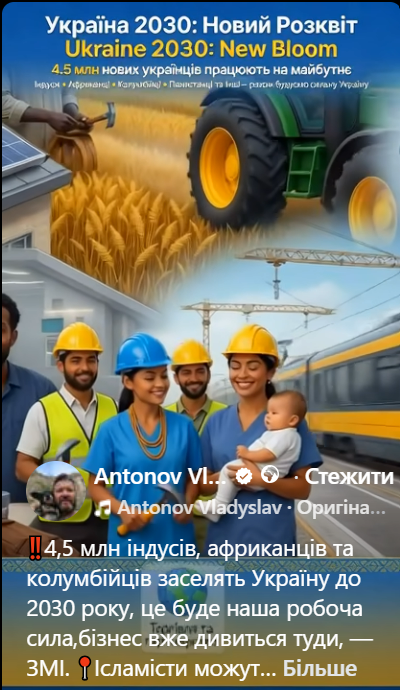
A clip with apocalyptic predictions of Ukraine’s future, with “the arrival of 4,5 million Indians, Africans, and Colombians”. Screenshot from Antonov Vladyslav on Facebook
This AI-generated video was posted to Facebook by Antonov Vladyslav from Kyiv, who has 44 thousand followers. And this reel claiming to show what Kyiv will be like soon, after the “invasion of Indians”, is by “Odesa-based blogger” Alexaandr Drachuk.
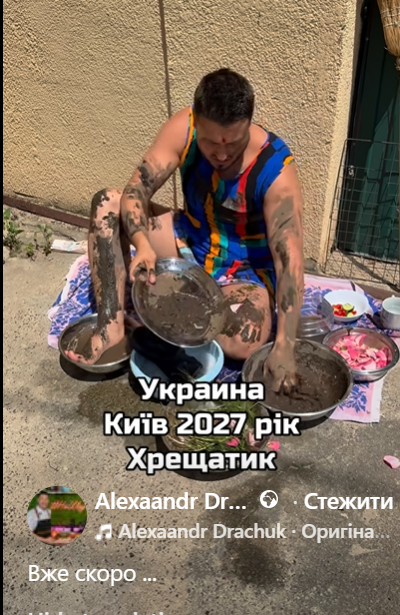
The reel showing how dirty and expensive Kyiv will become due to the influx of migrant workers. Screenshot from Alexaandr Drachuk on Facebook
We also came across a fake reel of an Indian man who supposedly arrived in Ukraine two months ago and was encouraging his “brothers” to come and work here because the views are beautiful and “there are beautiful little girls and boys here.” The video was shared on all possible platforms: X, YouTube, Instagram, Facebook, Telegram, TikTok. In reality, the video is by a man with no relation to Ukraine, dubbed with an audiotrack in Ukrainian that has nothing to do with the video’s original message. And such examples are numerous.
As StopFake.org found, the “Indians in Ukraine” narrative is a Russian tool for destabilising the homefront, aiming to instill fear and a sense of betrayal in Ukrainians. To this end, Russia promotes posts on this topic through a coordinated campaign involving bots and AI-generated content. StopFake tracked tens of thousands of identical comments or posts featuring claims that “4,5 million Indians, Africans, and Colombians will populate Ukraine by 2030,” that “Pakistani and Indian immigrants are being imported to the West of Ukraine en masse,” that “they are being paid upwards of $800, unlike Ukrainians doing the same work,” that “the Ukrainian Armed Forces are liberating Ukraine for the Indians,” that “a planned effort to erase the Ukrainian nation is underway,” and that “it is the EU or the US who are forcing Ukraine to accept all these migrants.”
Mainstream news websites did their part as well. In fact, the ways they presented information sometimes seemed to play into the hands of Russian propaganda.
For instance, Channel 24 reported in their news article “Migrants from Bangladesh are already flooding Ukraine: which businesses hire them and how much it costs” that “Ukrainian employers are actively hiring foreign workers, in particular from Bangladesh, due to a staffing shortage in construction, retail, and processing industries.”
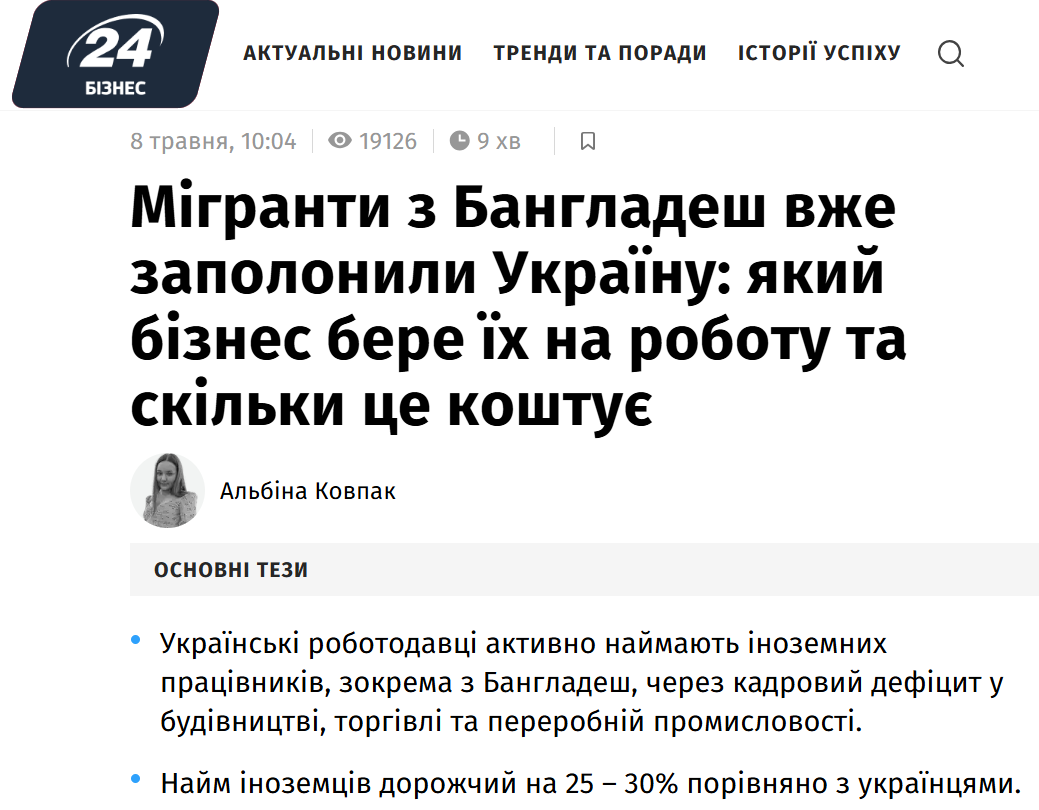
Key points: “Ukrainian employers are actively hiring foreign workers, in particular from Bangladesh, due to a staffing shortage in construction, retail, and processing industries. Hiring foreign citizens costs 25–30% more than hiring Ukrainians.”
Screenshot from Channel 24 by IMI
Businesses are, indeed, hiring migrants, just as they did before the full-scale invasion. Moreover, reports of migrant workers being hired by Cherkasy and Ivano-Frankivsk companies were confirmed in May. The mayor of the latter city, Ruslan Martsinkiv, said in a comment to Apostrophe that he was personally opposed to hiring migrant workers but could do nothing to prevent it. A comment responding to the claims that an Ivano-Frankivsk-based management company would involve migrant workers from India to clean the area around a building went viral across social media and, as NV reported, effectively became another catalyst pushing this issue.
On their part, Channel 24 reported that “Bangladesh nationals have received 599 work permits in Ukraine.” This can hardly be considered an “invasion of Ukraine”, especially in view of the findings by Texty, which examined the official figures by the State Migration Service. Very few people are moving to Ukraine these days. According to media reports, the number of foreign nationals registering with the Ukrainian migration service had been growing slowly but steadily before the full-scale invasion. But even then, their share was negligible among 40 million Ukrainians — about 0.75%. The number of registered persons has barely increased since 2022, while the number of new immigration permits issued has dropped sharply.
Along with Texty, a minority of news outlets approached the topic of “the migrant worker threat to Ukraine” professionally, including NV, Radio Liberty, and Apostrophe, which explained why the migrant moral panic is just that and has no real grounds except for propaganda. Many other media outlets followed a different path.
For example, Znaj.ua claimed back in March that “Ukraine will be populated by Indians, Africans, and Bangladeshis: the state faces a demographic catastrophe,” and reported that “Migrants are flooding Ukraine: will there be a mass settlement of Indians and Pakistanis?” as soon after as May. However, the experts whose predictions are cited in the articles simply discuss probabilities and argue that an immigration policy should have been developed back in the 1990s.
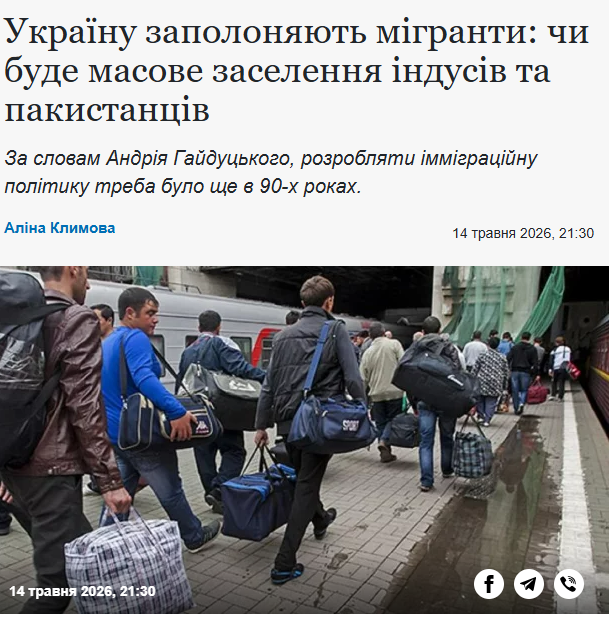
Znaj.ua uses manipulative headlines featuring hate speech. Screenshot from Znaj.ua
TSN got emotional about labor migration, too. “Foreigners with suitcases near Kyiv: social media users are sounding the alarm over an ‘assault force’ of migrant workers” is a news article they posted in May. The “assault force” in question was shown in a clip taken from the web, which supposedly depicted the foreigners “imported to Kyiv oblast from abroad. Namely, about thirteen men with suitcases were spotted in a Kyiv oblast village.”
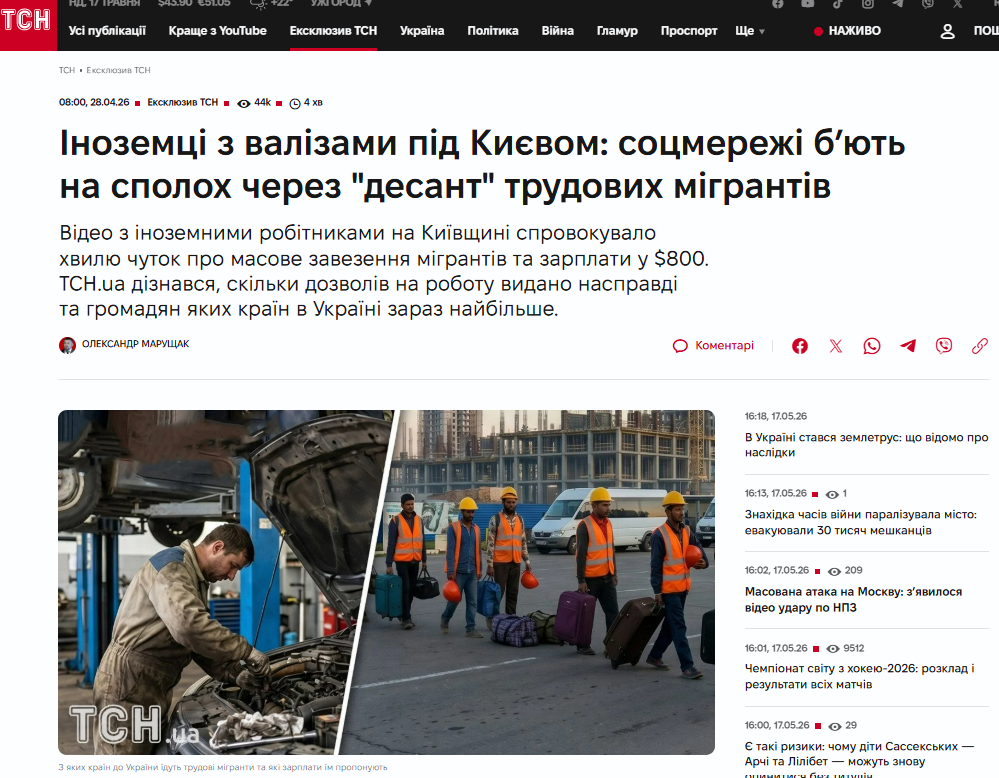
Lead: “A clip of migrant workers in Kyiv oblast triggered a wave of rumours about migrants being imported en masse and paid $800. TSN found how many work permits have really been issued and what countries most immigrants in Ukraine are from.”
TSN uses generalising language, giving traction to the migrant topic. Screenshot from TSN
The news article itself says that the real situation is not as scary. Indeed it is not, considering that the report cites an unverified, anonymous source from “social media” and the number of men in question is 13. The article also quotes Vasyl Voskoboynyk, chief of the Migration Policy Office, who said that the process of attracting labour migrants was underway even before the full-scale invasion, so this should not be surprising. He gave numbers: foreign nationals received about 22 thousand work permits in Ukraine in 2021 and over 9.5 thousand permits in 2025. This is almost two and a half times less than the pre-war figure. However, whenever migrant workers were concerned, TSN dialed up the emotion, particularly in the headlines.
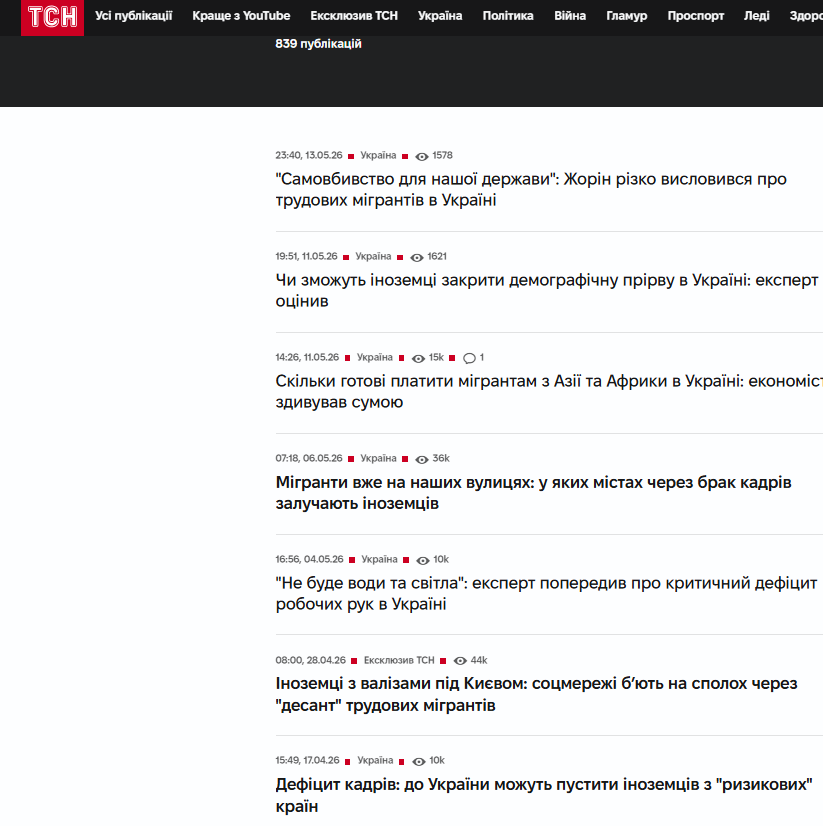
Headlines related to migrant workers. Screenshot from TSN
UNIAN joined the moral panic, too, sharing another news story by TSN, which featured a series of clips of foreigners working in factories and fields yet never mentioned where the footage was taken.
“The number of migrant workers in Ukraine is on the rise: recruitment companies are recording a spike in according applications both from foreign nationals looking for jobs and from Ukrainian companies. The country is facing an unprecedented staffing shortage due to the mobilization effort and the outflow of Ukrainians abroad. Citizens of Pakistan, India, Bangladesh, and Uzbekistan are showing particular interest in working in Ukraine,” the caption reads.
However, the expert commenting the reports calmly says that his company was approached by five men and two women who will be working for them and that they were currently trying such mode of employment out.
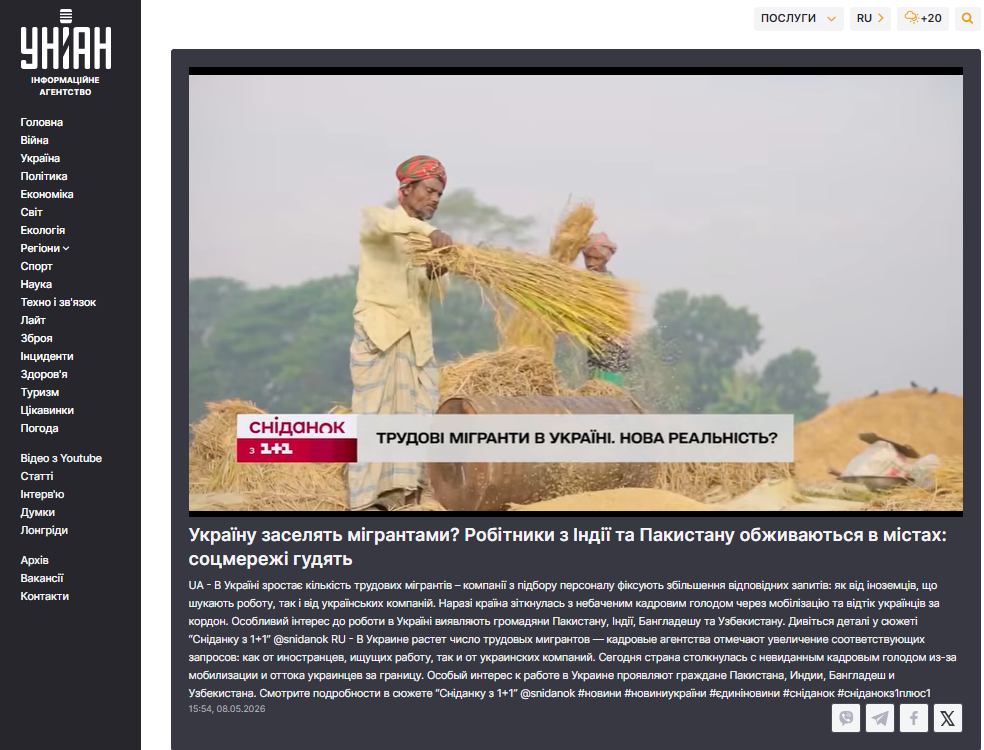
The news does not explain where the harvesting work is taking place. Screenshot from UNIAN
Other media outlets also resorted to emotionally charged headlines: “Workers from India are already being imported to Ukraine: which cities will employ them and what is really happening” (Oboz.ua), “Import of migrant workers to Ukraine has begun: who will be replacing Ukrainian workers” (Radio Trek), “Indians in Ukraine: a new reality or the beginning of a great migration?” (PravdaTUTNews), etc.
IMI director Oksana Romaniuk believes that the topic lends itself well to combining several toxic Russian narratives into one.
“Three old Russian narratives can be seen at work here simultaneously: ‘the authorities are betraying Ukrainians,’ ‘Ukraine is ruled by the West’, and ‘it is not Ukraine’s future that the army is fighting for.’ Added to these are ‘Ukrainians are being erased and displaced’ and ‘Ukraine is at risk of losing its identity.’ Thes narratives are fueled by fear and presented in a xenophobic wrapper,” says Oksana Romaniuk.
We see that Russian propaganda is ultimately trying to replace the source of the danger in the minds of Ukrainians. To make it seem that it is not the aggressor state that is to blame for the air strikes, for the economic and demographic crisis, but “the Indians, Africans, Bangladeshis” who will “take your jobs” and “displace Ukrainians.” This is especially alarming in wartime. After all, such manipulation simply seeks to turn the aggressive impulse inwards.
The main objective of this narrative is to drive a wedge in Ukrainian society, to replace real conversations about demography and the labor market with a racist panic, to pit Ukrainians against their allies, and to create another layer of distrust within the country.
And what is most dangerous is that Russian disinformation does not necessarily look like overt Russian propaganda. It often uses clickbait headlines in Ukrainian media, “harmless” reels, or the desire of some Telegram channels, bloggers, and news outlets to drive their engagement through hype as entry points. Fighting this wave of Russian disinformation would be very simple: by keeping the professional and ethical standards of journalism, which forbid describing people as “an invasion,” “replacement,” or “a demographic catastrophe” simply because of their ethnicity, in mind.