The biggest challenge faced by Ukrainian media is moving away from resilience that depends largely on journalists’ personal endurance towards systemic resilience of newsrooms.
Long-term support for Ukrainian media should extend beyond one-off grants for equipment or content production. It should cover building news outlets’ institutional capacity: stable funding, preparedness for crisis, staff reserves, practical safety, and support for employees.
The resilience of the media should not be measured by how much more strain journalists can withstand. Its true measure is a news outlet’s ability to keep doing high-quality work without constantly relying on the personal heroism of its staff.
This is evidenced by the findings of the Institute of Mass Information’s study “Journalists’ Resilience Ahead of Winter 2026–2027”, which surveyed 265 media professionals based in 23 oblasts of Ukraine and in Kyiv city. The survey was carried out in the period from 21 September to 7 October 2026.
IMI studied six components of resilience: energy autonomy, physical safety, staffing and editorial protocols, mental health support, readiness to relocate, and journalists’ own understanding of what helps them keep working in wartime.
The findings revealed several interrelated problems. More than half of respondents had no basic equipment for autonomous power supply, 56.6% noticed signs of burnout in their teams, only 16.6% said their team had a clear protocol to follow if a colleague went missing, and only five of the 265 respondents demonstrated comprehensive preparedness for emergencies.
At the same time, journalists’ responses betrayed a significant gap between the risks they were aware of and those they were actually prepared for. Media workers were most concerned about electricity, connectivity, and basic living conditions. Safety protocols, staff reserves, and organisational planning were listed as priorities much less often.
Personal endurance over systemic preparedness
Rather than equipment or money, one of the most telling findings of the study touched on the very understanding of “resilience”.
When posed an open-ended question about what they would advise their colleagues to do to stay resilient in wartime, 44.3% of respondents suggested holding on, not giving up, and having faith in Ukraine’s victory. 31.8% mentioned self-care, and 19.3% listed mutual support within the team.
By contrast, only 10.2% recommended specific organisational solutions. Physical safety and material preparedness for blackouts were mentioned by 6.8% each.
This does not imply that journalists did not appreciate the importance of organisational preparedness. However, personal coping strategies were mentioned far more often in spontaneous responses than managerial or institutional solutions.
A similar trend was observed in responses to the question asking what media workers would spend an extra €3,000–5,000 on to boost their own resilience.
Of 230 substantive responses, most (63.9%) listed power supply equipment, connectivity, and heating. Mental health help was mentioned by 24.3% of respondents, rest and recovery by 20.4%, equipment for work and digital tools by 18.7%, and physical safety by 16.5%.
Only 23% of respondents were willing to spend at least some of the extra money to help cover the needs of their newsroom or team.
Yet, it is important to bear in mind that the question was primarily about each journalist’s own resilience. These responses, therefore, should not be interpreted as a full assessment of media workers’ attitudes to institutional support. However, considered together with the available data on the lack of editorial protocols and staff reserves, they point to a broader problem: resilience is often achieved through individual effort where systemic organisational solutions are needed.
For Ukraine’s media sector, this is a fundamental distinction. Personal endurance helps you survive the next crisis, but does not necessarily give you the capacity to survive the one after that.
Power supply: not everyone has the equipment, and owning it does not guarantee autonomy
Energy autonomy remains the need reported by Ukrainian media professionals most often ahead of winter 2026–2027.
Only 48.3% of respondents owned a power station, a generator, or an inverter. More than half, 51.7%, had none of these devices.
Power banks were much more common: 77% of respondents owned one. However, while a power bank can keep a phone charged and keep you connected, it does not enable you to fully do your job with a laptop, internet access, and other necessary equipment during a long blackout.
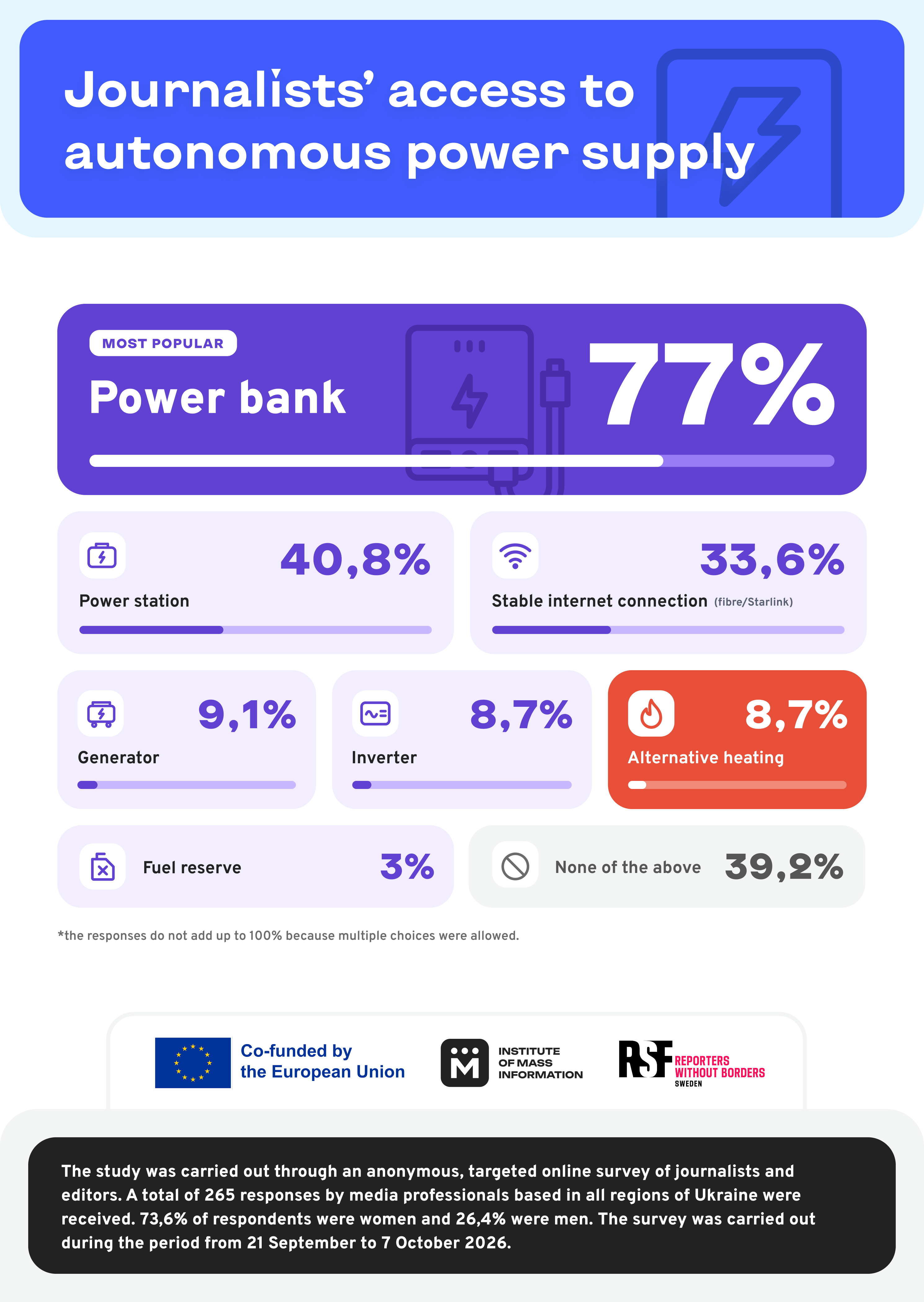
Overall, 39.2% of media professionals had none of the equipment listed in the questionnaire, or only owned a power bank. 33.6% reported having access to stable internet via fibre optic or Stralink, and only 8.7% reported having alternative sources of heating.
It should be remarked that even owning a power station does not mean full autonomy. Its power and capacity may be insufficient for long hours of work or for keeping the heating running. That is why the 48.3% figure should be understood as media professionals having access to at least the basic devices, not as confirmation of their ability to work throughout the entire day without electricity.
Journalists’ open-ended responses confirmed this problem:
- “A bigger power station, because mine is only enough for a laptop.”
- “An inverter to power the whole household, not just a few devices.”
- “For the gas boiler.”
Tellingly, the need for additional power equipment was reported not just by respondents who had nothing or only owned a power bank. 66.7% of these listed energy as a concern, but among other respondents the figure was 62.1%. No statistically significant difference was found between the two groups.
This shows that the problem now goes beyond initial supply of individual devices. What becomes increasingly important is whether the devices are enough for specific working conditions.
For media support programmes, this means the criteria for effective energy aid need to change: they should measure not just how many devices were supplied, but also how many hours of autonomous operation and connectivity these devices provide and whether they are able to ensure basic working conditions for the staff.
Energy vulnerability goes beyond frontline-adjacent areas
Another important finding is that frontline-adjacent and rear regions are supplied with autonomous power sources at nearly identical levels.
48.7% of respondents based in frontline-adjacent and border oblasts and 47.9% of respondents living in other regions owned power stations, generators, or inverters. The difference is not statistically significant.
Still, 52.4% of respondents in the central regions and Odesa oblast had none of the listed equipment or only owned a power bank. In other regions, the figure was 35.1%. These findings are preliminary and need further verification.
These findings suggest that going off geography alone when distributing aid does not always reflect the actual level of journalists’ access to equipment.
This does mean that the media based in frontline regions, which work in particularly high-risk conditions, need support less. However, the energy needs of rear-based newsrooms should also be considered. Proximity to the battlefield cannot be the only criterion for assessing energy vulnerability.
Physical safety: the gap between real risks and perceived needs
While energy autonomy was the most visible need among journalists, the study showed that physical safety remained a much less acknowledged priority.
IMI analysts focused on four components of overall emergency preparedness: backup power supply, at least two indicators of medical training, having a fire extinguisher and the skills to use it, and knowing what to do when trapped under rubble.
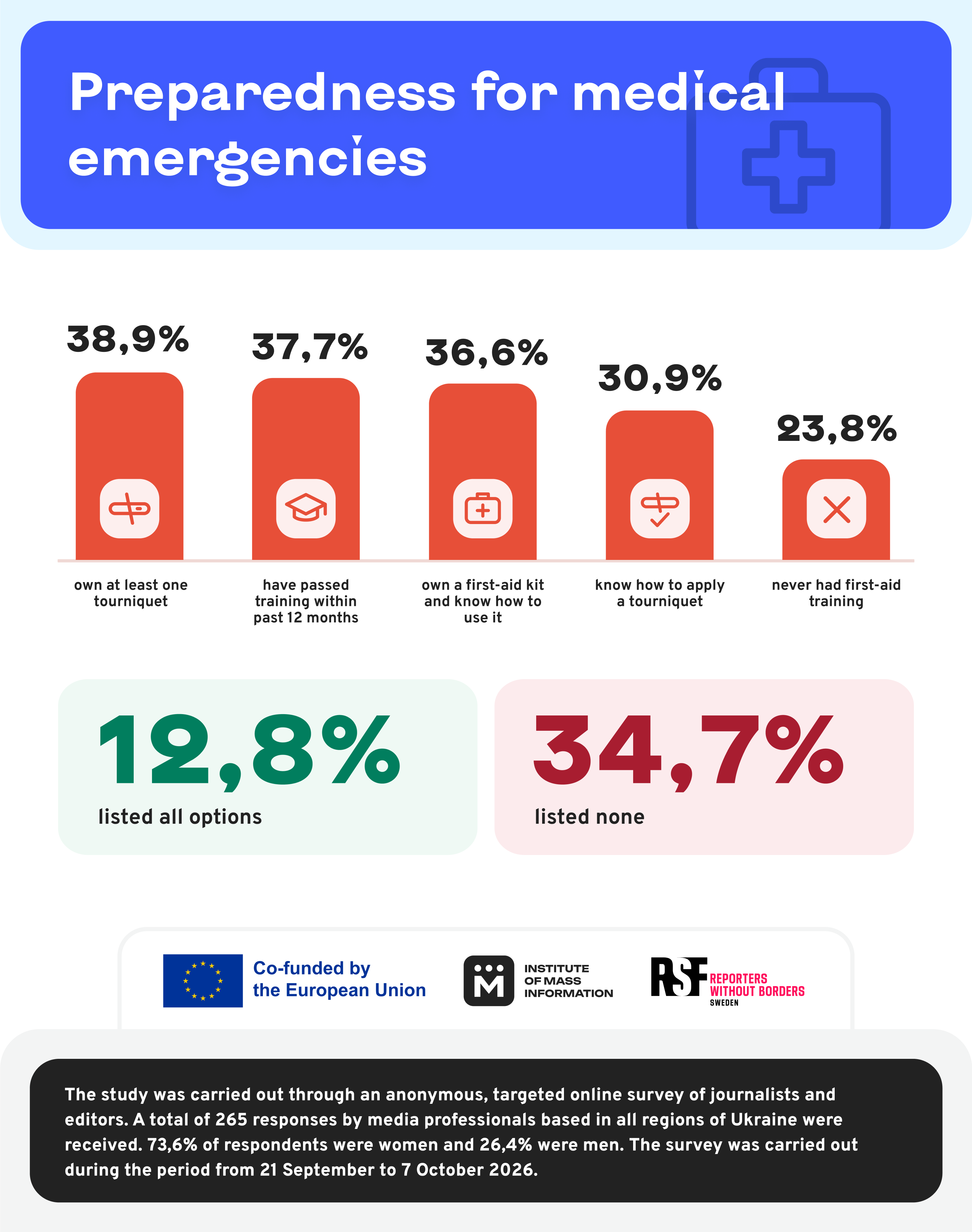
Only five of the 265 respondents, or 1.9%, checked out all four components. Meanwhile, 60.4% checked out no more than one.
The problem is not limited to whether people have access to equipment, but also concerns knowing how to use it.
For instance, 38.9% of respondents carried at least one tourniquet on their person, but only 30.9% knew how to apply it. 15.1% of respondents owned a tourniquet but did not know how to use it. 37.7% had taken any practical first-aid training over the past year.
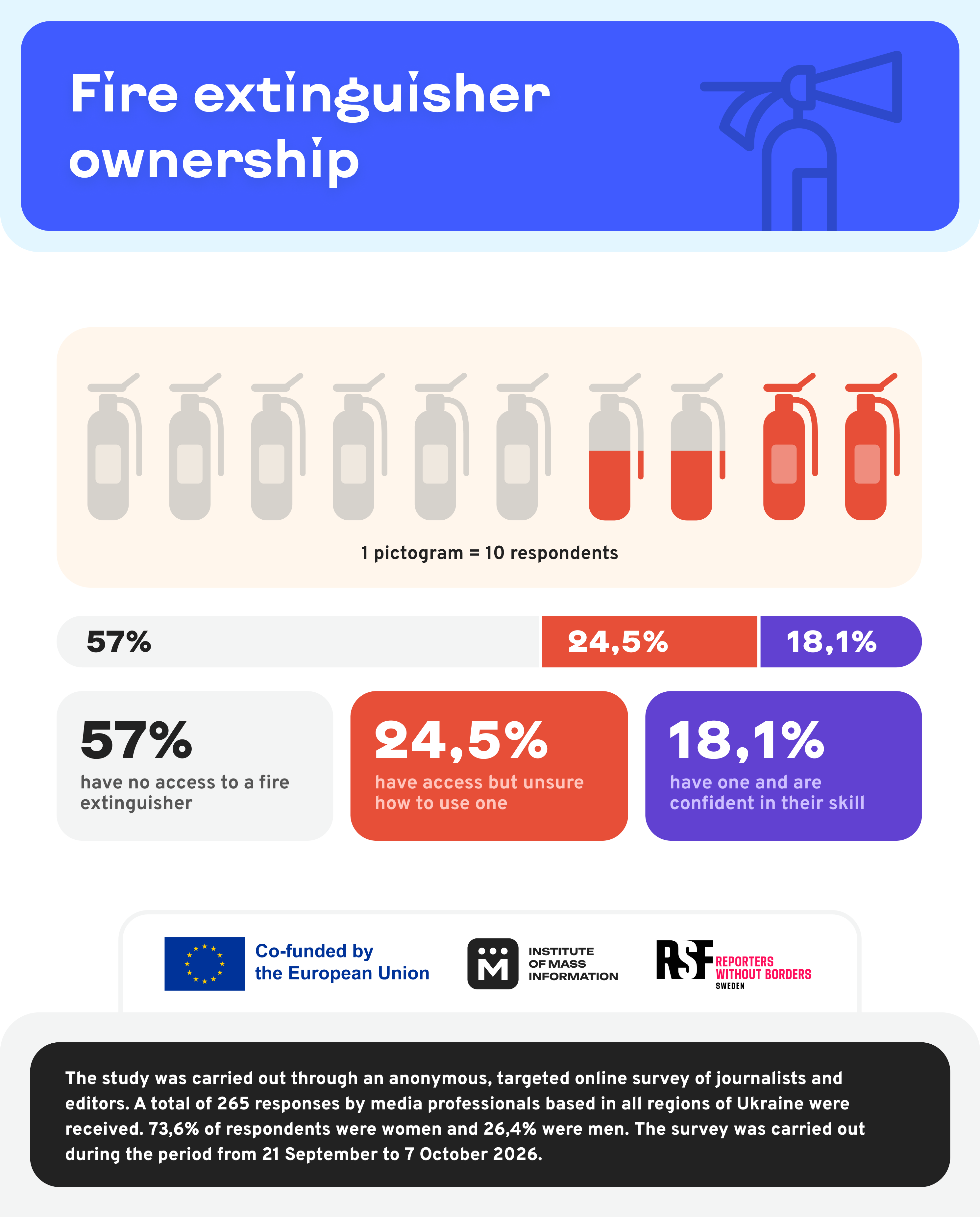
Fire safety also proved to be a problem. 57% of media professionals did not own a fire extinguisher, and another 24.5% had one but were unsure they could use it correctly. Only 18.1% reported having both the fire extinguisher and the necessary skill.
Unpreparedness for getting trapped under rubble is particularly alarming. Only 9.8% of respondents knew the steps well, while 54% only had a general idea of it, and 18.1% did not know how to behave in such a situation at all.
That means that a total of 90.2% had no concrete knowledge of what to do when trapped under rubble.
Despite these gaps, only 16.5% of respondents who gave substantive answers listed physical safety as something they would spend extra money on. Energy needs featured nearly four times as often.
This is one of the most important contradictions the study revealed. Power shortages affect journalists every day, so the related need is obvious. Fire, a serious injury, or being trapped under rubble, by contrast, may be perceived as less pressing risks, even though they can lead to far more severe consequences.
Safety support programmes therefore cannot be shaped solely on the basis of self-reported needs. They must also take into account actual gaps in preparedness and include practical training.
Working during air strikes and the danger of getting desensitised to risk
The study also showed that a significant share of journalists did not interrupt their work during Russian air strikes.
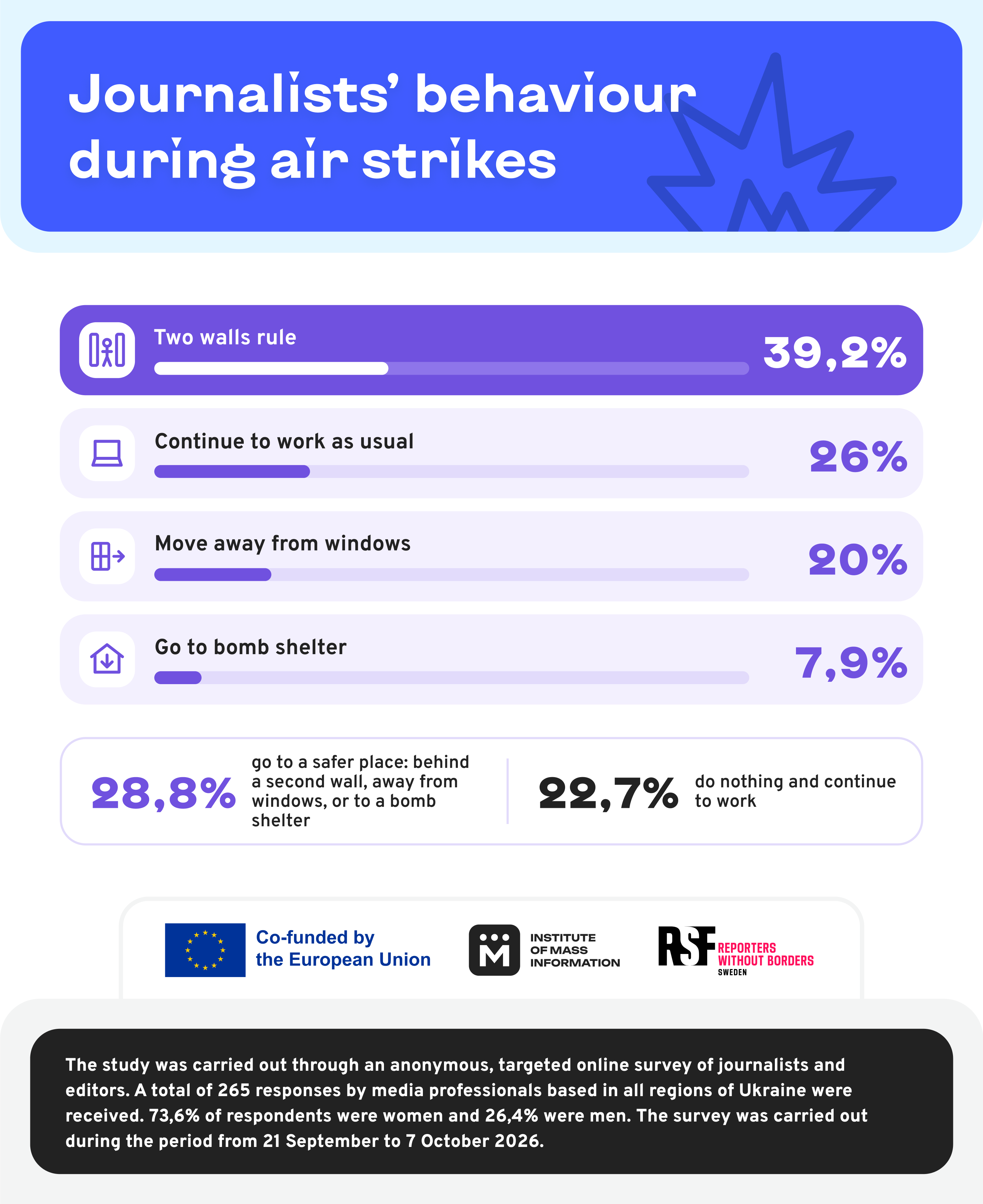
26% of respondents said they carried on working as usual. The most commonly reported self-protection step, at 39.2%, was following the “two walls rule.” 20% more said they moved further away from windows. Only 7.9% said they typically went to a bomb shelter.
Continuing to work during air strikes is not a practice exclusive to frontline-adjacent regions. The share of such responses did not vary statistically between areas close to and away from the frontline: 22.7% vs. 28.8%.
The study did not establish the reasons for this behaviour. It may have to do with getting desensitised to danger, needing to keep the newsroom running, a lack of accessible shelters, or other circumstances.
Some open-ended responses pointed to issues with access to safe places:
- “The nearest shelter is at least 500 metres away.”
- “I go down into the basement, but it can’t be considered a proper shelter.”
An important conclusion is that safety should not remain a matter of a journalist’s personal discretion alone. Newsrooms need clear procedures for working during shelling that prioritise protecting life and allow tasks to be suspended.
News teams do roll calls after attacks but many have no plan in case an employee is lost
Data on newsrooms’ organisational preparedness revealed another telling feature: simple mutual aid practices are far more widespread than more complex crisis procedures.
For example, 69.8% of respondents said their team did roll calls after major air strikes. However, only 47.2% said their newsroom kept track of the up-to-date contact data of employees and their families.
Mechanisms to ensure the outlet keeps running continuously proved even less common. Only 34% reported having someone on the team who could replace another employee performing a core function. 27.5% knew who had the access to work passwords and systems. Only 16.6% said their newsroom had a set procedure for when an employee went missing or could not be reached.
12.1% of respondents listed none of the newsroom safety practices mentioned in the survey.
This poses a risk for the continuity of newsrooms’ operations. If a key team member is unavailable temporarily or for a long time due to illness, getting drafted, injury, or evacuation, this may bring some editorial processes to a halt.
The revealed relationship between organisational preparedness and recovery opportunities is also telling.
Of the respondents who listed no newsroom safety practices, only 21.9% were able to recover after a major air strike. Among those who reported three to five such practices, the figure reached 69%.
These data do not prove that introducing protocols alone enables employees to rest. However, they suggest that better developed safety procedures and a culture of caring for employees often go together.
A newsroom’s institutional resilience is not only a matter of having the equipment or the financial resources, but also ofbeing able to organise workflowsin a way that ensures the system keeps running when one person drops out.
Burnout is becoming a risk to newsroom operations rather than a personal issue
More than half of respondents (56.6%) saw signs of exhaustion or burnout in their teams. Another 49.1% reported that their workload had grown over the past year.
43.8% of respondents listed three or more staffing problems.
The most commonly reported ones included the core functions depending on one or a few people (38.5%), difficulty finding potential replacements for employees (28.7%), difficulty hiring (25.7%), regular overtime (23%), and inability to take proper annual leave (21.1%).
This means that often individual employees being overloaded is not just a consequence of intense hostilities or personal situation, but also a manifestation of newsrooms’ staffing vulnerability.
The problem is aggravated by limited recovery opportunities. Overall, 35.1% of respondents said that they could not take time to recover after big air strikes or found it extremely difficult to do so.
This issue was particularly evident among respondents working in television, reported by 69.6% vs. 31.8% among those working in other media outlets. However, findings for individual types of media should be interpreted with caution given the small size of the respective samples.
Signs of burnout were widespread in both frontline-adjacent and rear regions, reported by 52.9% to 63.3% of respondents in different regional groups with no statistically significant variation.
This shows that the mental and staffing exhaustion should not be viewed as a problem only caused by journalists working in immediate proximity to hostilities.
This situation creates a two-fold risk for newsrooms. On the one hand, staff shortages increase the workload on the existing team. On the other, exhaustion, burnout, and the lack of opportunities to recover can exacerbate the staffing vulnerability even more.
Supporting journalists therefore requires not only mental health counselling but also managerial decisions: redistributing the workload, having a staff reserve, planning for rest and securing sufficient resources for teams to work.
Television and print media: two vulnerability profiles
A comparison by type of media revealed two opposite patterns: television teams were best prepared for emergencies but most exhausted, while print media were least prepared in both medical and organisational terms.
Of all respondents, television journalists were prepared for dangerous situations the best. 73.9% of them had taken practical first-aid training in the past year (compared to 34.3% for other media), 47.8% had a fire extinguisher and the skills to use it (15.3%), and 21.7% went to a bomb shelter during air strikes (6.6%). Only 8.7% of respondents working in TV checked out none of the four indicators of medical preparedness (35.1% for other media).
At the same time, it was in television that the recovery problem proved to be most acutely felt: 69.6% of respondents could not take time to meaningfully recover after a major attack (31.8% for other media), and only 4.3% said recovery was normal practice for them (30.2%). This distinction persisted among frontline-based media as well: 68.8% vs. 30.1%. 13 of the 23 respondents working in TV had both taken training in the past year and were unable to recover after attacks. Safety training, therefore, does not make up for exhaustion.
Print journalists, by contrast, were the least likely to possess basic safety skills. Only 16.1% carried a tourniquet on their person (41.9% for other media), 19.4% had taken first-aid training in the past year (40.2%), and 48.4% were medically unprepared (30.8%). Print newsrooms also relied most on individual team members: only 3.2% reported having a set procedure in case an employee went missing (18.4%), 16.1% had someone to replace a person performing a core function (36.3%), and 38.7% were unable to take proper annual leave (18.8%).
These findings should be interpreted with caution: the sample included 23 respondents working in television and 31 working in print. For television, the differences in training, access to fire extinguishers, and ability to recover were statistically robust and persisted when the respondents’ location and gender were taken into account. For print media, the variation was statistically significant in some comparisons, but the findings should be considered preliminary given the number of indicators tested. The questionnaire did not record respondents’ age, so checking whether employees’ ages play into the profile of print media is impossible.
Mental health support: money, trust, and lack of time remain the biggest obstacles
Despite the high levels of exhaustion, access to mental health support remains limited.
Only 14.7% of respondents reported having it.
Of the 244 media professionals who answered the question on why they did not seek mental health care, 44.3% listed pricing as a reason. Another 27.5% said it was difficult for them to find a specialist they trusted, and 19.7% said they did not have the time.
Overall, 62.7% of respondents who answered this question listed at least one obstacle affecting the accessibility of help: the prices, lack of time, or difficulty finding a specialist.
The existence of a financial barrier was further confirmed by the fact that among respondents who considered mental health care too expensive, 44.7% would spend an extra €3,000–5,000 on therapy. Only 10.3% of other respondents said they would do so.
Obstacles varied significantly by gender. Among the 244 respondents who reported facing such barriers, the pricing of mental health care was listed by 50.6% of women and 27.3% of men. The gap was even wider among the respondents working for news websites: 64.2% vs. 27.3%. Team composition differences in different media types does not explain this variation: the share of women in online media, print media, and television is roughly the same (74–78%). Controlling for media type and region, women’s odds of listing price as an obstacle were 2.9 times higher. Men, by contrast, were 2.4 times more likely to say they did not feel the need for mental health care: 30.3% vs. 12.4%.
Print media were the exception in terms of the financial barrier: only 6.5% of respondents working for print outlets listed pricing, compared with 49.8% for other media. Instead, 38.7% of them said that support from friends or family was enough for them, which is three times as many respondents as among those working in other media (11.7%). Given the small sample of respondents working in print media (31 people), this finding should be interpreted with caution.
Meanwhile, media professionals’ needs differed. Some sought individual therapy, others preferred support from loved ones, self-help methods, or group therapy formats.
Interestingly, 12.3% of respondents who answered the question on obstacles to seeing a therapist listed ChatGPT or other artificial intelligence tools as an alternative to professional mental health care. The study did not assess the effectiveness of such tools, and they are not an adequate substitute for professional help.
To support journalists, simply providing a certain number of mental health consultations is not enough. It is important to ensure the consultations are affordable, that the media professionals can pick a specialist, that there is trust, and that the nuances of wartime media work are taken into account.
It is equally important to address the organisational causes of overload as well, not just to help employees cope with its consequences.
Relocation and evacuation: newsrooms must prepare to function as distributed teams
Another challenge ahead of winter 2026–2027 is the potential displacement of journalists due to air strikes, power outages, and the safety situation.
Overall, 51.3% of respondents did not rule out relocating, although only 17.4% were already considering it. Another 34% did not plan to move at the time but would consider it depending on future developments.
Possible relocation scenarios varied significantly between regions.
Among respondents from Kyiv city and Kyiv oblast, 29.4% were considering a temporary move for the winter because of the threat of air strikes or prolonged power or heating outages. This figure is almost four times as high as the one for respondents based in other regions (7.8%).
In frontline- and border-adjacent regions, by contrast, evacuation from dangerous areas remained the most pressing issue.
Overall, among the 136 media professionals who did not rule out relocating, 41.2% were considering another region in Ukraine as the destination, while 15.4% considered moving abroad and 11.8% were thinking about moving to a village or smaller town in their own oblast. Another 30.1% had no set destination in mind. The remaining 1.5% chose another option (moving to a more peaceful neighbourhood in the same city) or did not respond to the question.
This suggests that potential relocation will not necessarily mean losing staff to emigration. An important risk for newsrooms is the dispersal of teams across different towns and cities in Ukraine.
In such a situation, continuous operation depends on remote access to work systems, backup communication channels, backup power and a clear division of responsibilities.
Newsroom continuity plans should account not only for the likelihood of material damage to the office or loss of equipment, but for the relocation of individual employees or entire teams as well.
From responding to crises towards systemic media resilience
The findings of the IMI study show that the major risks for Ukrainian media are interrelated.
Energy problems complicate day-to-day work. Insufficient safety preparedness makes journalists more vulnerable to emergencies. Staff shortages and the lack of staff reserves increase newsrooms’ dependence on individual people. Overload limits opportunities for recovery, and potential relocation may further complicate coordination within teams.
Individual solutions such as delivering power stations, arranging first-aid classes or funding mental health care, remain important. But they do not always address the organisational causes of vulnerability of the media.
Support for Ukrainian newsrooms should gradually shift from responding to individual crises to consistently building their capacity to work amid prolonged instability.
This requires action to be taken along several interconnected tracks.
First, energy assistance should ensure genuine autonomy and take into account the needs of specific teams, connectivity, and heating.
Second, material aid should be complemented by practical safety training, and newsrooms should introduce clear procedures for air strike, loss of contact with employees, and other emergencies.
Third, investments should be made into the organisational development of media outlets, i.e. staff reserves, management procedures, secure access to work systems, financial planning, and capacity to work as distributed teams.
Fourth, supporting people should include not just mental health care but also real conditions for rest and recovery and reducing excessive workload.
Predictable funding for newsrooms is of particular importance. Short-term project support can help solve a specific task, but building staffing and organisational resilience calls for a longer planning horizon.
This is important for international partners and donors supporting independent Ukrainian media. Alongside funding the production of public-interest content and pressing needs, they should consider investing in the institutional capacity of the media — their ability to retain teams, maintain editorial independence, and continue working during crises.
After all, the resilience of Ukrainian media is not an endless reserve of journalists’ personal endurance. It is the capacity of organisations to protect their employees, work continuously, and perform socially important functions even during a prolonged war.
The shift from individual endurance to systematic newsroom preparedness is the main conclusion of the IMI study ahead of winter 2026–2027.
About the study
The study “Journalists’ Resilience Ahead of Winter 2026–2027” was carried out by the Institute of Mass Information through an anonymous, targeted online survey of 265 media professionals based in 23 regions of Ukraine and in Kyiv city in the period from 21 September to 7 October 2026.
The questionnaire covered energy autonomy, physical safety, newsroom protocols, staffing decisions, mental health support, and potential relocation. Two open-ended questions enabled IMI to analyse media professionals’ priority needs and their understanding of resilience.
The sample is not representative of the entire Ukrainian media sector, so the results describe the responses by survey participants and should not be automatically projected on all Ukrainian journalists. Data on newsroom practices reflect respondents’ reports rather than an independent audit of newsrooms.
Disclaimer
This study was carried out by the Institute of Mass Information (IMI) with financial support from the European Union and the Swedish branch of the international organisation Reporters Without Borders (Reporters Without Borders Sweden).
The contents of this study are the sole responsibility of the Institute of Mass Information and do not necessarily reflect the views of the European Union or Reporters Without Borders Sweden.
Artificial intelligence use
IMI used its own large language model-based (LLM) AI assistant as an auxiliary tool for structuring and analysing the data set for the study, in particular for identifying recurring themes and patterns in respondents’ answers. The output was reviewed by IMI’s analysts. The methodology, data interpretation, findings, and final editorial decisions are by the IMI research team.