

War reporting from Donetsk oblast remains one of the most dangerous jobs in Ukraine. Journalists working near the front line face not just the constant threat of shelling, but also communication disruptions, navigation problems, staff shortages, and severe psychological stress.
Radio Free Europe / Radio Liberty war correspondent Serhiy Horbatenko, freelance journalist Yulia Surkova working with international media, and Suspilne Donbas chief editor Andriy Kramchenkov discussed the biggest challenges of woring in Donetsk oblast with the Institute of Mass Information journalist Valentyna Troyan.
Drones are the main threat
Drones are the biggest challenge while living and working in Donetsk oblast, says RFE/RL war correspondent Serhiy Horbatenko, adding that any section of a road can become dangerous in a matter of hours.
“You drive through the net tunnel in Oleksandrivka in the morning, everything is quiet. You come back in the evening and see a van smashed by a Lancet and the shredded net,” he said.
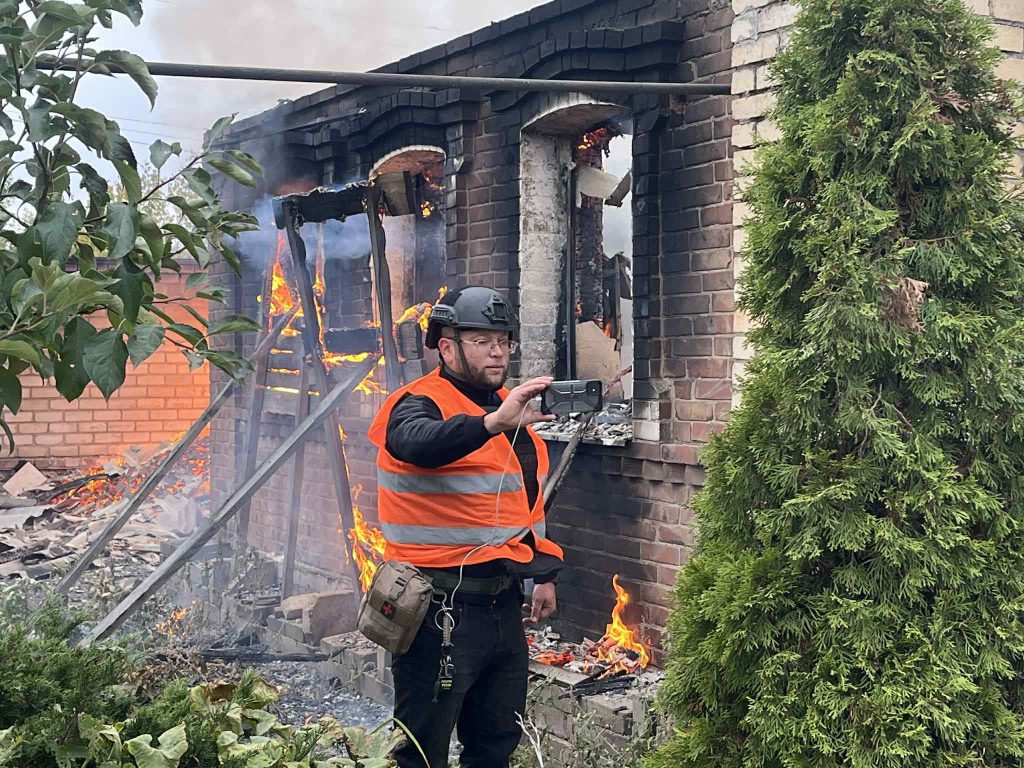
Serhiy recounted an incident in Kramatorsk when he had to repair his car while an FPV drone circled over him, and the second Shahed strike at a high-rise building as he was there alongside rescuers on 1 December.
Another incident occurred on 20 November, when a Russian drone targeted an armored vehicle carrying journalists near Lyman.
Horbatenko says that this environment forces journalists to constantly change their behavior: “You have to listen to the sky; hide your car under trees; wear a bulletproof vest even in cities; pay attention to the drone detector indicators; have a tourniquet and a first aid kit on you.”
GPS glitches, blackouts, and connectivity issues
Disruptions in the navigation system constitute another serious problem for journalists. Horbatenko says that the GPS signal in the region often goes off, forcing them to use offline maps.
The situation with power supply and Internet connection remains a problem as well. The journalist says that having a generator and a fuel reserve helps during blackouts and alternative means of accessing the Internet come in handy in terms of connectivity.
“The Starlink terminal that IMI gave us a few years ago was a godsend. The other day I took it out of the box, updated the utility software on my phone, and everything worked,” the war reporter said, adding that even satellite Internet sometimes “goes down” due to the disruptions in the GPS signal.
Dangerous roads and working without hotels
Journalist Yulia Surkova says that even traveling around the country’s East is complicated, with direct routes often being unsafe due to Russian drones.
“Traveling is really dangerous now, with Russian drones flying over the highways, so we are taking roundabout routes. It’s a big detour to be driving through anti-drone net tunnels, but there’s no other way right now,” she explains.
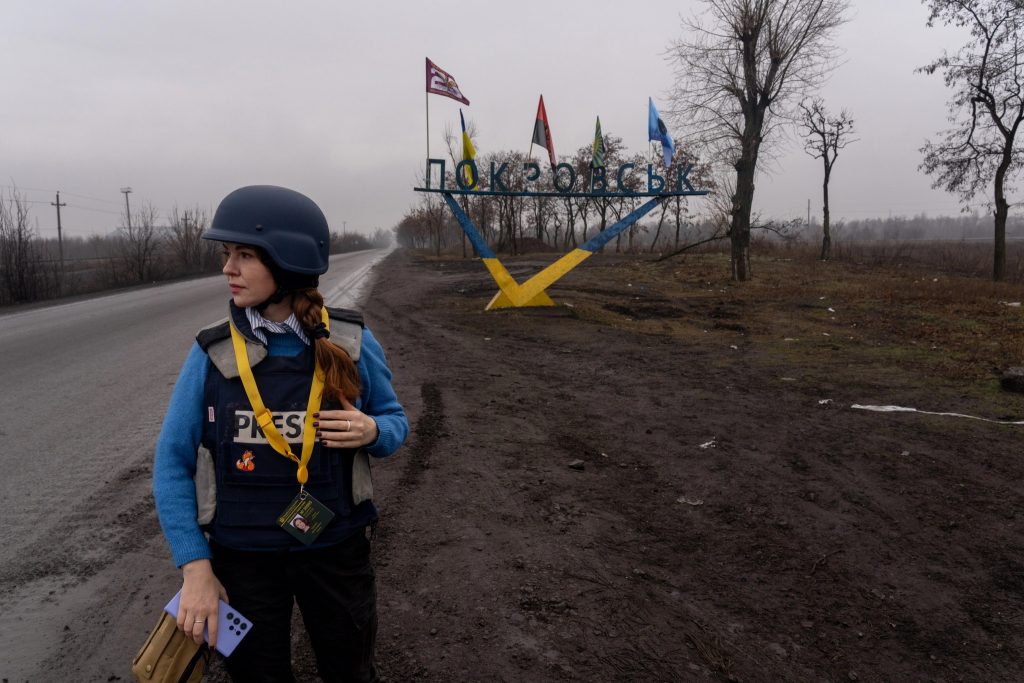
Surkova stresses that journalists working near the front line have long stopped staying in hotels, because any hotel is a potential target.
“I rent an apartment. We often report on evacuations efforts and it is quite dangerous, so we either travel in White Angels’ armoured capsules or with volunteers who have electronic warfare equipment,” the journalist says.
She adds that traveling to some areas of Donetsk oblast in your own unarmoured car without any means of electronic warfare is mortally dangerous.
Mental fatigue and a sense of loss
The journalist also stresses the mental pressure of working in the region. She has been reporting from Donetsk oblast since 2014 and says that the most difficult part is watching cities disappear one after another.
“A year ago I went to Pokrovsk, and it has been erased almost completely by now. Back in spring I had coffee in Dobropillya, and now it’s being crushed to the ground with guided bombs. Back in summer I bought grapes in Druzhkivka, and now it is in the red zone,” says Surkova.
She admits that she sees each trip to Kramatorsk or Slovyansk as potentially her last.
“Even 20 kilometers is a dangerous distance”
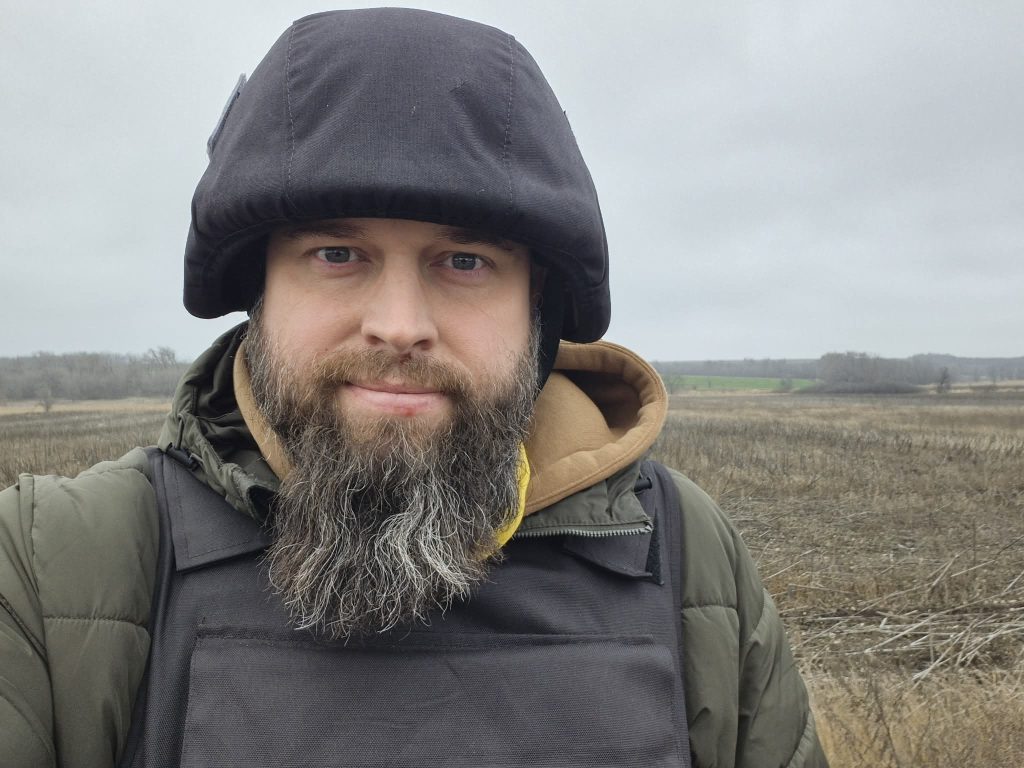
With the so-called kill zone expanding, even areas located tens of kilometers away from the front line are becoming dangerous, explains Suspilne Donbas chief editor Andriy Kramchenkov.
“Even 20 kilometers from the front line is a dangerous distance now,” says Kramchenkov.
According to him, drones of various types allow the Russian troops to hit targets at a considerable distance.
“If earlier you could get close to the front line, say, within a mortar shot distance, now even 40 kilometers is not too far for drones to reach,” explains the editor.
He adds that you risk dying or losing your transport where evacuation can’t reach you even in the relative “deep rear”.
Connectivity issues and staff shortage
Suspilne Donbas chief editor Andriy Kramchenkov also highlights the systematic connectivity issues that arise due to the infrastructure damage and the active electronic warfare on both sides.
“Mobile connection and even Starlink terminals are not guaranteed to work there,” he says, adding that journalists often have to travel further away from the front line to submit their material.
Kramchenkov mentioned staff shortage another challenge, saying that there are only three “on the ground” correspondents left on the team and those are working at the limit of their mental capabilities.
“Their mental strength is holding by the last thread, one might say,” Kramchenkov says.
Due to the lack of personnel he does the driving himself, because finding male drivers and cameramen is extremely difficult.
“A normal Suspilne branch should have eight or nine on-the-ground correspondents; I have three,” he concludes.
Russian strikes at media crews in Donetsk oblast
On 25 May 2025, a Suspilne Donbas camera crew (chief editor Andriy Kramchenkov and reporter Vladyslav Ukolov) came under Russian fire in Donetsk oblast.
Also in May 2025, Vyacheslav Lakomkin, correspondent with the Polish media outlet TVP Vot Tak, was targeted by a Russian drone along with the Ukrainian Armed Forces brigade No. 68 near Pokrovsk in Donetsk oblast.
On 23 October 2025, war reporter Alyona Hramova (Hubanova) and cameraman Yevhen Karmazin of the Ukrainian international channel Freedom TV were killed in a Russian Lancet drone strike in Kramatorsk (Donetsk oblast).
In November 2025, the chief editor, two reporters, and a camerawoman with Suspilne Donbas had to take cover from Russian drones in a residential building’s entrance hall while filming a news story in Druzhkivka (Donetsk oblast).
Cover photo by Oleksiy Filippov