

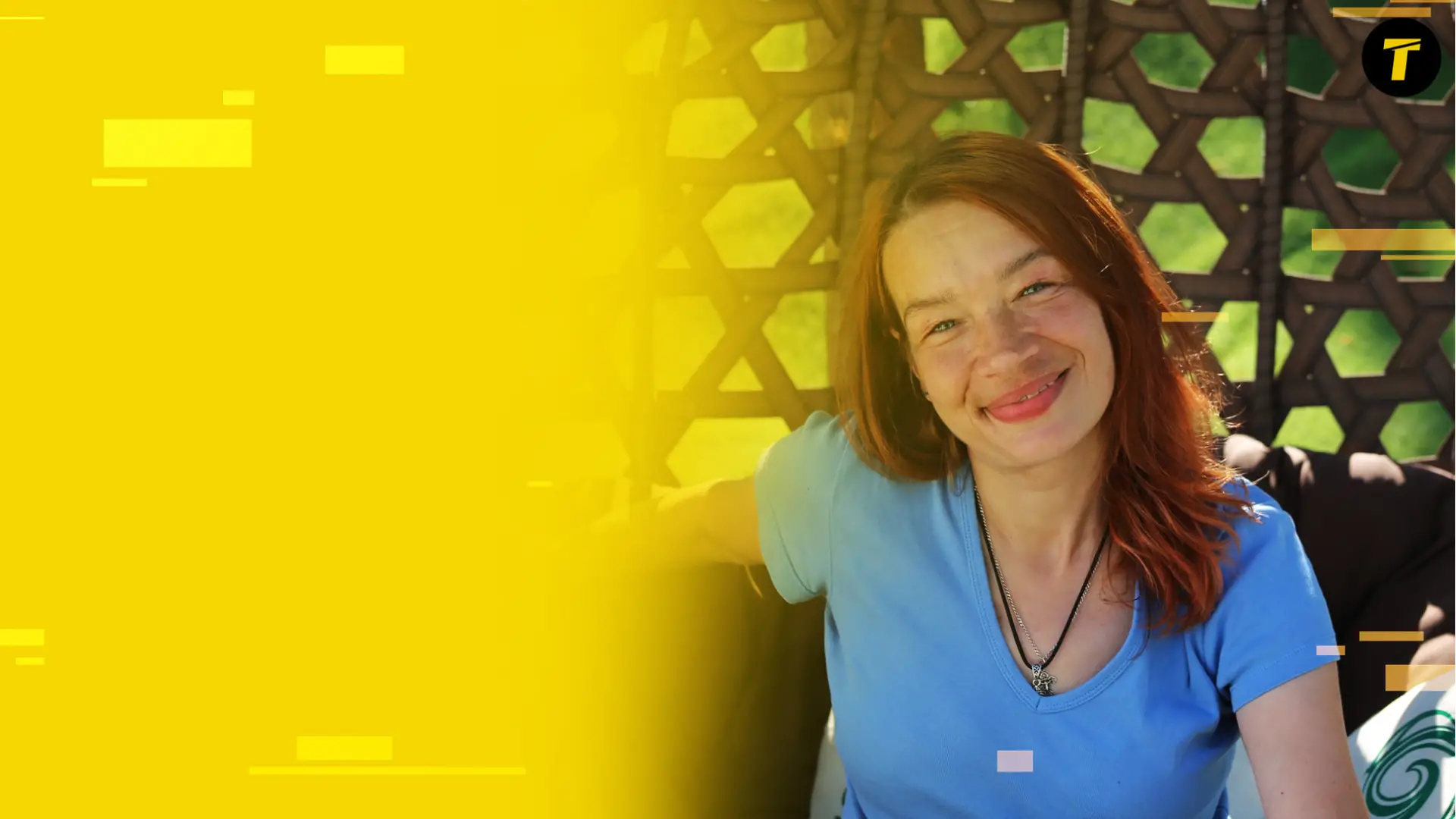
Journalist Yana Osadcha, who was reporting from Luhansk for local media in the spring of 2014, publicly opposed calls for a Russian invasion and witnessed the beginning of the war unfolding in the city, the media worker told Trybun. At that time, her articles would be read aloud from a stage near the overtaken SBU office, and she noticed not only locals, but also “guests with a pronounced Russian accent” among the protesters.
Yana recalls there were both locals and people with a pronounced Russian accent who did not speak the local dialect well among the pro-Russian activists at the time.
“Although the majority of Luhansk people spoke Russian, we had our own pronunciation, our own words. It was immediately clear that these people were here ‘on a mission,’” the journalist says.
In her articles, she addressed her fellow Luhans residents, urging them not to drag Luhansk into war, not to call on Putin to send troops, and not to destroy their own home.
Osadcha was especially outraged by the burning of Ukrainian flags. She tried to save one, but the crowd did not allow it.
Back then, Luhansk journalists were trying to stop the upcoming war through the initiative “Hearing Luhansk”, an open discussion platform for locals.
“We wanted people to sort things out within their own country, without the Russians. But we failed to take one thing into account: an aggressive neighbor who had decided everything for us. You can’t confront a tank empty-handed,” Yana concludes.
She had to leave the city in the summer of 2014 because she was already being watched. She took the last bus to Starobilsk. Every morning she would go to the city center to see which flag was hanging there.
The journalist and her family stayed in the oblast for a long time, hoping that Luhansk would be liberated. Over 12 years have passed, and she still cannot go home.
“I cannot sell my house in Luhansk, because I’d have to go through filtration at Moscow’s Sheremetyevo for this. As a citizen of Ukraine, I do not want to go there. Best case, I will be deported, worst case, imprisoned,” she explains.