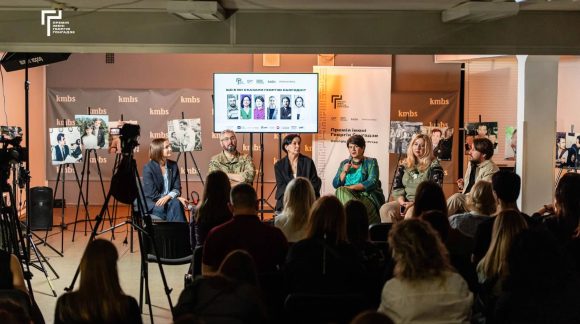
The Ukrainian media community held an event in Kyiv titled “26 Years of Unfinished Conversations” as part of Heorhiy Gongadze Remembrance Week. The event was centered around the question, “What would you say to Heorhiy today?” and dedicated to the memory of all deceased Ukrainian journalists.
To keep that memory alive, the Heorhiy Gongadze Prize partnered with PEN Ukraine and with the Institute of Mass Information (for media support) to found the RECviem project — a memorial platform for journalists killed in the course of Russia’s war against Ukraine.
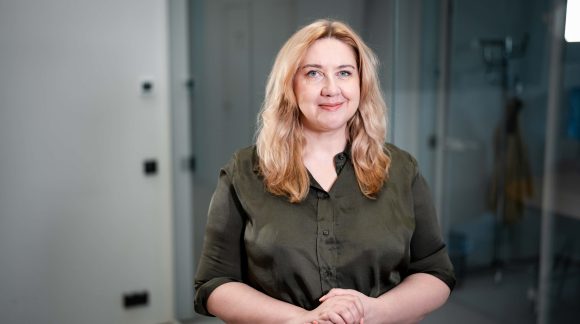
During the event, Gongadze Prize director Anastasia Abramets read out the stories of three journalists who had been killed. She stressed the importance not only of preserving the memory of these people, but also of telling people who they truly were. After all, there is a real person behind every name and every story, and dozens of people who loved them.
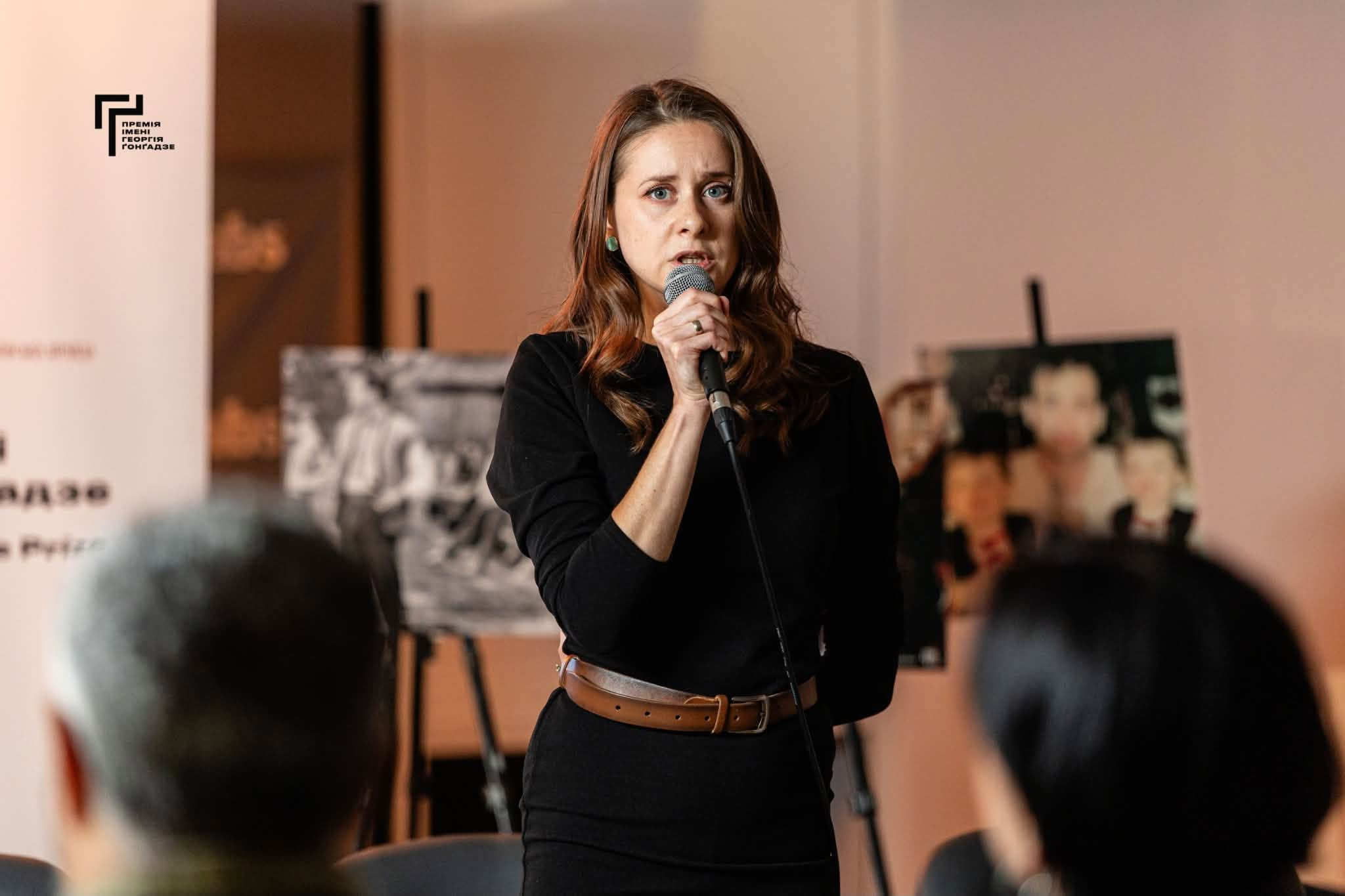
Attendees of the event also shouted out the journalists unlawfully imprisoned by Russia. Namely, ZMINA Human Rights Centre researcher Nari Usenko stressed that many Ukrainian journalists have been paying for their reporting by facing torture, unlawful detention, arrests, psychological torment, and pressure on their families and on the journalists themselves.
She said that after independent journalism was dismantled in Crimea under Russian occupation, citizen journalists became the peninsula’s voice, documenting everything happening there. A similar situation developed in Ukraine’s other occupied territories. Thanks to the work of citizen journalists, the world was able to see the truth that Russia wanted to hide.
The researcher mentioned the names of journalists unlawfully imprisoned by Russia. According to her, 27 media workers are currently known to be in Russian custody, detained on false charges.
“Russia doesn’t just want to capture, arrest, and torture our people. It wants to take away their right to a voice, to stop them from writing and speaking out. It bans them from staying in touch with their loved ones, isolates them from the world, and moves them far away from their families. So this day is also a day for us to talk about the people who are carrying on Heorhiy’s cause, and who need to be set free,” Usenko said.
This was followed by a public discussion where participants shared their memories of Heorhiy Gongadze, his values, and his contribution to the development of Ukrainian civil society.
The discussion included:
- Vakhtang Kipiani, journalist, Historical Pravda and the Press Museum and Archive founder, 2019 Heorhiy Gongadze Prize laureate;
- Myroslava Barchuk, journalist, TV host, documentary filmmaker, 2021 Heorhiy Gongadze Prize laureate;
- Larysa Denysenko, writer and human rights advocate;
- Roman Romaniuk, political columnist at Ukrainska Pravda;
- Oksana Romaniuk, director of the Institute of Mass Information.
The discussion was moderated by Tetiana Teren, Supervisory Board Chair and co-founder of the Heorhiy Gongadze Prize, founder of the Tereny culture agency, journalist, and cultural manager.
The event was hosted by Radio Liberty journalist Olha Snitsarchuk.
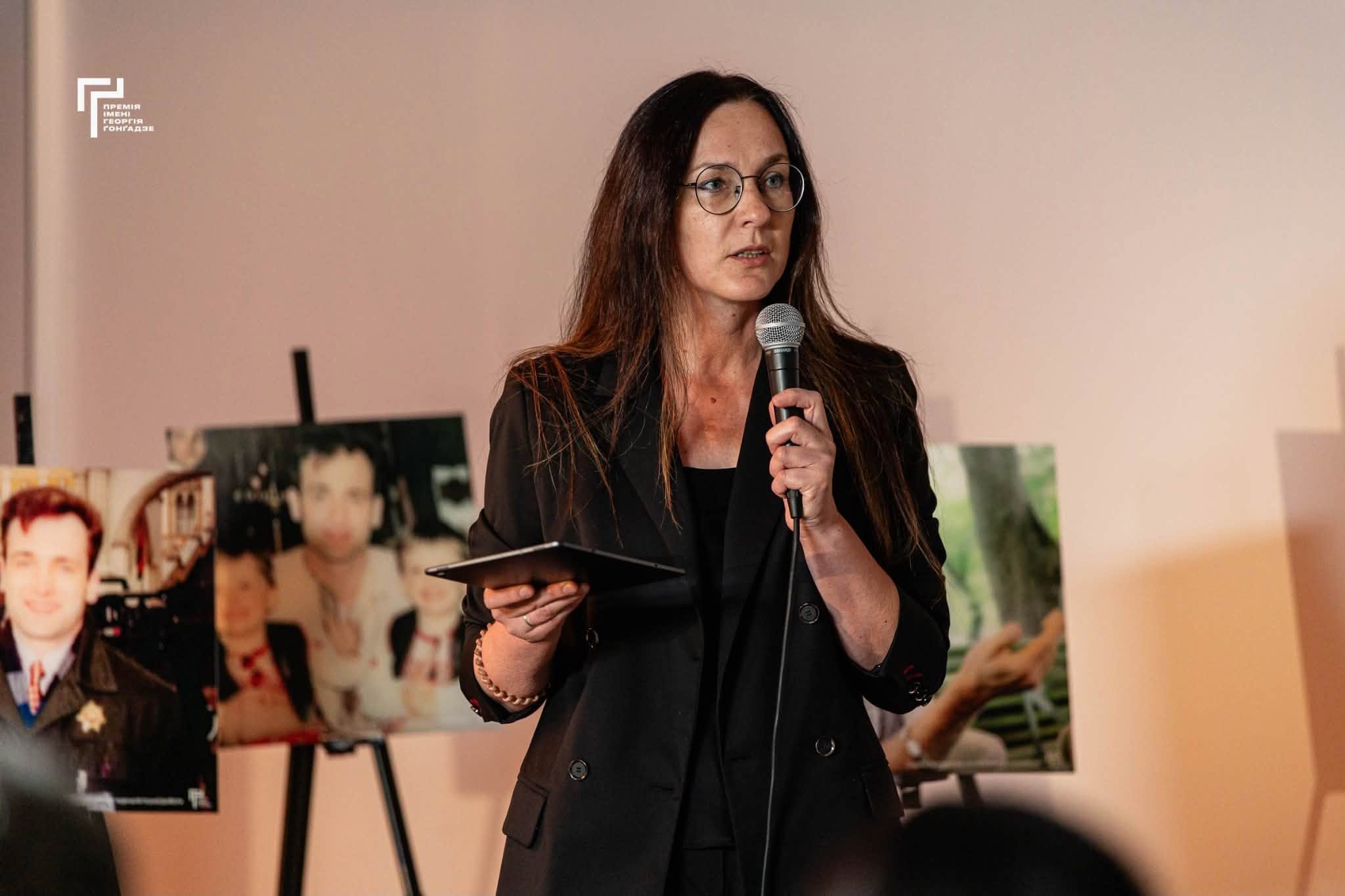
The participants also remembered the media workers and journalists who have been killed in the war and those Russia keeps in unlawful detention, and watched a video tribute to Heorhiy.
Remembering Heorhiy Gongadze’s abduction and murder
Participants in the discussion shared their memories of Heorhiy’s abduction and the day it was reported that he had been murdered. Vakhtang Kipiani recounted that he had seen Heorhiy two days before his disappearance, at parliament. So, upon learning that Heorhiy had gone missing, he decided contact what was then called the militsiya (police) to tell them everything he knew about his colleague and to help with the search for him.
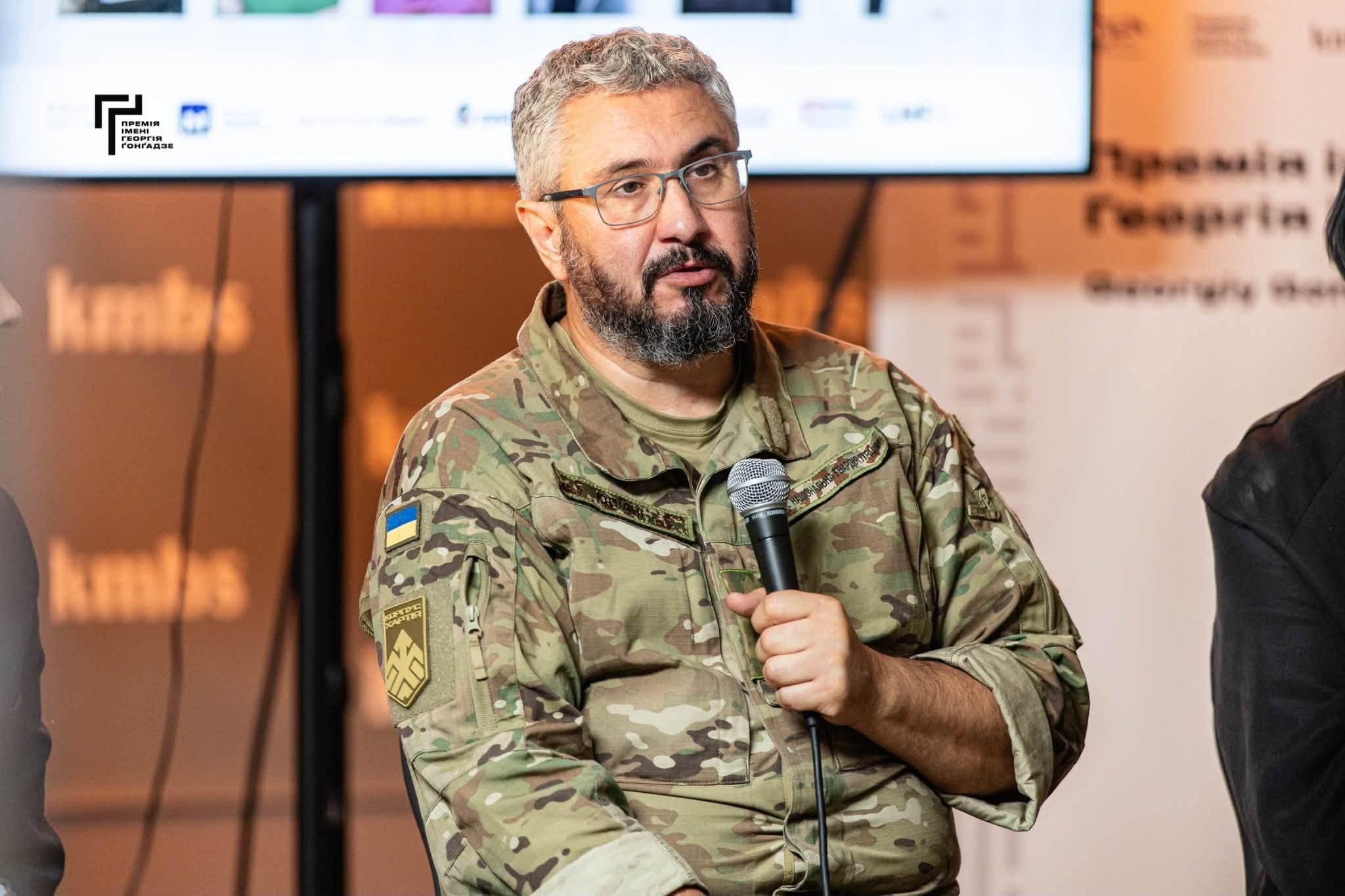
Kipiani said that at one point Petro Opanasenko, chief of the capital’s militsiya, was present during his conversation with the investigator; he later died under strange circumstances. Journalists suspect this was part of an effort at the time to cover up traces of the crime committed against Heorhiy.
He also said that a great many different reports about Heorhiy’s supposed whereabouts had been circulating at the time, so those putting genuine effort into searching for him kept being led down false trails.
“At that point, nobody knew what had actually happened yet. So the events of 2 November, and then the events following the release of the so-called Melnychenko tapes, really were a shock. There was such a flood of news, you could drown in it…” the journalist said.
Kipiani added that the country’s leadership behaved very brazenly throughout that time and tried to steer the “investigation” down the wrong path. So it became clear to Heorhiy’s friends and colleagues that they wouldn’t be the ones searching for him.
Myroslava Barchuk, meanwhile, said that back then, state sovereignty and independence had not yet taken on the meaning they carry today. In particular, the last story that the journalist had shared with Heorhiy vividly illustrated this: it was about the power Viktor Medvedchuk wielded at the time, and the fear he instilled in certain publishers and media executives.
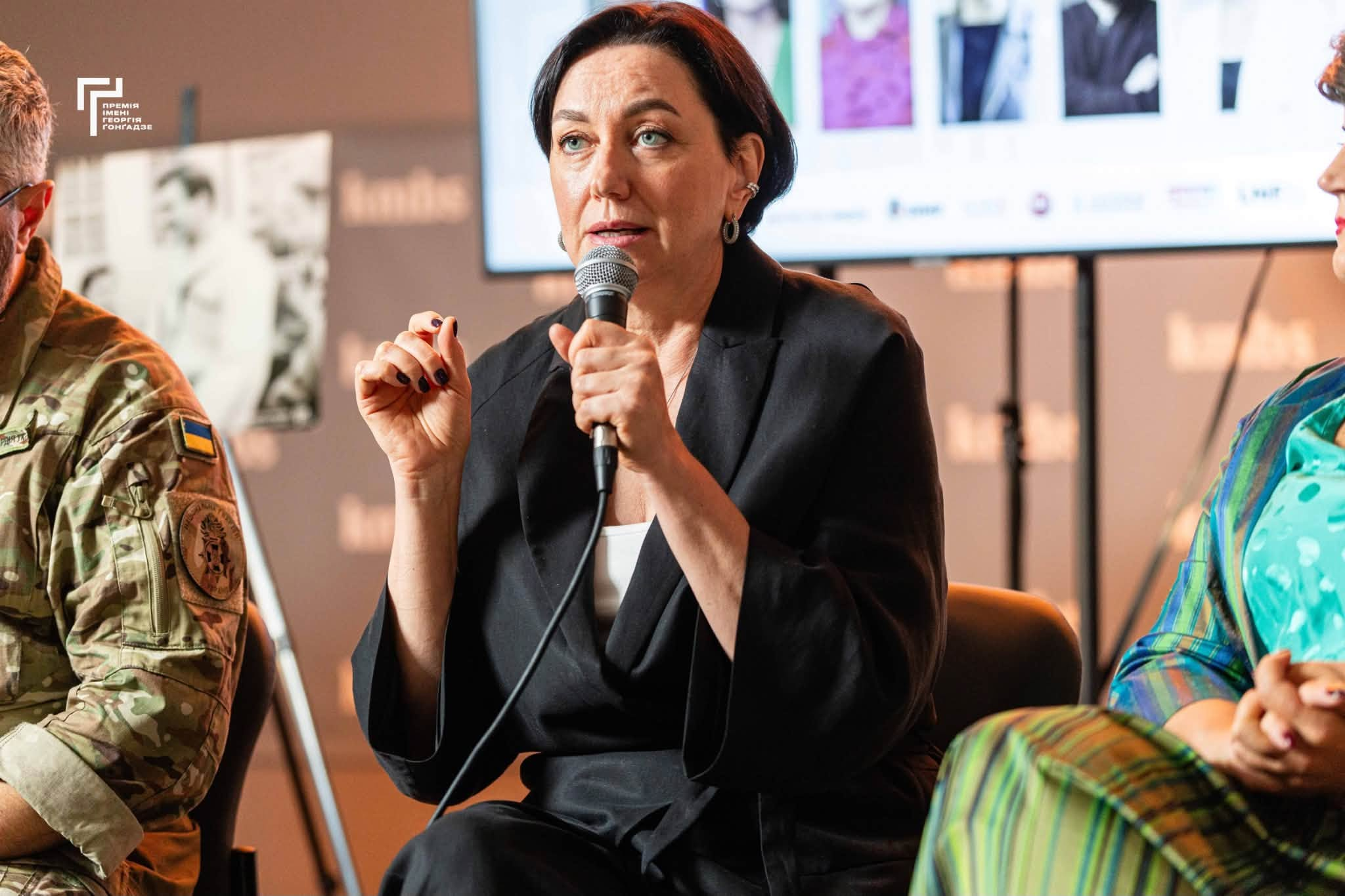
“Giya [Gongadze] was very lonely in his position. I’m not saying none of our colleagues shared his principles or values, but most had a very conformist stance. And when he went missing, all my conversations with colleagues kept circling back to one idea — that he’d be found. That was partly because it was easier for people to justify themselves back then, to justify their own silence and their fear of openly supporting Giya’s position,” Barchuk said.
According to Larysa Denysenko, she was providing legal consultations to what was the opposition at the time, while Heorhiy was partly running the media side of the opposition to President Kuchma. She stressed that back then, new reasons for the public to be saying that things couldn’t go on like this would arrive almost daily. It was as part of that resistance to the authorities that the human rights advocate first got to know Gongadze.
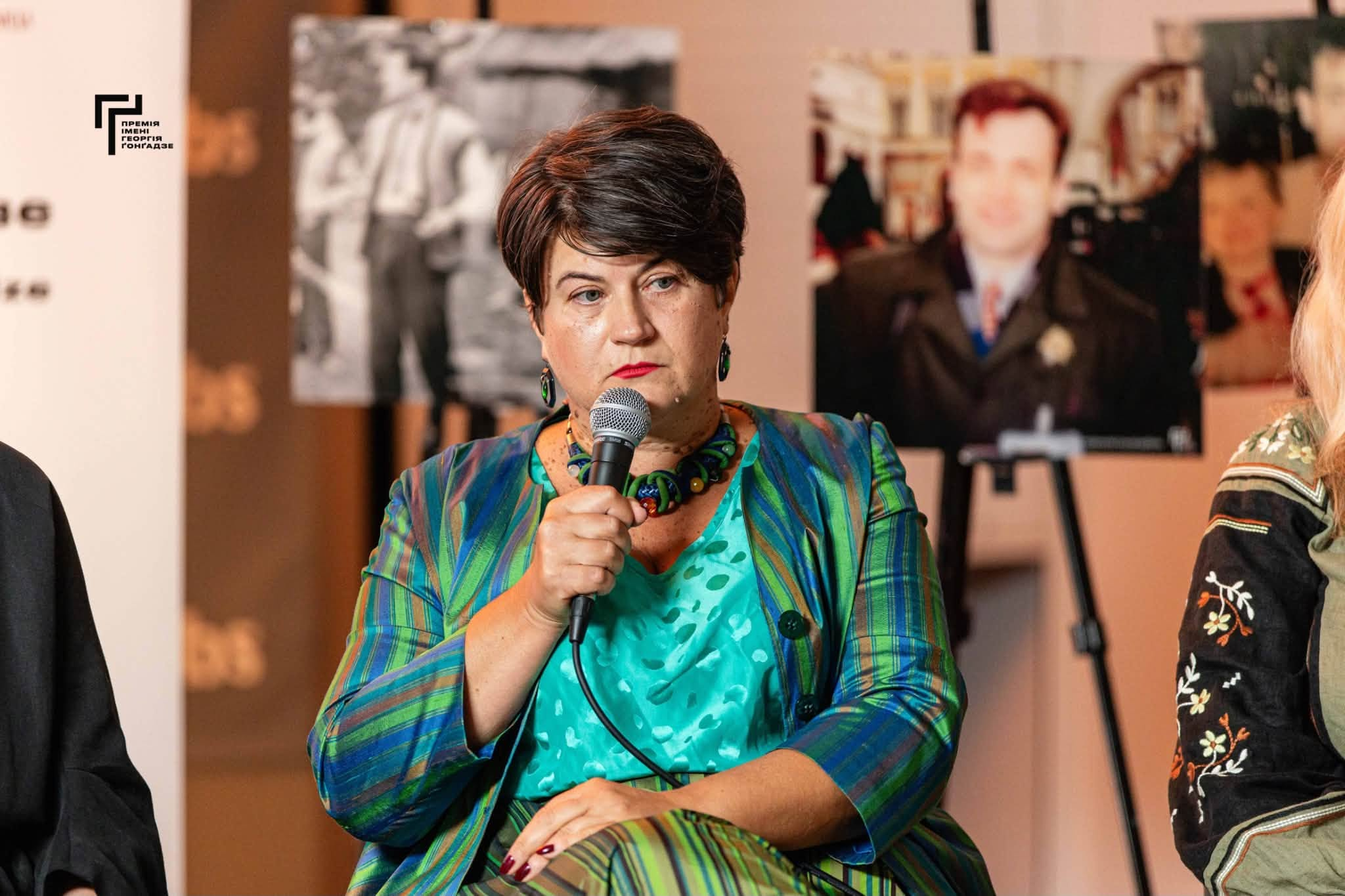
“The prosecutor general at the time was a scoundrel and an utterly dishonest person… After Heorhiy went missing, there was a kind of value-based resentment between us and the authorities. And the more we talked to all of them, the more convinced we would become that something terrible had happened,” Denysenko said.
She added that at the time, Heorhiy’s associates realised they were being watched, and it later turned out they were right.
“I’d really like to ask him: can you tell me where else I can find evidence — evidence that would lead straight to the person whose name we’ve mentioned many times today, Leonid Kuchma. If you know what I can get hold of and where, please, just give me a sign and tell me,” Denysenko said.
In this context, Tetiana Teren stressed that this event intended not just to honour Heorhiy’s memory, but also to keep reminding people that the main perpetrators of his murder have still not been officially identified.
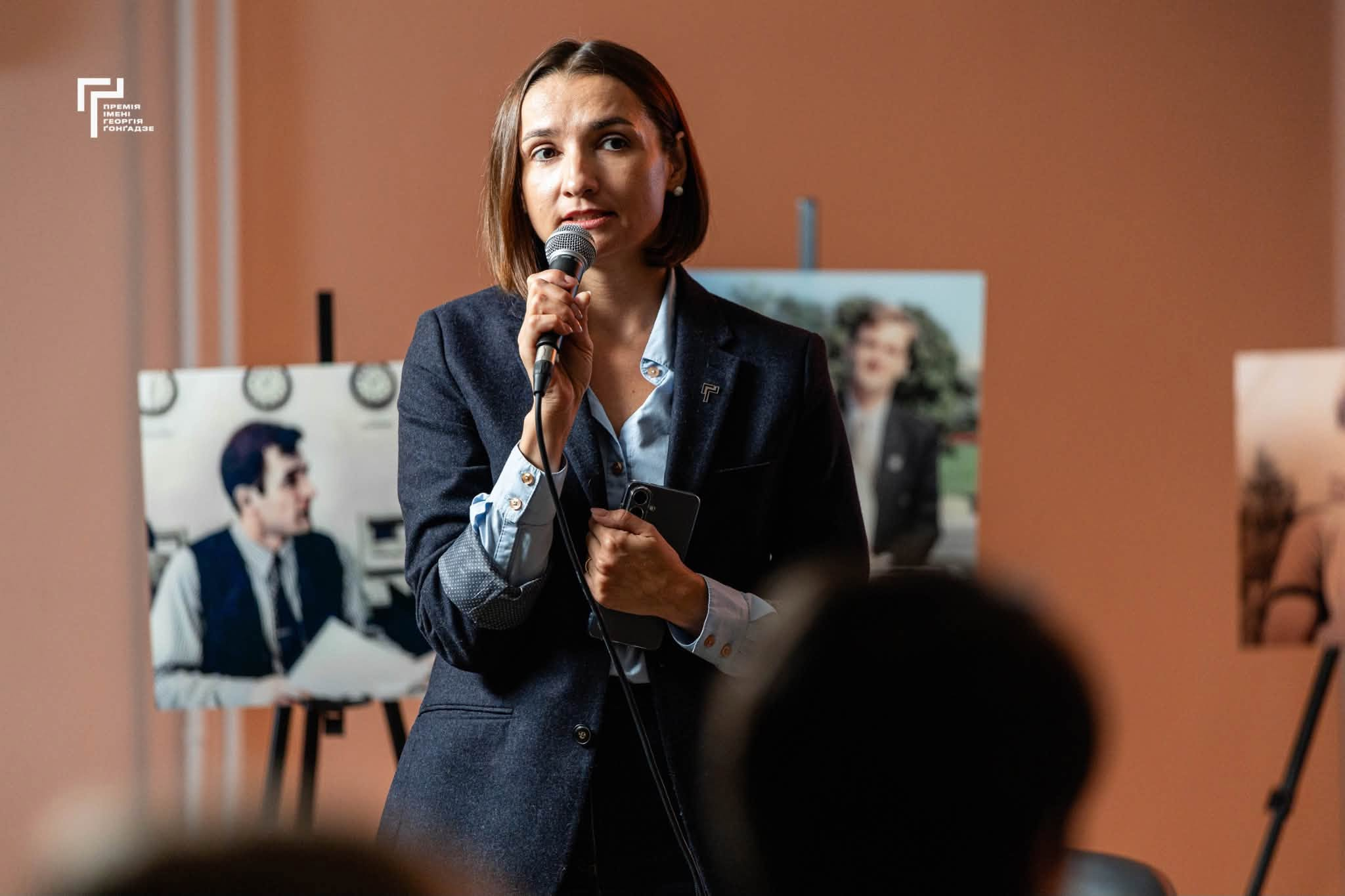
Oksana Romaniuk said that Heorhiy’s disappearance prompted her to talk to her colleagues and fellow students about the values he stood for, the questions he put to those in power, and how Heorhiy changed journalism.
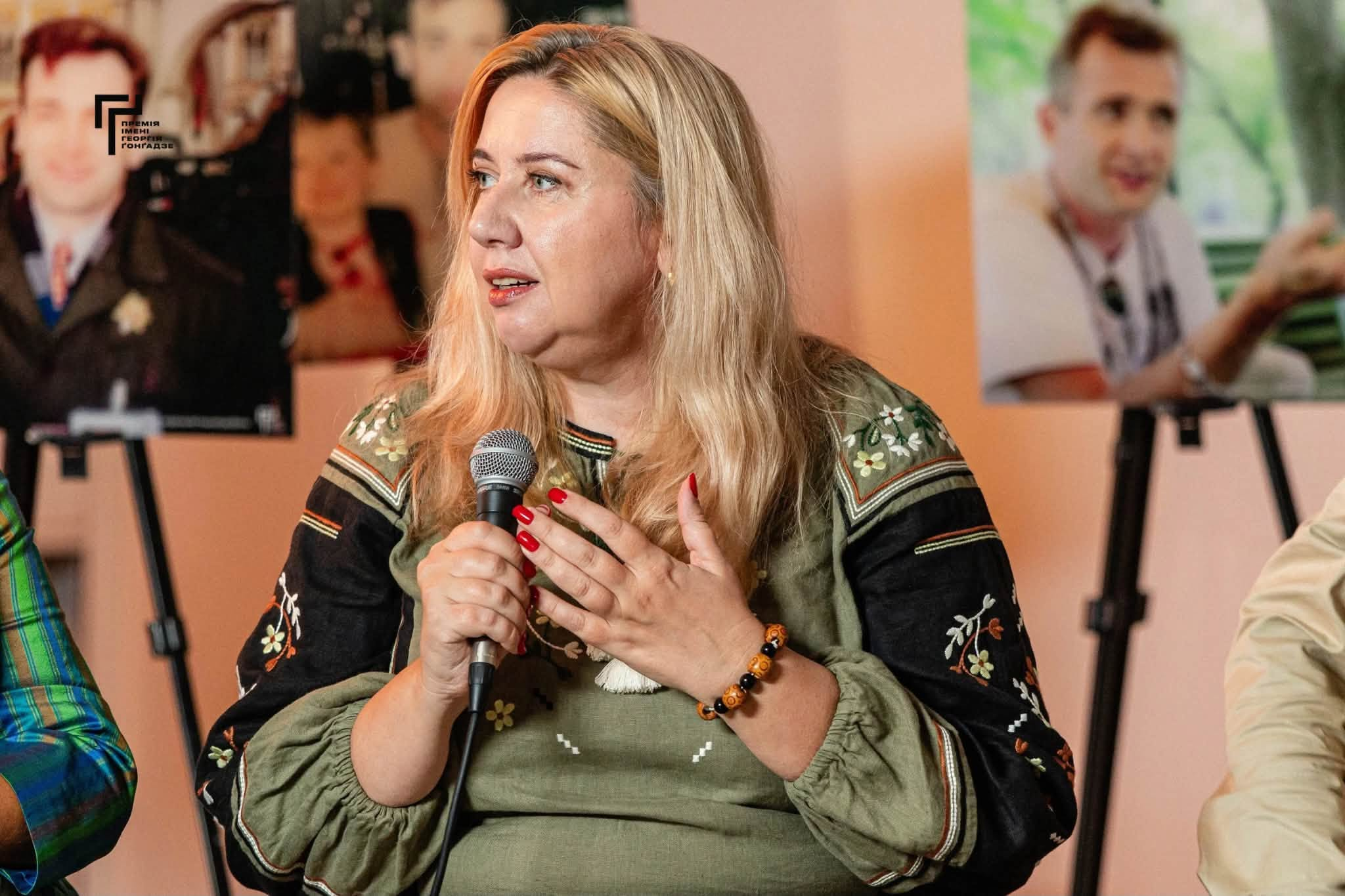
“Later on, I wrote official statements on the anniversaries of Heorhiy’s disappearance… my colleagues and I would go meet the chief of the investigation office, the prosecutor’s office. They’d look at us with these glassy eyes, telling us the inquiry was underway and that all other information was not public,” she shared.
IMI director stressed that Heorhiy’s murder had shed light on multiple other cases where journalists would die strangely, that had occurred before it.
“Indeed, right now we’re also talking about all our colleagues who have been killed since the start of the Russian invasion. On this day, I ask everyone to remember their names… Because this is living history, an ongoing process of change. We’re still transforming and developing as a media community, as Ukraine. That’s why it’s important to remember this, to draw conclusions, to engage with all these stories, to take responsibility. That’s the only way we can hold our ground and truly transform into something beautiful, democratic, and powerful,” she added.
During the conversation, Vakhtang Kipiani recalled his time working in journalism after Heorhiy’s murder. He said that Kuchma’s government tried to control the media at the time and would sent so-called “temnyky” (censorship directives) to journalists.
“The ‘temnyky’, a censorship tool, were effectively a response by the pro-Russian ruling elite — Kuchma, Medvedchuk, and others in that circle — to the crisis they faced, needing to save themselves. Because the Heorhiy affair could have ended in a Romanian-style scenario, with the president’s family executed, or something similar,” the journalist explained.
At the same time, he stressed that many media outlets ran dozens, even hundreds, of pieces about Heorhiy.
Journalist Roman Romaniuk, who now works at Ukrainska Pravda, the outlet Heorhiy founded, shared his own memories of that period. He said he first learned about Heorhiy Gongadze’s story while a student, at a time when the Orange Revolution was unfolding in Ukraine.
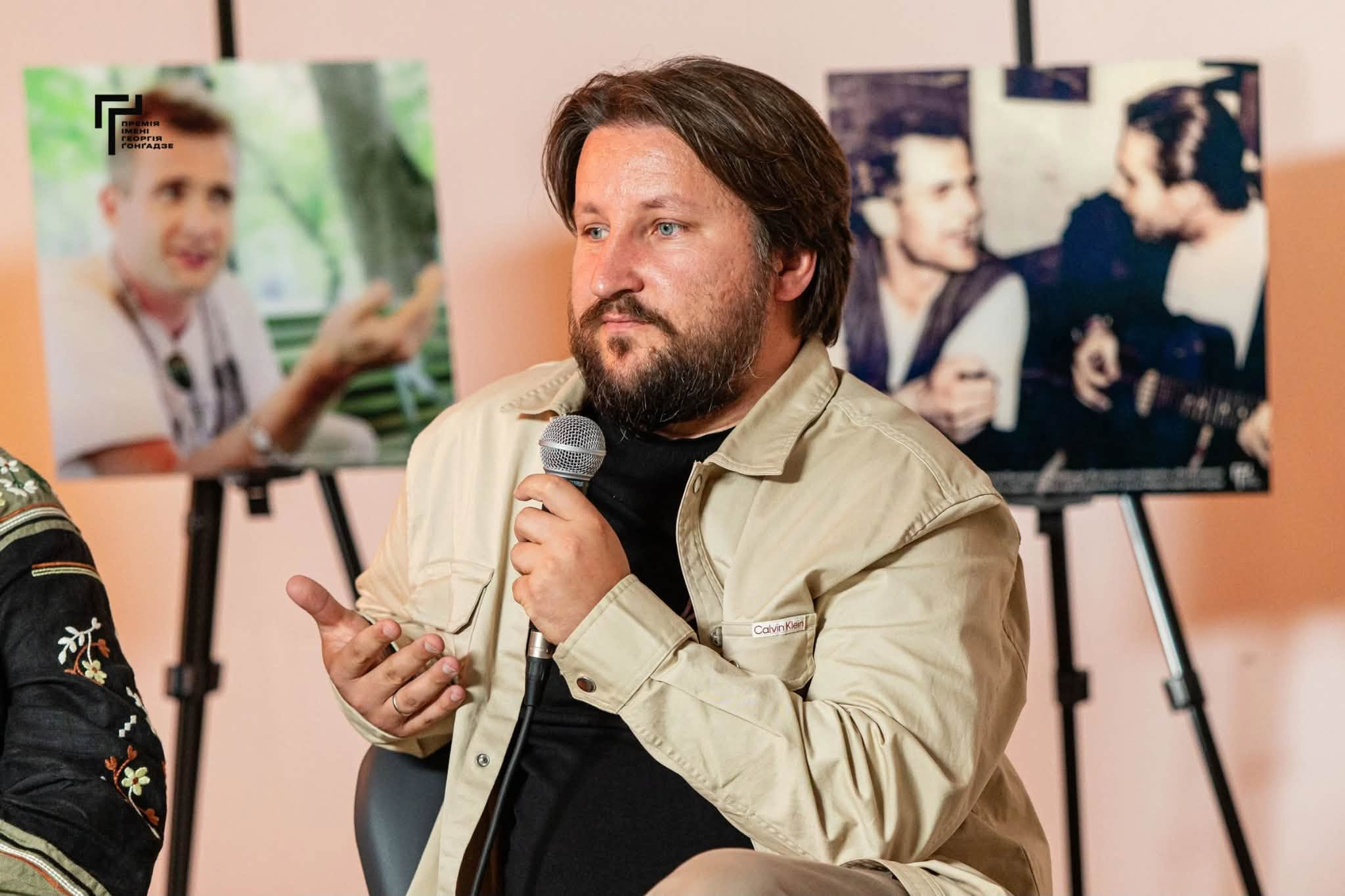
In the journalist’s view, this story stands as a benchmark of absolute injustice, brutality, and unpunished malice against journalists. Because nothing has changed in the 26 years since it happened: those who ordered Heorhiy’s murder have not only gone unpunished, they haven’t even been formally identified.
“We have portraits of Giya and Pavlo Sheremet hanging on the wall in our newsroom. And now Vika Roshchyna’s portrait has been added to that, too… And every day, those photos bring Giya, Pavlo, and Vika back into our real, everyday life… Whenever you stand before a certain values-based choice, you look at them — at someone who didn’t hesitate and who, in effect, paid for that choice with their lives. For me, that’s a real source of strength in the office,” Romaniuk said.
“Have we come far from the situation in which Heorhiy founded Ukrainska Pravda?”
He also spoke about what he would say to Heorhiy if he had the chance. He said his would be the question, “What should we do now?” He would ask it in the context of the country’s current situation.
“Have we really come that far from the situation Heorhiy was in when he founded Ukrainska Pravda?… But I’ve never had any doubt about where I needed to work if I wanted to be a journalist. And that, I think, is Heorhiy’s biggest contribution to my personal life,” the journalist said.
Oksana Romaniuk also shared the question she would like to put to Heorhiy, saying she would ask him how to move from protesting to building a system that would provide sustained support and protection for independent journalism in Ukraine.
“Sadly, I never knew Heorhiy personally, but I’ve heard he had a lot of energy. I’d ask him to get involved in building some kind of journalist organisation, movement, or solidarity community, so that he could use that energy of his to inspire people towards that,” she added.
Romaniuk stressed that while protests are necessary for a young democracy, media outlets needed to build a system where everyone could rely on and coordinate with one another.
Responding to this, Larysa Denysenko said that Heorhiy was, in fact, a person of protest, who responded to injustice by fighting against it. So, in today’s reality, in her view, Gongadze would have been among the servicemembers on the front line, since statehood was his highest priority. Vakhtang Kipiani shared her view on the role Heorhiy might have played in today’s circumstances.
“He was someone who would have tried to stop the process of his homeland’s defeat and territorial losses. For example, if he’d lived to see 2008, he would just as easily have been among those few who went out onto the Maidan and said that Ukraine needed to support Georgia…” the journalist believes.
He said that although Heorhiy would be a different person today, he would still have kept the values instilled in him by his family: his father, who took part in the Georgian independence movement, and his noble mother.
“So it’s obvious that Heorhiy and I would have a great deal to talk about right now. At the same time, it’s become clear now that we were living through a phase of the Russo–Ukrainian war already back then — one that hadn’t yet been called a war, but which Russia was already waging against us. And Heorhiy’s murder was neither the first nor the last element of that war,” Kipiani said.
He also added that every journalist today carried forward what Gongadze did. Myroslava Barchuk shared this view, stressing that over 26 years, journalism and Ukrainian civil society have made a colossal leap forward thanks to Heorhiy, his stance, and his death.
The journalist remarked that, if she could, she too would want to talk to Heorhiy about how Ukraine should move forward, and what to do now about the things that haven’t been addressed.
The event took place as part of Heorhiy Gongadze Remembrance Week.
The Heorhiy Gongadze Remembrance Week’s media partners: Ukrainska Pravda, PEN Ukraine, the Institute of Mass Information, Detector Media, the Donbas Media Forum, the Commission on Journalism Ethics, NV, ZMINA Human Rights Centre, Suspilne Broadcasting, and the Lviv Media Forum.
The Heorhiy Gongadze Prize was founded in 2018 by PEN Ukraine, Heorhiy Gongadze’s family, Ukrainska Pravda, the Kyiv-Mohyla Business School, and its alumni.
The Gongadze Prize’s continuity and development are made possible thanks to the support of patrons. Its patrons are exclusively alumni of the Kyiv-Mohyla Business School who share the Prize’s values and are committed to transforming Ukrainian society through high-quality, professional journalism.