
Russia has put Odesa-based investigative journalist and environmentalist Vladyslav Balinskyi on the international wanted list, as per the statement by the National Ecology Center of Ukraine (NECU), released on 29 January 2026.
The NECU says that the persecution campaign targeting Balinskyi began in 2014, following his involvement in the think tank 2 May Group, which was independently investigating of the events in Odesa of 2 May 2014 debunking Russian propaganda. The persecution sharply intensified in 2022 as Balinskyi began tracking Russia’s war crimes and acts of ecocide.
The organisation says that Russian authorities and propaganda outlets have been spreading disinformation about Balinskyi for a long time, claiming his reporting and academic work was “espionage,” “sabotage,” or “academic hitmanship”.

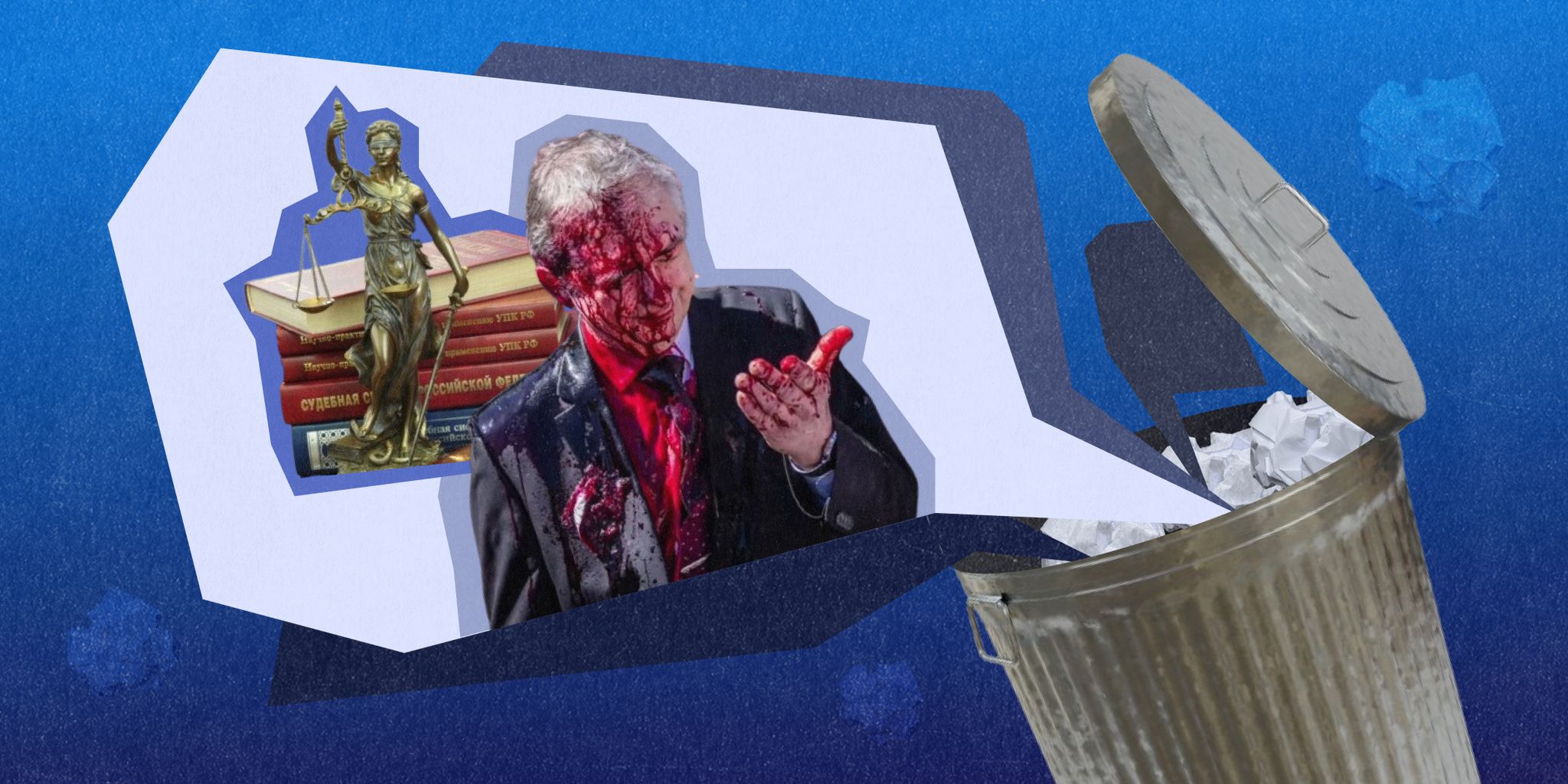
Russia opened an investigation into him in absentia in 2025. In October 2025, the Moscow Prosecutor’s Office submitted the case for trial in absentia. Balinskyi is charged with two articles of the Russian Criminal Code:
- Article 207.3 (“spreading fake information about the Russian Armed Forces”) for his posts about the war crimes in Bucha and Irpin, air strikes along the Odesa coast, and missile and drone strikes at civilian infrastructure. The posts were made on Facebook and on the news website Zelenyi Lyst.
- Article 243.4 (“damaging military memorials”), referring to the removal of Soviet symbols from the Wings of Victory memorial in Odesa in September 2024.
The Basmanny District Court of Moscow tried Vladyslav Balinskyi’s case on 29 January 2026; Russia later put him on the international wanted list.
The NECU pointed out the overt public threats to physically eliminate Balinskyi by Russian Telegram channels, which openly call him the “next target.”
The National Ecology Center of Ukraine emphasised that Balinskyi was a key witness in war crime and ecocide cases, in particular the destruction of the Kakhovka HPP, the mass death of marine flora and fauna and the pollution of the Black Sea as a result of Russia’s actions. His academic articles and reporting were used to achieve international justice.
“His involvement in these cases makes him a crucial witness for future trials at the International Criminal Court,” the organisation noted, adding that Balinskyi’s prosecution is part of Russia’s systemic policy of eliminating witnesses to war crimes and ecocide.
The organisation called on the SBU and the Prosecutor General’s Office of Ukraine to take urgent action to ensure Balinskyi’s safety, and on international human rights organisations, the UN, the International Criminal Court, and EU bodies to document the case and provide legal support, security, and advocacy.
In a comment to the Institute of Mass Information representative in Odesa oblast, Vladyslav Balinskyi said that such a reaction from Russia is not unexpected. He explained that working as an expert in the fields of environmentalism and fighting propaganda traditionally trigger a sharply negative response from Russia, confirming that the war is being waged not just on the battlefield, but is clearly hybrid.
Balinskyi said that the environment issue particularly worries Russia as it enjoys high attention and trust in the world: international media report on the environmental impact of the war, academic institutions work with it, and a discussion about liability and possible reparations for ecocide is taking shape. This is why Russia has been consistently attacking actors in this field.
Balinskyi stressed that it was not just the propaganda resources targeting him, but also the Russian state bodies, “which mimick the judicial process while violating the basic principles of extraterritoriality and the rule of law.” The purpose of this action is to discredit him as a specialist and to shape the image of him as a “legitimate target.”
He added that Russian narratives are trying to present him as a “spy” who is hiding behind environmentalism to use satellite data, drones, and work in the Black Sea region. According to him, Russia especially focuses on Odesa and the Russian-speaking audience there, since the popular opinion in the South of Ukraine remains important for Russia. Russia has been purposefully constructing propaganda narratives for this audience, expecting them to help achieve their political goals.
Vladyslav Balinskyi is an Odesa-based journalist, chief editor of the news outlet Zelenyi Lyst, and hydrobiologist of the National Nature Park Tuzlivski Lymany and a manager of the international research project SUNDANSE (Horizon Europe) as part of the National Ecology Center of Ukraine.