

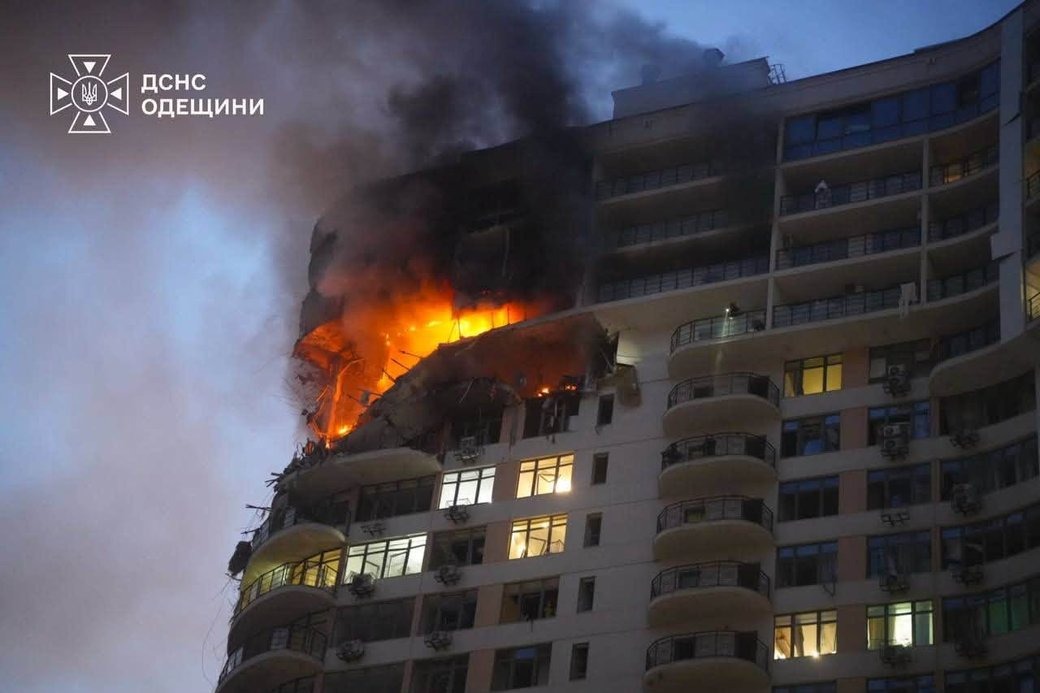
A Russian missile strike on Odesa on 12 September damaged the flat where MykVisti journalist Yulia Boichenko lived. Due to the damage to the building, she has no access to her flat and cannot retrieve her belongings now, Boichenko told Kateryna Sereda, the Institute of Mass Information’s representative in Mykolaiv oblast.
Yulia Boichenko was not at home at the moment of the strike: she was in Mykolaiv, working on a report for MykVisti. No one else was in the flat at the time of the attack either.
In comments to IMI, Yulia Boichenko said that was the fourth time since the start of the full-scale war that Russian shelling had damaged a building or flat where she had lived.
“This time I don’t have access to the flat, I can’t get my things yet. Specialists say there’s a risk of collapse. I don’t have the strength to look for a new flat, to deal with moving out. Not physically, not emotionally, not mentally,” Yulia Boichenko shared.
The journalist said that this was not the worst such incident she had had to go through since the start of Russia’s full-scale invasion of Ukraine. In her opinion, the worst case was in Mykolaiv, when a missile struck the building where she was living at the time.
“But this isn’t the worst strike I can remember. The worst was the missile in Mykolaiv,” she said.
On 12 September, Russian forces targeted Odesa in a missile strike. One of the missiles hit a 25-storey residential building, destroying the upper floors. Access to part of the building remains restricted following the rescue operations due to the risk of further structural collapse.
Previously Russian drone strike in Mykolaiv destroyed the home of the mother of Kateryna Lysiuk, IMI’s representative in Dnipropetrovsk oblast.
Earlier today, IMI’s representative in Volyn oblast spoke about her experience of evacuating from a train due to Russian shelling.