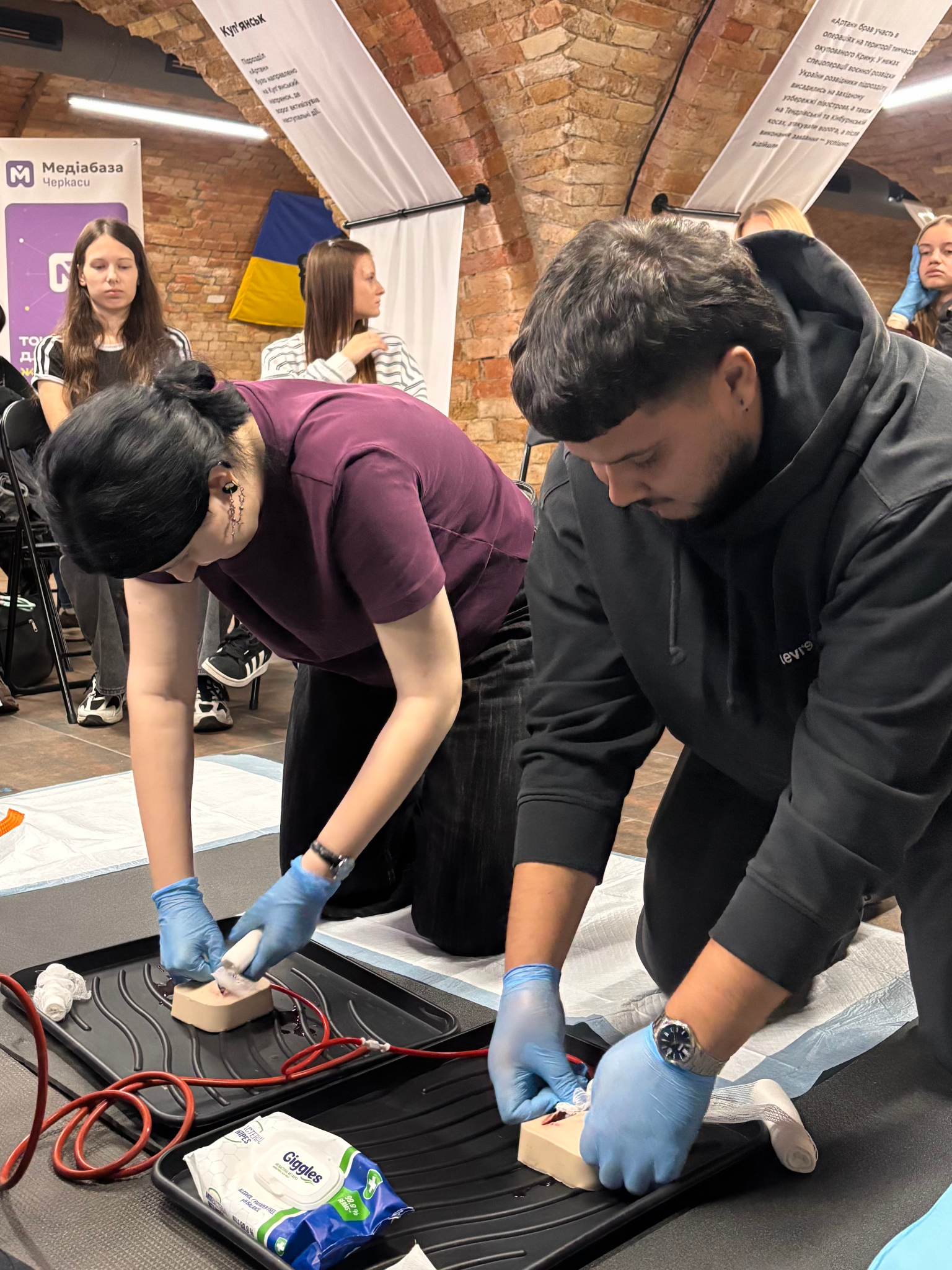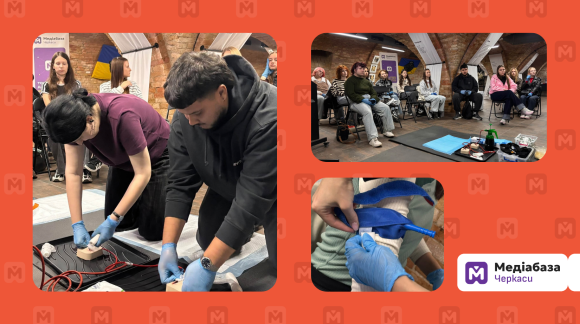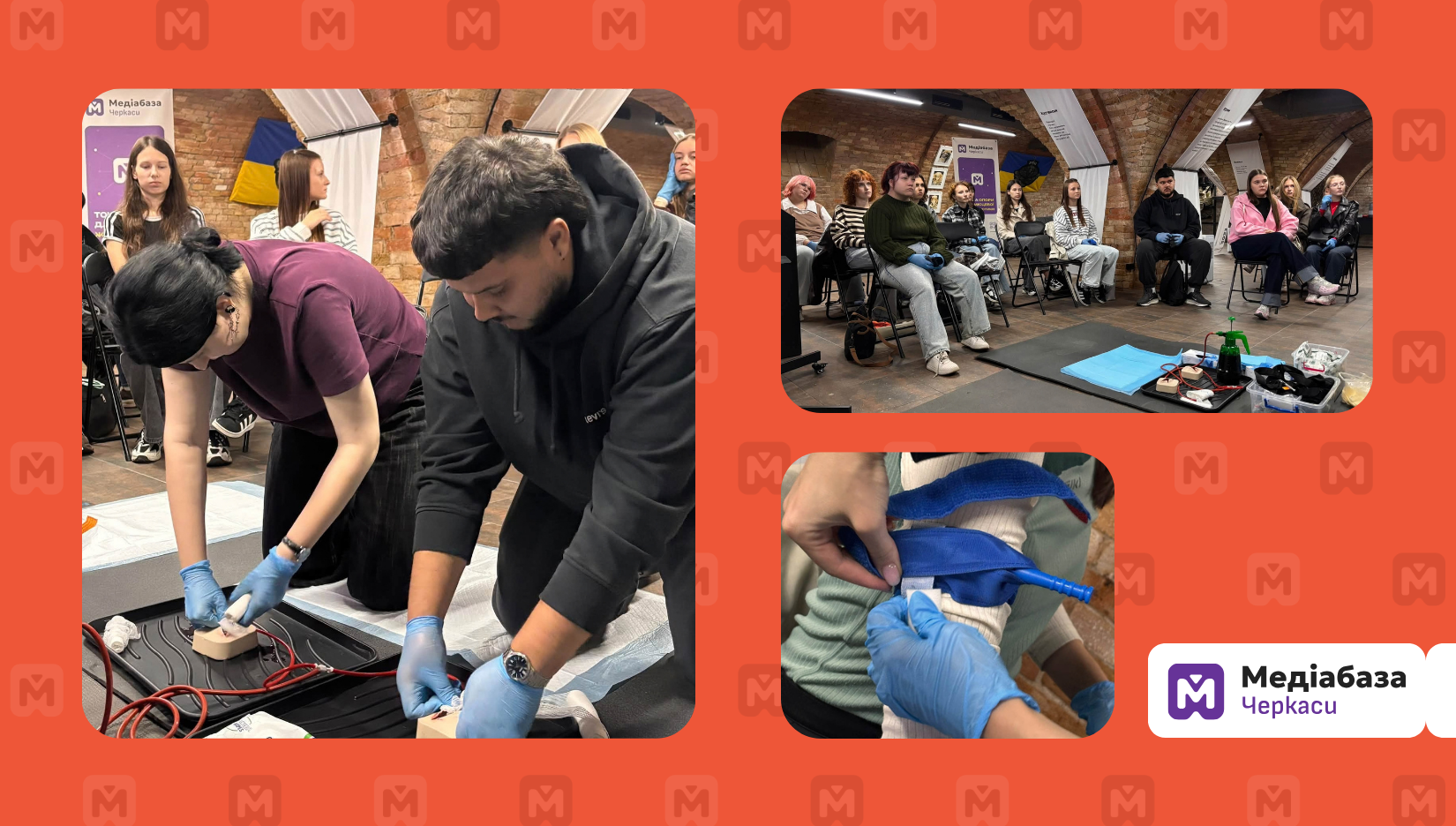
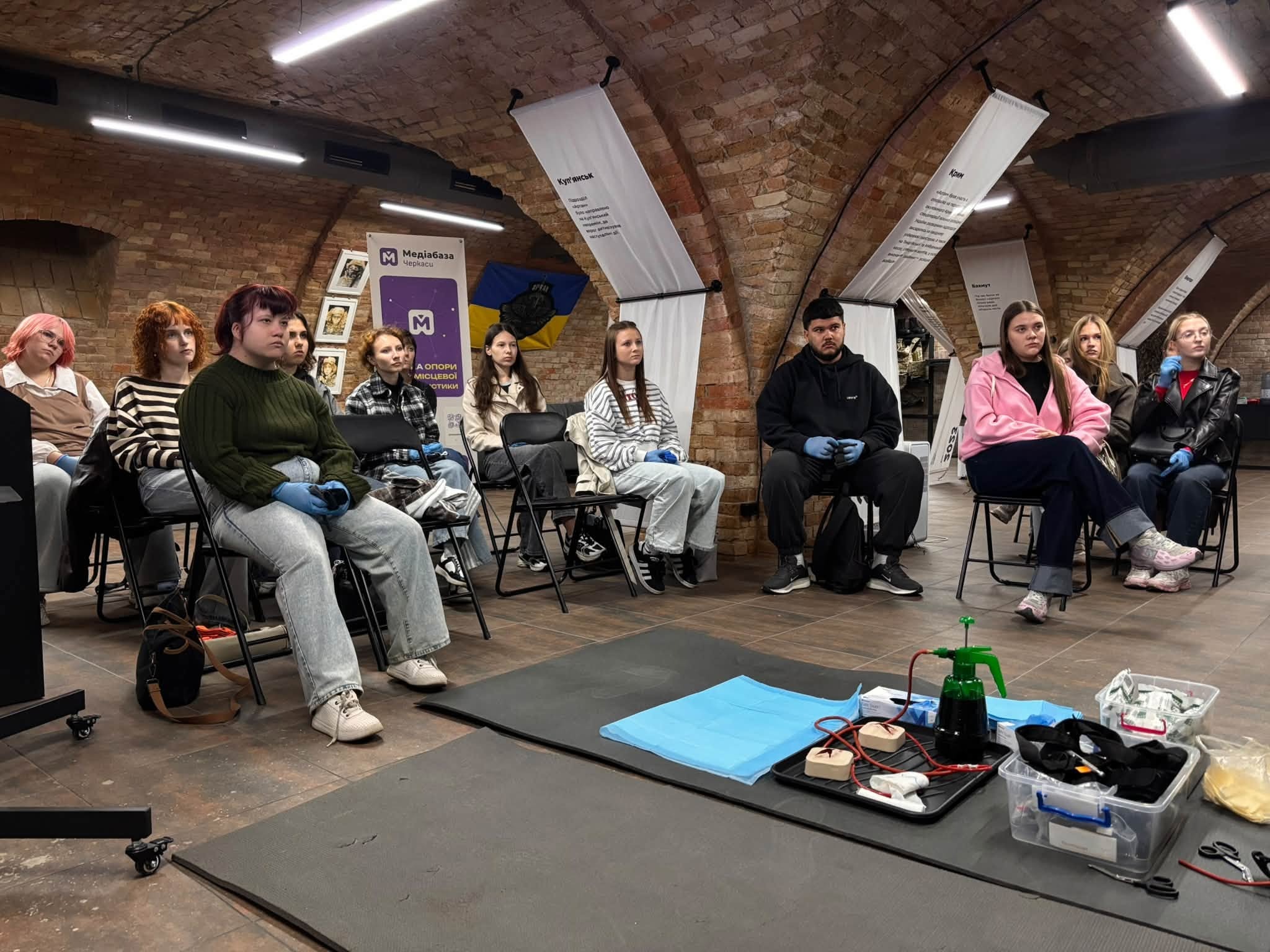
The Institute of Mass Information’s (IMI) regional hub Mediabaza Cherkasy hosted a class where local journalists learned how to stop critical bleeding and provide first aid while working in a dangerous situation. They also practised applying tourniquets and bandages, packing wounds, and responding to simulated emergencies.
Instructors from the Defence Intelligence special unit “Artan” not just went through the theory with the participants but also let them practice hands-on skills.
Tourniquets save lives
The instructors stressed that it is important for journalists not just to be carrying a tourniquet at all times but also to learn in advance how to use it correctly.
“Please, always have a tourniquet with you. This is crucial, it’s a matter of your life and health. You could be the person who applies a tourniquet and keeps the casualty from bleeding out before the ambulance arrives. Sadly, there are a great many such cases now,” stressed the Artan instructor.
Specialists also advise only including high-quality, certified tourniquets in your first aid kit. The instructors stressed that a tourniquet is a single-use item.
“A tourniquet bought for a first aid kit cannot be used for training. Under TCCC (Tactical Combat Casualty Care) protocols, only original certified tourniquets that have been tested and recommended by the TCCC Committee are permitted for stopping critical bleeding. These include the CAT Gen 7/8 and the SOFTT-W, or tried domestically produced equivalents such as the SICH, which Ukraine’s Ministry of Health has recommended,” the instructor said.
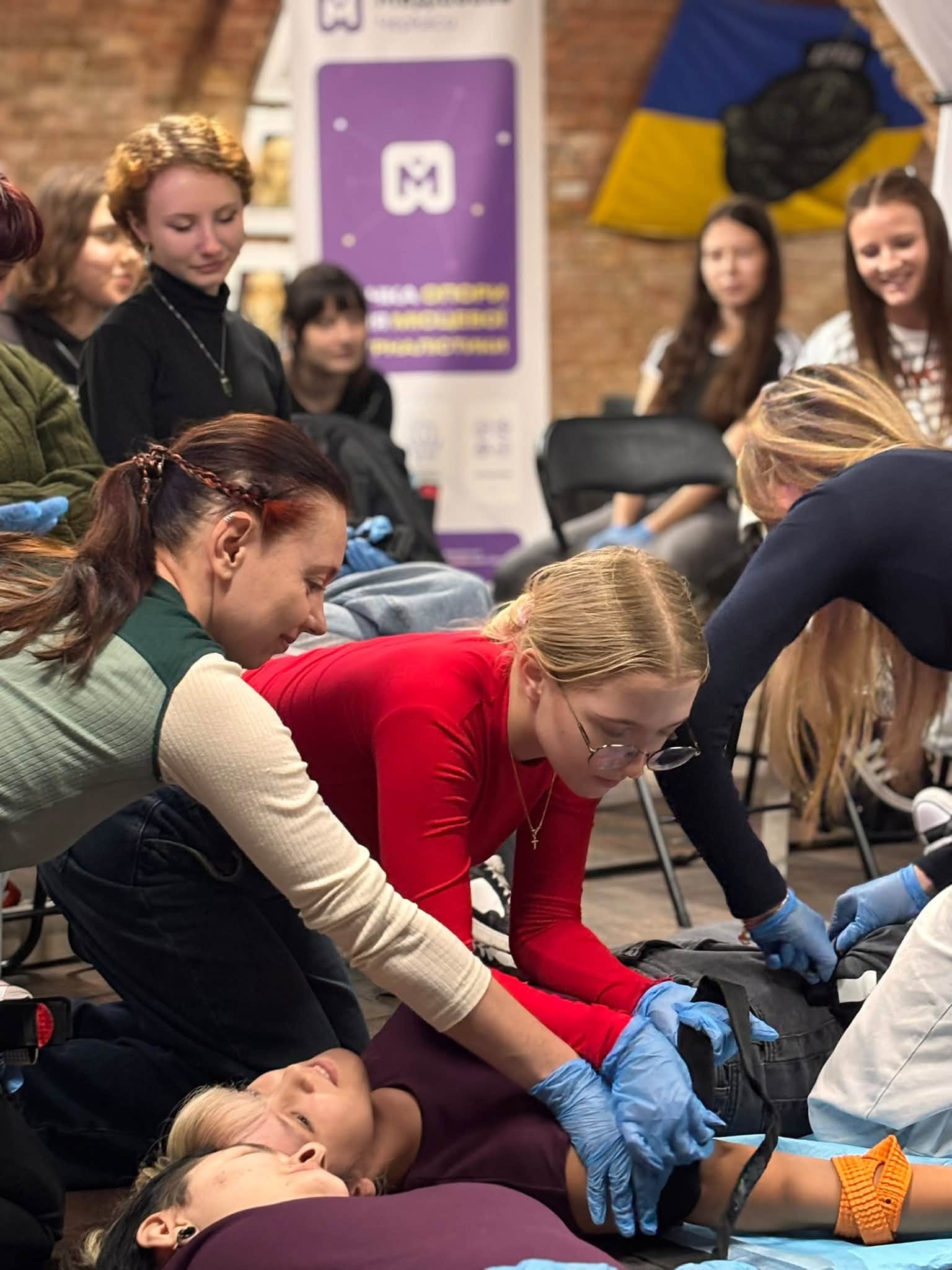
The media workers also learned the basic principles of applying a tourniquet and what to look out for before applying one.
“A tourniquet is applied as high and as tightly as possible over clothing if the source of the bleeding isn’t visible, or 5–7 cm above the wound if you can see the injury clearly. A tourniquet is never applied over a joint,” the instructors said.
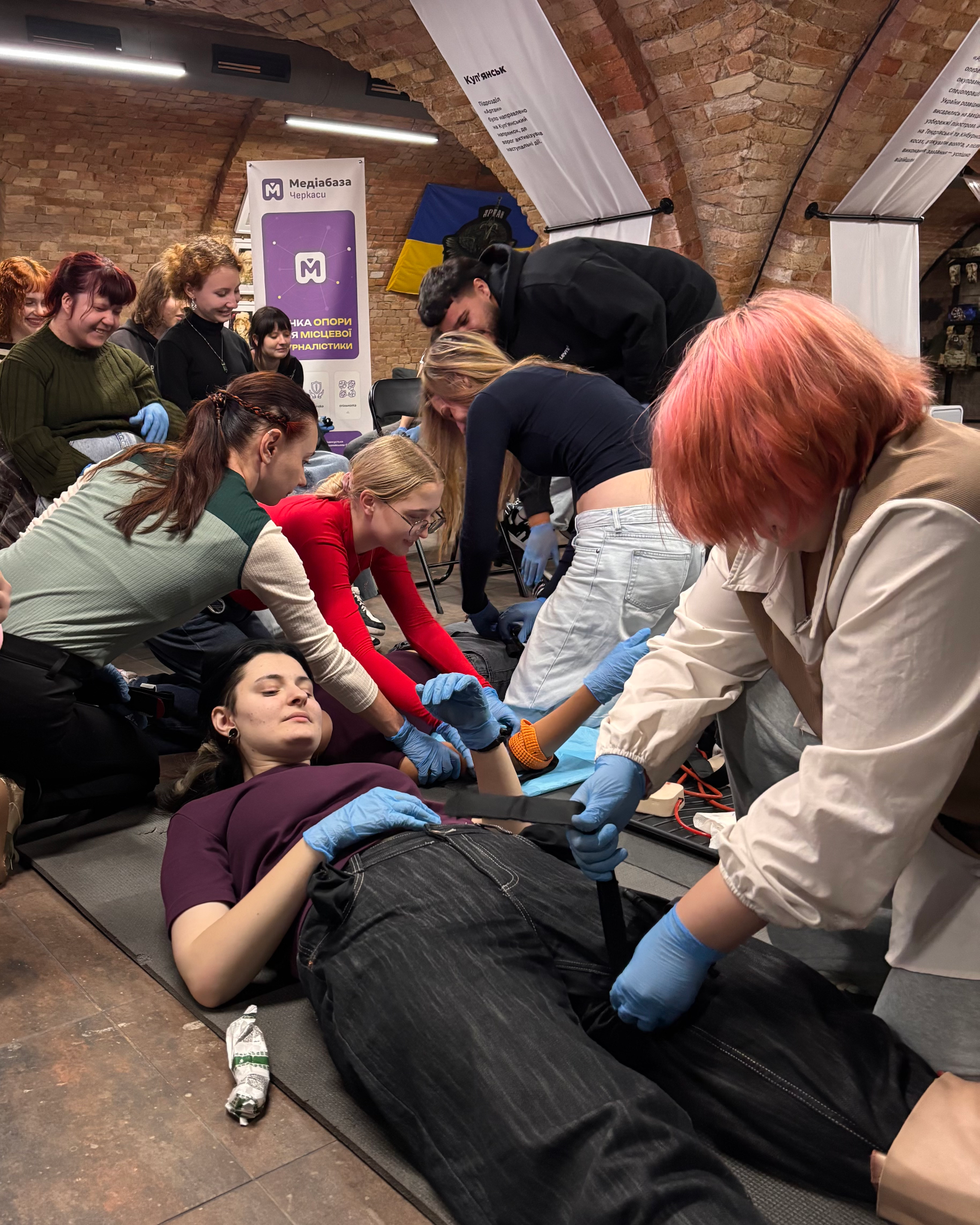
Once a tourniquet has been applied, it must not be loosened or removed without a medic’s oversight, as this could cause the critical bleeding to resume.
From skills to model scenarios
After the theory module, the media workers moved on to the practice. They worked through simulated emergency scenarios where they had to assess the condition of a mock casualty, divide up tasks among themselves, call an ambulance, and stop the bleeding.
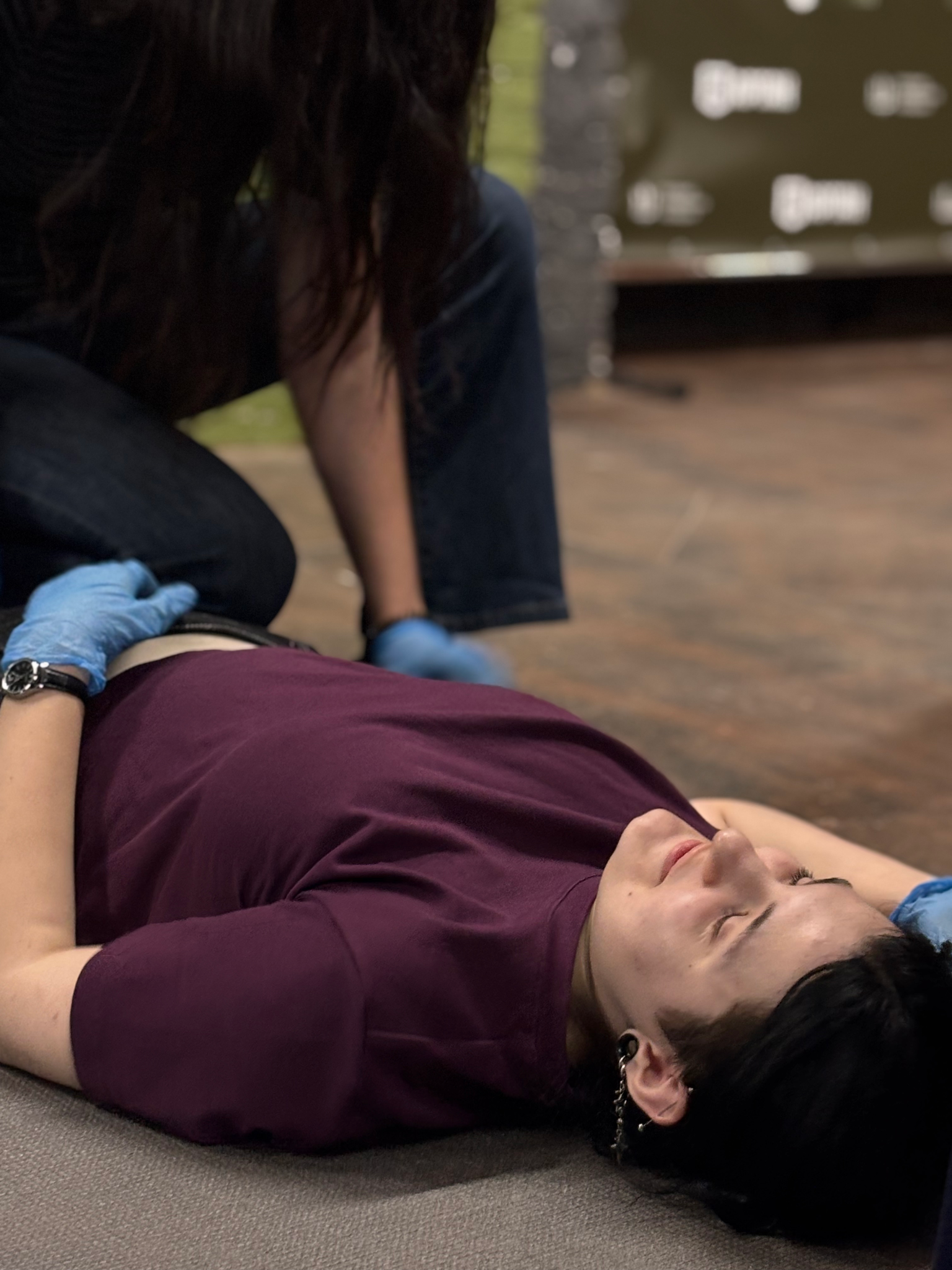
After they completed the exercises, the instructors went through the participants’ actions with them and pointed out where there was room for improvement.
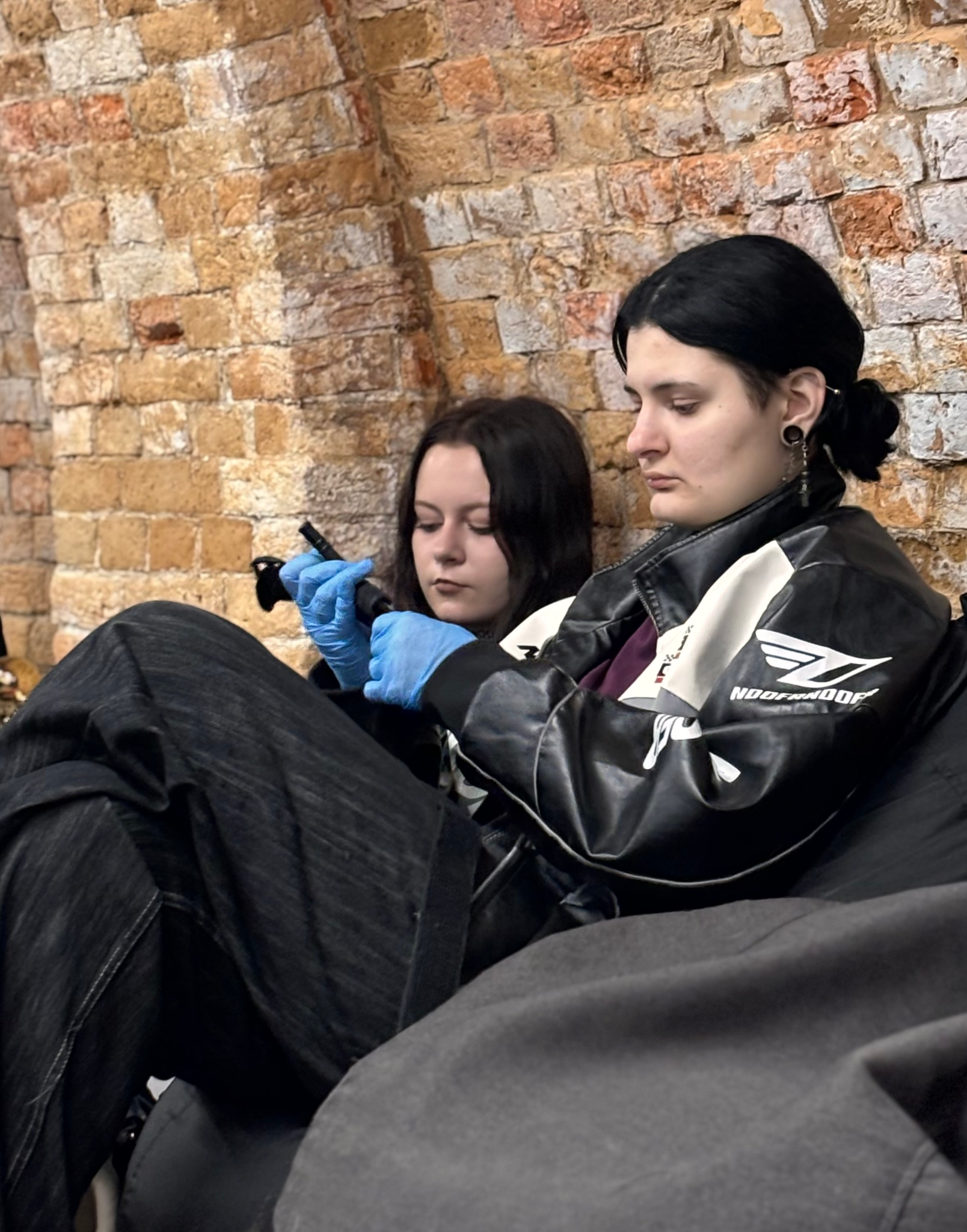
Uliana, a first-year PR student at Bohdan Khmelnytskyi National University in Cherkasy, said that tourniquet application was what had stuck with her most.
“I think classes like this should be held more often. They’re very helpful and genuinely cool. I enjoyed listening to the theory, but the practice was really interesting too. What I remember most is probably working with the tourniquets,” she shared.
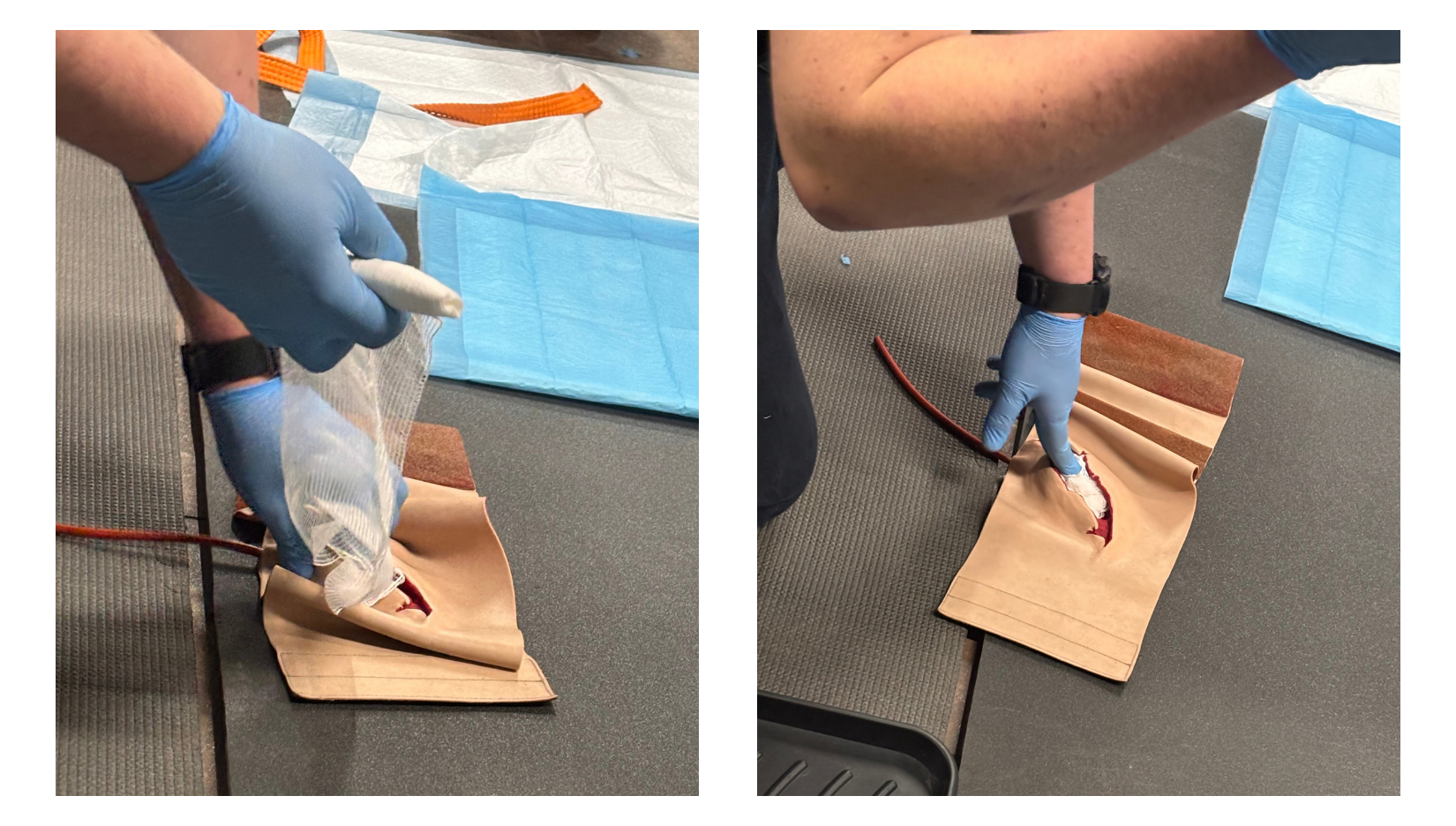
Andriy, a first-year student and media worker, also highlighted the practical segment of the class, saying that he had not gotten every exercise right on his first try.
“I got it all, though not on the first try. Packing the wound was the most difficult for me: the bleeding wouldn’t stop and I had to add more bandage to stop it. But it was helpful, though I hope I’ll never need this knowledge,” Andriy said.