
The Marine Corps is willing to cooperate with the media by showing various aspects of their service, as was discussed during a meeting between journalists and UAF Marine Corps spokespeople hosted by the Institute of Mass Information’s hub Mediabaza Odesa / Kherson on 12 March.
The event offered a platform for between media professionals and military personnel to openly discuss working on the battlefield, communication regulations, and organising filming tours to combat units.
The event was attended by press officers of the Marine Corps No. 30 as well as the marine brigades No. 34, 39, and 40. The speakers included:
- Marine Corps No. 30 chief of communications, Lieutenant Colonel Denys Yeshchenko;
- Marine Corps No. 30 communications officer, Senior Lieutenant Artem Rudakov;
- marine brigade No. 34 press officer Yevhen Voronetskyi;
- marine brigade No. 39 press officer Yevhen Latyi;
- marine brigade No. 40 press officer Pavlo Kolotvin.
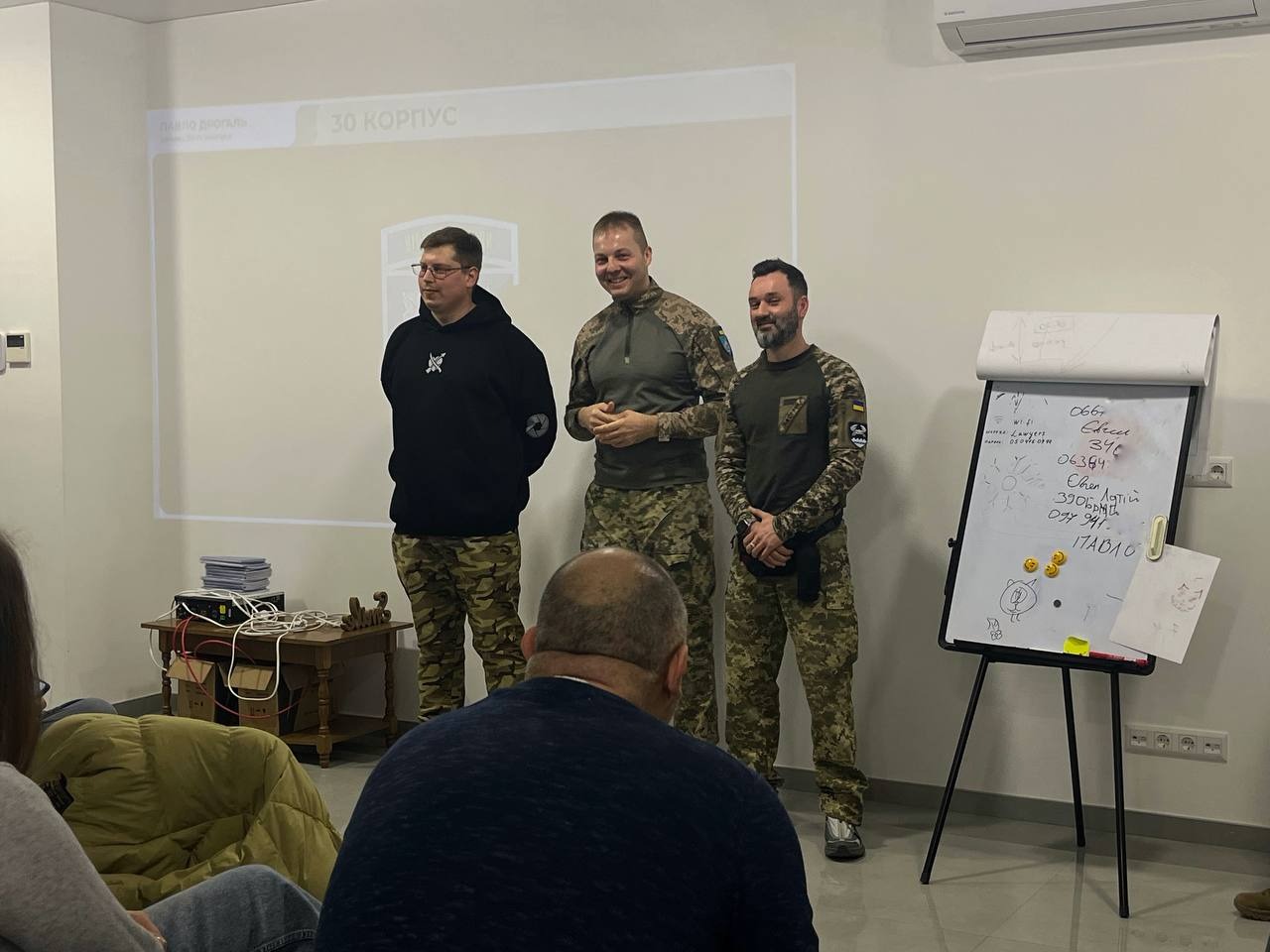
MC No. 30 press officers. Photo by Dana Hrynko
The meeting turned into an open discussion between the military and journalists. The journalists were interested in the practical aspects of working with marine units:
- how filming tours to combat positions are organised;
- how long does it take to prepare for a tour;
- what is the algorithm for communication with press services.
The discussion touched on the procedure for accessing army units as journalists. The press officers explained that reporting in combat areas is regulated by UAF Commander-in-Chief’s Decree No. 73, which outlines the accreditation procedure and the rules for journalists’ work on the battlefield.
The journalists were reminded of the main steps for working with military units:
- get accredited by the Ukrainian Armed Forces;
- submit a request in advance through the press service of the unit or corps in question;
- reach agreement on the work format, filming date, and crew composition;
- adhere to safety rules and information restrictions when working at combat positions.
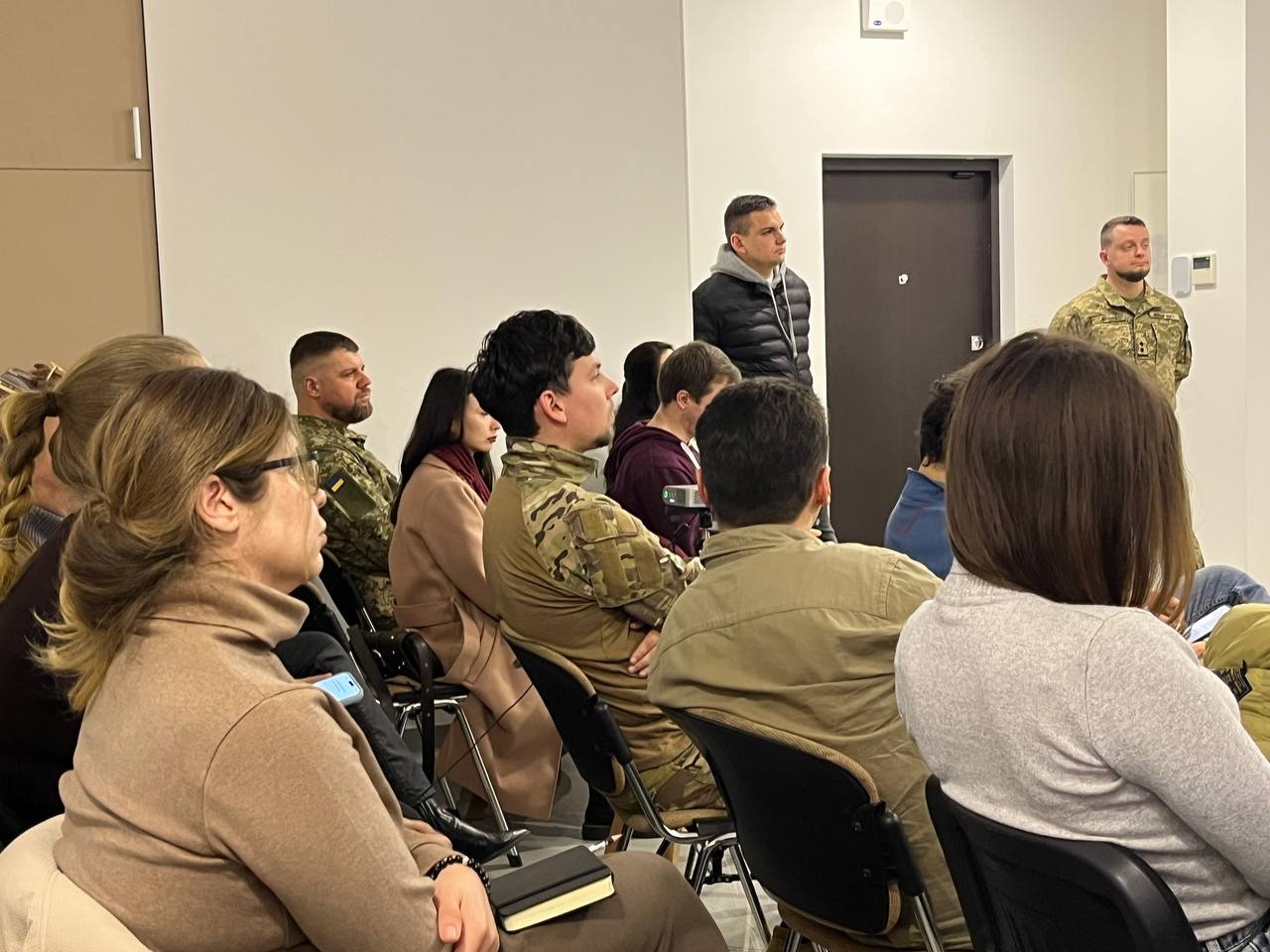
Participants of the meeting with marine corps press officers. Photo by Dana Hrynko
The participants of the meeting said that such events helped to establish better communication between the media and the military and facilitated more responsible coverage of the war by the media.
Today the marines have ample opportunities for working with the media and are willing to show various aspects of their work, said Senior Lieutenant Pavlo Drohal, spokesman for the Marine Corps No. 30.
“We do have a lot that we can show, and we are absolutely open to working with the media. Yes, there are limitations, things we can not show in terms of safety. But overall, each unit that I listed is ready to receive reporters, speak about their work, show the unique things they do. This can be combat work or training, because we don’t just fight, we learn, evolve, and live our lives,” he explained.
The press officers spoke briefly of how the modern version of Ukraine’s marine corps came to be. They said the overhaul had started in 2015, following the annexation of Crimea, when the marines who had left the peninsula formed brigade No. 36. Other units, such as brigade No. 35 and reconnaissance battalion No. 140, were created later.
It was in this composition that the marines met Russia’s full-scale invasion of Ukraine. In particular, brigade No. 36 took part in the defense of Mariupol and was a large component of the city’s defense forces. Since 24 February 2022, new units have been created, such as the marine brigades No. 37 and 38, which, after completing their training (part of which took place in the UK), joined the action almost immediately.
Dana Hrynko, Mediabaza Odesa / Kherson SMM