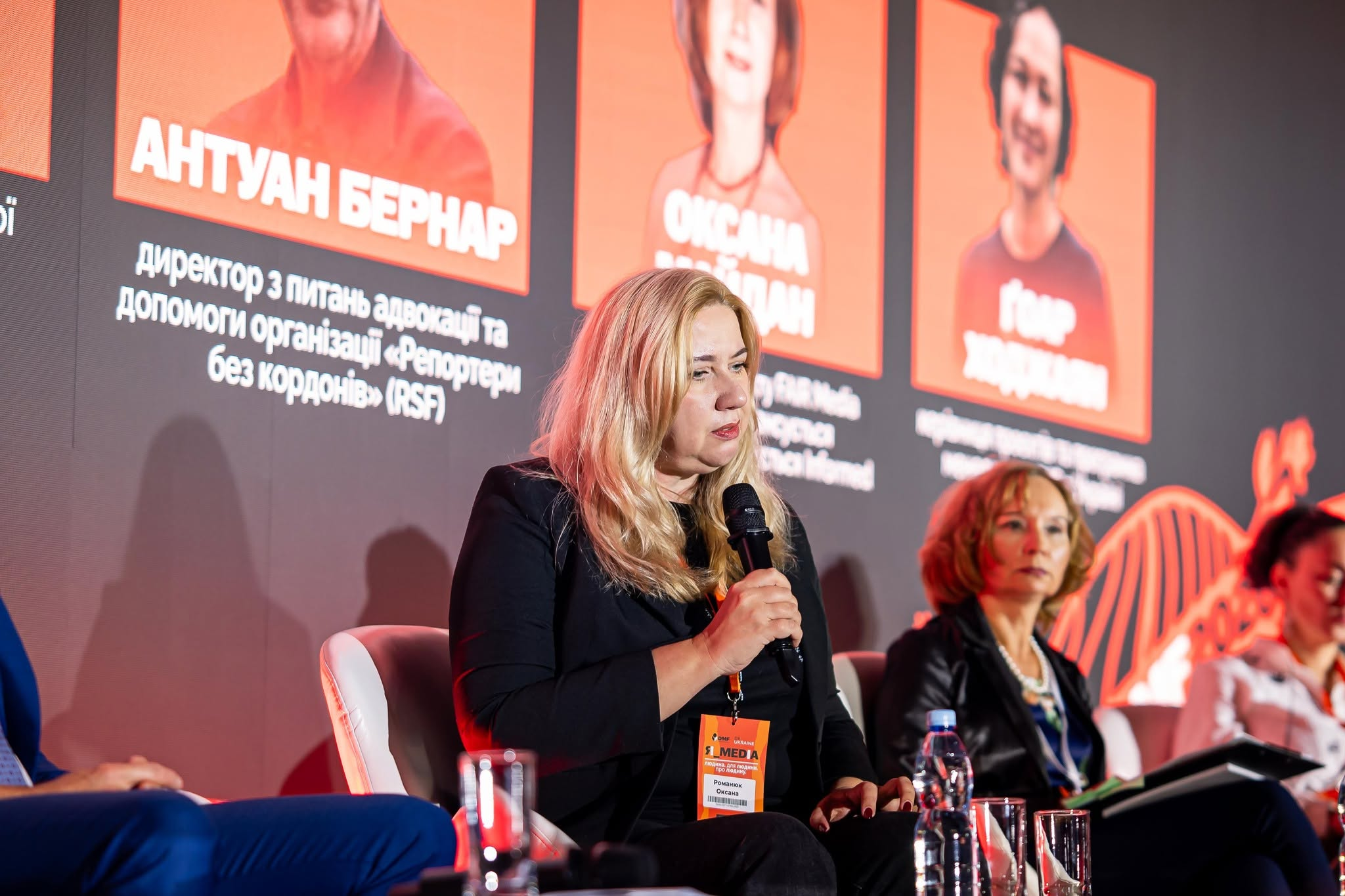

Protecting freedom of speech in Ukraine and ensuring the European integration requires making changes not only to media law: it is also important to revise the Criminal Procedure and Criminal Codes, said Volodymyr Zelenchuk, a lawyer at the Institute of Mass Information (IMI), during the panel discussion “Changes to Media Law on the Way to the EU”, which took place at the Donbas Media Forum on 9 October.
“We understand that the freedom of speech sphere concerns not just media law. EMFA (European Media Freedom Act), for example, also extends its effect to criminal law. For example, Article No. 4 of the Act details the procedure for law enforcement agencies to access information that is a journalistic secret,” Volodymyr Zelenchuk said.
He added that Ukraine’s Criminal Procedure Code is not up-to-date enough to include various methods by which law enforcement bodies can interfere in the work of journalists. For isntance, the Code says nothing about spyware installation. Such a technique, which can enable law enforcers to interfere in journalism, is not outlined and does not fall under the scope of the Criminal Procedure Code, the lawyer stressed.
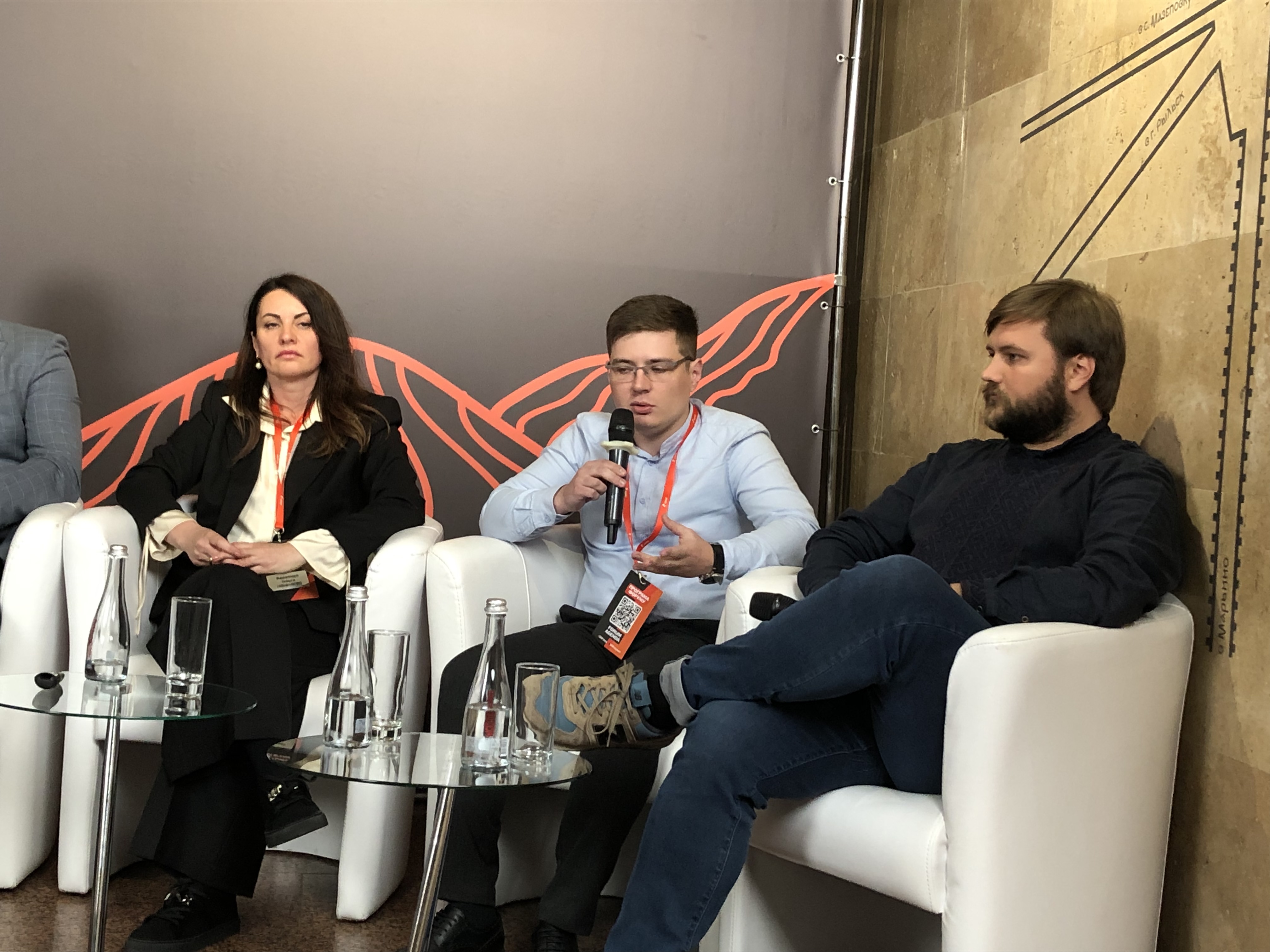
Volodymyr Zelenchuk believes that the interpretation of journalism and journalists in EMFA poses another problem.
“It [the interpretation] is somewhat broader than what the Criminal Code proposes. In fact, the secrecy of journalistic sources extends not just to journalists themselves, but also to persons associated with them who perform certain work for the media in general. EMFA offers this broad interpretation of who journalists are,” he said.
In contrast, in Ukraine’s Criminal Procedure Code, only certain persons who have a license and an editorial assignment fall under the definition of a journalist. According to Zelenchuk, in order to fix this, special laws on amendments to criminal procedure legislation have to be passed.
“Such facts do really matter. We continue to provide as much support as possible to the initiators of various draft bills on advocacy, in particular regarding coverage of lawmaking issues. And we ourselves continue to record violations of freedom of speech in Ukraine,” he added.
In 2025, the National Qualifications Agency of Ukraine updated the professional standard for “Journalist” in the Register of Qualifications. For the first time, photojournalists and camerapeople were added to the list of professions included in the standard at the initiative of the Institute of Mass Information. Before that, people practicing these professions would repeatedly face discrimination and misunderstandings while performing their jobs, in particular with law enforcers.
The Institute of Mass Information releases a monthly monitoring report titled Freedom of Speech Barometer, which tracks freedom of speech violations in Ukraine. The study has been carried out since 1998 and allows IMI to assess the freedom of speech situation in Ukraine and to offer relevant recommendations to state bodies, international organisations, and civil society institutions.