
Publicity and continued attention to the case of UNIAN journalist Dmytro Khyliuk during his time in Russian prison served as a kind of safeguard against brutal, life-threatening torture, Khyliuk told Hromadske Radio, recalling his experience of Russian jail.
He said that his status and the publicity surrounding his case gave him no privileges as such, but the Russian forces did take note of the public’s and the media attention to his situation.
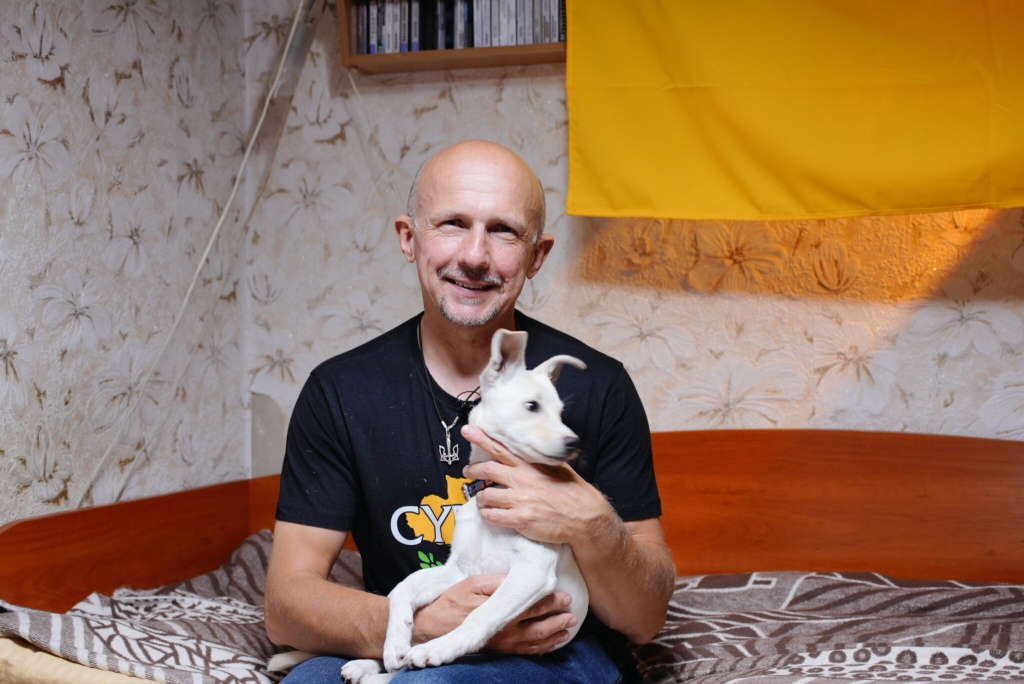
“In my case, I think they knew I was a journalist and that held them back from beating me in ways that could cause severe injury. There was probably some unofficial instruction that they shouldn’t beat this specific person too hard so as not to maim him. That’s just the sense I’ve got,” Dmytro Khyliuk said.
He noted that back in 2022, when he was detained, Russian troops were seizing civilians indiscriminately and did not care who exactly they were taking hostage. The occupying forces were not particularly interested in his work as a journalist.
According to Khyliuk, he was officially interrogated in Novozybkov (Bryansk region, Russia) in March–April 2022.
“This sparked some interest in them, but nothing more. I mean, they were far more interested in servicemembers, especially those holding a rank, who knew certain information. Those were the ones they beat and tortured more,” he recalled, adding that the POWs were questioned for strategic intelligence.
More than half of the answers in Khyliuk’s own interrogation records, by contrast, are written down along the lines of: “Has no information due to not being a servicemember.”
The journalist stressed that Russians brought no charges whatsoever against detained civilians. The people were imprisoned in Russian jails had the status of hostages of a terrorist state.
Dmytro Khyliuk’s story
Dmytro Khyliuk was detained by Russian forces in the front yard of his own home in Kozarovychi (Kyiv oblast) on 3 March 2022. He was first held captive in occupied Dymer and later taken to a prison in Russia.
The Russian Ministry of Defense did not explicitly say that the UNIAN journalist Dmytro Khyliuk was detained as a prisoner of war, but cited the Third Geneva Convention, which specifically concerns POW treatment, in response to his father’s query.
Dmytro Khyliuk was released on 24 August 2025.
In an interview to the Institute of Mass Information, Dmytro Khyliuk said that torture by starvation and freezing had been the hardest to bear.