

Three news websites based in Poltava oblast (Poltavska Dumka, Poltavska Khvylya, and Kremenchutskyi Telegraf), received emails claiming that bombs had been planted in their office buildings on 30 January, editors and CEO of the news outlets reported to Nadia Kucher, the Institute of Mass Information representative in Poltava oblast.
Kremenchutskyi Telegraf chief editor Lesya Lazorenko said that her team had received an email whose sender claimed to be a former fighter of the UAF unit Kraken and said that a bomb had been planted in the team’s office building specifically. A photo of the supposed explosive device was attached to the letter.
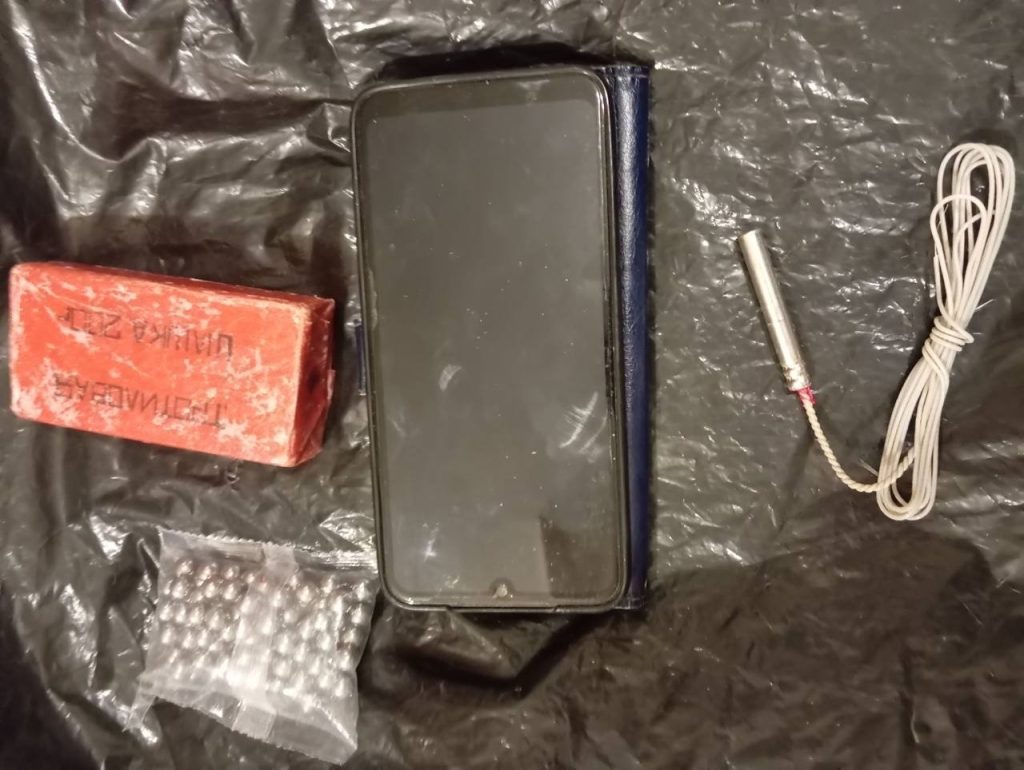
The letter received by Kremenchutskyi Telegraf contained a photo of the supposed bomb. Photo shared with IMI by Lesya Lazorenko
The email also threatened mass bombings and contained a list of other facilities where the sender claimed to have planted explosives. These included administrative buildings, educational establishments, crowded locations, and state bodies in Ukraine and abroad.
“Starting 01/10/2026, my allies and I planted about 500 explosive devices in administrative buildings, schools, daycares, and places where people gather en masse; the timers on the bombs is set to activate at different times on 01/30/2026 to 01/31/2026, you will have 15 minutes left to leave the building, otherwise you will die and there will be casualties among the civilian population,” reads the letter sent to Kremenchutskyi Telegraf.
Lesya Lazorenko said that her team has been receiving bomb threats repeatedly, adding that most previous emails did not refer to their news outlet specifically but used general terms such as “in your building.”
Poltavska Khvylia founder and CEO Vitaliy Ulybin said that his team had received several similar emails with identical content as well. The letters claimed that a bomb had been planted at the building housing their editorial office and listed some other addresses unrelated to the news outlet.
“We received 5 emails, I think, from different addresses. They all said that our building had been mined. But then they listed completely random addresses,” he said.
Poltavska Dumka chief editor Diana Strashko said that her team had received three emails with threats. The sender did not refer to the news outlet by name, but said that receiving the letter meant there was a bomb planted in your building. The emails also listed several other facilities where the sender claimed to have installed explosive devices.
“The letter said that the sender had served as a miner in the Azov [Brigade], was severely wounded in action, and now the pension he receives from the state is not enough even to buy basic groceries for his family,” said Diana Strashko. She added that the letter listed addresses where explosives had been supposedly planted and did not mention Poltavska Dumka specifically.
“The letter only said that if we received the message it meant there was a bomb in our building and if we do not want to die we should leave immediately, that bombs had also been planted at some other addresses, in special containers that could not be detected by police dogs, that searching for the bombs was pointless, that the sender was a bomb-sweeper with 10 years of experience and knew their job very well,” said Diana Strashko.
National Police departments in 22 oblasts received over 2,000 bomb reports on 30 January 2026. Namely, Detector Media, 18000, and Pershyi Kryvorizkyi received emails to that effect.