

Suspilne Dnipro journalist Olesia Prykhodko provided first aid to an injured man following a strike on Kramatorsk, Prykhodko reported to Kateryna Lysiuk, the Institute of Mass Information’s regional representative in Dnipropetrovsk oblast.
Olesia Prykhodko was in Kramatorsk on assignment: travelling with members of the animal welfare organisation Save Animals Ukraine, planning to head on to Sloviansk in Donetsk oblast. The journalist was set to film a news story on the evacuation of cats and dogs.
The volunteers’ armoured bus in which the correspondent was travelling was just approaching one of the last intact bridges remaining in Kramatorsk when an explosion went off: Russian forces had struck the bridge.
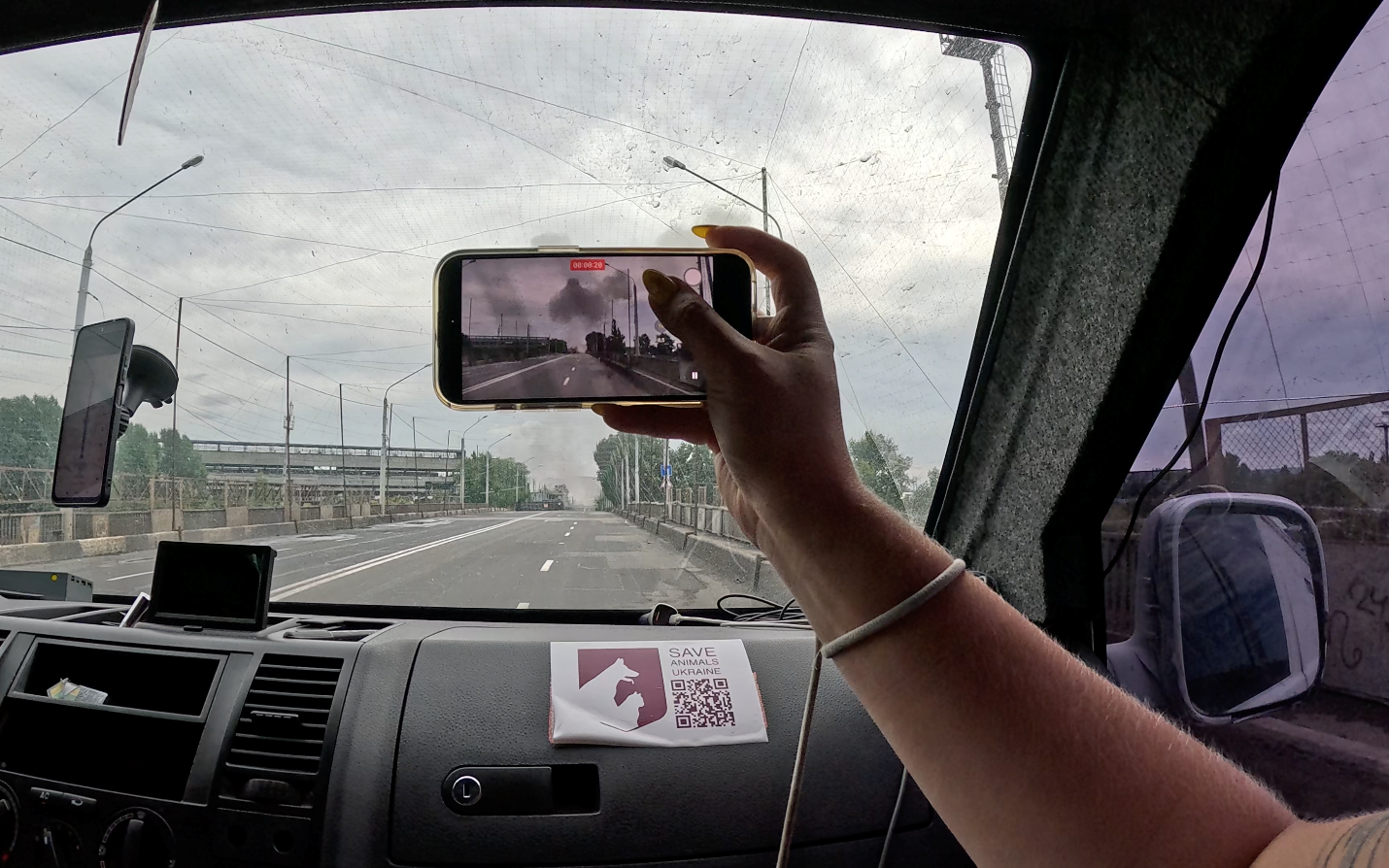
The volunteers and the journalist quickly drove over to check on the wounded. Upon seeing the injured man, Olesia Prykhodko ran out of the car and towards him without hesitation, pulling a tourniquet out of the first aid kit as she did so.
“At one point I saw him [the injured man] move his leg. As I was running, opening the first aid kit, the animal volunteer Hnat was calling an ambulance. It wasn’t clear how many people were wounded or how many had died. I ran up to the man and saw that he had no leg — it had been torn off very high up. I tried to talk to him as I worked. He was conscious, we asked him his name, he tried to say something,” Prykhodko recounts.
Once the tourniquet had been applied, a serviceman who was nearby ran over. The media professional and the soldier turned the man over together to check for other injuries. It turned out he had also been wounded in the back. An occlusive dressing was applied to the wound — the correspondent said that shrapnel fragments had been visible inside it.
“Servicemembers stopped nearby, and Hnat and the boys loaded the injured man into their vehicle (since the one we were travelling in was full of animal transport cages), and we all drove together to a stabilisation point. The whole way there, I tried to keep talking to the man, made sure he didn’t pull off the tourniquet or knock the dressing loose, and kept holding onto him on the turns, because we were driving really fast,” the correspondent added.
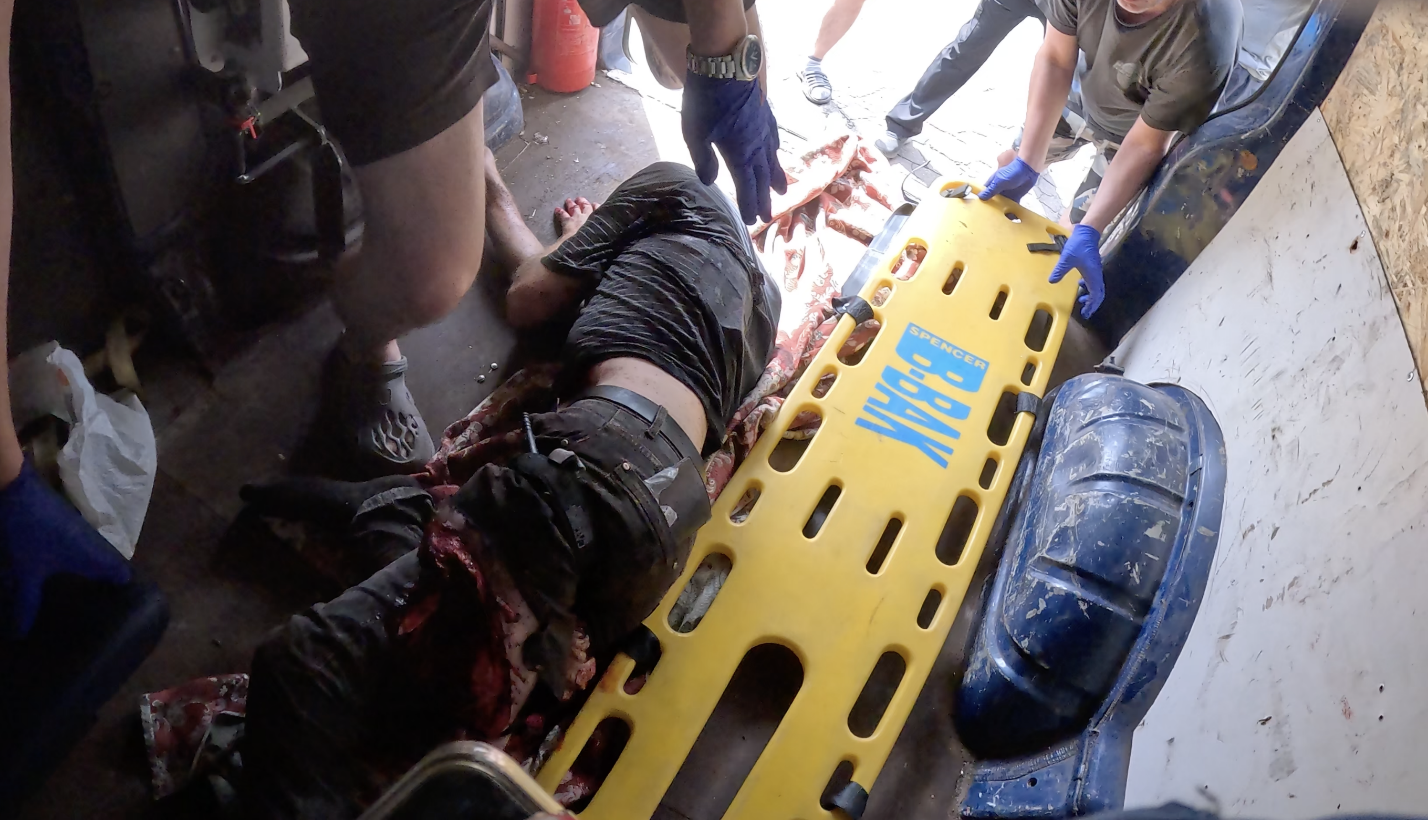
The man was taken straight into surgery upon arrival. The journalist later learned that he had been transported to a hospital in Dnipro. Olesia Prykhodko has since spoken with doctors in Dnipro and learned that the man was no longer in mortal danger.
After the man was evacuated to hospital, medics reported that the tourniquet, applied in time, had stopped the critical bleeding. He received the necessary medical care. Suspilne Dnipro chief editor Yevhen Pedashenko commented that the journalists working in the combat zone and their readiness for emergency situations were a priority for the team.
“Olesia, in particular, has taken tactical medicine training three times and has mastered the skill of applying a tourniquet. As we can see, here’s a real example of how a simple class helped save a life. Well done, Olesia — she did everything as professionally as possible,” Yevhen Pedashenko says.
The journalist herself stressed that her reaction to the event was the result of the classes she’d passed, including the most recent one, which she took two months ago.
“There wasn’t a moment of confusion. The training really helped, both with stress resilience and with muscle memory. You immediately realise — there’s a person lying there, you grab the tourniquet and run over to them,” Olesia Prykhodko added.