

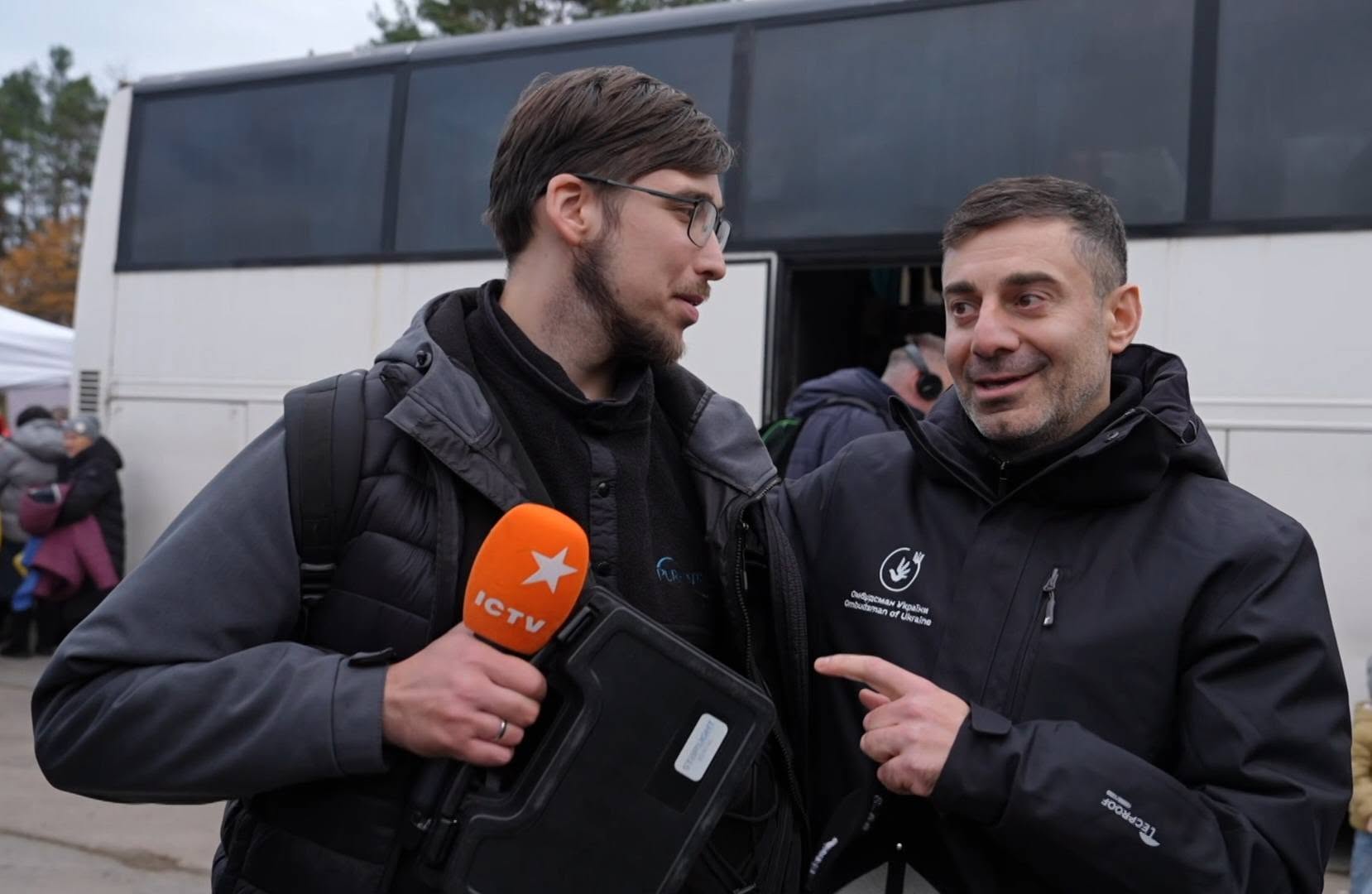
Ukrainian reporters covering the humanitarian mission in occupied Oleshky (Kherson oblast), worked with no connectivity the entire time and were unable to upload their material promptly, while around 30 Russian propagandists travelling in the same bus with them were posting their content non-stop, Fakty ICTV journalist Yehor Romakhlo said at the 24 November session of the Verkhovna Rada’s Temporary Investigative Commission (TIC) on Russia’s crimes against media workers and the Committee on Humanitarian and Information Policy. The Institute of Mass Information’s Hanna Chabarai also took part in the session.
Romakhlo worked in Oleshky along with TSN cameraman Illia Shynkarenko. The journalist said he had learned about the trip just four hours before departure, so he had had no time to prepare.
READ MORE
- People in occupied Oleshky burst into tears upon hearing reporters speak Ukrainian, ICTV correspondent says
- Between Oleshky and “Alyoshki”. Russia weaponising evacuation to promote imperialist narratives
He said connectivity was the biggest problem they faced during the mission. The Ukrainian crew was equipped with a Starlink terminal, but it did not work in Crimea and lasted about half an hour in Oleshky. According to the journalist, the terminal drew the attention of both the Russian press and the military, who tried to connect to it.
“We sent out whatever we managed to send in that half hour. We were literally riding in the same bus, and they were putting everything out right away, ‘fresh out the oven.’ We didn’t have that opportunity,” Romakhlo said.
The journalist believes such missions require backup telecom equipment such as satellite phones. These should be supplied by the security services, since the group was not just in the occupied territories but also in Russia’s territory.
Romakhlo mentioned another problem: Ukrainian media workers being outnumbered by Russian ones. There were more Russians, and they worked as one pool: representatives of different TV channels and so-called war correspondents were sharing footage with one another.
As people approached the press, they would close ranks and push Ukrainian reporters aside. The journalist called for more efforts to ensure that more Ukrainian media are involved in such missions.
Yehor Romakhlo said that the Russian side had arranged the trip’s route in a way that allowed them to film “Ukrainian landmines and drones” and to shift the blame for the situation in Oleshky onto Ukraine, even though under international law the occupying state is responsible for the territory it occupies.
Romakhlo stressed that a clear algorithm for preparing for future missions was needed. It should set out the procedure for compiling the lists of participating media outlets, providing journalists with telecom equipment, and guaranteeing that Ukrainian newsrooms are present on the ground.
The TIC Chair Yevhenia Kravchuk promised to include the recommendations on organising such missions in the Commission’s report.
As previouslye reported, the humanitarian mission to evacuate residents of Russian-occupied Oleshky, Kherson oblast, started on 30 October 2026. A Ukrainian delegation led by Human Rights Commissioner Dmytro Lubinets arrived in the city along with Ukrainian journalists. Almost 800 people were evacuated; they arrived in Ukraine via Russia and Belarus.
Journalist Yehor Romakhlo has said that the people in Oleshky had burst into tears when they heard journalists speak Ukrainian.
Read the Institute of Mass Information’s study on the Russian propaganda machine weaponising the evacuation of civilians from Oleshky to justify Russia’s aggression and promote imperialist claims.