
Zaporizhzhia journalists and the spokesperson for the oblast National Police department, Anna Tkachenko, agreed to hold a briefing featuring the chief of the oblast police following the meeting “Police and the Media: Effective Communication about Air Strikes, Evacuation, and Crime” which took place at Institute of Mass Information’s regional hub for journalists Mediabaza Zaporizhzhia on 13 March.
During the meeting, media professionals asked the police to resume regular press conferences or briefings involving the oblast police chief, which were paused last year.
The spokesperson said that journalists would be notified of the briefing date after the time and place are approved.
The meeting also discussed reporting from Russian air strike sites, appropriate coverage of topics related to the wounded and deceased, why the police is not always able to promptly respond to journalists’ queries, and how martial law restrictions affect communication between the media and law enforcers.
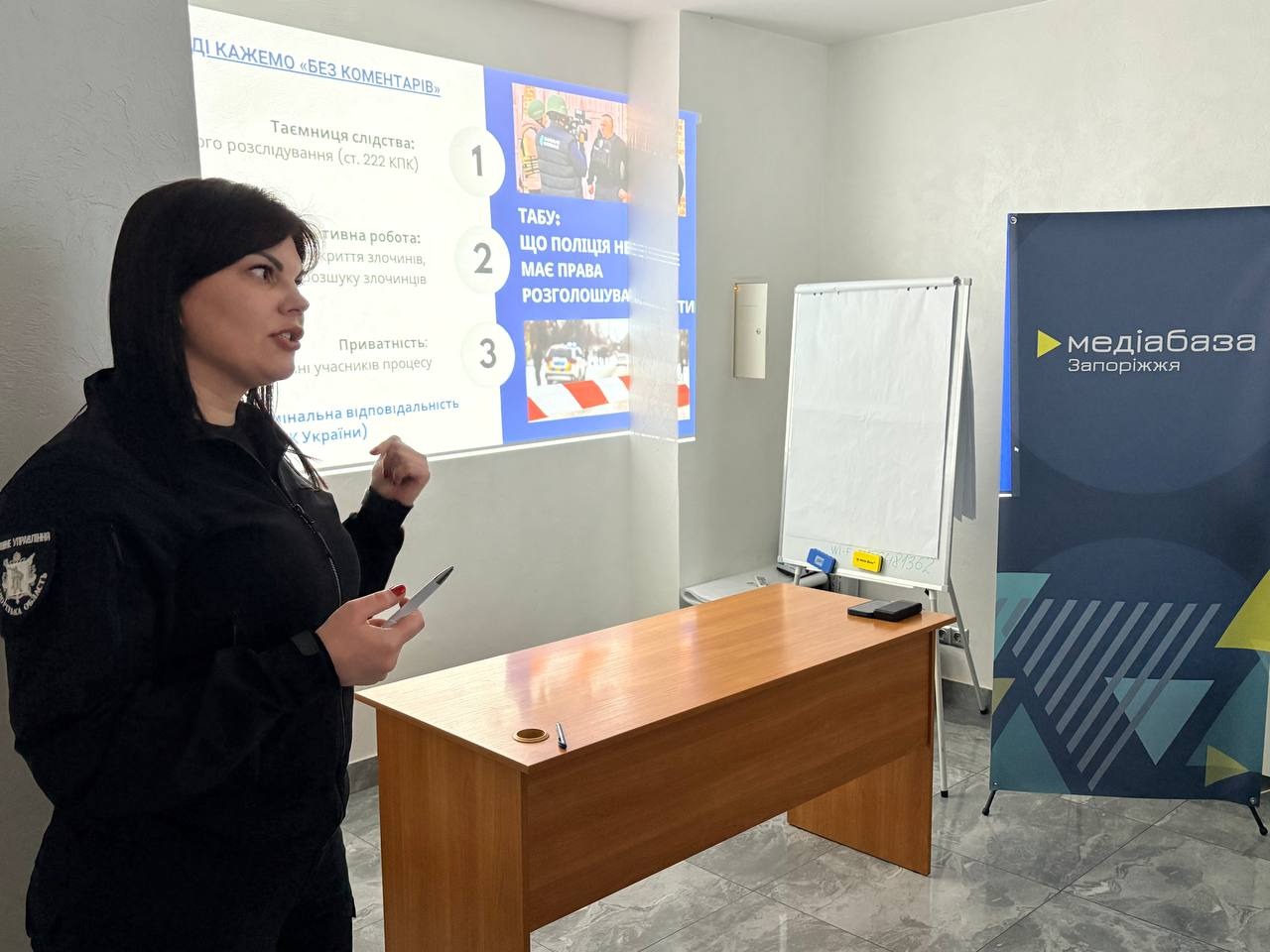
Zaporizhzhia oblast police spokesperson Anna Tkachenko meeting media professionals at Mediabaza Zaporizhzhia. Photo by Mediabaza Zaporizhzhia
During the two-hour meeting with the spokesperson, the media professionals:
- were briefed on how to work in frontline areas, whom to contact to coordinate visits, and whom to address official queries to;
- learned why the police install red signal tape and strictly prohibit crossing it;
- clarified the rules for reporting data on the dead and wounded, as well as the reasons for discrepancies in the figures reported by agencies such as the State Emergency Service and the police;
- learned how to communicate effectively when covering mass events, especially unauthorized actions or rallies;
- discussed martial law restrictions, including the rules for live broadcasts, streams, and real-time Zoom calls.
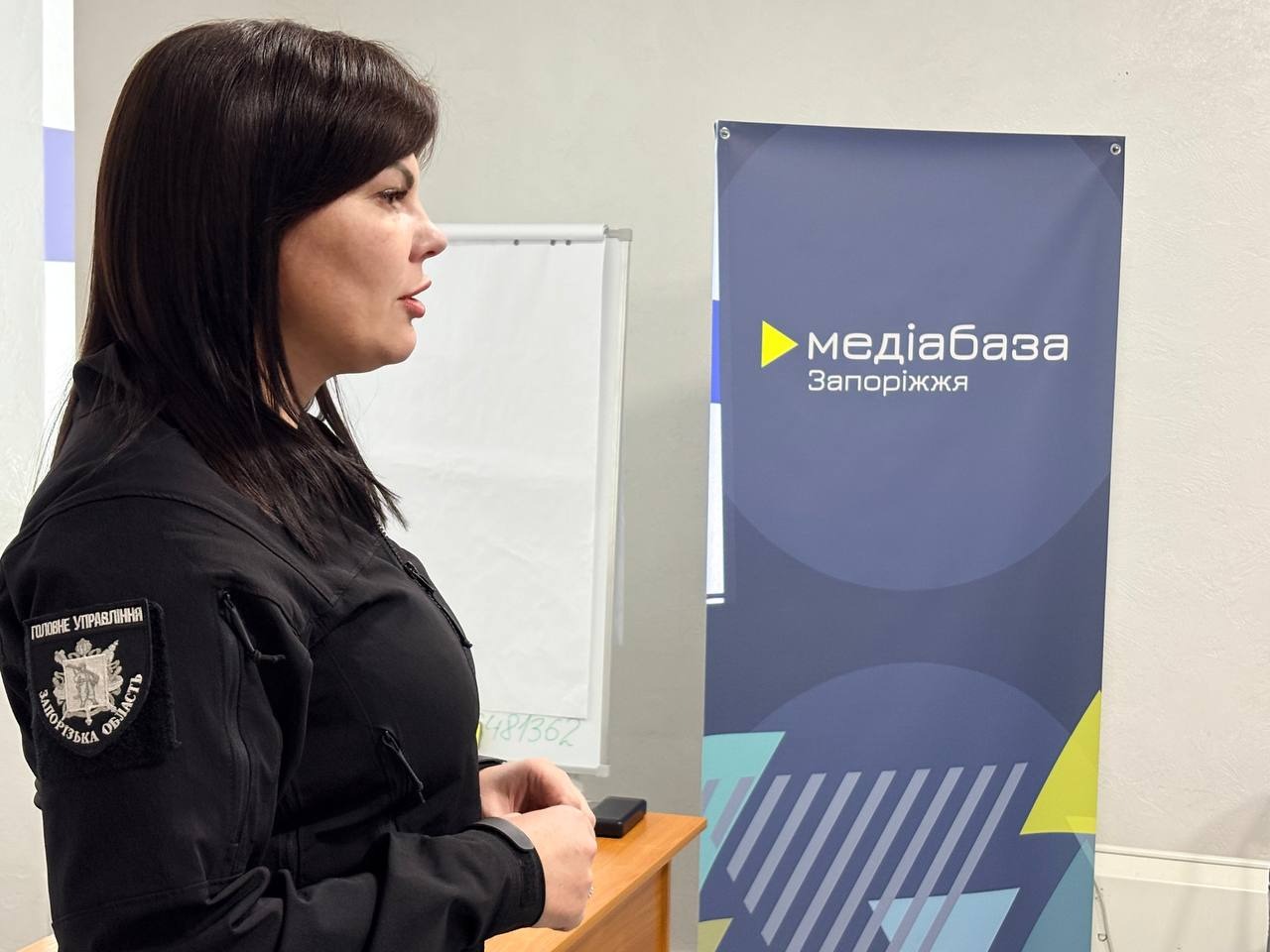
Anna Tkachenko explained why the police did not always comment on events. Photo by Mediabaza Zaporizhzhia
Anna Tkachenko explained what exactly fell within the powers of the police and what topics law enforcement officers were not allowed to comment on. She also explained the procedure for journalists to obtain and use photos and video footage taken by the police press service, as well as why the police did not always respond promptly in group chats and how to act in such situations.
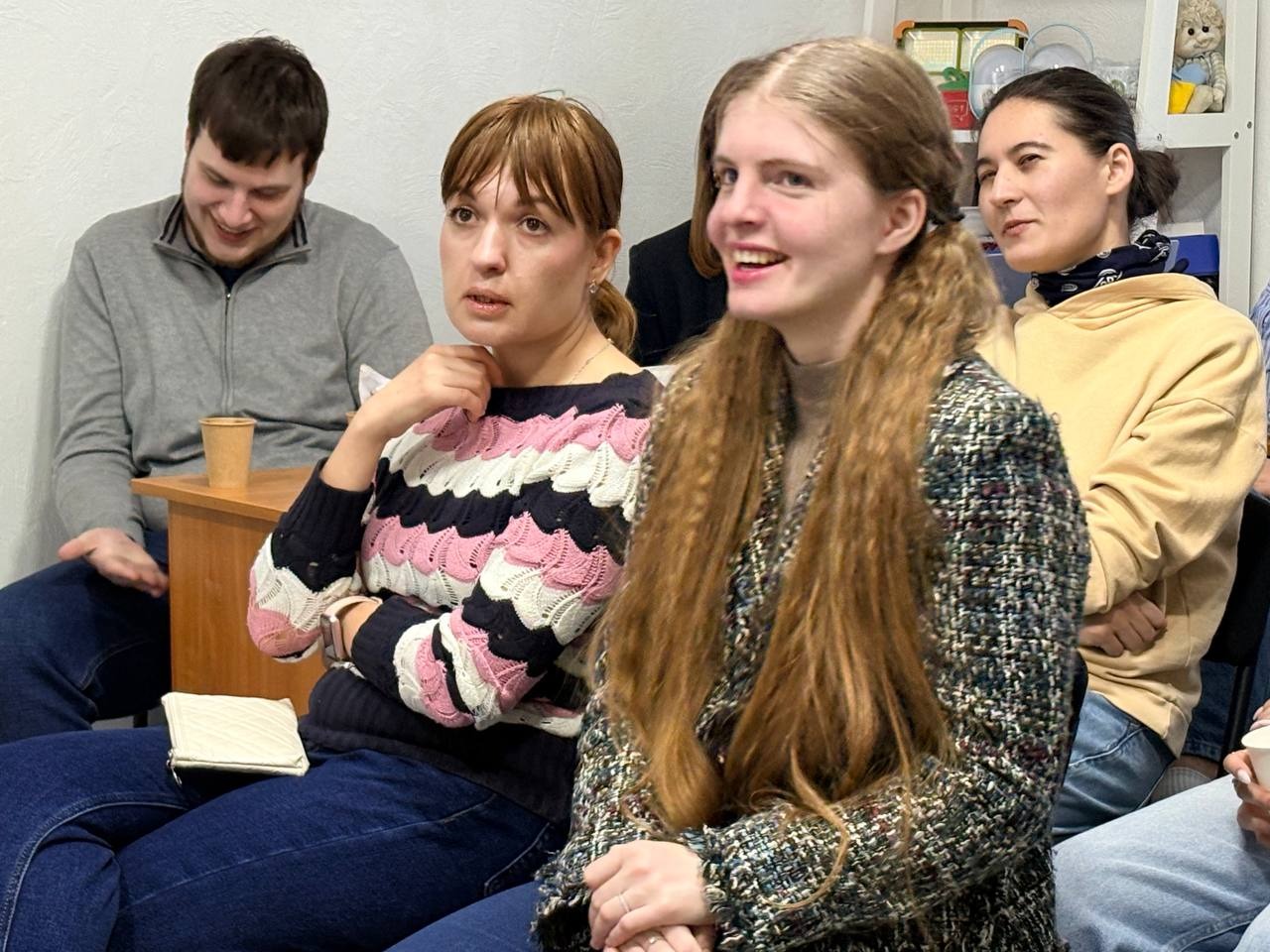
Media professionals and the police agreed to resume press conferences featuring the chief of the oblast police
Feedback by participants
People who attended the meeting “Police and the Media: Effective Communication about Air Strikes, Evacuation, and Crime” at Mediabaza Zaporizhzhia shared their impressions.
Yevhenia Nazarova, Radio Liberty correspondent: “At the event, we thoroughly discussed the restrictions and points of contention such as working at shelling sites, which have prompted questions. It was very helpful to better understand which information to request from the police and in what cases, and how to arrange cooperation with the police as effectively as possible.”
Kateryna Shevchenko, Soda chief editor: “A wonderful, informative, helpful event. The guest spoke in great detail about communicating with the police, the restrictions. Confusing moments became clearer. It’s really cool that we have Mediabaza Zaporizhzhia and that we can participate in such events, as well as come and talk not just with each other, but also connect with other structures, including law enforcement bodies.”
Antonina Frolova, Zprz.city editor, journalist: “I can’t say that I go to air strike sites very often, but sometimes I do. All these moments are what I wanted to hear. It does happen sometimes that people ask something in the chat and the police don’t reply right away, and there is a vague feeling that they are hiding something. And today we learned what is really happening on the other side. My impressions are great. Later, I approached the police spokesperson and talked to her, coming up with some topics for future news stories in the process and discussing them with her. And overall, the atmosphere is just good, everyone is a familiar face, it’s nice to see them. I’m glad I attended.”
Iryna Yehorova, Novyny Orikhova journalist: “The meeting with Anna Tkachenko was very helpful, primarily because the Zaporizhzhia Oblast Police chief of communications spoke about the rules of conduct for journalists at shelling sites, why they are not allowed into the areas fenced off with tape, and why reports from the site should not be publised immediately. Anna also discussed the procedures for interaction between the communications department and media workers in covering high-profile crimes. The meeting was also helpful because it was an opportunity to ask a question and get a specific answer. Thank you to the Mediabza for organizing this meeting.”
Natalia Chaika, RIA-Pivden journalist: “If the phrase ‘has difficult relations with the police’ describes you more than it does not, this event is for you. It is especially important for young journalists! For some reason, universities don’t teach you what to do when you are at a shelling strike site that may be targeted again. A missile is flying at you, people are running, there is broken glass, police, screaming all around, and your job is to film and document it all. But for some reason they don’t let you past the tape. Why are some people allowed in and others not? When should you confront them and when is it better to beg tearfully? Why doesn’t the police press service text you back on Telegram? Whom should I write to get a reply? And how do I access the police’s evacuation efforts in frontline-adjacent communities? Journalists sought answers to all these questions during the Mediabaza Zaporizhzhia event. Why was it helpful to me? Because sometimes I have to ask whether I should mention the district in a news story about a shelling strike, or take pictures of the debris, and there’s just no one who can help me. Establishing connections and getting to know the police press service is useful. And it’s nice to meet our own community of journalists somewhere besides events, briefings, and air strike sites, and to chat in a casual atmosphere.”
The Mediabazas are a network of regional hubs created by the Institute of Mass Information in 2022 to support the work of independent journalists amid Russia’s full-scale war on Ukraine. The Mediabazas offer journalists free protective gear, training, a work space with a power supply and Internet access, etc.