

Some media representatives were not invited to the introduction of the new Chernivtsi Oblast Military Administration char Ruslan Osypenko. Only reporters with local TV channels were present, while news websites and print media received no invites, reports Molodyi Bukovynets.
Olha Maksymiuk, chief editor at the media platform Shpalta, said in a comment to the Institute of Mass Information representatve Alyona Chorna that the OMA communications department had explained the selective approach by claiming that only TV channels capable of livestreaming and filming the speech were invited.
“However, the event was not broadcast live. They also claimed that the event’s main purpose was for the chair to meet community representatives and that a separate press conference was planned for the media. Shpalta hopes for high-quality communication with the new OMA chair and for continued ability to freely cover the work of the regional governing body,” says the journalist.
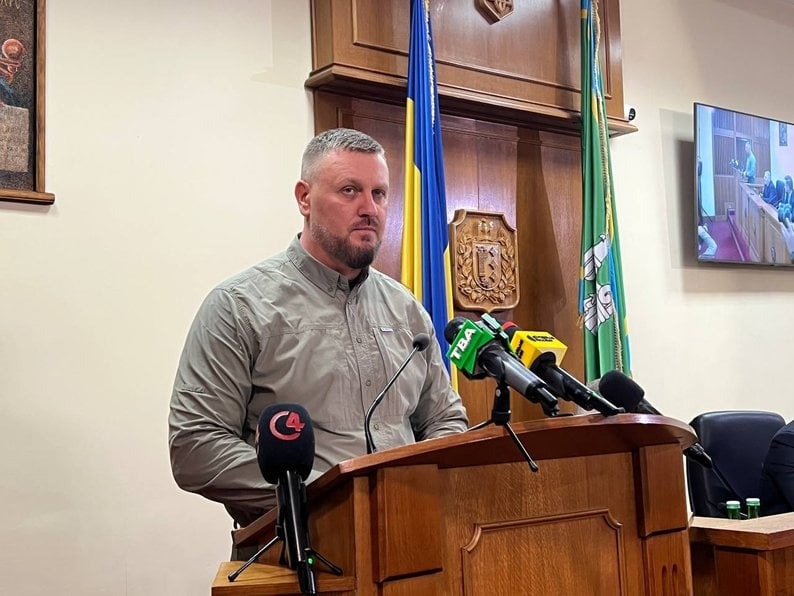
The introduction of the new Chernivtsi OMA chair Ruslan Osypenko. Photo via Suspilne Chernivtsi
Molodyi Bukovynets editor Lyudmyla Osadchuk said that her news outlet had learned that an introductory event was expected and that only TV reporters would be present from their own sources. The journalist said that they had tried to discuss this with the OMA press service but got no response.
The Institute of Mass Information’s lawyer Volodymyr Zelenchuk says that, according to the Law of Ukraine “On Media”, all media entities, regardless of their type (audiovisual, print, online), have equal rights to receive information.
He stresses that unwarranted selective treatment violates this principle.
“Unfortunately, Ukrainian law has little to no mechanisms that would effectively protect this equality, especially when it comes to the underregulated methods of providing information (invitations to events, comments by officials, etc.). However, violation of the media equality principle should in any case entail consequences for the perpetrators, and state authorities should respond to these incidents,” the lawyer said.
Volodymyr Zelenchuk added that in this situation, journalists can submit a query to the OMA and ask which official was tasked with the decision-making related to inviting media to events. They can also address the OMA with a demand to explain the reasons why only TV reporters were invted.
A possible next step would be to file a complaint with the new OMA chair regarding the situation. Moreover, journalists have the right to file a group complaint with the President of Ukraine and the Cabinet of Ministers, i.e. the bodies appointing OMA chairs, with a request to establish a dialogue between the new administration chair and mass media representatives.