
Supporting Ukrainian media is a strategic investment in democracy, reconstruction, and Ukraine’s safe future, as was discussed at Rebuilding Ukraine: Strong Media, Secure Investments, Transparent Recovery, the event marking the launch of the International Fund for the Reconstruction of Ukrainian Media (IFRUM) that took place in London on 19 September and was hosted by the European Bank for Reconstruction and Development (EBRD) alongside the EU delegation in the United Kingdom.
“This is the case with any democracy: free and independent media are essential to ensure well-founded decision-making and the government’s accountability. In Ukraine we see a media landscape that, despite enormous pressure, continues to show resilience and cover very important events, fighting disinformation, promoting transparency, and helping us shape democratic values,” said Julien Bourtembourg, Head of Press and Public Diplomacy with the EU delegation to the UK.
Ukrainian media do not need charity: they need a simple and reliable base to do their work, said Hanna Chabarai, deputy director at the Institute of Mass Information. She added that supporting Ukrainian media is an investment in a strong Ukraine, which is now holding back the Russian threat as it is close to spilling over into the rest of the world.
“The cut-off of US funding has significantly undermined the efforts of all these journalists to monitor the government and expose corruption. But they didn’t stop. Because every journalist understands that without an independent press, Ukraine will not have democracy, effective reconstruction, or a healthy investment climate,” added Hanna Chabarai.
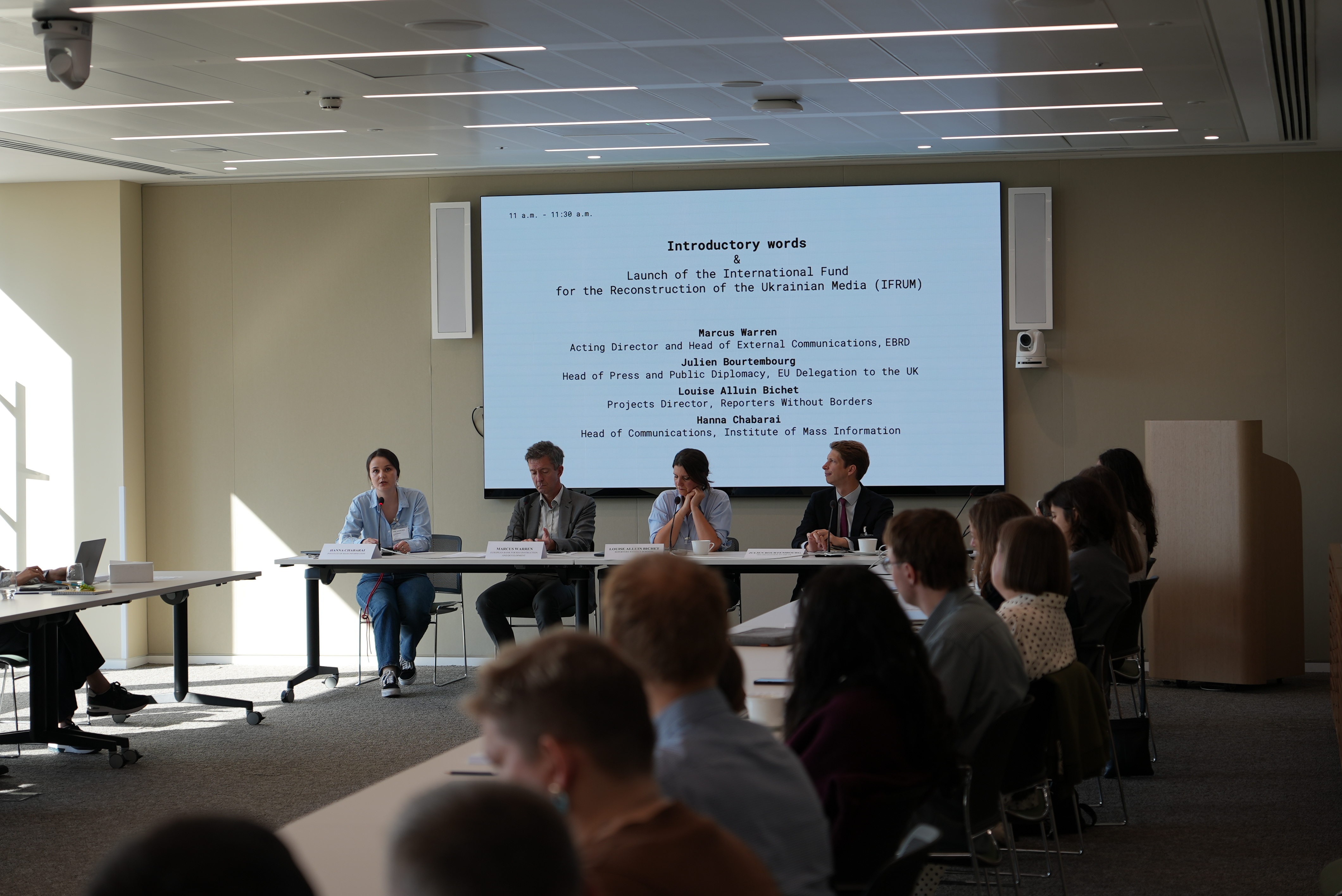
Supporting Ukrainian media is not charity, but a strategic step for future partners and investors, stressed Louise Alluin Bichet, project director at Reporters Without Borders (RSF):
“The launch of the IFRUM sends a powerful signal of support to Ukrainian journalism, a cornerstone of press freedom and democracy. Supporting Ukrainian media is not an act of charity but a strategic step towards the future for all investors. It also establishes the conditions for long-term backing, free from political pressure, so that these courageous voices can continue their essential work. We urge investors and international partners to step up and contribute through IFRUM — an investment in Ukraine’s democratic future.”
Why independent media in Ukraine should be supported
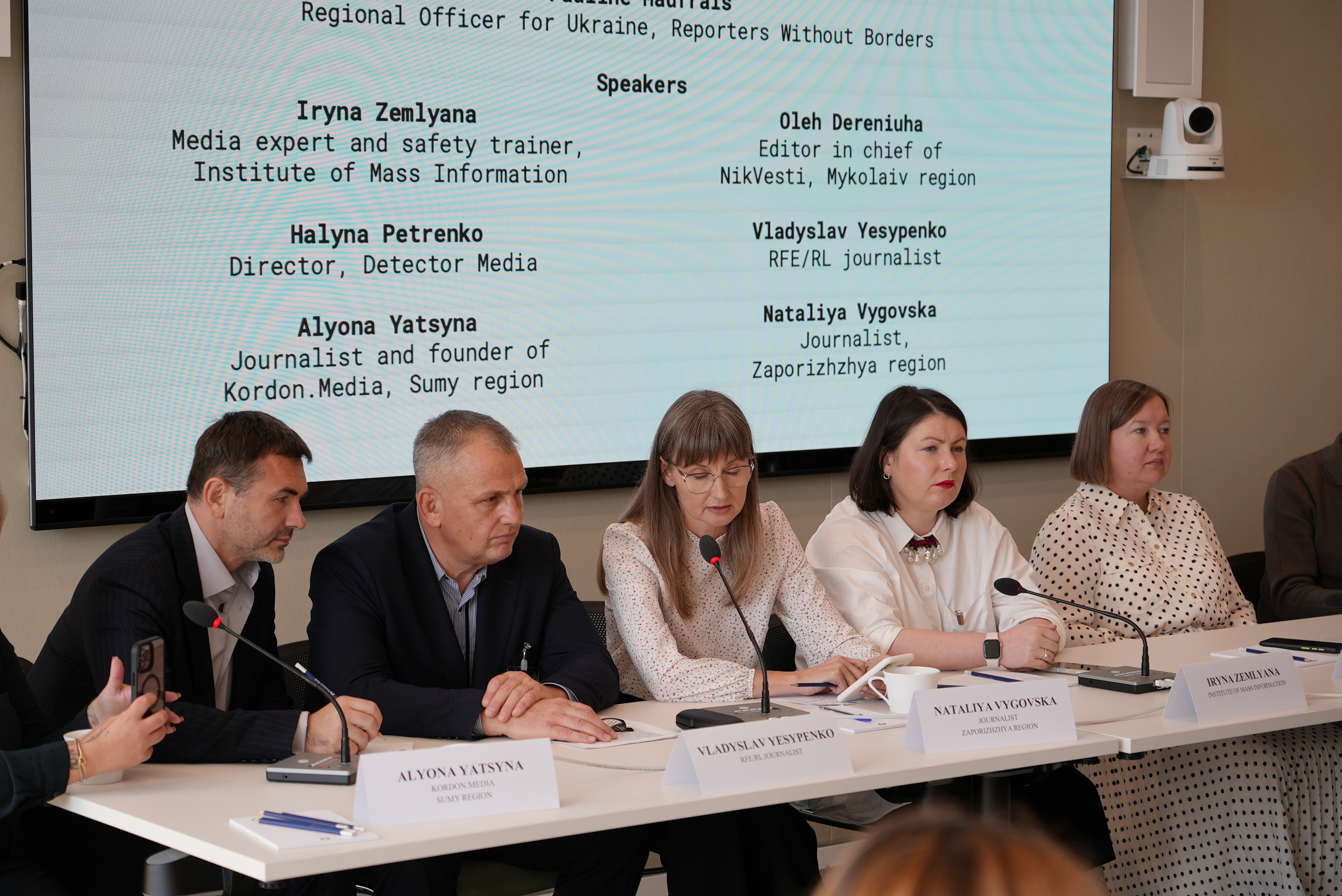
Ukrainian journalists face safety risks constantly: daily shelling strikes, systematic arrests of reporters trying to give coverage to what is happening in the temporarily occupied territories, says Iryna Zemlyana, media expert at the Institute of Mass Information. Among other challenges, she mentioned grant funding cuts, as an IMI survey showed that 80% of journalists made use of various forms of international support (training, grants, help with equipment, etc.) in 2024.
“Historically, it was American initiatives covering a large part of the media field’s needs. So nearly all journalists found themselves in a difficult situation when these resources were no longer available. We also asked media outlets how long they could keep working as usual without this support. About 60% of the journalists IMI surveyed reported that they would have to cancel or downscale programs or change their work format within 6 months to survive,” added the IMI media expert.
Iryna Zemlyana reminded that according to IMI, 12 media professionals have died while reporting since the start of Russia’s full-scale invasion. Russia committed a total of 841 crimes against journalists and media in Ukraine during this period.
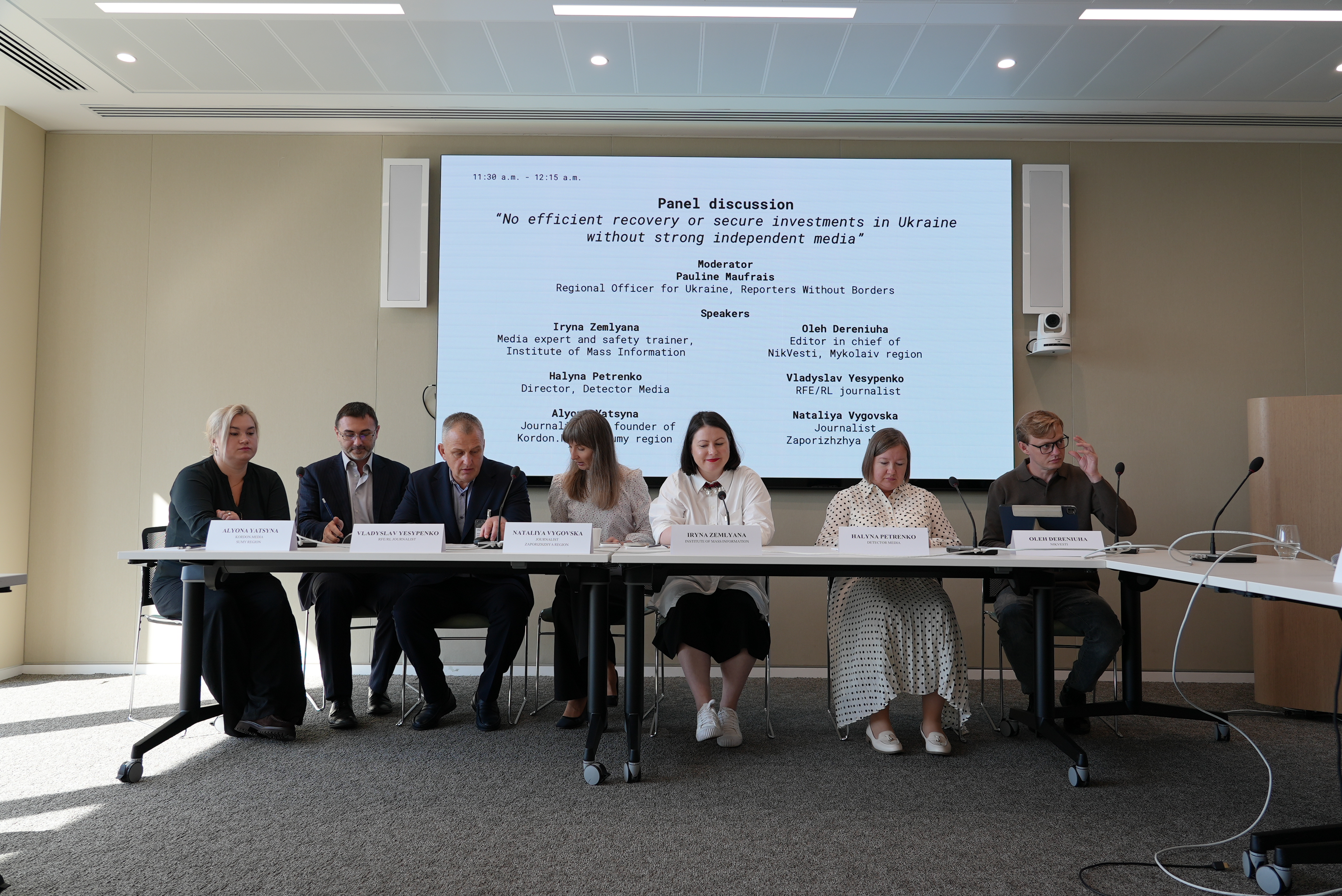
Natalia Vyhovska, journalist and IMI representative in Zaporizhzhia oblast, said there were local media outlets in her region that covered the life of small communities, exposed corruption, and reported on the government’s work. Relocated media outlets from the occupied territories have also become a source of support for their audience, scattered by the war, and will help those who have lived under the influence of propaganda for years to restore the real picture of the world after de-occupation.
“This is really scary, but we must do all we can right now while also thinking about the future, when these territories are liberated by the Ukrainian Armed Forces. We have faith that the media will recover then. Which is why we need support so much,” said Natalia Vyhovska.
There are no real media left in the occupied part of Zaporizhzhia oblast, Natalia Vyhovska added, as all news resources in that area are controlled by Russia and work to shape an alternate reality.
Ukrainian media lack financial stability
Ukrainian media, especially local outlets, mostly lack financial stability, said IMI media expert Iryna Zemlyana. Small grants allow them to survive for several months, but they are at a loss as to what to do when short-term projects end, so they have to search for new funding time and time again, she added.
“Ensuring stable support is crucial. This means not just grants for specific topics, but freedom for media outlets to decide for themselves what their audience needs, what topics are important to communities, and not just cover the topics determined by donors,” said the IMI media expert.
Oleh Derenyuha, CEO of the Mykolaiv news outlet Mykvisti, said that the average size of the grants available to online media in Ukraine was about 1000 euros, which was usually enough for two months of news production.
“This allows us to live but not to plan. Which is why I believe that creating an independent fund for the development of Ukrainian media is so important. This may change the model from short-term or fragmentary support to consistent, strategic, and predictable. And if this does happen, some news outlets will be able to plan for years ahead, and not just months. This will alleviate the pressure and allow us to focus on what really matters: journalism, which supports recovery, accountability, and democracy in our country,” Oleh Derenyuha said.
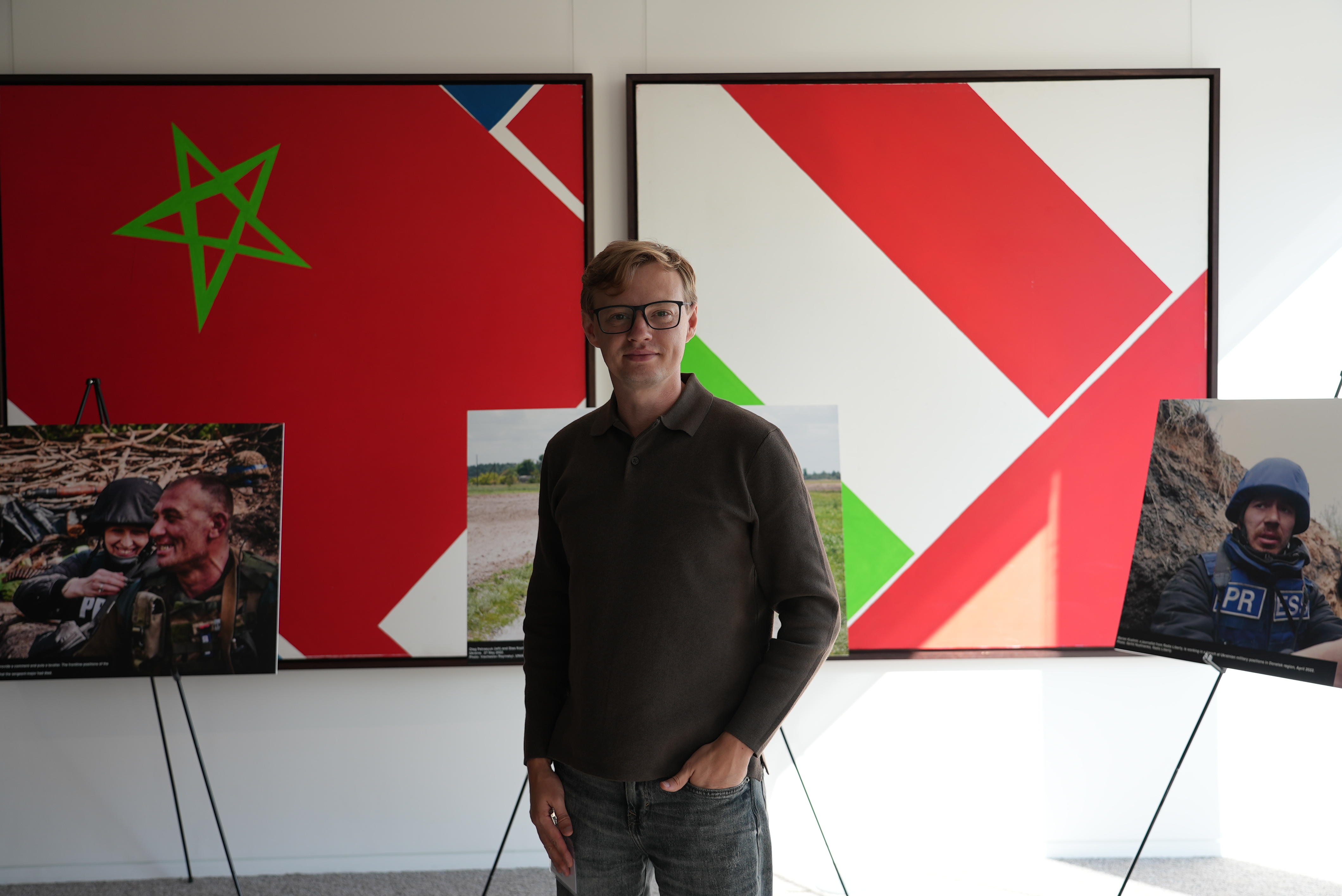
The International Fund for the Reconstruction of Ukrainian Media (IFRUM) was launched by the international watchdog Reporters Without Borders and Ukrainian organisations: Institute of Mass Information, Lviv Media Forum, Detector Media, DII-Ukraine, Recovery Window, Media Development Foundation. The Fund has already received support from the European Union.
Lesia Lutsiuk, Hanna Chabarai