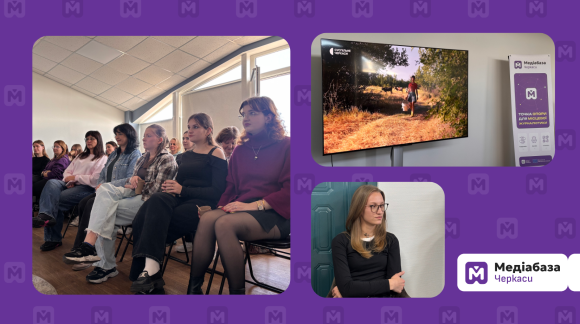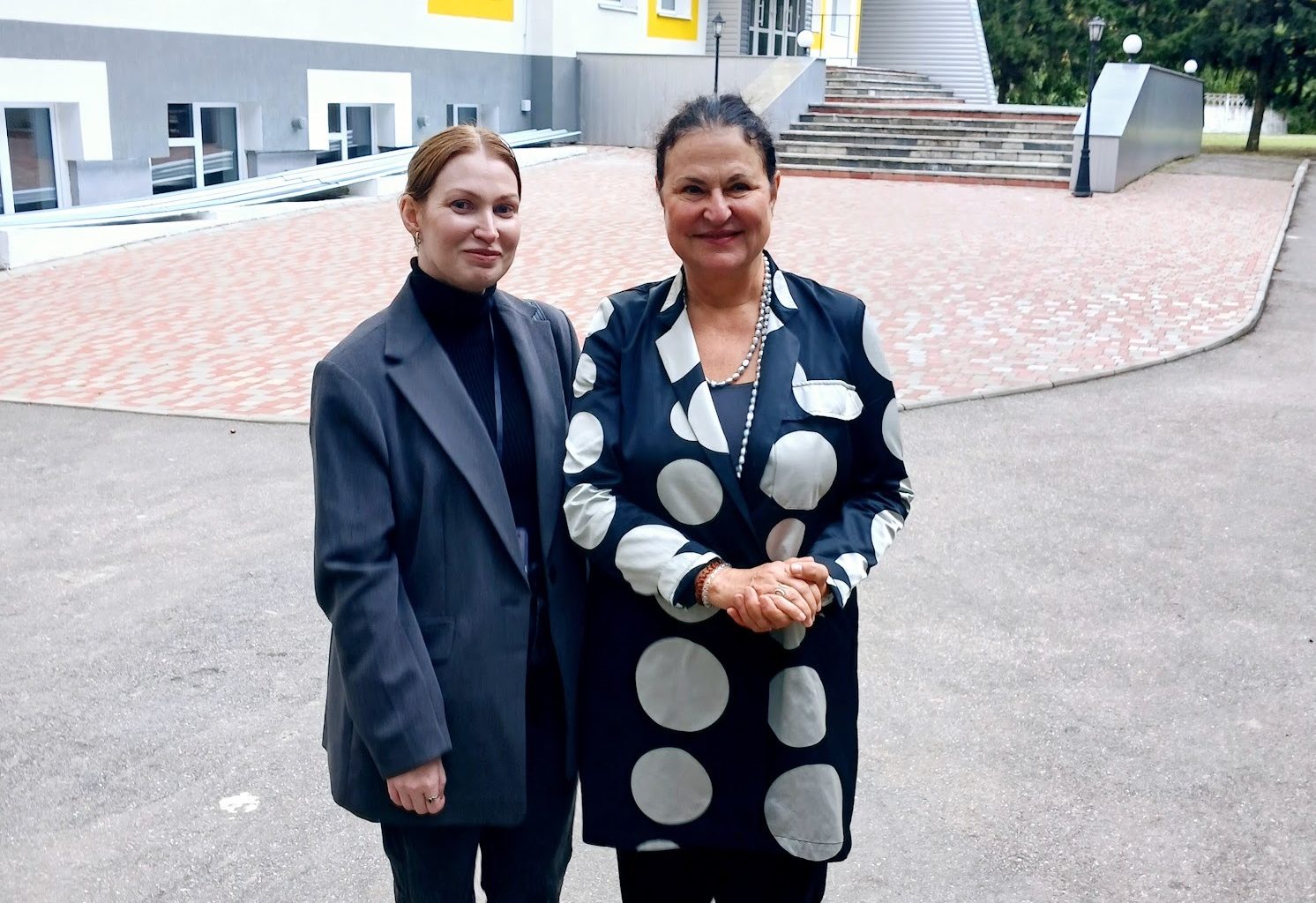

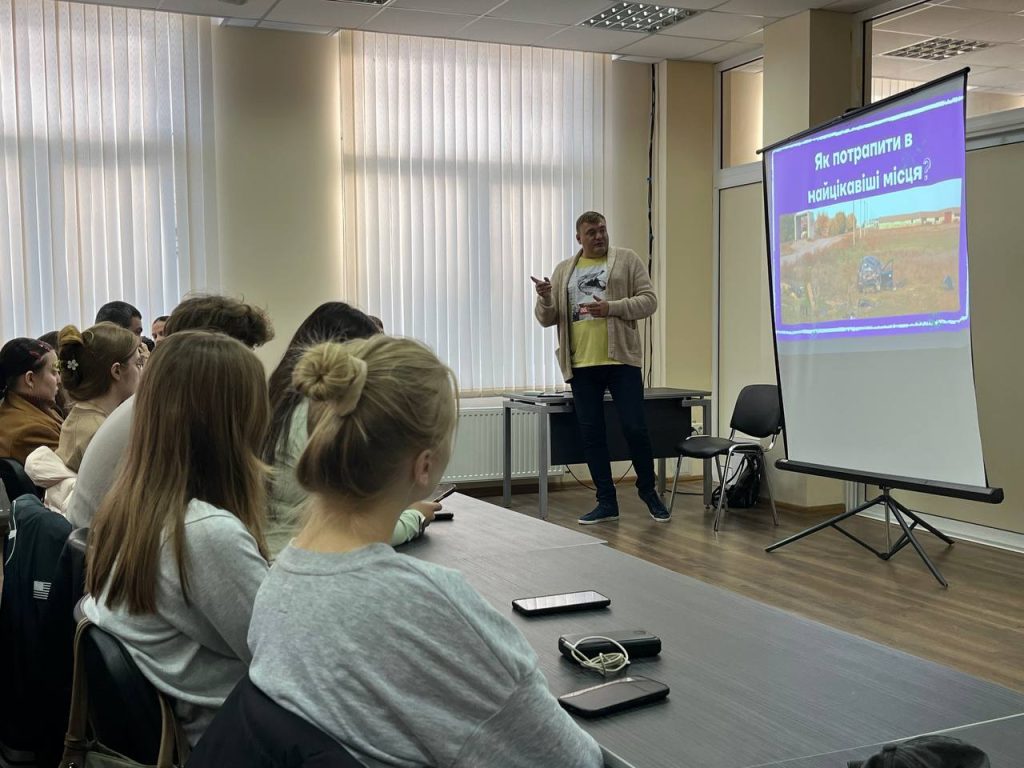
Serhiy Nikitenko, chief editor of the Kherson-based online news outlet MOST, met with journalism students from the Mechnykov University of Odesa to share his experience working in the liberated parts of Kherson oblast, the nuances of accessing such zones, searching for subjects, and the basic challenges that a journalist faces in a front-line region. The meeting was organised by the Institute of Mass Information’s (IMI) regional hub Mediabaza Odesa / Kherson.
Working in deoccupied territories
First and foremost, Serhiy stressed the importance of following safety rules.
“A journalist in a combat zone must be disciplined. You must always have a press ID and a first-aid kit on you, wear a helmet and a bulletproof vest marked ‘Press’, and never stay in one place for a long time,” he said.
Reproting in such areas is regulated by the UAF Commander-in-Chief’s Decree No. 79, which defines three access levels:
- green zone – relatively safe for work;
- yellow zone – requires route coordination with the military and a press officer;
- red zone – working only allowed while escorted by UAF representatives.
“No accreditation – no access. Previously, credentials would be issued for six months, now for a year. But to get accredited, you need to have a full package of papers: an application, a journalist’s ID, and a letter from the media outlet,” Nikitenko explained.
He also stressed the importance of coordinating your actions with press officers.
“Before you go, you definitely need to agree on a route. This is not only a matter of permits, but also your safety,” said Serhiy Nikitenko.
Getting to the interesting spots
Serhiy said that in frontline areas, access often determines whether a journalist is able to produce a truly powerful story.
“It’s all random. If we’re talking about Kherson oblast specifically, everything here depends on access. The ones who get the most interesting stories are those who have already firgured out where to go and how to get there,” he shared.
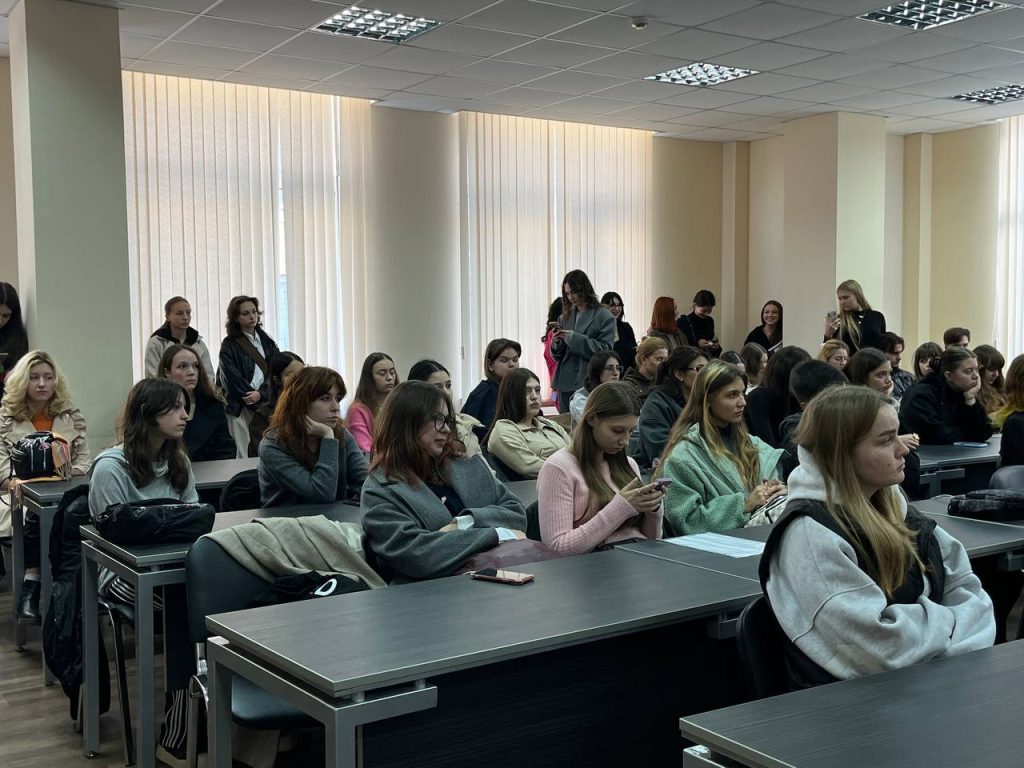
Serhiy Nikitenko advises journalists to be flexible: even if the plan doesn’t work out, there are stories to be found around you: you just have to observe and be attentive to details.
Searching for stories
“When we head out on a filming trip, we usually have a plan. But sometimes we arrive in a village and just start talking to people. They share their stories themselves. Sometimes they even text us on social media after a story gets released,” said Serhiy.
For example, one MOST reader messaged the news outlet on Facebook following a news story about a Kherson oblast village: “He gathered the people himself, and that’s how our report from Andriivka was born.”
Nikitenko said that it is such spontaneous stories that often end up having the most value, because they contain the live emotion, pain, and truth of the occupation survivors.
The challenges of on-the-ground reporting
Serhiy said that a key difficulty is the lack of new stories and topics, as many stories have already been told.
“We can’t keep retelling the same thing, and new stories are rare. Some things we film we can’t release publicly. Some other things we’re not allowed to hear,” he explained.
Safety remains a big challenge.
“Many areas are still mined. We even had a story about ‘black’ sappers – people who clear mines themselves without special education or equipment. They collected thousands of anti-tank mines, but this report never came out because it would pose a threat to these people,” explained the MOST chief editor.
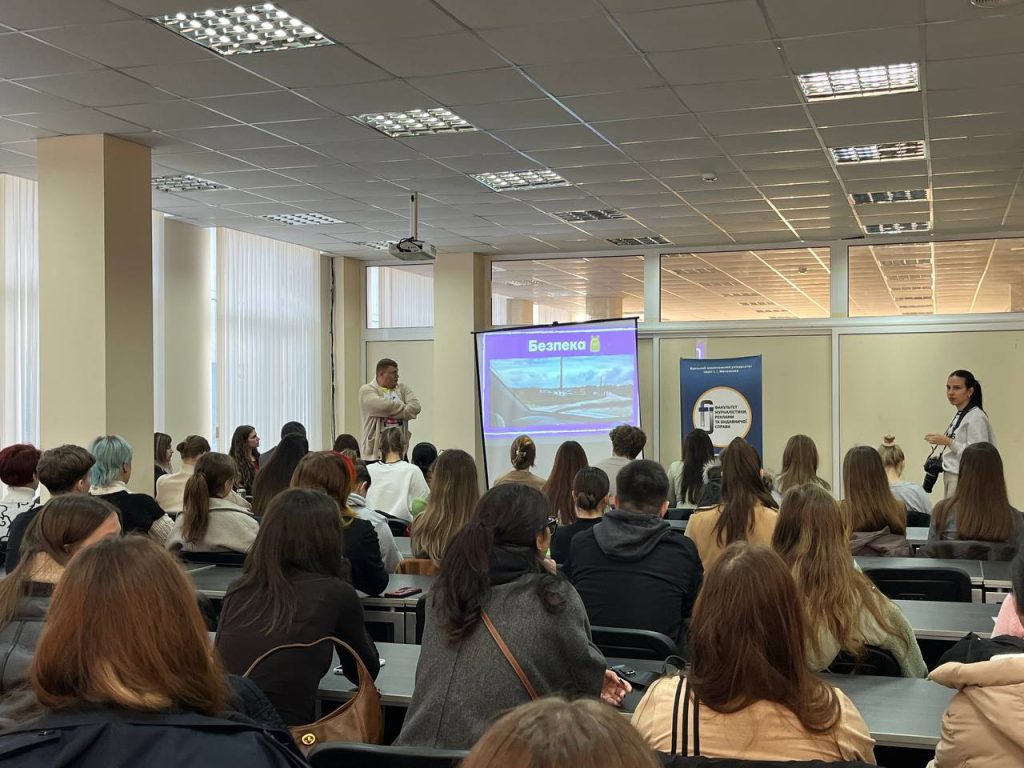
Nikitenko stressed that learning something truly new and important takes a huge effort.
“In the deoccupied territories, you need to not just be working: you need to be taking risks constantly, be attentive, and honor the trust that people who share their lives put in you,” he said.
The meeting closed with a Q&A session. The students asked about ethical dilemmas, emotional burnout, and ways to remain objective when you see the impact of the war with your own eyes.
“What matters is that you do not lose your humanity. We are not just collecting information – we are recording the history that our country is living through,” Serhiy Nikitenko concluded.
by Dana Hrynko, Mediabaza Odesa / Kherson SMM