

The Khmelnytskyi Oblast Military Administration (OMA) met with media representatives on 22 September, but only selected news outlets were invited. The event was attended by 13 journalists from TV channels, online media outlets, and print newspapers based in Khmelnytskyi city.
The administration reported on the meeting in a Facebook post on 23 September.
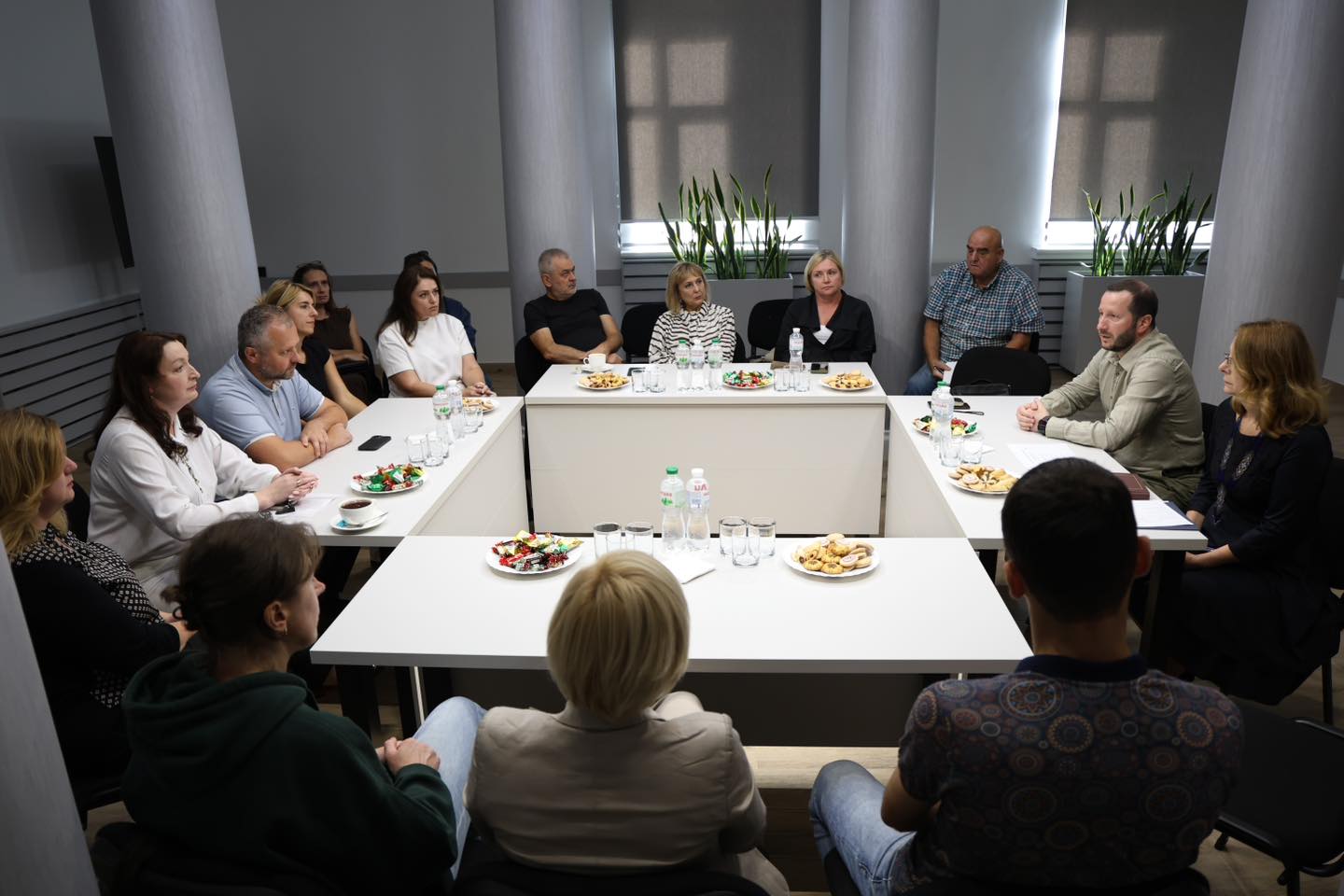
Khmelnytskyi OMA chair Serhiy Tyurin meeting journalists. Photo by the Khmelnytskyi OMA
The meeting was attended by representatives of five TV channels, two print newspapers, and five online news outlets, as well as Olena Havinska, the National Council for Television and Radio Broadcasting representative in Khmelnytskyi oblast.
Dunayevetskyi Visnyk chief editor Valentyna Baytaliuk says that as a representative of a print publication, she was not invited to the meeting by the Khmelnytskyi OMA. In a comment to Alyona Bereza, the IMI representative in Khmelnytskyi oblast, Valentyna noted that if she had received an invitation to the meeting, she would have very gladly joined it, because there were issues that she would have liked to discuss.
Vpered chief editor Alla Humeniuk received no invitation, either.
“We want to be within our oblast’s information landscape,” Alla Humeniuk added in a comment to the IMI representative.
The online news outlet ZHAR.INFO was excluded from the meeting as well. The team did go to the meeting to ask, among other things, why a media outlet that regularly submits information queries and takes comments from administration officials had not been invited. In response they were told that the specialized department organising the meeting had not had time to invite them.
Inna Doroha of the broadcasting company Kamyanets-Podilskyi, did not receive an invitation either. However, the journalist is unsure that she would have joined this meeting. She said that for them nothing had changed since the previous meeting between journalists and the administration, law enforcers, and emergency responders in February.
“If we were talking local level, we would be very interested in it. If there was an oblast-scale event, with the OMA chair coming here with those managers, and all the managers were gathered here, and I would look them in the eye here, then perhaps the dialogue would be different,” Inna Doroha added.
In his Telegram channel, the OMA chair Serhiy Tyurin said that they had an informal conversation with media representatives and outlined a vision for the further development of communication with the media.
“Our colleagues from the media shared their proposals for a new strategy of communication and cooperation. They specifically focused on covering events related to Russian shelling,” the official’s post says.
The IMI representative addressed the OMA regarding their approach to inviting media representatives. Lyudmyla Cherevchenko, acting director of the OMA Department of Information Work, Culture, Nationalities, and Religions, noted that this was a different meeting format. According to her, the previous time it was necessary to convey information, hear the feedback, hear out the comments on what restrictions on information and access to public information should be like.
“This time it was just a conversation where you could suggest some good ideas. It turned into a good event. Next time we will take this into account and invite everyone,” added Lyudmyla Cherevchenko.
The previous meeting between top OMA officials, law enforcers, emergency responders, and journalists of Khmelnytskyi oblast took place in February 2025. The meeting was initiated by IMI’s Media Hub Khmelnytskyi and included journalists both from Khmelnytskyi and other cities in the oblast.