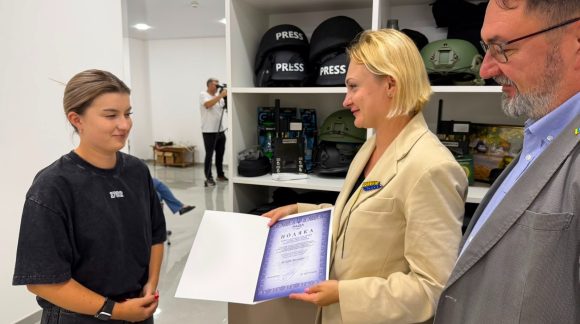

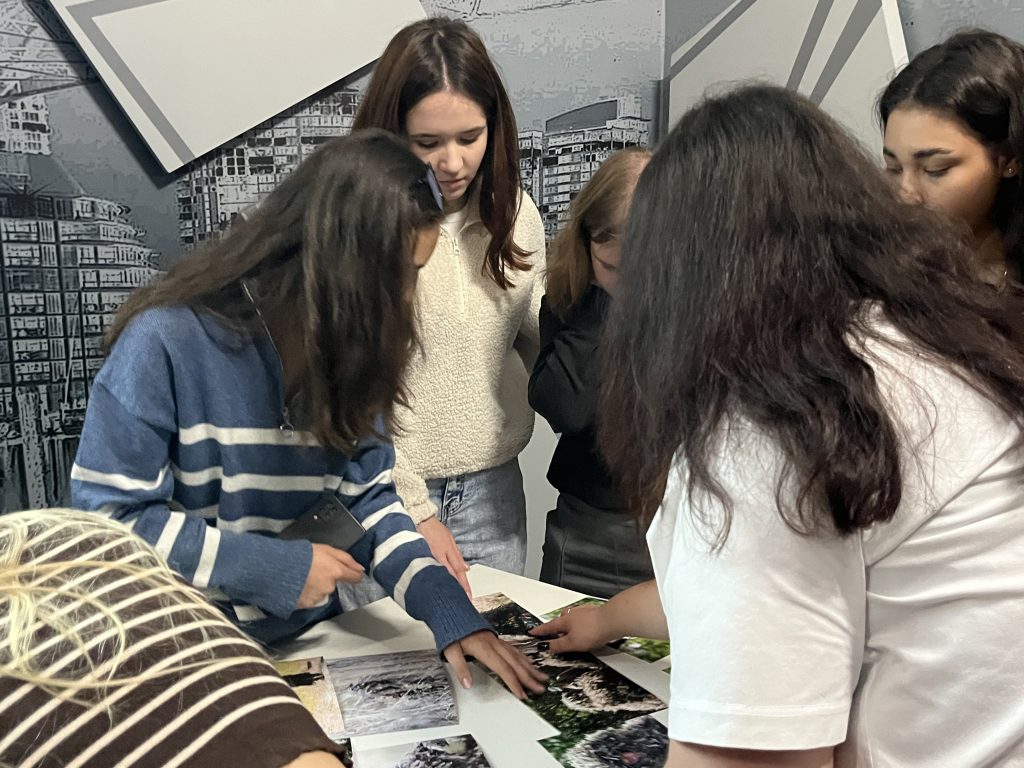
How to create a news story that touches the reader? Why is it important that a journalist “feel,” and not just know the rules? This was discussed at a reporting workshop organized for journalism majors from the Odesa Law Academy by the Institute of Mass Information’s (IMI) Media Hub Odesa / Kherson.
Media Hub Odesa / Kherson representative and MOST chief editor Serhiy Nikitenko and his team spoke to the students, sharing their professional experience, explaining the challenges and their own views on reporting as a genre.

Eva Vasylevska stressed that journalism is, first and foremost, about feeling.
“In journalism, you need to have a knack for feeling: the text, the person, the event. Shaping a cultural background is important for this, and there are no instructions here, everything works intuitively,” she explained. It is important to learn to see not just the facts, but also the emotions and meanings behind them.
“The only advice I can give is: work on your personal growth. Develop a sense of observation, learn the theory, watch good movies, read high-quality texts. And when you learn to pinpoint the main things, then you will succeed,” she said.
Serhiy added that even in the era of artificial intelligence, a real journalist can only be replaced by another journalist. After all, someone who has a burning passion for their work can feel the people they’re writing about and their stories, and a machine cannot.
The speakers also focused on how modern media teams function. There are several models for a media outlet to survive:
- selling printed copies or subscriptions;
- advertising;
- donations from readers;
- donor support.
“The biggest challenge is finding a team that is ready to invest in reportage. This genre is expensive and time-consuming, but it is what gives journalism depth,” explained Serhiy.
The issue of reporting from combat areas and occupied territories was no less important. Broadly speaking, there are 3 zones in terms of reporting:
- Green zone. It is safe and freely available to journalists;
- Yellow zone. Journalists may report from this zone, but only after coordinating their route with the military, especially if the area in question is close to strategic objects. It is especially important to have a journalist’s ID, first aid kit, helmet, and bulletproof vest marked PRESS with you in this zone. Serhiy stresed, “The more precisely you follow the rules, the more you will be trusted, and trust is key to quality reporting.”
- Red zone. According to the amended Decree No. 73, journalists are forbidden to work in this zone without an escort, otherwise they may face serious consequences. “This is not a formality, but a matter of safety,” Serhiy explained. “In the red zone, you only work with a press officer accompanying you, no exceptions allowed.”
The workshop also discussed finding stories for reporting. The journalists said in Ukraine today stories are literally born before one’s eyes — all it takes is watching carefully.
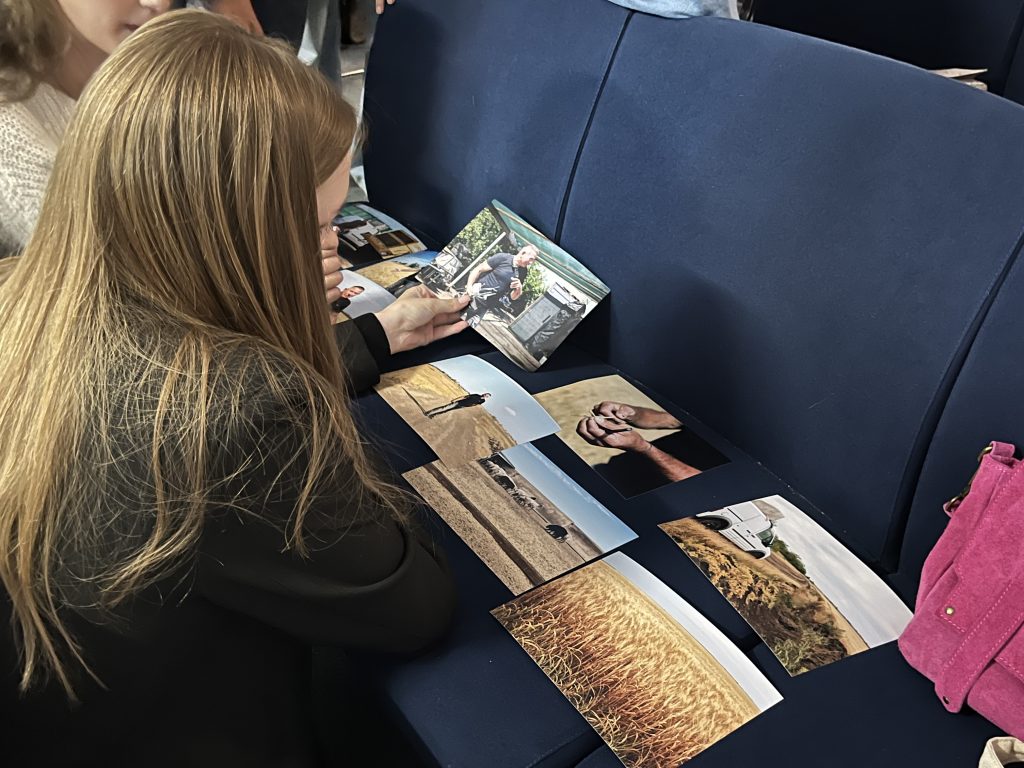
“What matters is that they be true. We live our life together with our heroes, and this helps a lot in creating stories,” Serhiy said. High-quality reporting always centers the person, their experience, pain or triumph.
Another question that interested the students was how to get to the “most interesting spots” where reportage stories are born. Serhiy replied that such opportunities most often arise unexpectedly: “You can come across a subject for your story by chance, but it all depends on whether you can build trust. The ability to communicate and negotiate with people is your main tool.”
By Dana Hrynko, Media Hub Odesa / Kherson social media manager