

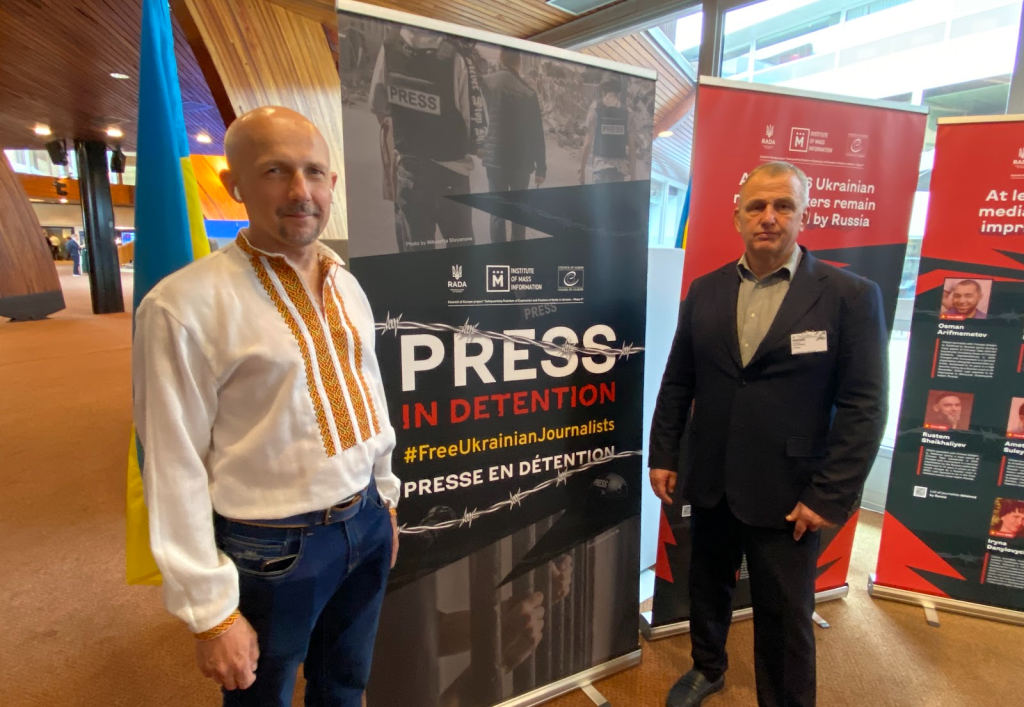
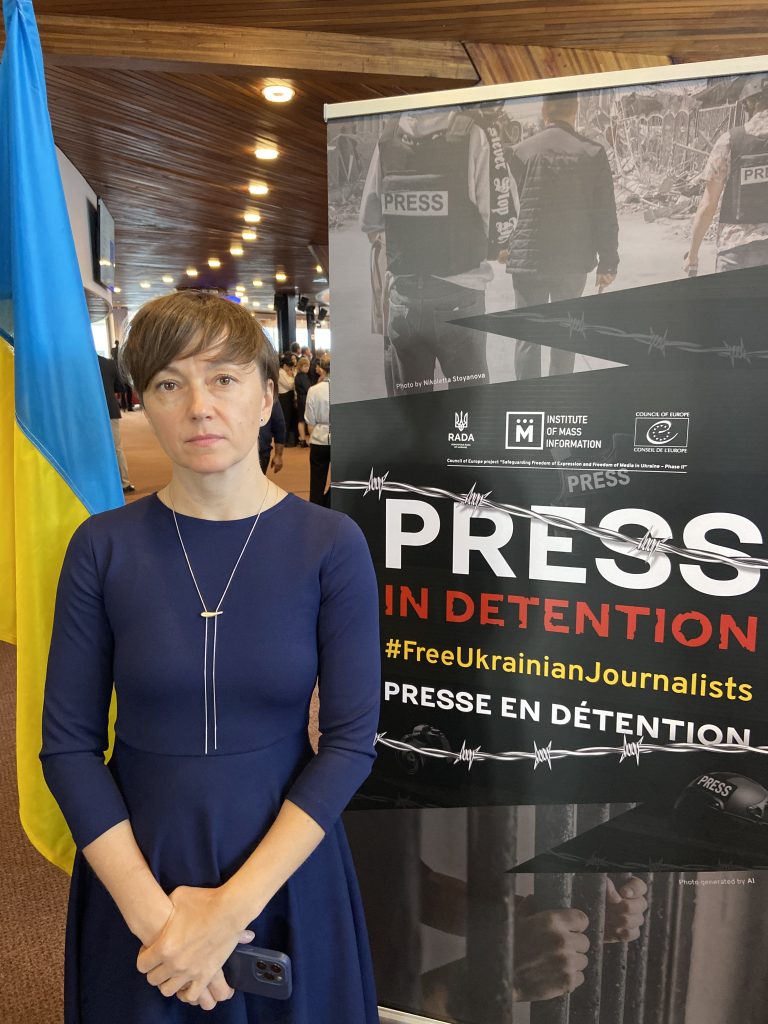
Press In Detention, an exhibition about Ukrainian journalists imprisoned by Russia, has opened at the Parliamentary Assembly of the Council of Europe (PACE) headquarters in Strasbourg, France, on 1 October 2025, the day that the resolution on Ukrainian journalists unlawfully detained by the Russian Federation was finally adopted, reports Lesia Lutsiuk, an Institute of Mass Information (IMI) representative present. The exhibition was organised by IMI, the Verkhovna Rada of Ukraine Delegation to PACE, and the Council of Europe as part of the project “Safeguarding Freedom of Expression and Freedom of the Media in Ukraine” (SFEM-UA).
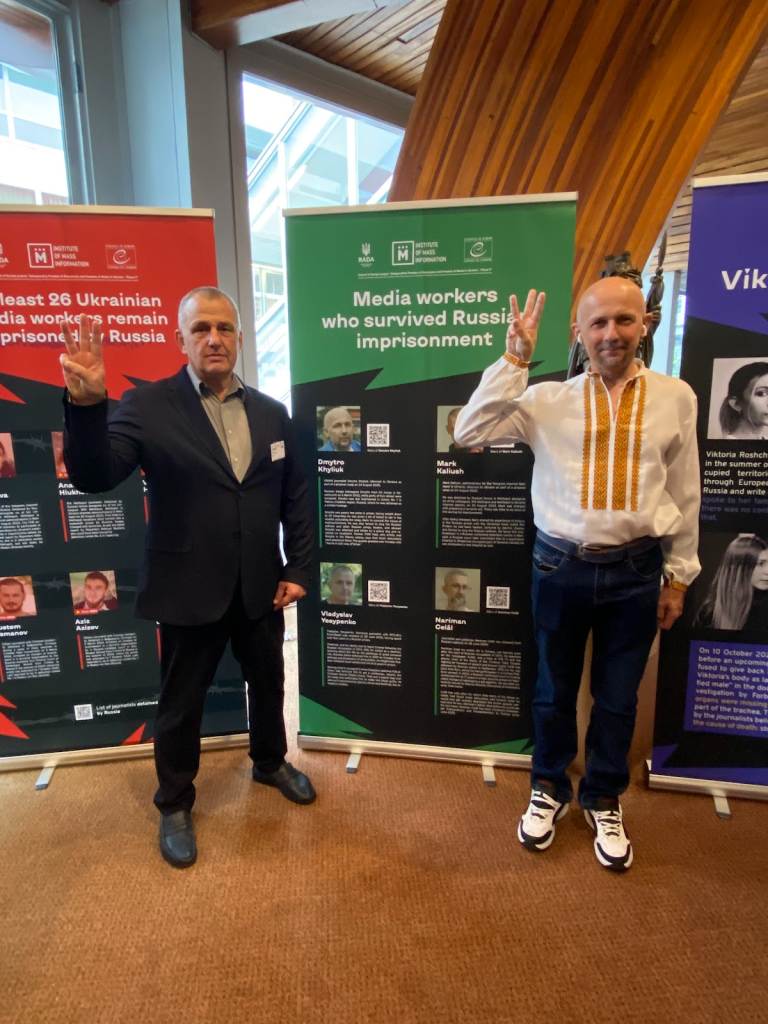
The exhibition is based on the list of at least 26 Ukrainian journalists imprisoned by Russia, which is maintained by the Institute of Mass Information. It featured a display board and a video dedicated to Ukrainian journalist Viktoria Roshchyna, who was tortured and killed in Russian custody, as well as a board about journalists who survived Russian detention, such as Mark Kaliush and Nariman Celal, as well as Dmytro Khyliuk and Vladyslav Yesypenko, who attended the opening of the exhibition in person.
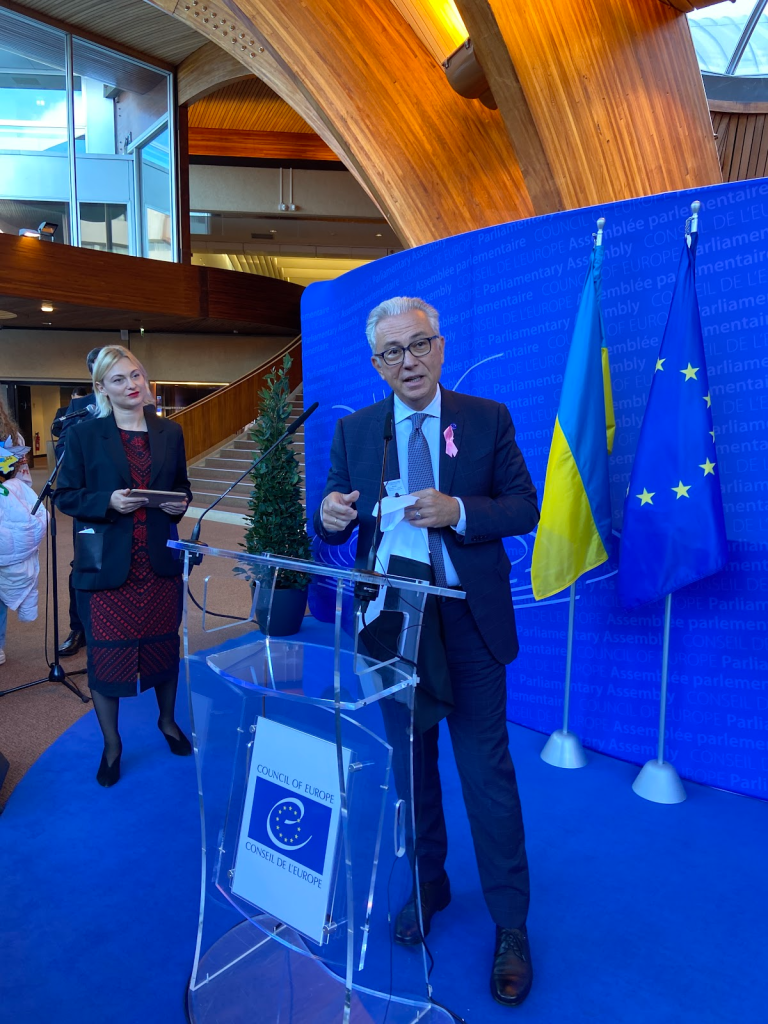
The “Victory for Victoria” Day honoring the late journalist Viktoria Roshchyna, which was officially launched in PACE on 1 October, reminds us of those who fight for truth, for democracy, for the rule of law, for human rights, said PACE President Theodoros Rousopoulos. He called on the listeners not to forget about the people fighting for democracy with their pens, words, and speeches.
“In late August, I asked my colleagues on the Václav Havel Prize jury to dedicate the prize to journalism, because the past two years have been most devastating. Hundreds of journalists have been killed, hundreds, if not thousands, have been detained, and many more are barred from expressing themselves freely,” said Theodoros Rousopoulos.
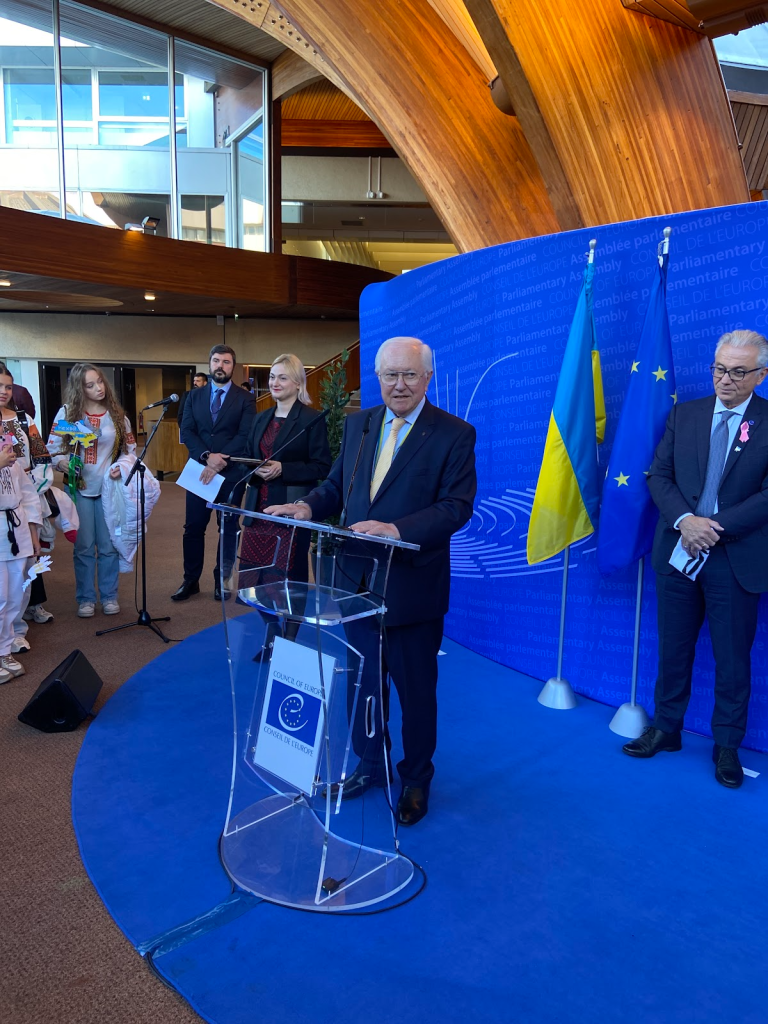
Press In Detention is a live continuation of the resolution calling for increased pressure on Russia to release Ukrainian journalists, which was adopted on 1 October 2025 in Strasbourg, said Borys Tarasiuk, Ukraine’s Permanent Representative to the Council of Europe. He added that the exhibition turned words into faces and stories, reminding the viewer why urgent action is needed and encouraging them to keep fighting for the freedom of every unjustly imprisoned journalist and to defend the right to speak the truth.
“Today we open an exhibition that gives a voice to those who have been silenced. Press In Detention tells the stories of Ukrainian journalists who chose the truth over fear and who are now paying for it with their freedom, and in some cases, with their lives. At least 26 Ukrainian journalists remain behind bars in Russia. Viktoria Roshchyna never returned. Vladyslav Yesypenko and Dmytro Khyliuk, who stand with us today, survived torture and returned from prison,” added Borys Tarasiuk.
European officials and citizens should realize that their lives are still peaceful because Ukraine lives every day in a turmoil, said UNIAN journalist Dmytro Khliuk, who came back from Russian prison a little over a month ago on Ukraine’s Independence Day, 24 August 2025.
“We will ask European politicians to step up pressure on Russia, on the Russian government, on the Russian authorities in order to release the civilians, including civilian journalists, from detention. Since we know that there are no mechanisms to achieve their release, neither in Ukrainian nor in international law. The case-by-case releases such as the one that brought me back give minimal results, and over 16,000 people remain imprisoned,” said Dmytro Khliuk.
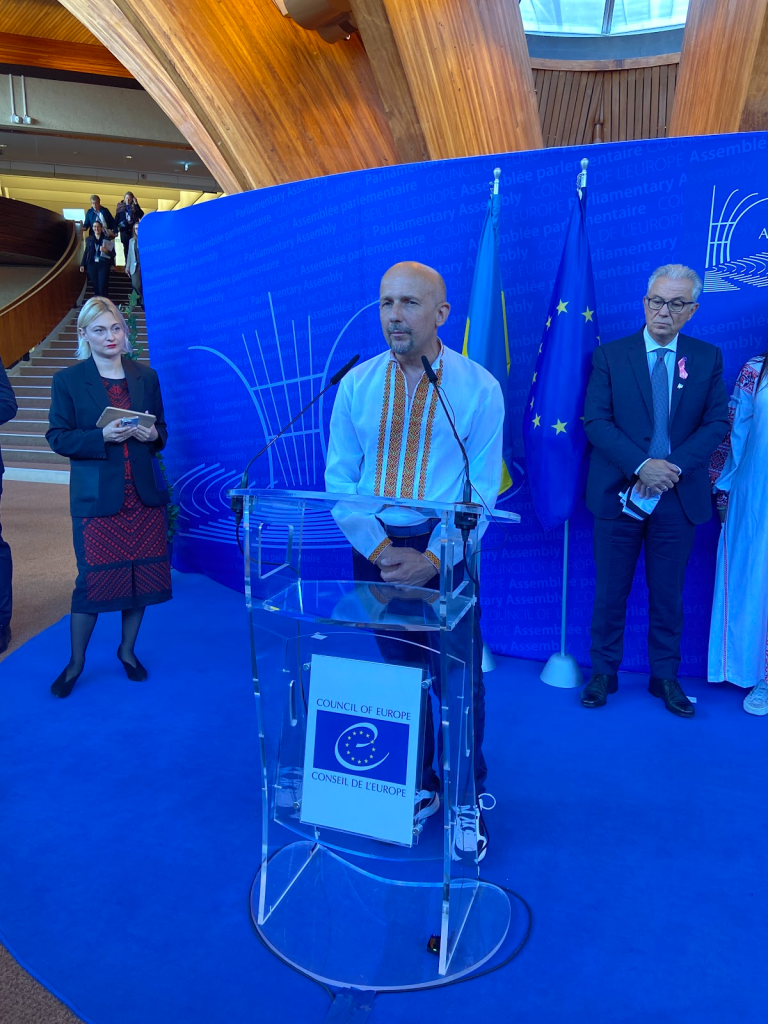
It is necessary to raise awareness of the civilians in Russian prisons more often because they are sick and face torture, said Vladyslav Yesypenko, a freelancer with Radio Free Europe/Radio Liberty who was released from a prison in Crimea on 20 June 2025.
“Ukrainian journalists are not treated as normally as others. Russia is breaking them in various ways: physically and mentally. Precisely is because of their work.
“The full-scale war has already entered its fourth year, but not all European MPs realise the threat to the lives of Ukrainian journalists in the territories occupied by Russia. People with pro-Ukrainian views are being arrested, they are disappeared. It is very important that we do not forget about the journalists, nor about the political prisoners with a pro-Ukrainian stance,” Vladyslav Yesypenko commented.
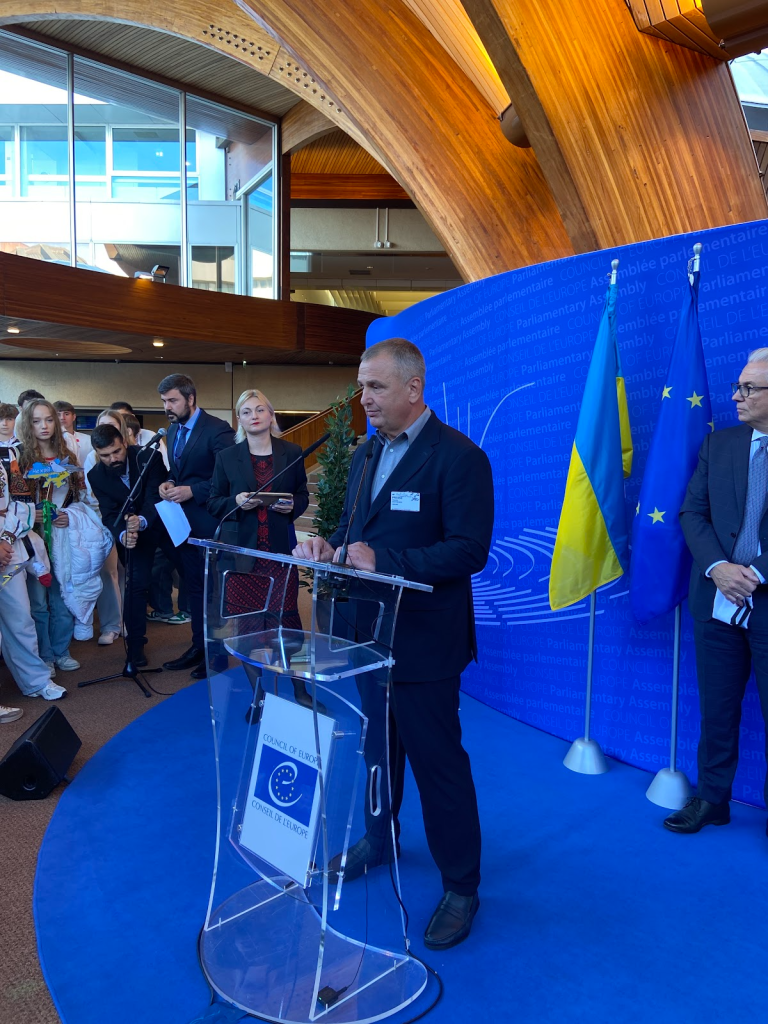
It is important to show PACE delegates from different countries the faces of those who are perhaps being tortured at this very moment, said Yevhenia Kravchuk, a member of the Ukrainian delegation to the PACE. She added that it was necessary to step up the sanctions and to put pressure on Russia because the fate of the prisoners, especially those detained in the occupied territories, highlights that occupation is not just about the land.
“Of course, the subject of Ukrainian prisoners is not new. There are many prisoners of war, there are many imprisoned civilians. But when people hear numbers such as ‘thousands,’ they don’t see the people behind them. This exhibition is an example, especially considering that the fate of Viktoria Roshchyna has become very well-known thanks to a journalist investigation, it sheds light on the fates of people. And on people’s reasons for traveling to the occupied territories. Like Viktoria Roshchyna did: to report on human rights violations.
“Or on how many citizen journalists there are, who are not professional reporters. Very often these are Crimean Tatars, who, say, attend trials and describe them. They are imprisoned just for this. Or take the story of RIA Melitopol journalists who created a Telegram channel opposing the occupation and also ended up behind bars,” added Yevhenia Kravchuk.
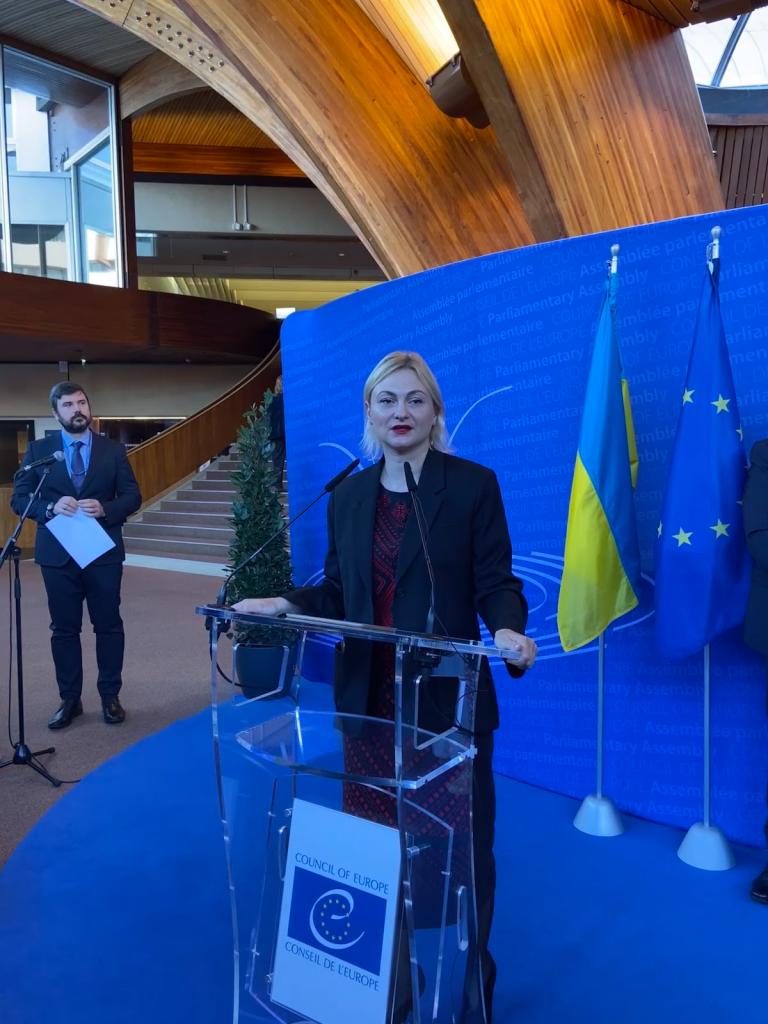
Reporting on Russia’s crimes at the international level creates pressure on Russia and serves to remind us of the Kremlin’s systemic crackdown on freedom of speech, said Kateryna Dyachuk, chief freedom of speech monitor at the Institute of Mass Information.
“The exhibition allows international partners to see the stories of specific people behind the statistics and to understand the scale of persecution. Such initiatives emphasize that repression against journalists is not a matter of Russia’s domestic affairs, but a challenge for the entire democratic world. Reporting these facts at the international level helps to create pressure on the Russian Federation and to defend the right to truth,” commented Kateryna Dyachuk.
Press In Detention also exhibited the pair of broken glasses worn by Ukrainian journalist Vladyslav Yesypenko while in Russian prison. The prison staff would not give him a new one despite repeated requests.

Earlier, the Parliamentary Assembly of the Council of Europe (PACE) adopted a resolution calling for increased political, economic, and diplomatic pressure on Russia to ensure the release of illegally detained Ukrainian journalists. The PACE decision was passed at the 1 October session in Strasbourg (France).
The PACE launched an annual “Victory for Victoria” commemoration named after journalist Viktoria Roshchyna, who died in Russian custody. This annual commemoration will honour journalists who risk their lives defending the right to information and truth in conflict zones.