

Anastasia Taran and Maria Onyshchenko, journalists with the news website Dnipro.media, were not allowed to attend the 10 December plenary session in the Dnipro City Council’s session hall. The reporters have filed a complaint with the police, the media outlet reports.
They were seated on the glazed balcony intended for the public, with the City Council employee (who did not introduce herself) citing “the regulations”. The woman with the communal company Munitsypalna Varta (“municipal guard”) who did not allow the journalists to enter another, un-glazed balcony did not say her name either and did not explain the reasons for the refusal.

A security guard present confirmed that “journalists go to the balcony on the right,” to which the Munitsypalna Varta representative replied, “It’s the left one now, that’s what it says.” The journalists were not given a document or provided with any details as to the grounds of the City Council employees’ actions.
On 8 December, the journalists submitted a request for admission to plenary sessions and received an approval to attend the City Council sessions on 10 and 17 December 2025.
The media outlet pointed out that journalists likely representing the city’s municipal Dnipro Television Studio, owned by the Dnipro City Council, were present unhindered in the session hall and on the unglazed balcony.

Journalist Maria Onyshchenko called the police to file a complaint on obstruction of reporting. As soon as 10 minutes later, as the journalist was on her way to the police, she was approached by the director of the Dnipro City Council’s support department, Oleksandr Lytvyn, who escorted journalist Maria Onyshchenko to the unglazed balcony. Still, she did file an obstruction complaint.
Anastasia Taran stayed on the glazed balcony. Maria commented that the glass, which makes the image mirrored, spoils the sound quality, makes deputies’ speeches impossible to record and prevents journalists from taking comments from accountable officials, is an arbitrary barrier that contradicts the principles of openness and transparency enshrined in the Charter.
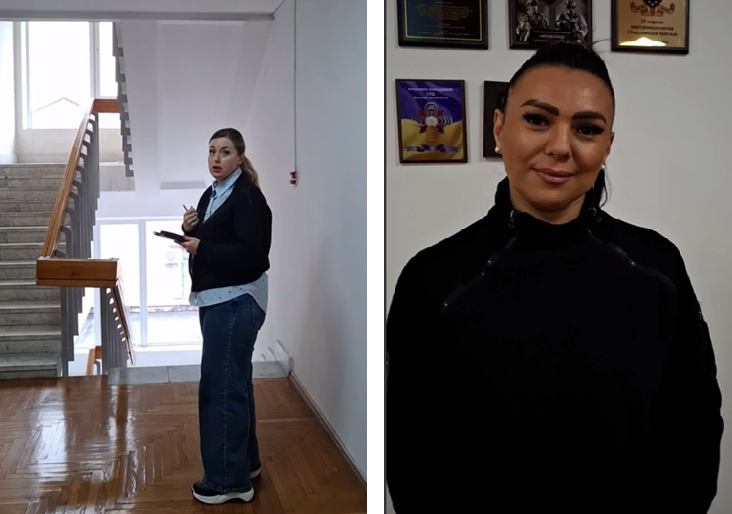
Dnipro.media chief editor Nika Yehorova said in a comment to the Institute of Mass Information’s regional representative Kateryna Lysiuk that this is not the first time that their journalists have faced such a situation in the City Council.
“The 10 December situation is not our first time — a similar incident already occurred on 25 February. Then, as now, Dnipro.media journalists were effectively barred from working in the session hall, with no clear legal grounds or written decrees provided. In both cases, we highlighted the fact that the City Council’s regulations, the territorial community Charter, and the current law say that the sessions should be open and that journalists should be given free access to cover them. Still, we observe that access conditions differ for independent media and municipal media, which warrants a separate explanation from the City Council,” said Nika Yehorova.
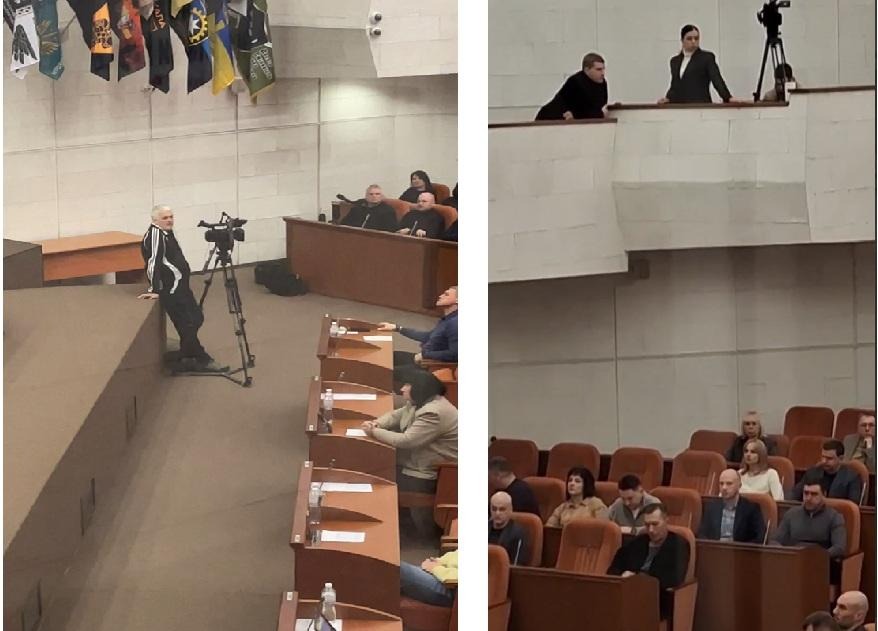
The news outlet’s journalists shared footage with the IMI representative showing that other media outlets were working inside the session hall and on the open balcony.
In a comment to the IMI representative, Yulia Vitvytska, Dnipro City Council’s chief of information policy and local self-government, internal and information policy, claimed that the Dnipro.media reporters had been seated on the open balcony while the glazed balcony had been reserved for activists with the Money for the Armed Forces movement. The official does not know the reasons why the journalists ended up on the other balcony.
When asked why this media outlet was barred from working in the session hall, the answer was “deputies work there,” and when asked why reporters with the municipal channel were allowed to work there, she replied, “This is our municipal news outlet, it covers the City Council’s work. There were only cameras in the session hall.”
When asked about the “regulations” cited by the City Council employee and the Munitsypalna Varta representative, Vitvytska said that an answer would require consulting many documents and advised IMI to submit an information query: then the lawyers would provide an answer.
The Institute of Mass Information has contacted the Dnipro City Council with an information query regarding the situation.