

A Suspilne Dnipro filming crew was able to escape a Russian FPV drone following them thanks to being equipped with a drone detector. The incident happened in Demuryne village (Dnipropetrovsk oblast) on 17 March, correspondent Roman Mykhalchuk reported to the regional Institute of Mass Information representative Kateryna Lysiuk.
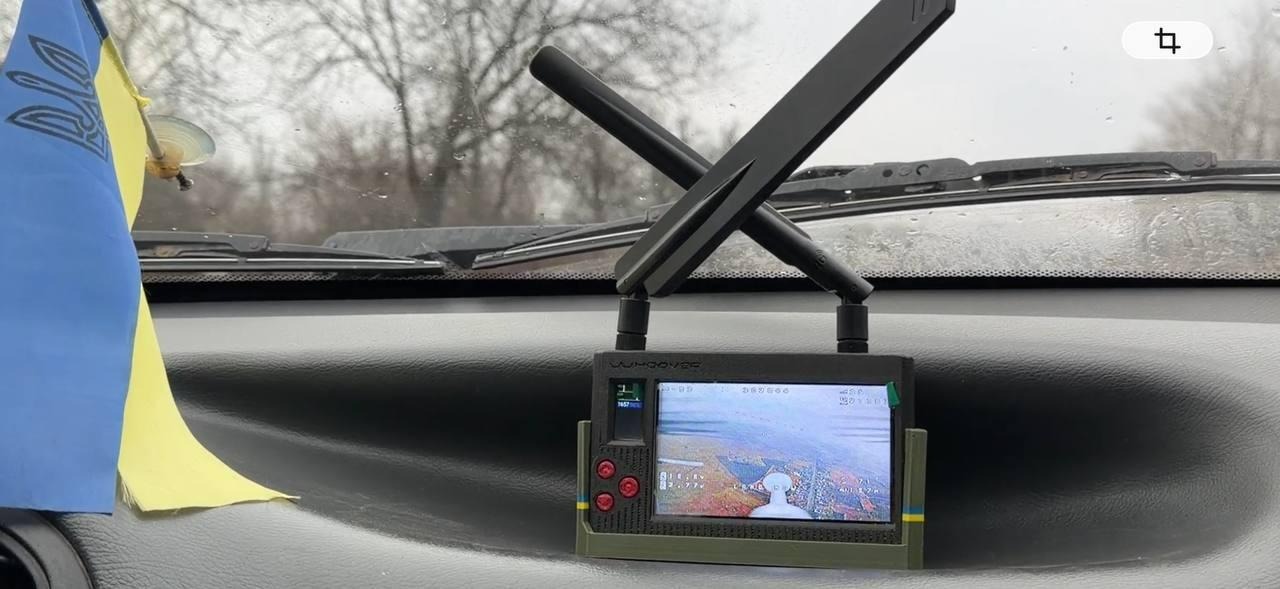
The drone detector installed in the Suspilne Dnipro car intercepting the video feed from a Russian drone. Screenshot from the video by Suspilne Dnipro
The crew included Roman Mykhalchuk, cameraman Danyil Nikolayenko, and driver Vasyl Tynnyi. They were going to Demuryne to film a news story about the life of locals who remain in the village.
According to DeepState, the village is located approximately 13 km away from the front line.
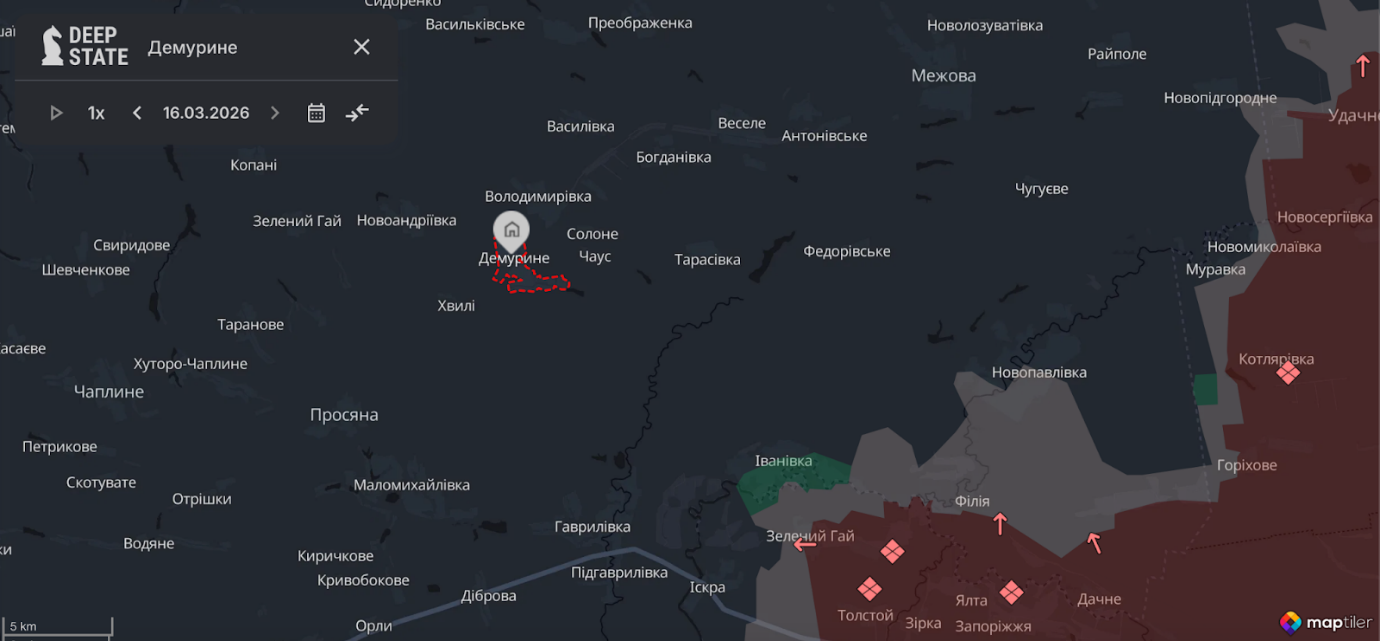
Demuryne on the Deep State map. Screenshot by Kateryna Lusiuk (taken 17.03.2026)
“After the filming session, when we got into the car, we had barely driven a few meters, maybe 10, when our Chuyka [the drone detector] went off, which actually helped us: it intercepted the ‘picture’ from the drone. I saw the train station on the detector screen — they have a train station there that is no longer in use — and we were literally next to it, maybe 100 meters away at most. We quickly drove the car right under a tree. Because there was nowhere to hide there,” said Suspilne Dnipro correspondent Roman Mykhalchuk.
Having stopped the car, the crew ran outside and heard a drone circling nearby. The journalists hid between a tree and a damaged fence. Roman Mykhalchuk says this was the only place where they could take cover. The nearest shelter was at the destroyed train station, but it crossing the several dozen meters to reach it would have been extremely dangerous.
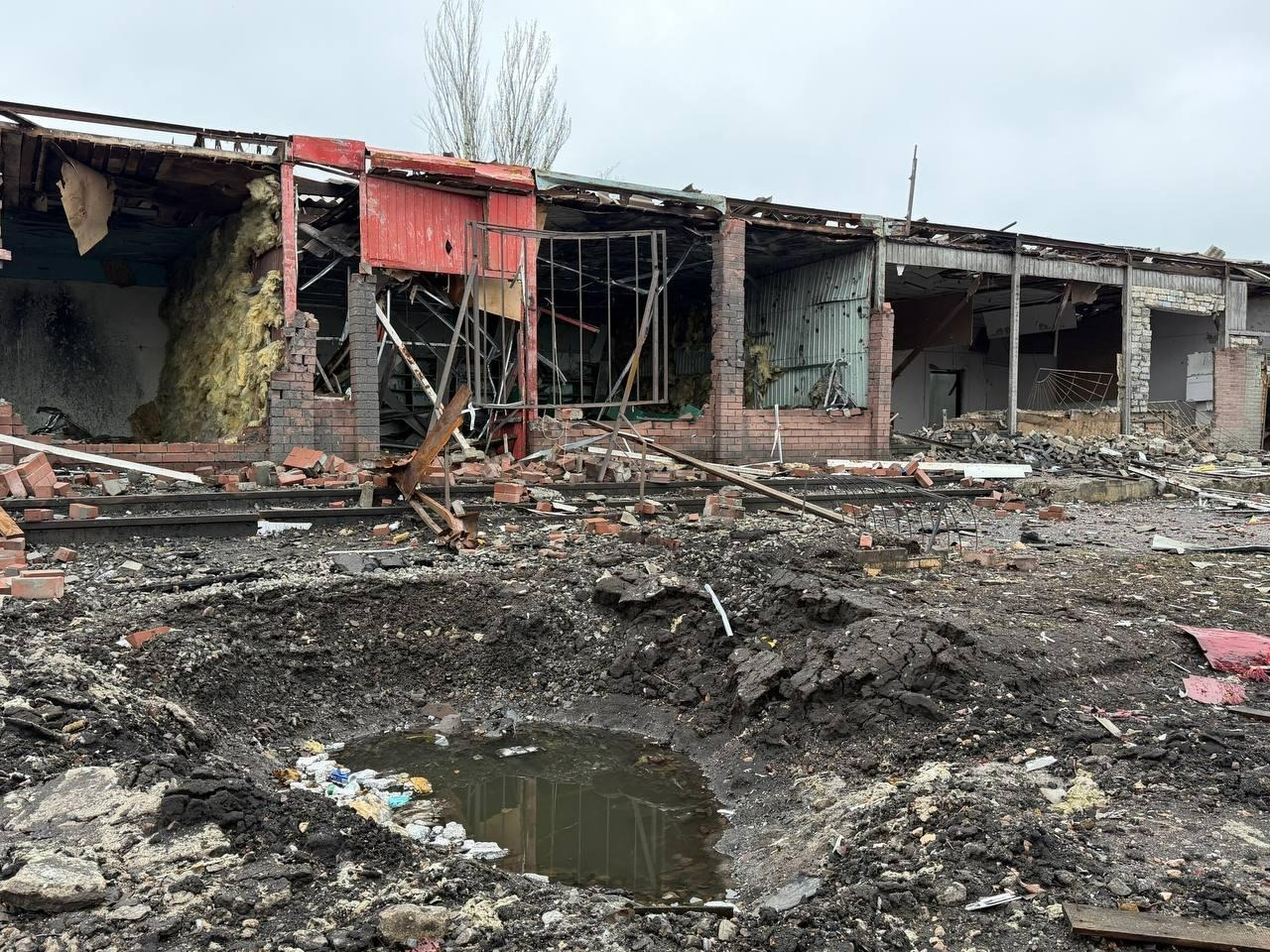
Destroyed buildings and a crater from a guided bomb in Demuryne. Photo by Roman Mykhalchuk
The correspondent said that the FPV drone had been circling right above them and the crew was certain that the drone had been targeting them specifically.
“The FPV drone was circling right above us, we heard it all. We filmed everything, we recorded it all. There was no one around except us. The village is almost deserted, and what’s more, it was the very edge of the village, beyond was a field, some abandoned buildings, an abandoned factory that had been bombed… And the closest village was a few kilometers away. We realised that it was definitely following us, because we were the only people on that street, and the only car,” Roman Mykhalchuk said.
The filming crew had to hide for about five minutes. Later, the journalists heard an explosion nearby.
“It circled above us for some time and then, apparently, fell down and exploded. We heard this buzzing, there was no dive sound, just an explosion, and the buzzing stopped. As soon as there was silence, we ran as fast as we could from there. It fell down maybe 100 meters away from us or even closer,” added Suspilne Dnipro cameraman Danyil Nikolayenko.
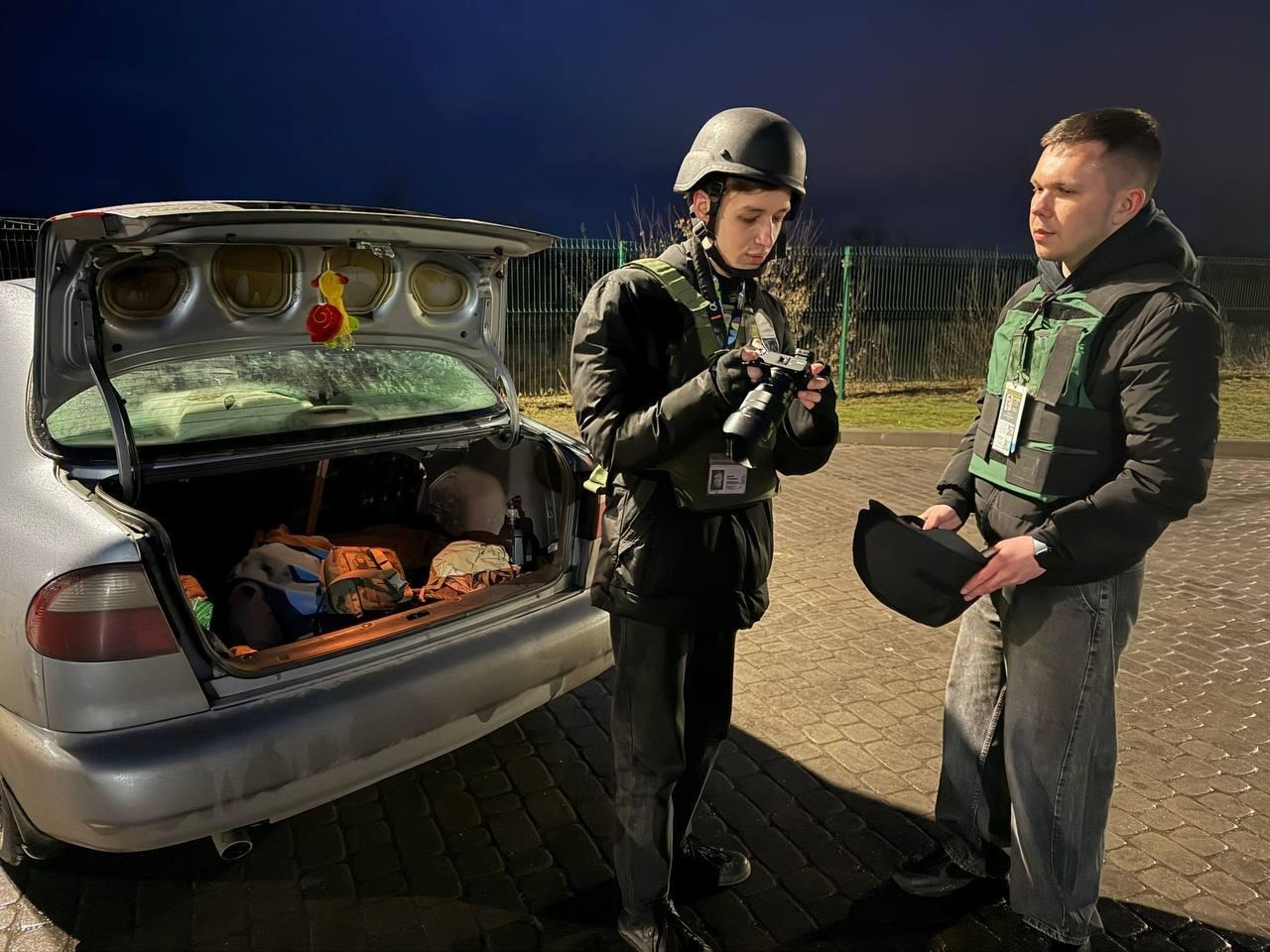
Suspilne Dnipro filming crew: correspondent Roman Mykhalchuk and cameraman Danyil Nikolayenko. Photo by Suspilne Dnipro
All members of the filming crew were wearing protective gear with PRESS markings.
“FPVs are flying around that place all the time, on top of the guided bombs and Shaheds. The locals told us that the drones were hunting down cars. We ourselves saw two completely burned-out cars at the edge of the village. And here was our car, with us wearing ‘body armor’ inscribed PRESS… The FPV drone operator definitely saw all this and clearly aimed the drone at us. In my opinion, this was a deliberate attack on us as media workers,” added Roman Mykhalchuk.
On 2 February 2026, a Suspilne Dnipro filming crew came under Russian Shahed fire while working in Ternivka (Dnipropetrovsk oblast). The journalists were filming the aftermath of the Russian strike at a bus carrying miners that occurred the day before, on 1 February.
According to the Institute of Mass Information, Russia committed 896 crimes against journalists and the media in Ukraine in the four years of the full-scale invasion. Of these, at least 51 were air strikes at journalists, and 46 journalists were injured.
As IMI has pointed out, while artillery posed the biggest threat to journalists in 2022, in 2025–2026 UAVs (FPV drones, Lancet and Molniya type drones, etc.) have become the dominant risk factor. IMI recorded the deaths of three media professionals while reporting in the fourth year of the full-scale invasion, all of which were drone strikes.