
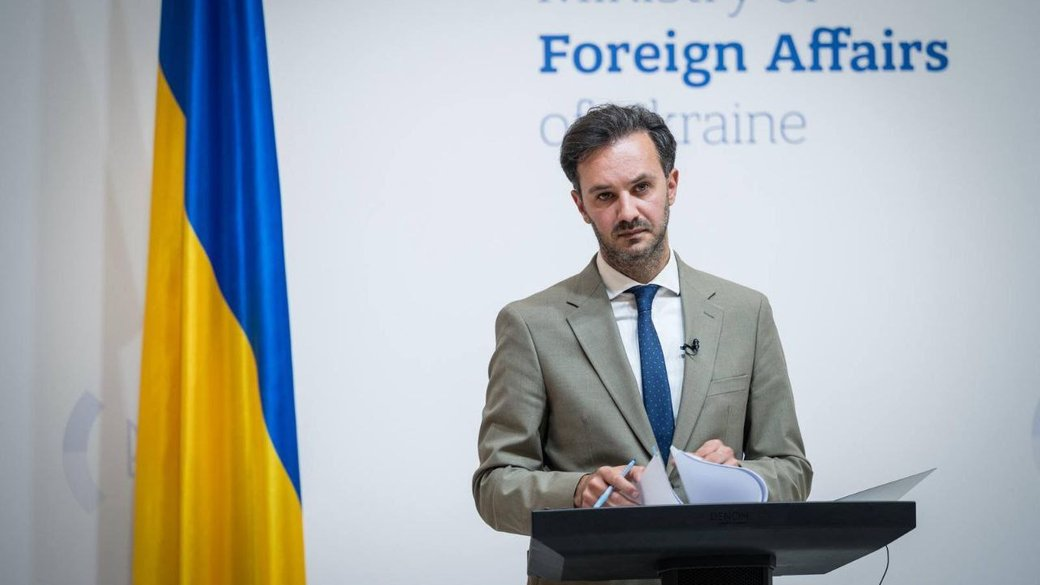
Ukraine’s Foreign Affairs Ministry spokesperson Heorhiy Tykhy criticised UNESCO’s statement about the recent Russian strike on a world heritage site in central Lviv, saying during a briefing that the organisation failed to mention Russia as the party responsible for the attack, and calling it a manifestation of UNSECO’s “dysfunctionality” and inability to “call a spade a spade,” Suspilne Culture reports.
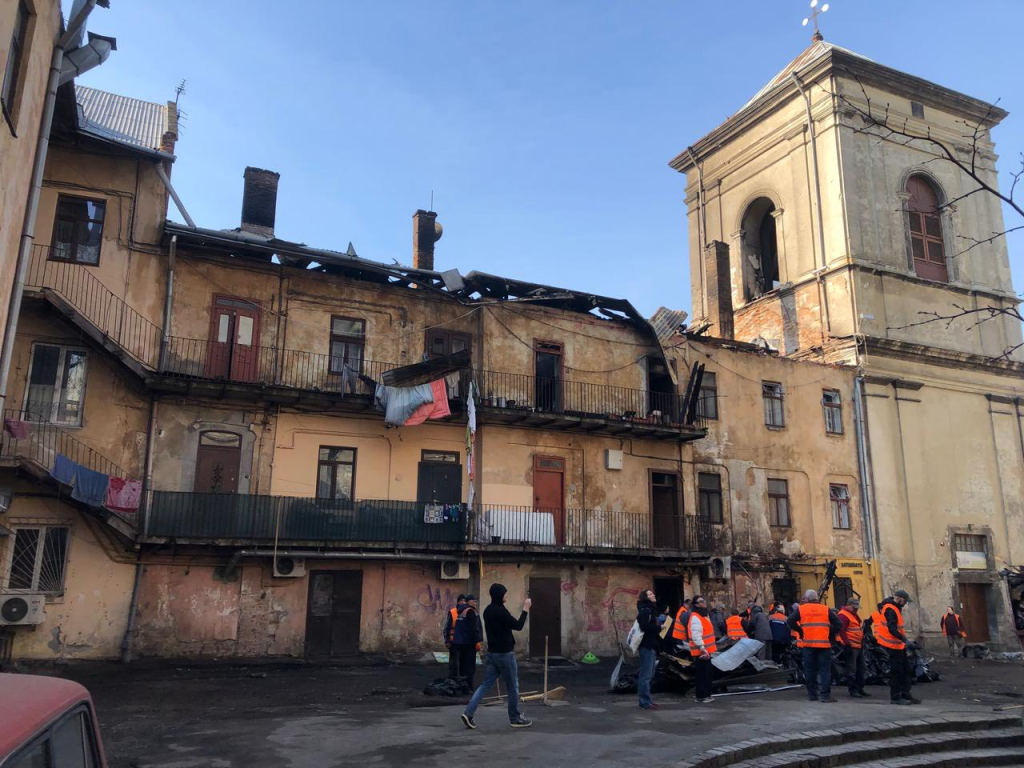
Russian drones targeted central Lviv, which is included in the UNESCO world heritage site list, on 24 March, damaging the following locations: the Bernardine Monastery church (dates back to the 17th century), the St. Mary Magdalene Church (17th century, houses the Organ Hall), and the museum “The Prison on Lontskyi St.” The blast wave broke almost all the windows in the church.
UNESCO said in its official statement that it was “deeply alarmed” by the 24 March strike, emphasising that cultural property was protected under the 1954 Hague Convention and the 1972 World Heritage Convention and that all parties must safeguard heritage.
“It’s shameful, what else there is to say. If they can’t even mention who did the strike and [speak of it as if] these were some abstract attacks on Lviv by aliens. Unfortunately, this seals the organisation’s status as dysfunctional and unable to call a spade a spade,” said the Foreign Ministry spokesperson.
Heorhiy Tykhyi said that Ukraine’s Foreign Minister Andriy Sybiha had immediately addressed UNESCO’s leadership and informed European partners of the issue. The Foreign Ministry agreed with UNESCO’s Ukraine office to send experts to Lviv to assess the damage.
The Lviv City Council reported that the building, which is part of the Bernardine Monastery complex, is in a state of emergency and uninhabitable: “The damage is colossal: the roof and floors are destroyed, wooden structures have burned down, load-bearing walls are damaged. Inside, there are collapsed walls, ruined staircases, some of the historical elements have been lost, traces of a severe fire are visible.”
The Foreign Ministry spokesperson added that Ukraine had already received signals of support from Latvia, Lithuania, Estonia, Portugal, Romania, as well as from the OSCE Parliamentary Assembly President and the United Kingdom.
Marta Cienkowska, Poland’s Minister of Culture and National Heritage, was outraged by the Russian strike, writing on X that the shelling near the Bernardine Church endangered archives and artefacts that are part of Ukraine’s, Poland’s, and Europe’s shared history.
Heorhiy Tykhyi added that statements alone were not enough: “We insist on concrete action. In particular, we mean more robust sanctions against the Russian Federation in the field of culture, its complete international isolation, and the exclusion of Russian representatives from any international art events.”
Earlier, the Ukrainian Institute of National Remembrance called on the public to sign an open address to UNESCO and international partners demanding that Russia be excluded from the organisation in view of its consistent attacks on cultural sites in Ukraine which are protected by UNESCO and considered world heritage.